
Steinunn Sigurðardóttir
Author of Heida: A Shepherd at the Edge of the World
About the Author
Works by Steinunn Sigurðardóttir
Tímaþjófurinn 3 copies
Síðasta orðið : safn til eftirmæla eftir hluta Ívarsen-ættbálks og tengdafólk á 20. öld, útgefið,… (1990) 3 copies
Tagged
Common Knowledge
- Canonical name
- Sigurðardóttir, Steinunn
- Legal name
- Sigurðardóttir, Steinunn
- Other names
- Sigurdardottir, Steinunn
- Birthdate
- 1950-08-26
- Gender
- female
- Relationships
- Hauksson, Thorsteinn (Lebenspartner)
1 Tochter - Nationality
- Iceland
- Birthplace
- Reykjavík, Island
- Associated Place (for map)
- Iceland
Members
Reviews

Sérstök og eftirminnileg ástarsaga eftir Steinunni. Frásagnaraðilinn er ung kona sem býr ein og líður vel þannig þegar hún fellur fyrir manni sem fer á fjörurnar við hana. Þau eru bæði á vissan hátt kaldlynd og halda samskiptum í þessu ástarsambandi í lágmarki. Þó taka ástríðurnar á köflum völdin.
Tilfinningalega fjarlægð elskendanna veldur þó flækjum í samböndum þeirra við aðra.
Skemmtilega skrifuð og húmorísk, sérstaklega í glímu konunnar við show more óþolandi fullkomna foreldra sína, og fjallar vel um hamingju og ást þegar tilfinningakuldi markar svo oft samskipti einstaklinga. show less
Tilfinningalega fjarlægð elskendanna veldur þó flækjum í samböndum þeirra við aðra.
Skemmtilega skrifuð og húmorísk, sérstaklega í glímu konunnar við show more óþolandi fullkomna foreldra sína, og fjallar vel um hamingju og ást þegar tilfinningakuldi markar svo oft samskipti einstaklinga. show less

This slow, implausible but not wholly uninteresting book strikes the classic tone of middlebrow litfic – a sort of vague, wistful melancholy which allows its characters to give a lot of moody ruminations about regret and suchlike without bothering to do anything concrete which might advance the plot. If you like that kind of thing, pull up a chair.
In this case, our protagonist, Karl Ástuson, is a wealthy businessman returning from New York to his native Iceland in order to chase down the show more love of his life, whom he hasn't seen since they broke up as teenagers. His rather passive attempts to make progress with the one that got away are intercut with memories of a one-night stand he had with a psychologist years previously in the US.
In normal circumstances, the resolution of Karl's quest with his lost love would be withheld to the end of the book. To her credit, though, Steinunn sorts it all out by page ninety, at which point the novel shifts gear and becomes a more psychological examination of the insecurities and biases that underlie romantic or sexual behaviour. Karl, who is said to be amazing in bed but who has never had a longterm partner, seems to embody the theory of his American psychiatrist one-night stand, who believes that
the world is full of wimps and psycho mamas' boys trying to cover up their condition by playing football and setting the world afire and laying as many women as they possibly can, eternally dissatisfied because no woman is as good as mommy dearest.
Karl was very close to his mother and did not know his father: yes, it's that kind of book, and yes, Freud is invoked repeatedly.
No one in The Good Lover really behaves the way people do in life – in the end, character is sacrificed for the sake of creating psychoanalytical types. I did not think this worked in its favour, but perhaps if you're interested in portrayals of the psychology of men and women you may feel otherwise.
Philip Roughton's translation into American English reads very fluently, although the effect is slightly spoiled by a lot of typos – ‘her trousers where greenish-gray’ and ‘her movements where elegant’, both on the same page, and (more unforgivably) the original Icelandic title is misspelled on the copyright page. With any luck the market for translated fiction will explode and World Editions will be able to hire a couple more copy-editors. show less
In this case, our protagonist, Karl Ástuson, is a wealthy businessman returning from New York to his native Iceland in order to chase down the show more love of his life, whom he hasn't seen since they broke up as teenagers. His rather passive attempts to make progress with the one that got away are intercut with memories of a one-night stand he had with a psychologist years previously in the US.
In normal circumstances, the resolution of Karl's quest with his lost love would be withheld to the end of the book. To her credit, though, Steinunn sorts it all out by page ninety, at which point the novel shifts gear and becomes a more psychological examination of the insecurities and biases that underlie romantic or sexual behaviour. Karl, who is said to be amazing in bed but who has never had a longterm partner, seems to embody the theory of his American psychiatrist one-night stand, who believes that
the world is full of wimps and psycho mamas' boys trying to cover up their condition by playing football and setting the world afire and laying as many women as they possibly can, eternally dissatisfied because no woman is as good as mommy dearest.
Karl was very close to his mother and did not know his father: yes, it's that kind of book, and yes, Freud is invoked repeatedly.
No one in The Good Lover really behaves the way people do in life – in the end, character is sacrificed for the sake of creating psychoanalytical types. I did not think this worked in its favour, but perhaps if you're interested in portrayals of the psychology of men and women you may feel otherwise.
Philip Roughton's translation into American English reads very fluently, although the effect is slightly spoiled by a lot of typos – ‘her trousers where greenish-gray’ and ‘her movements where elegant’, both on the same page, and (more unforgivably) the original Icelandic title is misspelled on the copyright page. With any luck the market for translated fiction will explode and World Editions will be able to hire a couple more copy-editors. show less

The writing looped around and sometimes threw me off, and the central event of the story was apparent long before the book gets to it - and still I could not put it down. The word that keeps coming to mind is "compelling", although that feels weirdly academic. Anticipation mixed with unease comes closer.
Potential readers take note: there are two Martins, they are friends, and this information is not a spoiler or mystery (although it took awhile for my jet-lagged brain to figure it out).
Potential readers take note: there are two Martins, they are friends, and this information is not a spoiler or mystery (although it took awhile for my jet-lagged brain to figure it out).
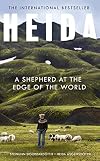
Here's a book to give to a teen who is fascinated with the larger world and for whom you have secret aspirations of greatness. Leave it on your coffee table or somewhere where it will get picked up and read.
In a no-nonsense translation, the life of Heida Ásgeirsdóttir is presented in seasons of a single year. The writing is straightforward and, judging from other reviews, does not appeal to everyone. The lack of lyricism didn't bother me much as a reader, but I was curious that a culture show more that prides itself on extemporaneous poetry could not produce a more poetic text. The translator perhaps?
Nevertheless, Heida tells us a lot about Iceland, its climate and natural world, and the rigors of farming. We learn how solitary farming is and thus how important social conventions, including wild parties, are to a rural culture.
I recommend this book to readers who enjoy Scandinavian culture, rural culture, and sheep. It's also wildly feminist.
I received a review copy of "Heida: A Shepherd at the Edge of the World" by Steinunn Sigurðardóttir (John Murray) through NetGalley.com. show less
In a no-nonsense translation, the life of Heida Ásgeirsdóttir is presented in seasons of a single year. The writing is straightforward and, judging from other reviews, does not appeal to everyone. The lack of lyricism didn't bother me much as a reader, but I was curious that a culture show more that prides itself on extemporaneous poetry could not produce a more poetic text. The translator perhaps?
Nevertheless, Heida tells us a lot about Iceland, its climate and natural world, and the rigors of farming. We learn how solitary farming is and thus how important social conventions, including wild parties, are to a rural culture.
I recommend this book to readers who enjoy Scandinavian culture, rural culture, and sheep. It's also wildly feminist.
I received a review copy of "Heida: A Shepherd at the Edge of the World" by Steinunn Sigurðardóttir (John Murray) through NetGalley.com. show less
Lists
Awards


You May Also Like


Associated Authors
Statistics
- Works
- 28
- Members
- 305
- Popularity
- #77,180
- Rating
- 3.6
- Reviews
- 22
- ISBNs
- 76
- Languages
- 10
- Favorited
- 5