
Kenneth Joseph Arrow (1921–2017)
Author of Social Choice and Individual Values
About the Author
Kenneth Joseph Arrow was born in New York City on August 23, 1921. He received a bachelor's degree in social science and in mathematics from City College. He did his graduate work at Columbia University. He served in the Army Air Corps during World War II. He taught at Harvard University from 1968 show more to 1979 and at Stanford University until retiring in 1991. He was an economist who was known for his contributions to mathematical economics. He wrote numerous books including Social Choice and Individual Values and Social Choice and Multicriterion Decision-Making written with Herve Raynaud. Arrow and John R. Hicks received the 1972 Nobel Memorial Prize in Economic Science for their work in welfare economics and the theory of social choice. In 2004, Arrow received the National Medal of Science, the nation's highest scientific honor. He died on February 21, 2017 at the age of 95. (Bowker Author Biography) show less
Disambiguation Notice:
(yid) VIAF:9908994
Series
Works by Kenneth Joseph Arrow
Collected Papers of Kenneth J. Arrow, Volume 3: Individual Choice under Certainty and Uncertainty (1984) 31 copies
Collected Papers of Kenneth J. Arrow, Volume 1: Social Choice and Justice (1984) — Author — 25 copies
The rational foundations of economic behaviour proceedings of the IEA Conference held in Turin, Italy (1996) 4 copies
Handbook of Mathematical Economics. THREE VOLUME SET (Handbooks in economics) (Vols 1-3) (Vols 1-4) (1981) 4 copies
Collected Papers of Kenneth J. Arrow, Volume 5: Production and Capital (Collected Papers of Kenneth J. Arrow Vol. 5) (1985) 2 copies
The viability and equity of capitalism (E. S. Woodward Lectures in Economics) (1976) 1 copy, 1 review
Associated Works
Women and the Work Place: The Implications of Occupational Segregation (1976) — Contributor — 34 copies
Tagged
Common Knowledge
- Birthdate
- 1921-08-23
- Date of death
- 2017-02-21
- Gender
- male
- Education
- City College of New York (1940)
Columbia University (MA, 1941 | PhD, 1951) - Occupations
- economist
- Organizations
- Pontifical Academy of Sciences
Economists for Peace and Security
Stanford University
Harvard University - Awards and honors
- Nobel Prize ( [1972])
National Medal of Science ( [2004])
John Bates Clark Medal (1957)
von Neumann Theory Prize (1986) - Relationships
- Summers, Lawrence H. (nephew)
Stokey, Nancy L. (doctoral student) - Nationality
- USA
- Birthplace
- New York, New York, USA
- Place of death
- Palo Alto, California, USA
- Disambiguation notice
- VIAF:9908994
- Associated Place (for map)
- USA
Members
Reviews
The viability and equity of capitalism (E. S. Woodward Lectures in Economics) by Kenneth Joseph Arrow

Two first rate essays defending the welfarist approach to justice.

Professor Graciela Chichilnisky has chosen to discuss Essays in the Theory of Risk-Bearing by Kenneth Arrow on FiveBooks as one of the top five on her subject - Risk Management, saying that:
“…This is a classic book. What Arrow is doing is a parallel theory. He develops it from the point of view of decisions theory in the sense of looking at how you react to uncertainty. It is about economic decisions and it is really simple and very focused. …”
The full interview is available here: show more target="_top">http://fivebooks.com/interviews/graciela-chichilnisky show less
“…This is a classic book. What Arrow is doing is a parallel theory. He develops it from the point of view of decisions theory in the sense of looking at how you react to uncertainty. It is about economic decisions and it is really simple and very focused. …”
The full interview is available here: show more target="_top">http://fivebooks.com/interviews/graciela-chichilnisky show less
Social Choice and Individual Values, Second edition (Cowles Foundation Monographs Series) by Kenneth J. Arrow

Social Choice Theory starts here.
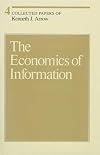
Articolo: Information and economic behavior. Informazione come bene, ma solo in parte può essere considerata una merce. Tuttavia l'idea che i mercati possano produrre una efficiente allocazione delle risorse non è vera in questo caso. Ciò che impedisce all'informazione di essere considerata senz'altro come una merce sono due caratteristiche:
1. è per definizione indivisible nel suo uso: cioè l'informazione è la stessa indipendentemente dalla scala del prodotto. Il costo show more dell'informazione dipende solo dal contenuto non dal suo uso per cui acquistarla conviene più ad un produttore su larga scala che non ad un piccolo. In tal modo l'informazione crea economie di scala da un capo all'altro dell'economia, e quindi per i ben noti principi causa un allontanamento dall'economia competitiva
2. è inappropriabile perchè chi ce l'ha non la perde trasmettendola. Creata a grandi costi l'informazione può essere trasmessa a prezzi assai minori, assai inferiori al costo di produzione. Allora il venditore non può realizzare il valore sociale dell'informazione.
In tal modo la produzione di informazione è lungi dall'essere ottimale e produrre costose misure protettive al di là del solito sistema proprietario.
Allora 1. o si attuano adattamenti per aumentare l'efficienza della gestione dell'informazione o 2. i mercati non funzionano o funzionano in modo strano. Il mercato dovrebbe essere un modo per distribuire l'informazione tramite i segnali che gli agenti inviano.
Nel primo caso un modo per aumentare l'efficienza è moltiplicare gli osservatori, qui idea di rete. Ciò però è sottoposto al rischio di pietrificazione. show less
1. è per definizione indivisible nel suo uso: cioè l'informazione è la stessa indipendentemente dalla scala del prodotto. Il costo show more dell'informazione dipende solo dal contenuto non dal suo uso per cui acquistarla conviene più ad un produttore su larga scala che non ad un piccolo. In tal modo l'informazione crea economie di scala da un capo all'altro dell'economia, e quindi per i ben noti principi causa un allontanamento dall'economia competitiva
2. è inappropriabile perchè chi ce l'ha non la perde trasmettendola. Creata a grandi costi l'informazione può essere trasmessa a prezzi assai minori, assai inferiori al costo di produzione. Allora il venditore non può realizzare il valore sociale dell'informazione.
In tal modo la produzione di informazione è lungi dall'essere ottimale e produrre costose misure protettive al di là del solito sistema proprietario.
Allora 1. o si attuano adattamenti per aumentare l'efficienza della gestione dell'informazione o 2. i mercati non funzionano o funzionano in modo strano. Il mercato dovrebbe essere un modo per distribuire l'informazione tramite i segnali che gli agenti inviano.
Nel primo caso un modo per aumentare l'efficienza è moltiplicare gli osservatori, qui idea di rete. Ciò però è sottoposto al rischio di pietrificazione. show less
Jan 1, 2008Italian
Awards


You May Also Like


Associated Authors
Statistics
- Works
- 49
- Also by
- 2
- Members
- 660
- Popularity
- #38,227
- Rating
- 3.9
- Reviews
- 4
- ISBNs
- 97
- Languages
- 4
