
Paul Kincaid
Author of Iain M. Banks (Modern Masters of Science Fiction)
Works by Paul Kincaid
A Very British Genre: A Short History of British Fantasy and Science Fiction (1995) 18 copies, 2 reviews
John Clute; an appreciation 1 copy
Robert Holdstock’s Mythago Wood: A Critical Companion (Palgrave Science Fiction and Fantasy: A New Canon) (2022) 1 copy
Associated Works
A Traveller in Time: The Critical Practice of Maureen Kincaid Speller (2023) — Foreword — 14 copies, 1 review
Interzone 295 — Reviewer — 9 copies
BSFA Awards 2020: Featuring All the Nominated Short Stories and Non-Fiction for the 2020 BSFA Awards (2021) — Contributor — 2 copies, 1 review
Vector 298: Libraries, Archives and the Future of Information (2023) — Contributor — 1 copy, 1 review
Bull Spec #7 — Contributor — 1 copy
Tagged
Common Knowledge
- Birthdate
- 1952
- Gender
- male
- Awards and honors
- Guest of Honour, Eastercon, UK (1996)
- Relationships
- Speller, Maureen Kincaid (spouse)
- Nationality
- UK
- Places of residence
- UK
- Associated Place (for map)
- UK
Members
Reviews
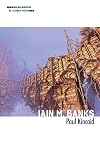
A critical yet readable study of the science fiction novels of Iain M. Banks, together with a study of the more fantastic of the works of Iain Banks. Paul Kincaid draws on close personal knowledge of the field of British science fiction and many of the personalities involved. He examines recurring themes in Banks' books - the politics, the reinvigoration of the space opera sub-genre (these two go hand-in-hand), the emphasis on more ordinary people as protagonists (though many of his show more protagonists have a high profile within the context of the books, they are not leaders ln the accepted sense of epic fiction), and the violence. Kincaid does not shy away from criticism in this latter area, specifically in terms of the prevalence of sexual violence.
The division of Banks' books into the two categories - mainstream and science fiction - is, as I said, blurred in this study. Other critical studies, and indeed, other critics, have failed to do this, and that approach gives a false view of Iain Banks as an author. His first three novels all had elements of the fantastic in them; but science fiction was his first love, and any analysis of Banks' output has to acknowledge that. (Kincaid does comment disparagingly that many who wrote obituaries of Banks, especially in the print media, commented on his career and acclaimed his mainstream novels but at best only touched on his science fiction without having ever read any of it - a palpable hit.) The mainstream novels that have more or less non-fantastic settings - The Crow Road, The Business, Dead Air and Stonemouth - are only really mentioned in passing when a theme, such as the role of games, occurs in them.
Of particular interest is the relationship between The Steep Approach to Garbadale and Transition - material excised from the first book appeared in the second - although it is a pity that Kincaid overlooked The Spheres, a chapbook published by the Birmingham SF Group on the occasion of Iain's appearance as Guest of Honour at their 2010 convention, Novacon; as that is a discarded opening chapter that, if kept, might have made Transition a very different book.
The influences on Banks are given their due, including Alasdair Gray, although I was pleasantly surprised to see that IMB's taste also ran to the songs of Pete Atkin, whose lyricist was his friend Clive James. (Yes, that Clive James.) As we are talking about friendships, Banks' friend Ken Macleod is duly identified as a huge influence on the evolution of his novels, though many of his friends are also cited where their influence comes into play. Iain Banks was notable as a successful author for maintaining friendships from his life before he was famous. (This is a theme that many of his "mainstream" novels keep returning to, and indeed there are strong relationships in the science fiction books as well.) It is little wonder that Banks took to SF fandom so very readily; and fandom returned the favour. In the end, Kincaid emphasises how much Iain Banks enjoyed life, and believed that his readers should have as much fun reading his books as he did writing them. In this, he succeeded. And although Kincaid does not spare criticism of the novels, this monograph ends on a note of joy which more academic studies would be far less likely to: "His books could be many things... but the one quality they all share, science fiction or mainstream or the many that don't quite belong in either category, is that they are fun to read." show less
The division of Banks' books into the two categories - mainstream and science fiction - is, as I said, blurred in this study. Other critical studies, and indeed, other critics, have failed to do this, and that approach gives a false view of Iain Banks as an author. His first three novels all had elements of the fantastic in them; but science fiction was his first love, and any analysis of Banks' output has to acknowledge that. (Kincaid does comment disparagingly that many who wrote obituaries of Banks, especially in the print media, commented on his career and acclaimed his mainstream novels but at best only touched on his science fiction without having ever read any of it - a palpable hit.) The mainstream novels that have more or less non-fantastic settings - The Crow Road, The Business, Dead Air and Stonemouth - are only really mentioned in passing when a theme, such as the role of games, occurs in them.
Of particular interest is the relationship between The Steep Approach to Garbadale and Transition - material excised from the first book appeared in the second - although it is a pity that Kincaid overlooked The Spheres, a chapbook published by the Birmingham SF Group on the occasion of Iain's appearance as Guest of Honour at their 2010 convention, Novacon; as that is a discarded opening chapter that, if kept, might have made Transition a very different book.
The influences on Banks are given their due, including Alasdair Gray, although I was pleasantly surprised to see that IMB's taste also ran to the songs of Pete Atkin, whose lyricist was his friend Clive James. (Yes, that Clive James.) As we are talking about friendships, Banks' friend Ken Macleod is duly identified as a huge influence on the evolution of his novels, though many of his friends are also cited where their influence comes into play. Iain Banks was notable as a successful author for maintaining friendships from his life before he was famous. (This is a theme that many of his "mainstream" novels keep returning to, and indeed there are strong relationships in the science fiction books as well.) It is little wonder that Banks took to SF fandom so very readily; and fandom returned the favour. In the end, Kincaid emphasises how much Iain Banks enjoyed life, and believed that his readers should have as much fun reading his books as he did writing them. In this, he succeeded. And although Kincaid does not spare criticism of the novels, this monograph ends on a note of joy which more academic studies would be far less likely to: "His books could be many things... but the one quality they all share, science fiction or mainstream or the many that don't quite belong in either category, is that they are fun to read." show less
A housemate lent me a copy of The Wasp Factory back in 1987, and while it was certainly a memorable book, it wasn’t my thing. It wasn’t until I joined the British Science Fiction Association a year or two later that I discovered Banks also wrote science fiction – and I can remember finding a hardback copy of Consider Phlebas in WH Smith soon after, but at the time I would never have considered buying a book in hardback. Later, Banks was GoH at Prefab Trout, the second convention I ever show more attended, in September 1989, and I can remember a review of Canal Dreams in the programme booklet which described the novel as “a taunt thriller”. I think by that point I’d read Banks’s earlier novels – probably borrowed from Coventry City Library – the mainstream ones at least, but possibly also Consider Phlebas and The Player of Games. I’m pretty damn sure, however, that the first Culture novel I actually bought was Use of Weapons, which was launched at Eastcon, the 1990 Eastercon, in Liverpool. I bought the hardback and Banks signed it for me. I stil have it, of course. From that point on, I purchased all of his books in hardback as soon as they were published. (However, it wasn’t until a few years ago that I managed to track down first edition copies of the books before Use of Weapons.) So I guess you could say I am/was something of a fan. And yet, all those decades of reading him, but so few of his books seemed to manage the quality I expected of them – I enjoyed them, I appreciated them… but it always felt to me like he could do much better. I knew I was being unfair, but I could never help myself. And yet…. after reading Paul’s book on Banks’s novels, it occurs to me that my problem with Banks is that he rewarded careful reading but his prose was so effortlessly readable that I likely never gave his fiction the depth of reading which generated the most reward. And I reached this conclusion because Paul, a friend of many years, writes about Banks’s novels so well, so readably, that I want to go back to Banks’s books immediately and reread them and discover in them all the depth and goodness identified by Paul which I plainly missed… and knowing full well that I will also hugely enjoy the novels because they were always were, above all, hugely enjoyable. So, Paul, job done. (Although I’ll need more convincing about Transition, I think…) show less

This book is an academic monograph covering the entire sf corpus of Iain Banks-- a man whose work I have read distressingly little of (just The Bridge, The Wasp Factory, and The State of the Art). Despite that, I could tell that this was a strong piece of literary criticism, providing a couple threads that pull you across Banks's work; Kincaid emphasizes the Culture as a society, Banks's experiments with form, and Banks's anti-great man reworking of the space opera genre, among other show more things. It made me even more distressed at how little Banks I have read. (Also, there was a citation of Bill Hardesty, an undergraduate professor of mine partially responsible for my graduate school career, so that was nice.) show less
https://nwhyte.livejournal.com/3644975.html
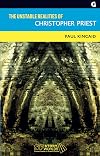
I know and like both subject and author, but even if I didn't, I think this would stand out as a superb explanation of what Priest is trying to do with his writing and how he does it, and would also engage readers who are less familiar with his work. All I ask of my sf criticism is that it leaves me better informed about what I have read, and eager to try what I haven't, and this incisive and succinct analysis did both for me. Strongly recommended.
I know and like both subject and author, but even if I didn't, I think this would stand out as a superb explanation of what Priest is trying to do with his writing and how he does it, and would also engage readers who are less familiar with his work. All I ask of my sf criticism is that it leaves me better informed about what I have read, and eager to try what I haven't, and this incisive and succinct analysis did both for me. Strongly recommended.
Awards


You May Also Like


Associated Authors
Statistics
- Works
- 18
- Also by
- 33
- Members
- 178
- Popularity
- #120,888
- Rating
- 3.6
- Reviews
- 11
- ISBNs
- 16