

Farah Mendlesohn
Author of The Cambridge Companion to Science Fiction
About the Author
Farah Mendlesohn teaches at Middlesex University, London
Image credit: Photo taken Aug. 11, 2006 Copyright © Johan Anglemark, 2006 (image use requires permission of Johan Anglemark)
Works by Farah Mendlesohn
The Inter-Galactic Playground: A Critical Study of Children's and Teens' Science Fiction (Critical Explorations in Science Fiction and Fantasy) (2009) 26 copies
Associated Works
Fighting the Forces: What's at Stake in Buffy the Vampire Slayer? (2002) — Contributor — 238 copies, 1 review
Fantasy Girls: Gender in the New Universe of Science Fiction and Fantasy Television (2000) — Contributor — 36 copies
Uneven Futures: Strategies for Community Survival from Speculative Fiction (2022) — Contributor — 12 copies
BSFA Awards 2019: Featuring All the Nominated Short Stories and Non-Fiction for the 2019 BSFA Awards (2020) — Contributor — 2 copies
Tagged
Common Knowledge
- Birthdate
- 1968-07-27
- Gender
- female
- Nationality
- UK
- Associated Place (for map)
- UK
Members
Reviews
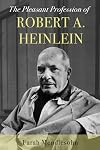
Like many boys of my generation, I was introduced to science fiction by a small number of authors, most prominently Robert A. Heinlein. Farah Mendlesohn, a scholar of speculative fiction, has reviewed Heinlein's works including those left unpublished at his death, and written a critical assessment in (mostly) plain language. Some of her conclusions may surprise you: she decides Heinlein is a feminist (outstanding in relation to most men of his generation) and (again in the context of his show more generation and formative years) a certain type of progressive all his life. This was a fascinating read and has helped me see Heinlein through a different lens. I'm still not going to reread "Farnham's Freehold" or one or two others of his books but she even explains his, to me, embarrassing female-male dialogues. An excellent book, which argues that the Sad Puppies are wrong about Heinlein. show less

A fascinating exploration of the themes in the works of Robert Heinlein, the way that they repeat, and the way that they change over time. Mendlesohn does a fabulous job of articulating the reasons that Heinlein is problematic, as well as highlighting the reasons that I loved many of Heinlein's work (except Job, which I remember as baffling and unreadable).

Short book about Joanna Russ’s “The Female Man.” I didn’t know how little we know about Russ’s life outside her writings, but enjoyed this short book/long essay situating her work within/against that of other feminist and sf writers. “Russ’s feminism has three key strands: anger with men, an anger with liberal feminism, which aspired to men’s estate, and which, as this book tackles, set ever more impossible barriers to ever being accepted ‘as a man’; and the third is a show more materialist Marxism which is rooted in her Jewishness.” Jewishness in the form: argument instead of synthesis; Jewishness in the humor: self-deprecating, striving to fit in because assimilation might mean safety. She was, Mendelsohn says, not trying to convince men but to reach women; Mendelsohn doesn’t shy away from the novel’s transphobia. I thought it plausibly read as an argument that patriarchy imposes transphobia as part of its commitment to creating a falsely “natural” order, but Mendelsohn writes that she later “repudiated such views (which strongly suggested she had held them) in an interview with Samuel R. Delany Jr.” Mendelsohn notes that both she and Russ “swam in a transphobic bio-essentialist feminist environment in the 1970s and 1980s.” Polysemy! show less

This is a book-length academic study of the works of Robert Heinlein. And at over 400 pages of content, it's quite a long book! I haven't actually read a ton of Heinlein (Double Star, Starship Troopers, Stranger in a Strange Land, and Friday are it), but I still enjoyed this. Mendlesohn situates Heinlein in his historical and literary context, especially when it comes to issues of race, gender, and sexuality, showing both where he was ahead of the curve and where he couldn't see beyond his show more own limitations. Her argument is there are some things he gets flack for, which is undeserved if you read it in the context of his time and his body of work, but there are other things for which he deserves castigation, especially Farnham's Freehold.
These parts of the book are worthy but honestly a little too thorough, though I understand why. On the other hand, I really enjoyed the chapters about Heinlein's technique and rhetoric, and about the themes of civic engagement, revolution, and personal responsibility in his work. By reading all of it, from the early shorts to the juveniles to the late-period novels, Mendlesohn is able to show how Heinlein saw society and the self and the relationship between them. It deepened my appreciation of the Heinlein I have read, and made me want to read more of it. (Upon finishing it, I promptly ordered a copy of The Moon Is a Harsh Mistress, though who knows when I will actually get around to reading it.)
As in her book Rhetorics of Fantasy, Mendlesohn is attentive to detail when she needs to be, but her real strength as a critic is identifying trends and explicating why they matter. She's also a lively and engaging writer. This is a model of good criticism in general, and good sf criticism in particular. show less
These parts of the book are worthy but honestly a little too thorough, though I understand why. On the other hand, I really enjoyed the chapters about Heinlein's technique and rhetoric, and about the themes of civic engagement, revolution, and personal responsibility in his work. By reading all of it, from the early shorts to the juveniles to the late-period novels, Mendlesohn is able to show how Heinlein saw society and the self and the relationship between them. It deepened my appreciation of the Heinlein I have read, and made me want to read more of it. (Upon finishing it, I promptly ordered a copy of The Moon Is a Harsh Mistress, though who knows when I will actually get around to reading it.)
As in her book Rhetorics of Fantasy, Mendlesohn is attentive to detail when she needs to be, but her real strength as a critic is identifying trends and explicating why they matter. She's also a lively and engaging writer. This is a model of good criticism in general, and good sf criticism in particular. show less
Lists
Awards


You May Also Like


Associated Authors
Statistics
- Works
- 43
- Also by
- 6
- Members
- 1,373
- Popularity
- #18,735
- Rating
- 3.8
- Reviews
- 33
- ISBNs
- 59
- Languages
- 1
- Favorited
- 1