
Lia Levi
Author of The Jewish husband
About the Author
Image credit: www.comune.corenoausonio.fr.it
Works by Lia Levi
Tagged
Common Knowledge
- Canonical name
- Levi, Lia
- Birthdate
- 1931-11-09
- Gender
- female
- Occupations
- scrittrice
giornalista
novelist
children's book author
journalist - Short biography
- Lia Levi was born to a Jewish family in Pisa, Italy. After the issuance of the Fascist racial laws in 1938, and the start of persecution of Jews, her family left northern Italy and found refuge in Rome. After World War II ended, Levi stayed in Rome, where she completed her studies in philosophy and became a successful journalist. In 1957, she married Roberto Calderoni, with whom she had two children; after they divorced in 1970, she re-married to Luciano Tas. In 1994, Levi published her first novel, Una bambina e basta (Just a Child), which won the Else Morante Prize. A sequel appeared in 1996, Se va via il re (If the King Goes Away). Her novel L’albergo della magnolia (The Jewish Husband) won the Moravia Prize for fiction in 2001 and when it was translated into English in 2009, it received critical acclaim in the English-speaking world. She also has written numerous children’s books about Italian historical events of the recent past. Several of her other works have won major awards. Levi served as the editor-in-chief of the monthly magazine Shalom for more than 30 years, beginning in 1967.
- Nationality
- Italy
- Birthplace
- Pisa, Italia
- Places of residence
- Rome, Italy
- Associated Place (for map)
- Rome, Italy
Members
Reviews

Alessandro used to be considered a genius when he was younger. Then school started and his mother started realizing that he is bright but probably not a genius. This could have been the story of any precocious child with an overbearing mother who thinks her son is the best one and noone is better in anything. Except that this specific family happened to live in Genoa, Italy in the mid 1930s. And the family was Jewish.
The mother had been born and raised in Genoa and her whole family is in show more the area - providing Alessandro with a grandfather and numerous uncles, aunts and cousins. She believes that she is safe in Genoa and that nothing bad can happen to her at home. The father is a British citizen who had always thought that one day he is going to go back - except that the wife is not really interested in leaving her home so he never did.
And then Italy slowly starts changing the rules - the race laws come into effect and being Jewish becomes a problem. And yet, the family stays - the mother is not ready to admit that she must go and as she makes the decision at home, they all stay. The city is flooded with refugees from Austria and Germany and yet they stay - because it will never happen to them, not in Genoa. When the war really starts, the father ends up being branded as an enemy - that British passport which he always considered his Plan B ends up being less than useless - too late to use it to flee, now it ends up getting him sent to the middle of nowhere in the country (better than a camp I guess). And the rules keep changing.
The novel ends on what seems to be a cliffhanger - but only on the surface. The story which the author set out to tell is told - the story of a family which could not believe that things will go that bad, a family who believed in their own city and country and who ended up losing all in the process. In the next few years a lot more families will lose a lot more but this is a story for another place.
It is a story about how slowly changes happen sometimes and how clinging to the familiar can harm you. Reading the novel you want to shake the mother and tell her to run. And yet, the reality is that noone knew what was coming and even when people thought they knew, they still believed they were safe where they were.
Tucked at the end of the novel is a note by the author that the novel is based on real life events - those of her husband's family, complete with a photocopy of his documentation at the border.
If you are looking for heroics, that is not the novel for you. It is a slow (except for the end of course), almost meditative novel about a family, a place and a time. It sounds almost banal - it could have been any family. But then this is part of the point - it was just another family - which got luckier than most.
The novel won the 2018 Strega Giovani award (the youth/YA version of Premio Strega - the biggest Italian award; this one is awarded by a jury of over a thousand upper secondary school students who get to read the 12 nominated books and vote for the best/their favorite).
Not a perfect novel and most of the characters are nowhere near likeable. And yes, the story is believable, even before you find that author's note. How much of the story is reality and how much invention is unclear but it works as is. show less
The mother had been born and raised in Genoa and her whole family is in show more the area - providing Alessandro with a grandfather and numerous uncles, aunts and cousins. She believes that she is safe in Genoa and that nothing bad can happen to her at home. The father is a British citizen who had always thought that one day he is going to go back - except that the wife is not really interested in leaving her home so he never did.
And then Italy slowly starts changing the rules - the race laws come into effect and being Jewish becomes a problem. And yet, the family stays - the mother is not ready to admit that she must go and as she makes the decision at home, they all stay. The city is flooded with refugees from Austria and Germany and yet they stay - because it will never happen to them, not in Genoa. When the war really starts, the father ends up being branded as an enemy - that British passport which he always considered his Plan B ends up being less than useless - too late to use it to flee, now it ends up getting him sent to the middle of nowhere in the country (better than a camp I guess). And the rules keep changing.
The novel ends on what seems to be a cliffhanger - but only on the surface. The story which the author set out to tell is told - the story of a family which could not believe that things will go that bad, a family who believed in their own city and country and who ended up losing all in the process. In the next few years a lot more families will lose a lot more but this is a story for another place.
It is a story about how slowly changes happen sometimes and how clinging to the familiar can harm you. Reading the novel you want to shake the mother and tell her to run. And yet, the reality is that noone knew what was coming and even when people thought they knew, they still believed they were safe where they were.
Tucked at the end of the novel is a note by the author that the novel is based on real life events - those of her husband's family, complete with a photocopy of his documentation at the border.
If you are looking for heroics, that is not the novel for you. It is a slow (except for the end of course), almost meditative novel about a family, a place and a time. It sounds almost banal - it could have been any family. But then this is part of the point - it was just another family - which got luckier than most.
The novel won the 2018 Strega Giovani award (the youth/YA version of Premio Strega - the biggest Italian award; this one is awarded by a jury of over a thousand upper secondary school students who get to read the 12 nominated books and vote for the best/their favorite).
Not a perfect novel and most of the characters are nowhere near likeable. And yes, the story is believable, even before you find that author's note. How much of the story is reality and how much invention is unclear but it works as is. show less
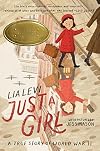
Remarkably gentle personal remembrance of Jewish childhood during WWII in Italy. While there are terrible things happening, Lia and her sisters are protected by her parents and successfully hide at a convent boarding school once things get really bad. It feels like it is written by a very young child for other young children -- seems like it would be a good introduction for kids who aren't ready to take in the enormity and brutality of the Holocaust. It's also a good reminder of the many show more perspectives of survivors.
Advanced Reader's Copy Provided by Edelweiss. show less
Advanced Reader's Copy Provided by Edelweiss. show less
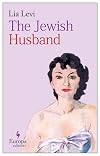
The story is told from the point of view of a man, Dino, writing to a son, Michele, whom he hasn’t seen for years, from Israel, after WWII. Dino wants Michele to understand how their lives were shaped and so he describes his life in Italy with his son’s mother, a woman whom he loved a great deal. Dino was a teacher and a Jew who marked the major Jewish holidays for the sake of his family but not much else. He fell in love with a good Catholic girl, Sonia, whose parents are wealthy, show more shallow, prejudiced and fascist sympathizers. Sonia’s parents in particular were not enthused with the prospective marriage, but objections were overcome, the two marred and have a son. All seemed to be well, but slowly their lives started to unravel as the anti-Jewish laws forced Dino out of his job, increasingly restricted his life, and even forced his parents to sell their successful hotel (which Dino thought would be his fallback after losing his teaching profession) to an employee before they would lose everything.
As Dino puts it: “I am talking about the others, those who cheered the Fascists on, while we few managed to glimpse the invisible and insidious web that seemed to be slowly covering our everyday lives, while a faint haze of the ridiculous descended over everything, a ridiculous that gradually turned into something grotesque. “
As a “half-Jew” Michele would have all avenues closed to him for education or in a profession, so Sonia’s family hatches a scheme whereby Dino and Sonia annul their marriage, Dino effectively admits to not being the father of his son, Sonia marries a family friend (who is, or was, also a friend of Dino), Dino and Sonia start to live separately. For a while they continue to see each other surreptitiously, but more and more they have less and less in common and the relationship spirals downward to the point where Dino simply leaves and goes to Palestine to start a new life, a life he manages to entice his parents to share and so they escape while other members of the family are arrested and shipped off to Auschwitz.
The story is well told. I don’t think it is on a par with The Garden of the Finzi-Continis, but it does illustrate how political regimes and fads and currents disrupt and destroy ordinary lives, how people struggle to stay alive, and the sacrifices they will make for those they love. show less
As Dino puts it: “I am talking about the others, those who cheered the Fascists on, while we few managed to glimpse the invisible and insidious web that seemed to be slowly covering our everyday lives, while a faint haze of the ridiculous descended over everything, a ridiculous that gradually turned into something grotesque. “
As a “half-Jew” Michele would have all avenues closed to him for education or in a profession, so Sonia’s family hatches a scheme whereby Dino and Sonia annul their marriage, Dino effectively admits to not being the father of his son, Sonia marries a family friend (who is, or was, also a friend of Dino), Dino and Sonia start to live separately. For a while they continue to see each other surreptitiously, but more and more they have less and less in common and the relationship spirals downward to the point where Dino simply leaves and goes to Palestine to start a new life, a life he manages to entice his parents to share and so they escape while other members of the family are arrested and shipped off to Auschwitz.
The story is well told. I don’t think it is on a par with The Garden of the Finzi-Continis, but it does illustrate how political regimes and fads and currents disrupt and destroy ordinary lives, how people struggle to stay alive, and the sacrifices they will make for those they love. show less
YThe jewish Husband moves slowly, but the prose is intense within many of the pages, more so during the last half of the book. I attribute the slowness to the fact that the book is written as a series of letters, and Dino is trying to tell his story in an exact manner. There are predictable moments, yet, for some readers, there might be one or two surprises within the story line. Levi writes with forthrightness and vivid imagery, as she tries to inflect how daily life played out during a show more tumultuous time period. She is sensitive to the issues of romance under adverse conditions, playing the fascist mindset against the Jews, and interjecting the conflicts of a Jewish-Catholic marriage under those circumstances.
There isn’t much written about fascism in Italy, and Levi puts a distinct face on the subject. She gives the reader much to ponder regarding the oppression of the Jews, within the confines of the Italian ghettos and within Italian society as a whole. She writes with clarity and cognizance regarding the daily restrictions placed upon the Jews in Italy during the fascist regime. The Jewish Husband is educational in that respect. I applaud Lia Levi for the historical information she infuses within the pages, and for that aspect, I recommend The Jewish Husband. show less
There isn’t much written about fascism in Italy, and Levi puts a distinct face on the subject. She gives the reader much to ponder regarding the oppression of the Jews, within the confines of the Italian ghettos and within Italian society as a whole. She writes with clarity and cognizance regarding the daily restrictions placed upon the Jews in Italy during the fascist regime. The Jewish Husband is educational in that respect. I applaud Lia Levi for the historical information she infuses within the pages, and for that aspect, I recommend The Jewish Husband. show less
Lists
Awards


You May Also Like


Associated Authors
Statistics
- Works
- 54
- Members
- 464
- Popularity
- #53,000
- Rating
- 3.8
- Reviews
- 18
- ISBNs
- 97
- Languages
- 2
- Favorited
- 1