
Jean-Michel Rabaté
Author of The Cambridge Companion to Lacan
About the Author
Jean-Michel Rabate is Professor of English and Comparative Literature at the University of Pennsylvania.
Works by Jean-Michel Rabaté
Jacques Lacan: Psychoanalysis and the Subject of Literature (Transitions) (2001) 14 copies, 1 review
The Cambridge Introduction to Literature and Psychoanalysis (Cambridge Introductions to Literature) (2014) 8 copies, 1 review
Understanding Derrida, Understanding Modernism (Understanding Philosophy, Understanding Modernism) (2019) 2 copies
Historical Modernisms: Time, History and Modernist Aesthetics (Historicizing Modernism) (2021) 1 copy
The Ghosts of Modernity 1 copy
Knots: Post-Lacanian Psychoanalysis, Literature and Film (Literary Criticism and Cultural Theory) (2019) 1 copy
Associated Works
Tagged
Common Knowledge
- Canonical name
- Rabaté, Jean-Michel
- Other names
- Rabate. Jean-Michel
- Birthdate
- 1949
- Gender
- male
- Nationality
- France
- Associated Place (for map)
- France
Members
Reviews
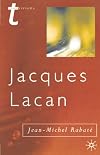
Let me start out by saying that Jean-Michel Rabaté is one of my favorite writers on the subject of Jacques Lacan. He has a commanding knowledge of Lacan's ideas - he is especially good at noting where particular concepts fit into the evolution of Lacan's thought - and he expresses that knowledge in clear and direct prose that I usually find engaging.
The particular angle of this book is to explore the relationship between Lacan and literature. The first three chapters are a testament to the show more qualities in Rabaté that I just praised: a lucid explanation of what Lacan means by "letters" and "literature," and how he sees the connection between them in his theory.
I did, however, feel a bit let down by rest of the book, which provides detailed (and often insightful) commentaries of Lacan's engagements with Poe (Ch.4), Hamlet (Ch.5), Antigone (Ch.6), Sade (Ch.7), Duras (Ch.8), and Joyce (Ch.9). It's not that Rabaté's ideas are bad, quite the contrary, it's just that these chapters felt a bit too much like they were aimed at the level of a textbook rather than a challenging and rigorous academic work. I wanted a little more meat on this particular bone.
There is always something to be learned from reading Rabaté on Lacan, and I did gain some new insights and ideas. On the whole, though, the level of ambition of this book was, for me, too low, as many of the concepts dealt with here I could get simply from reading Lacan. Rabaté's book did help to clarify a number of points, however, and overall it is worth reading. show less
The particular angle of this book is to explore the relationship between Lacan and literature. The first three chapters are a testament to the show more qualities in Rabaté that I just praised: a lucid explanation of what Lacan means by "letters" and "literature," and how he sees the connection between them in his theory.
I did, however, feel a bit let down by rest of the book, which provides detailed (and often insightful) commentaries of Lacan's engagements with Poe (Ch.4), Hamlet (Ch.5), Antigone (Ch.6), Sade (Ch.7), Duras (Ch.8), and Joyce (Ch.9). It's not that Rabaté's ideas are bad, quite the contrary, it's just that these chapters felt a bit too much like they were aimed at the level of a textbook rather than a challenging and rigorous academic work. I wanted a little more meat on this particular bone.
There is always something to be learned from reading Rabaté on Lacan, and I did gain some new insights and ideas. On the whole, though, the level of ambition of this book was, for me, too low, as many of the concepts dealt with here I could get simply from reading Lacan. Rabaté's book did help to clarify a number of points, however, and overall it is worth reading. show less
I really wanted to like this book, as I enjoy egoism and Joyce. Instead, I realized that some people with tenure think they can publish whatever, and it doesn't matter if anyone criticizes them. Rabate does well with giving a historical overview of Joyce's politics, and showing how egoism is in Joyce's texts, but fails in the muddle of his style.
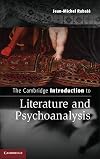
This volume is an introduction to the relationship between psychoanalysis and literature. Jean-Michel Rabaté takes Sigmund Freud as his point of departure, studying in detail Freud's integration of literature in the training of psychoanalysts and how literature provided crucial terms for his myriad theories, such as the Oedipus complex. Rabaté subsequently surveys other theoreticians such as Wilfred Bion, Marie Bonaparte, Carl Jung, Jacques Lacan, and Slavoj Žižek. This Introduction is show more organized thematically, examining in detail important terms like deferred action, fantasy, hysteria, paranoia, sublimation, the uncanny, trauma, and perversion. Using examples from Miguel de Cervantes and William Shakespeare to Sophie Calle and Yann Martel, Rabaté demonstrates that the psychoanalytic approach to literature, despite its erstwhile controversy, has recently reemerged as a dynamic method of interpretation. show less
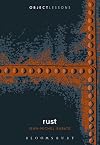
Rust by Jean-Michel Rabaté is another addition to the growing Object Lesson series from Bloomsbury Academic. Rabaté is one of the world's foremost literary theorists. He is Professor of English and Comparative Literature and the Vartan Gregorian Professor in the Humanities at the University of Pennsylvania. Rabaté has authored or edited more than thirty books on modernism, psychoanalysis, contemporary art, philosophy, and writers like Beckett, Pound, and Joyce.
For anyone that lives in the show more former industrial north, rust is simply a fact of life. Car bodies rust through with the help of winter salting. Rust stains concrete and leaves it mark on steel structures. Rust is the oxidation of iron in specific but Rabaté takes it to a deeper level. The Eiffel Tower gets painted regularly to prevent rust. Rabaté sees more rust in America than in Europe and Japan, equally industrialized areas. Others go through the trouble to hide rust that Americans do not. Rust even caused the collapse of Mianus River Bridge in Connecticut in 1983.
Rust takes on other manifestations. It is a plant disease. Ceylon, now Sri Lanka, was once a coffee producing region until a rust killed off all the coffee trees. That change Ceylon from a coffee producing nation to a tea growing nation. I benefit I personally enjoy. Being a primarily a literature professor, and a professor of modernist literature he includes a book by J.M. Coetzee the Life and Times of Michael K. Here is where modernism describes rust and rustication. A very interesting and appreciated twist. He even includes a review of a Japanese Movie entitled Rust. Hegel and Kafka are even brought into the lesson.
This is perhaps the most free-ranging lesson in the series. It takes a bit of modernism and stream of consciousness to give the broad range explanation of the subject. It is not a straightforward chemical process but covers how deeply the word has entered of vocabulary and mindset. Rust is a disease. It is a color. Its color describes other objects. It is in the Bible and the Koran. Rabaté gives a comprehensive and cultural look at the idea of rust more than the chemical reactions. show less
For anyone that lives in the show more former industrial north, rust is simply a fact of life. Car bodies rust through with the help of winter salting. Rust stains concrete and leaves it mark on steel structures. Rust is the oxidation of iron in specific but Rabaté takes it to a deeper level. The Eiffel Tower gets painted regularly to prevent rust. Rabaté sees more rust in America than in Europe and Japan, equally industrialized areas. Others go through the trouble to hide rust that Americans do not. Rust even caused the collapse of Mianus River Bridge in Connecticut in 1983.
Rust takes on other manifestations. It is a plant disease. Ceylon, now Sri Lanka, was once a coffee producing region until a rust killed off all the coffee trees. That change Ceylon from a coffee producing nation to a tea growing nation. I benefit I personally enjoy. Being a primarily a literature professor, and a professor of modernist literature he includes a book by J.M. Coetzee the Life and Times of Michael K. Here is where modernism describes rust and rustication. A very interesting and appreciated twist. He even includes a review of a Japanese Movie entitled Rust. Hegel and Kafka are even brought into the lesson.
This is perhaps the most free-ranging lesson in the series. It takes a bit of modernism and stream of consciousness to give the broad range explanation of the subject. It is not a straightforward chemical process but covers how deeply the word has entered of vocabulary and mindset. Rust is a disease. It is a color. Its color describes other objects. It is in the Bible and the Koran. Rabaté gives a comprehensive and cultural look at the idea of rust more than the chemical reactions. show less
You May Also Like


Associated Authors
Statistics
- Works
- 41
- Also by
- 1
- Members
- 347
- Popularity
- #68,852
- Rating
- 3.8
- Reviews
- 4
- ISBNs
- 107
- Languages
- 1