
Michael Parenti (1933–2026)
Author of Blackshirts and Reds: Rational Fascism and the Overthrow of Communism
About the Author
Michael Parenti (Ph.D., Yale University) is an internationally known, award-winning author, scholar, and lecturer who addresses a wide variety of political and cultural subjects. Among his recent books are God and His Demons (2010), Contrary Notions: The Michael Parenti Reader (2007), The Culture show more Struggle (2006), The Assassination of Julius Caesar (2003), and Democracy for the Few, 9th edition (2010). show less
Image credit: By Willa Madden - michaelparenti.org, CC BY-SA 3.0, https://commons.wikimedia.org/w/index.php?curid=4276634
Works by Michael Parenti
CovertAction Quarterly 4 copies
Quotations from Michael Parenti 3 copies
Terrorismo La Gran Excusa: lo que los Estados Unidos no quieren saber de ellos mismos (2002) 2 copies
Fascism in a Pinstriped Suit 1 copy
Video. Liberty Bound: Is the United States Bound for Liberty, or Does it Just have Liberty Bound? 1 copy, 1 review
Ruler of the Planet 1 copy
Conscientious Objections 1 copy
Associated Works
You Are Being Lied To: The Disinformation Guide to Media Distortion, Historical Whitewashes, and Cultural Myths (2001) — Contributor, some editions — 739 copies, 4 reviews
Propaganda, Inc. : selling America's culture to the world (2002) — Introduction — 87 copies, 1 review
Tagged
Common Knowledge
- Canonical name
- Parenti, Michael
- Birthdate
- 1933-09-30
- Date of death
- 2026-01-24
- Gender
- male
- Education
- City College of New York (BA|Political Science)
Brown University (MA|Political Science)
Yale University (PhD|Political Science) - Occupations
- political scientist
public intellectual - Relationships
- Parenti, Christian (son)
- Nationality
- USA
- Places of residence
- New York, New York, USA
New Haven, Connecticut, USA
Providence, Rhode Island, USA - Associated Place (for map)
- USA
Members
Reviews

“To Kill a Nation: The Attack on Yugoslavia” by Michael Parenti is the best book on the Balkan wars I have ever read. Parenti is my two favourite authors (the other being Victor Perlo), and this is probably my favourite book by him. Anyone interested in the Balkans and NATO’s aggressive expansion since the overthrow of the USSR needs to read this book.
Although marketed to Western audiences as a humanitarian intervention against Serbian atrocities, the US and NATO had been interfering show more in Yugoslavia’s internal affairs long before any Serbian atrocities. In 1984, the Reagan administration in the US issued National Security Decision Directive 133, which called for the support of “quiet revolutions” in communist Eastern Europe. This involved supporting reactionary secessionist leaders and their movements in Yugoslavia. The US threatened to cut off all aid to Yugoslavia unless elections were held, but only within the various republics and not at the federal level, inflaming inter-ethnic tensions. The US National Endowment for Democracy and other CIA fronts supported the electoral campaigns of pro-West, anti-Serb, and anti-socialist leaders in the national republics. At the same time, countries such as Germany and Austria sent arms shipments and military advisors to secessionist leaders in Croatia and Slovenia. German military instructors even engaged in combat with Yugoslav troops. By 1991, a European conference on Yugoslavia declared its support for “sovereign and independent republics” within Yugoslavia, effectively repudiating Yugoslavia’s sovereignty.
Alongside US-NATO support for right-wing secessionist leaders was the IMF-imposed fiscal dismemberment of Yugoslavia. In the 1960s and 1970s, Yugoslav leaders had made a catastrophic error in borrowing money from the West, and by 1991 Yugoslavia’s international creditors were in complete control of domestic monetary policy. Under the IMF-imposed structural adjustment and capitalist shock therapy, transfer payments from the federal government to the national republics were cut, leaving the republics to fend for themselves. As Chossudovsky wrote:
By cutting the financial arteries between Belgrade and the republics, the reforms fueled secessionist tendencies that fed on economic factors as well as ethnic divisions, virtually ensuring the de facto secession of the republics. The IMF-induced budgetary crisis created an economic fait accompli that paved the way for Croatia’s and Slovenia’s formal secession in June 1991.
Between 1991-1992 Croatia, Slovenia, Macedonia, and Bosnia declared independence from Yugoslavia, and the US and its NATO allies hastened to recognize the right to self-determination of these republics. The secession and subsequent US-NATO recognition of these republics led to a bloody cycle of violence that ravaged the Balkans. Under the Yugoslav constitution, the will of a republican majority could not override the equally valid will of a constituent national minority within that republic. The large Serb population inhabiting Croatia and Bosnia had a constitutionally protected right to self-determination and overwhelmingly wished to remain within the Yugoslav federation. US and NATO recognition of Croatian and Bosnian self-determination was, therefore, an implicit rejection of the right to self-determination of the large Serb population inhabiting these republics.
Moreover, the secessionist leaders supported by US and NATO were violently opposed to sharing power with constituent national minorities. Although Slobodan Milošević has frequently been compared to Hitler, it is more appropriate to compare Hitler with the secessionist republican leaders supported by the US and NATO. In Croatia, the US and NATO’s ally was President Franjo Tudjman. In 1989, Tudjman wrote how “the establishment of Hitler’s new European order can be justified by the need to be rid of the Jews” and how “Genocide is a natural phenomenon in harmony with the sociological and mythological divine nature.” As independent Croatia’s first president, he appointed Nazi collaborators to government posts, adopted the currency and emblem of Nazi-controlled Croatia, and boasted to his generals that the Serbian question had been resolved after the war. With NATO-supplied weapons and aerial support, the Croatian military under Tudjman ethnically cleansed the republic’s Serb population, “replete with rapes, summary executions, and indiscriminate shelling, driving over half a million Serbs from their ancestral homes in Croatia,” Parenti writes. In Bosnia, the US and NATO’s ally was President Alija Izetbegovic. During WWII, Izetbegovic was a member of the pro-Nazi Young Muslims, which recruited Muslims to serve in the Nazi SS. Izetbegovic intended to transform Bosnia into a fundamentalist Islamic state, claiming “Islamic society without an Islamic government is incomplete and impotent.” Months before the outbreak of the war, his fundamentalist militia waged a civil war against more moderate Bosnian forces and, according to a White House estimate, ethnically cleansed 100,000 Serbs before the war.
Serbs in Croatia and Bosnia naturally armed and organized themselves in defense against ethnic cleansing and massacres by Croat and Bosnian militias. These Serbs were supported by the Yugoslav People’s Army, which took active measures to ensure the sovereignty and territorial integrity of Yugoslavia against US-NATO-supported aggression. This is not to deny that the Serbs and Yugoslav troops committed horrible atrocities, but I haven’t seen evidence that what atrocities were committed could be classified as “genocide”. The US and NATO and their fascist proxies are responsible for the conflict. Once war starts, it develops a momentum of its own. Moreover, US-NATO countries or their allies have committed comparable and even worse atrocities without there ever being a genocide tribunal, such as in the Philippines, Indonesia, Colombia, Sri Lanka, or the British in Northern Ireland or the Russians in Chechnya. In Canada, Pierre Trudeau invoked the War Measures Act and suspended civil liberties because the FLQ kidnapped two people, killing one. How would Trudeau have responded if Quebec armed itself with foreign weapons and ethnically cleansed its non-French population?
US-NATO humanitarianism revealed its true self after the 1995 Dayton Accords. Bosnia became a virtual colony of the US and NATO. Under US-NATO control, Parenti writes,
Bosnia-Herzegovina became a Western colonial protectorate. Western officials imposed most of the fiscal and monetary policies. Western intelligence agents operated at will throughout the society. The media and the schools were cleansed of any dissident viewpoints. If any groups were to organize and agitate for an end to debt payments, or a return to socialism, or complete independence from Western occupation, SFOR, the NATO-stabilization forces in Bosnia, was ready to deal with them.
That “the Western powers put aside indirect forms of neo-imperialism and opted for direct colonialism” in Bosnia is most clearly evident in the Serb-inhabited Republika Srpska. US-NATO forces denied the Bosnian Serbs the right to freedom of speech, freedom of assembly, independent media, free elections, and every other fundamental human right. In response to crowds angrily protesting against media censorship, NATO Secretary General Javier Solana went so far as to announce that NATO “will not hesitate to take the necessary measures, including the use of force, against media networks or programs” critical of NATO. “For all intents and purposes,” writes Parenti, “Republika Srpska became a NATO colony. Its citizens were free to pursue only those policies pleasing to their imperialist overlords, free to listen only to media programs and elect only candidates approved by NATO. By definition, the free-market reforms and NATO domination were equated with democracy. And by definition, any resistance to such rule, even by duly selected RS representatives, was deemed hard-line, anti-reformist, and anti-democratic.”
In other words, the US and NATO supported fascists with arms and weapons who ethnically cleansed Serbs from their republics. When Yugoslav forces retaliated, the US and NATO battered Yugoslavia and imposed a colonial regime on Bosnia that was more oppressive than under Milosevic. This might seem irrational, but empire is not irrational. The Bosnian War enabled the US and NATO to achieve their ultimate objective: the Third Worldization of Bosnia. Bosnia’s “state-owned assets, including energy, water, telecommunications, media and transportation, were sold off to private firms at garage-sale prices. Essential health services fell into a state of neglect, and the economy as a whole remained in a sorry condition.” US-NATO forces forced Bosnians “to reconstruct the shattered economy along free-market economy lines, including significant privatization and close cooperation with the World Bank.”
But this wasn’t enough for US-NATO leaders. What was left of Yugoslavia, i.e., Serbia and Montenegro, still refused to be Third Worldized. For Western free-marketeers, an unacceptable state of affairs continued in Serbia: 75% of Serbia’s industry remained publicly owned as late as 1999. These publicly-owned industries needed to either be privatized or destroyed. As Parenti writes, “a massive aerial destruction like the one delivered upon Iraq might be just the thing needed to put Belgrade more in step with the New World Order.”
The US-NATO needed a new pretext to bomb Serbia — this was Kosovo. Parenti makes a convincing case that Kosovo was far from requiring a humanitarian intervention:
As an autonomous province of the Serb republic, Kosovo enjoyed far more extensive rights and powers within the FRY than were allowed national minorities in any Western European state or the United States. Kosovo was allowed to have its own supreme court and its own Albanian flag. University education was in Albanian, with Albanian textbooks and teachers. There were also Albanian newspapers, magazines, television, radio, movies, and sporting and cultural events. All education below the university level was exclusively in Albanian, a language radically different from Serbo-Croat. With only 8 per cent of Yugoslavia’s population, Kosovo was allocated up to 30 per cent of the federal development budget, including 24 per cent of World Bank development credits.
The terrorist activities of the Kosovo Liberation Army (KLA) deliberately undermined Kosovar-Serb relations. The KLA attacked police stations, Serbian villagers and farmers, government officials, and professionals, all to provoke conflict between Albanians and Serbs. Even moderate Albanians were terrorized and murdered if they didn’t support the KLA. These attacks continued for more than a year before triggering a concerted response from Yugoslav authorities. As even a UN court ruled, Serbian troops did not carry out genocide against ethnic Albanians during Milosevic’s campaign of aggression in Kosovo from 1998 to 1999.
Just like in Bosnia, the objective of US-NATO bombing was not human rights, democracy, or humanitarianism, but the Third Worldization of Serbia. Besides supporting an organization that the US itself considered a terrorist organization only a few months before, the US and NATO’s agenda to Third Worldize Serbia was most clearly evident in its choice of targets. In what Parenti describes as “privatization by bombing,” NATO humanitarian bombing targeted Serbia’s economic and cultural capital:
NATO’s attacks revealed a consistent pattern that bespoke its underlying political agenda. The Confederation of Trade Unions of Serbia produced a list of 164 factories destroyed by the bombings — all of them state-owned. Not a single foreign-owned firm was targeted. As I observed on a trip to Yugoslavia shortly after the war, the huge, state-run Hotel Yugoslavia was made uninhabitable by NATO missiles, while the corporate owned Hyatt Hotel, with its all-glass facade — as inviting a target as any mad bomber might want — suffered not a scratched window-pane. Buildings that displayed highly visible rooftop signs that advertised Panasonic, Coca-Cola, Diners International, and McDonald’s, the latter replete with immense golden arches, survived perfectly intact.
The NATO bombing targeted only publicly-owned schools, libraries, telecommunications, energy and transportation infrastructure, factories, theaters, hospitals, and clinics, as well as historical sites, cultural monuments, museums, and churches — “something not even Hitler did.”
Considering the current conflict in Ukraine and NATO’s involvement in it, this book is a powerful indictment of NATO, the world’s largest terrorist organization. Everyone should read this book. show less
Although marketed to Western audiences as a humanitarian intervention against Serbian atrocities, the US and NATO had been interfering show more in Yugoslavia’s internal affairs long before any Serbian atrocities. In 1984, the Reagan administration in the US issued National Security Decision Directive 133, which called for the support of “quiet revolutions” in communist Eastern Europe. This involved supporting reactionary secessionist leaders and their movements in Yugoslavia. The US threatened to cut off all aid to Yugoslavia unless elections were held, but only within the various republics and not at the federal level, inflaming inter-ethnic tensions. The US National Endowment for Democracy and other CIA fronts supported the electoral campaigns of pro-West, anti-Serb, and anti-socialist leaders in the national republics. At the same time, countries such as Germany and Austria sent arms shipments and military advisors to secessionist leaders in Croatia and Slovenia. German military instructors even engaged in combat with Yugoslav troops. By 1991, a European conference on Yugoslavia declared its support for “sovereign and independent republics” within Yugoslavia, effectively repudiating Yugoslavia’s sovereignty.
Alongside US-NATO support for right-wing secessionist leaders was the IMF-imposed fiscal dismemberment of Yugoslavia. In the 1960s and 1970s, Yugoslav leaders had made a catastrophic error in borrowing money from the West, and by 1991 Yugoslavia’s international creditors were in complete control of domestic monetary policy. Under the IMF-imposed structural adjustment and capitalist shock therapy, transfer payments from the federal government to the national republics were cut, leaving the republics to fend for themselves. As Chossudovsky wrote:
By cutting the financial arteries between Belgrade and the republics, the reforms fueled secessionist tendencies that fed on economic factors as well as ethnic divisions, virtually ensuring the de facto secession of the republics. The IMF-induced budgetary crisis created an economic fait accompli that paved the way for Croatia’s and Slovenia’s formal secession in June 1991.
Between 1991-1992 Croatia, Slovenia, Macedonia, and Bosnia declared independence from Yugoslavia, and the US and its NATO allies hastened to recognize the right to self-determination of these republics. The secession and subsequent US-NATO recognition of these republics led to a bloody cycle of violence that ravaged the Balkans. Under the Yugoslav constitution, the will of a republican majority could not override the equally valid will of a constituent national minority within that republic. The large Serb population inhabiting Croatia and Bosnia had a constitutionally protected right to self-determination and overwhelmingly wished to remain within the Yugoslav federation. US and NATO recognition of Croatian and Bosnian self-determination was, therefore, an implicit rejection of the right to self-determination of the large Serb population inhabiting these republics.
Moreover, the secessionist leaders supported by US and NATO were violently opposed to sharing power with constituent national minorities. Although Slobodan Milošević has frequently been compared to Hitler, it is more appropriate to compare Hitler with the secessionist republican leaders supported by the US and NATO. In Croatia, the US and NATO’s ally was President Franjo Tudjman. In 1989, Tudjman wrote how “the establishment of Hitler’s new European order can be justified by the need to be rid of the Jews” and how “Genocide is a natural phenomenon in harmony with the sociological and mythological divine nature.” As independent Croatia’s first president, he appointed Nazi collaborators to government posts, adopted the currency and emblem of Nazi-controlled Croatia, and boasted to his generals that the Serbian question had been resolved after the war. With NATO-supplied weapons and aerial support, the Croatian military under Tudjman ethnically cleansed the republic’s Serb population, “replete with rapes, summary executions, and indiscriminate shelling, driving over half a million Serbs from their ancestral homes in Croatia,” Parenti writes. In Bosnia, the US and NATO’s ally was President Alija Izetbegovic. During WWII, Izetbegovic was a member of the pro-Nazi Young Muslims, which recruited Muslims to serve in the Nazi SS. Izetbegovic intended to transform Bosnia into a fundamentalist Islamic state, claiming “Islamic society without an Islamic government is incomplete and impotent.” Months before the outbreak of the war, his fundamentalist militia waged a civil war against more moderate Bosnian forces and, according to a White House estimate, ethnically cleansed 100,000 Serbs before the war.
Serbs in Croatia and Bosnia naturally armed and organized themselves in defense against ethnic cleansing and massacres by Croat and Bosnian militias. These Serbs were supported by the Yugoslav People’s Army, which took active measures to ensure the sovereignty and territorial integrity of Yugoslavia against US-NATO-supported aggression. This is not to deny that the Serbs and Yugoslav troops committed horrible atrocities, but I haven’t seen evidence that what atrocities were committed could be classified as “genocide”. The US and NATO and their fascist proxies are responsible for the conflict. Once war starts, it develops a momentum of its own. Moreover, US-NATO countries or their allies have committed comparable and even worse atrocities without there ever being a genocide tribunal, such as in the Philippines, Indonesia, Colombia, Sri Lanka, or the British in Northern Ireland or the Russians in Chechnya. In Canada, Pierre Trudeau invoked the War Measures Act and suspended civil liberties because the FLQ kidnapped two people, killing one. How would Trudeau have responded if Quebec armed itself with foreign weapons and ethnically cleansed its non-French population?
US-NATO humanitarianism revealed its true self after the 1995 Dayton Accords. Bosnia became a virtual colony of the US and NATO. Under US-NATO control, Parenti writes,
Bosnia-Herzegovina became a Western colonial protectorate. Western officials imposed most of the fiscal and monetary policies. Western intelligence agents operated at will throughout the society. The media and the schools were cleansed of any dissident viewpoints. If any groups were to organize and agitate for an end to debt payments, or a return to socialism, or complete independence from Western occupation, SFOR, the NATO-stabilization forces in Bosnia, was ready to deal with them.
That “the Western powers put aside indirect forms of neo-imperialism and opted for direct colonialism” in Bosnia is most clearly evident in the Serb-inhabited Republika Srpska. US-NATO forces denied the Bosnian Serbs the right to freedom of speech, freedom of assembly, independent media, free elections, and every other fundamental human right. In response to crowds angrily protesting against media censorship, NATO Secretary General Javier Solana went so far as to announce that NATO “will not hesitate to take the necessary measures, including the use of force, against media networks or programs” critical of NATO. “For all intents and purposes,” writes Parenti, “Republika Srpska became a NATO colony. Its citizens were free to pursue only those policies pleasing to their imperialist overlords, free to listen only to media programs and elect only candidates approved by NATO. By definition, the free-market reforms and NATO domination were equated with democracy. And by definition, any resistance to such rule, even by duly selected RS representatives, was deemed hard-line, anti-reformist, and anti-democratic.”
In other words, the US and NATO supported fascists with arms and weapons who ethnically cleansed Serbs from their republics. When Yugoslav forces retaliated, the US and NATO battered Yugoslavia and imposed a colonial regime on Bosnia that was more oppressive than under Milosevic. This might seem irrational, but empire is not irrational. The Bosnian War enabled the US and NATO to achieve their ultimate objective: the Third Worldization of Bosnia. Bosnia’s “state-owned assets, including energy, water, telecommunications, media and transportation, were sold off to private firms at garage-sale prices. Essential health services fell into a state of neglect, and the economy as a whole remained in a sorry condition.” US-NATO forces forced Bosnians “to reconstruct the shattered economy along free-market economy lines, including significant privatization and close cooperation with the World Bank.”
But this wasn’t enough for US-NATO leaders. What was left of Yugoslavia, i.e., Serbia and Montenegro, still refused to be Third Worldized. For Western free-marketeers, an unacceptable state of affairs continued in Serbia: 75% of Serbia’s industry remained publicly owned as late as 1999. These publicly-owned industries needed to either be privatized or destroyed. As Parenti writes, “a massive aerial destruction like the one delivered upon Iraq might be just the thing needed to put Belgrade more in step with the New World Order.”
The US-NATO needed a new pretext to bomb Serbia — this was Kosovo. Parenti makes a convincing case that Kosovo was far from requiring a humanitarian intervention:
As an autonomous province of the Serb republic, Kosovo enjoyed far more extensive rights and powers within the FRY than were allowed national minorities in any Western European state or the United States. Kosovo was allowed to have its own supreme court and its own Albanian flag. University education was in Albanian, with Albanian textbooks and teachers. There were also Albanian newspapers, magazines, television, radio, movies, and sporting and cultural events. All education below the university level was exclusively in Albanian, a language radically different from Serbo-Croat. With only 8 per cent of Yugoslavia’s population, Kosovo was allocated up to 30 per cent of the federal development budget, including 24 per cent of World Bank development credits.
The terrorist activities of the Kosovo Liberation Army (KLA) deliberately undermined Kosovar-Serb relations. The KLA attacked police stations, Serbian villagers and farmers, government officials, and professionals, all to provoke conflict between Albanians and Serbs. Even moderate Albanians were terrorized and murdered if they didn’t support the KLA. These attacks continued for more than a year before triggering a concerted response from Yugoslav authorities. As even a UN court ruled, Serbian troops did not carry out genocide against ethnic Albanians during Milosevic’s campaign of aggression in Kosovo from 1998 to 1999.
Just like in Bosnia, the objective of US-NATO bombing was not human rights, democracy, or humanitarianism, but the Third Worldization of Serbia. Besides supporting an organization that the US itself considered a terrorist organization only a few months before, the US and NATO’s agenda to Third Worldize Serbia was most clearly evident in its choice of targets. In what Parenti describes as “privatization by bombing,” NATO humanitarian bombing targeted Serbia’s economic and cultural capital:
NATO’s attacks revealed a consistent pattern that bespoke its underlying political agenda. The Confederation of Trade Unions of Serbia produced a list of 164 factories destroyed by the bombings — all of them state-owned. Not a single foreign-owned firm was targeted. As I observed on a trip to Yugoslavia shortly after the war, the huge, state-run Hotel Yugoslavia was made uninhabitable by NATO missiles, while the corporate owned Hyatt Hotel, with its all-glass facade — as inviting a target as any mad bomber might want — suffered not a scratched window-pane. Buildings that displayed highly visible rooftop signs that advertised Panasonic, Coca-Cola, Diners International, and McDonald’s, the latter replete with immense golden arches, survived perfectly intact.
The NATO bombing targeted only publicly-owned schools, libraries, telecommunications, energy and transportation infrastructure, factories, theaters, hospitals, and clinics, as well as historical sites, cultural monuments, museums, and churches — “something not even Hitler did.”
Considering the current conflict in Ukraine and NATO’s involvement in it, this book is a powerful indictment of NATO, the world’s largest terrorist organization. Everyone should read this book. show less
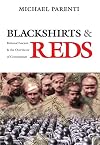
This is the rare book whose argument is so straightforward and compelling that I find myself repeating it in several conversations about current events. What if the wars against communism in the 20th and 21st century weren't wars of ideology but of market access? As the American president attempts to topple regimes in Venezuela and Iran who were resisting Western investments, the clarity is bracing.
Parenti undercuts himself by blaming Soviet and Cuban disfunctions on war and Western show more aggression. Factors, sure. But communism misses something essential about human nature, corruption and self justification. show less
Parenti undercuts himself by blaming Soviet and Cuban disfunctions on war and Western show more aggression. Factors, sure. But communism misses something essential about human nature, corruption and self justification. show less
Book like this is something I did not expect to come across. To be honest I was expecting some sanctimonious work that would preach about conflict between fascism and communism without actually pointing to major elements of both ideologies and their role and place in modern world.
Man, was I wrong. This book has to be the most comprehensive readers digest on total world breakup started some 30 years ago by using shock and awe economical strike used for sole purpose of converting the majority show more of the world into gigantic exploitation field.
Author's writings on effects of "liberalization" of East, Latin America and Africa are current even today, because recent militant liberation actions in last two decades or so point to the same goals as it was in more economical strike in 1990's.
I agree with the author that main issue humanity experiences is conflict between classes of people - you may call it castes if you want to feel less Marxists (but are you then politically correct, eh?) - rulers and ruled. Why is this so strange to grasp is beyond me. Classes always existed and always will exist. It is only mark of period if there are conflicts and unrest or peaceful coexistence (with maybe movement between classes possible for some). If anyone has any doubt just look at last two years and sudden classification of people - workers, professionals and entrepreneurs - as radical or non-essential. And note who never declared themselves as non-essentials but "voices of reason and " (man I hate this) " science and facts". Terrible. And unfortunately political orientation does not play any role - modern Western left is as bloodthirsty, single-minded and vicious as the right to both internal and international policies, there is no difference (as much as one would like it to exist). Author makes quite a few points here especially related to the so much admired left intelligentsia. And also let me not get started on human cybernetization in order to reach (for all means and purposes) godhood for few. If this does not sound like quazi-religious explanation (since technology is not there yet) for our future aristocracy, I dont know what does.
Additional point I agree with is that racial and gender issues present in "modern" world are just used as white noise - otherwise somebody would expect some hard words and actions at least in Middle East for the same issues - correct? In general problem is with have's and have-nots (which is more of a hipster way of saying class of citizenry) and (as is case throughout history) have-nots have numerical superiority. So lets stir up tension the other way because each segregated part of society will always think they are the most oppressed and they will never find common ground.
Book is rather short but very concise and to the point. If there was any doubt about anything author writes about in 1990's (when book was originally published), for anybody capable of using ones mental capacity to think and draw conclusions - there are no more doubts.
Very pleasant surprise, gotta admit.
Highly recommended. show less
Man, was I wrong. This book has to be the most comprehensive readers digest on total world breakup started some 30 years ago by using shock and awe economical strike used for sole purpose of converting the majority show more of the world into gigantic exploitation field.
Author's writings on effects of "liberalization" of East, Latin America and Africa are current even today, because recent militant liberation actions in last two decades or so point to the same goals as it was in more economical strike in 1990's.
I agree with the author that main issue humanity experiences is conflict between classes of people - you may call it castes if you want to feel less Marxists (but are you then politically correct, eh?) - rulers and ruled. Why is this so strange to grasp is beyond me. Classes always existed and always will exist. It is only mark of period if there are conflicts and unrest or peaceful coexistence (with maybe movement between classes possible for some). If anyone has any doubt just look at last two years and sudden classification of people - workers, professionals and entrepreneurs - as radical or non-essential. And note who never declared themselves as non-essentials but "voices of reason and " (man I hate this) " science and facts". Terrible. And unfortunately political orientation does not play any role - modern Western left is as bloodthirsty, single-minded and vicious as the right to both internal and international policies, there is no difference (as much as one would like it to exist). Author makes quite a few points here especially related to the so much admired left intelligentsia. And also let me not get started on human cybernetization in order to reach (for all means and purposes) godhood for few. If this does not sound like quazi-religious explanation (since technology is not there yet) for our future aristocracy, I dont know what does.
Additional point I agree with is that racial and gender issues present in "modern" world are just used as white noise - otherwise somebody would expect some hard words and actions at least in Middle East for the same issues - correct? In general problem is with have's and have-nots (which is more of a hipster way of saying class of citizenry) and (as is case throughout history) have-nots have numerical superiority. So lets stir up tension the other way because each segregated part of society will always think they are the most oppressed and they will never find common ground.
Book is rather short but very concise and to the point. If there was any doubt about anything author writes about in 1990's (when book was originally published), for anybody capable of using ones mental capacity to think and draw conclusions - there are no more doubts.
Very pleasant surprise, gotta admit.
Highly recommended. show less
I sought this book out after hearing that Parenti gives a good analysis of the situation in the former Soviet Union and its satellite states after the fall of communism. The sections that detail this period are among the best in the book, highlighting the great human cost that befell these countries as public institutions that had served people for decades were reamed out in the name of privatization. In the West, the fall of the USSR is often held up as a momentous occasion, one that people show more of all political persuasions can praise as a triumph of freedom over decrepit repression. Parenti provides a valuable counterargument to that notion, most successfully by just listing the various social services that were lost and the tremendous economic toll that it took on the vast majority of the populace. As I was reading this section, I thought of stories we’ve all heard of colonizers spreading disease among uncontacted peoples who have no immunity. The post-communist states were overrun with virulent capitalism against which they had never had to develop immunity, and as such experienced in a few years a change that the West took decades to undergo. Critics of Parenti’s view may say that the fiasco that occurred in the post-communist states was the result of corruption and malfeasance, and yet it seems clear that this type of behavior was merely made more visible by its concentration in such a short timeframe. In fact, in the history of capitalist development I would guess that this type of behavior has been more common than not, especially now that so many legal, “acceptable” channels have been carved out to funnel money and favors to those who demand them. In the same way that our capitalist development had the luxury (?) of playing out over a long time frame, our power holding elite have also learned how to put a more polite, demure mask over capitalist racketeering.
I’d have to guess that any modern reader would have their hackles raised by the Stalinist apologetics that take up the middle portion of the book. Parenti seems to feel a responsibility not only to shine a light on the commendable social programs of the USSR, but also whitewash human rights abuses by contrasting them with the millions of victims of worldwide capitalism. I can understand his motivation here. After all, if we stacked the sum total of Gulag victims versus the number of Americans that froze to death on the street or died in imperialist wars or because of addiction brought on by hopelessness, parity seems far from unimaginable. That being said, it leaves a bad taste in your mouth to read the lengths Parenti goes to to make his point, a point that he doesn’t even need to make in the first place; his other arguments are salient enough.
The truth is, throughout the book’s final section breaking down a Marxist interpretation of the modern world, it’s almost impossible to find fault with Parenti’s reasoning. Walking through my hometown of Baltimore, Maryland, you can’t help but wonder how things got so fucked up in our country (as Bernie Sanders always says, the richest country in the history of the world), and once you start reading Marx, it all becomes so clear. The thrill of reading Das Kapital for me was how clear-eyed and steely it was - no emotional harangues, no guilt-tripping that I had come to associate with leftist politics. It’s just good analysis bound up with a profound respect for human dignity and potential. Now, as we close in on 4 decades of unchallenged global capitalist hegemony, Marx’s predictions and analytical framework seem to me essential for understanding how we’ve gotten into this morasse. Parenti is at his best when he adopts this tone, not feeling the need to resort to what-abouts or litigations of the past, merely observing, reporting, and putting forth an interpretation. One of the key problems of living in a capitalist society (as a American *the* capitalist society) is that you forget things can be any other way. Unlike communist repression, which for all its perniciousness was always out in the open, capitalist societies have learned how to hide the brainwashing in the sweetest, most palatable of packages. Our society is set up to cloak the detritus generated by the system, or worse, train people to ignore or dismiss it. Reading Marx and books like this help you learn to notice the profound immortality of the system that surrounds us and affect our every thought and decision. show less
I’d have to guess that any modern reader would have their hackles raised by the Stalinist apologetics that take up the middle portion of the book. Parenti seems to feel a responsibility not only to shine a light on the commendable social programs of the USSR, but also whitewash human rights abuses by contrasting them with the millions of victims of worldwide capitalism. I can understand his motivation here. After all, if we stacked the sum total of Gulag victims versus the number of Americans that froze to death on the street or died in imperialist wars or because of addiction brought on by hopelessness, parity seems far from unimaginable. That being said, it leaves a bad taste in your mouth to read the lengths Parenti goes to to make his point, a point that he doesn’t even need to make in the first place; his other arguments are salient enough.
The truth is, throughout the book’s final section breaking down a Marxist interpretation of the modern world, it’s almost impossible to find fault with Parenti’s reasoning. Walking through my hometown of Baltimore, Maryland, you can’t help but wonder how things got so fucked up in our country (as Bernie Sanders always says, the richest country in the history of the world), and once you start reading Marx, it all becomes so clear. The thrill of reading Das Kapital for me was how clear-eyed and steely it was - no emotional harangues, no guilt-tripping that I had come to associate with leftist politics. It’s just good analysis bound up with a profound respect for human dignity and potential. Now, as we close in on 4 decades of unchallenged global capitalist hegemony, Marx’s predictions and analytical framework seem to me essential for understanding how we’ve gotten into this morasse. Parenti is at his best when he adopts this tone, not feeling the need to resort to what-abouts or litigations of the past, merely observing, reporting, and putting forth an interpretation. One of the key problems of living in a capitalist society (as a American *the* capitalist society) is that you forget things can be any other way. Unlike communist repression, which for all its perniciousness was always out in the open, capitalist societies have learned how to hide the brainwashing in the sweetest, most palatable of packages. Our society is set up to cloak the detritus generated by the system, or worse, train people to ignore or dismiss it. Reading Marx and books like this help you learn to notice the profound immortality of the system that surrounds us and affect our every thought and decision. show less
Lists
Awards

You May Also Like


Associated Authors
Statistics
- Works
- 34
- Also by
- 5
- Members
- 2,940
- Popularity
- #8,708
- Rating
- 3.8
- Reviews
- 27
- ISBNs
- 97
- Languages
- 6
- Favorited
- 17
