
Thom Gunn (1929–2004)
Author of The Man with Night Sweats
About the Author
Both literally and figuratively, Thom Gunn may have traveled the farthest of any of the original Movement poets of the 1950s in Britain. Born in Gravesend, he moved often as a child because his journalist father frequently worked for different newspapers. After two years in the British army and show more some months in Paris, he enrolled in Trinity College, Cambridge, from which he graduated in 1953. He then went to the United States for graduate study at Stanford University and an assistant professorship from 1958 to 1966 at the University of California, Berkeley. Gunn's literal journeys mirror psychological ones reflected in his poetry. Influenced by French existentialist thought, he first came to public attention as a skilled craftsman of anguished lyrics in traditional forms. Moving to California, he experimented with the drug LSD and a looser artistic structure, which he used to present often violent subjects (such as motorcycle gangs). Correspondingly, Gunn's erotic verse changed from the early heterosexual lyrics to a frank portrayal of homosexual love. Although he claims to be an atheist, Gunn often conveys a passionate, nearly mystical, identification with the world of nature. The title poem of his important volume Moly (1971) shows his understandable fascination with the theme of metamorphosis. (Bowker Author Biography) Thom Gunn, born in 1929, has received many awards, most recently a Lila Acheson Wallace/"Reader's Digest" Fellowship & a MacArthur Fellowship. His works include "The Man with Night Sweats" (FSG, 1992) & "Collected Poems" (FSG, 1994). (Bowker Author Biography) show less
Image credit: PHOTO BY ANDER GUNN
Works by Thom Gunn
A Destruição do Nada e outros poemas 5 copies
Five American Poets — Editor — 3 copies
Tatto 2 copies
“Baby Song” 1 copy
Mandrakes 1 copy
Associated Works
The Making of a Poem: A Norton Anthology of Poetic Forms (2000) — Contributor — 1,474 copies, 9 reviews
Literature: An Introduction to Fiction, Poetry, and Drama (1995) — Contributor, some editions — 1,017 copies, 7 reviews
The Norton Anthology of English Literature, 4th Edition, Volume 2 (1979) — Contributor — 271 copies, 1 review
Gay and Lesbian Poetry in Our Time (Stonewall Inn Editions) (1988) — Contributor — 191 copies, 1 review
Queer: A Collection of LGBTQ Writing from Ancient Times to Yesterday (2021) — Contributor, some editions — 66 copies
Die englische Literatur 10 in Text und Darstellung. 20. Jahrhundert 2. (2001) — Contributor — 6 copies
Poetry Magazine Vol. 86 No. 3, June 1955 — Contributor — 2 copies
Tagged
Common Knowledge
- Legal name
- Gunn, Thomson William
- Birthdate
- 1929-08-29
- Date of death
- 2004-04-25
- Gender
- male
- Education
- University of Cambridge (Trinity College)
University College School - Occupations
- poet
- Organizations
- The Movement
Stanford University
University of California, Berkeley - Awards and honors
- David Cohen Prize (2003)
Levinson Prize
Robert Kirsch Award (1988) - Relationships
- Winters, Yvor (mentor)
- Nationality
- UK
- Birthplace
- Gravesend, Kent, England, UK
- Places of residence
- Haight-Ashbury, San Francisco, California, USA
- Place of death
- San Francisco, California, USA
- Associated Place (for map)
- Gravesend, Kent, England, UK
Members
Reviews
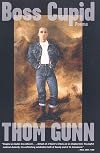
Smart and raw, these poems are about desire in all its' forms, both admirable and frightening. Gunn was one of only a few contemporary poets who are comfortable writing in form, and that versatility shows here. Unlike much contemporary form poetry, though, these poems aren't burdened by restraint--instead, they seem to celebrate life, and love. While some of the poems require some knowledge of biblical lore or classical mythology for a full appreciation of the content, many of them are far show more more accessible in nature, focusing on scene and character instead of building from other stories. Throughout the poems, however, Gunn's quick rhythms and perfectly formed descriptions are worth reading and re-reading, particularly when his poems are focused in on single short scenes and the results and questions of desire, as is so often the case in this collection. show less
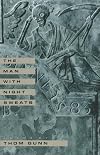
Gunn has some lovely work here--the most notable poems are those focused on love, illness, or the contradictions of body working against spirit, or vice versa. While the illness poems are focused on AIDS, they're far more universal in meaning, and the book as a whole is both challenging and accessible. Language and imagery strengthens nearly every piece, making the narrative works especially as clear as short films and more powerful than you'd expect for a single page of verse.
My main show more complaint about the book, and the reason I gave it a lower rating than might be expected from what's typed above, is that the varying tones in the book make it a jarring read. This may well be on purpose, but so many of the poems are serious and meditative, while others are playful and joking (though still making meaning), that it's sometimes hard to transition from one poem to the next.
The characters and meanings are clear, but when you're wrapped up in story of love and social struggles, and suddenly a poem shows up which seems nearly wholly separate, the journey of the book as a whole is difficult to follow. As such, I think that some of the poems here would have been better included elsewhere, or at least in a single section, to make the more powerful book. On some level, I can see them useful as breaking the relatively heavy nature of the book, but I'm just not sure the effort really came through as positively as it could have.
Thus, I recommend the poems in the book, though I admit some disappointment with the construction of the volume as a whole. Still, separately, these are powerful beautiful poems, worth reading. show less
My main show more complaint about the book, and the reason I gave it a lower rating than might be expected from what's typed above, is that the varying tones in the book make it a jarring read. This may well be on purpose, but so many of the poems are serious and meditative, while others are playful and joking (though still making meaning), that it's sometimes hard to transition from one poem to the next.
The characters and meanings are clear, but when you're wrapped up in story of love and social struggles, and suddenly a poem shows up which seems nearly wholly separate, the journey of the book as a whole is difficult to follow. As such, I think that some of the poems here would have been better included elsewhere, or at least in a single section, to make the more powerful book. On some level, I can see them useful as breaking the relatively heavy nature of the book, but I'm just not sure the effort really came through as positively as it could have.
Thus, I recommend the poems in the book, though I admit some disappointment with the construction of the volume as a whole. Still, separately, these are powerful beautiful poems, worth reading. show less

A very worthwhile book of critical essays on individuals poets ranging in time from Fulke Greville and Ben Jonson to Gary Snyder and Robert Duncan. The book is rounded out with several charming short autobiographical pieces or reminiscences. Gunn's critical procedure is to discuss some feature of a poet that he thinks makes him worth reading, and then to illustrate this with close readings of short poems or excerpts. He is particularly sensitive to how the movement of the verse affects show more communication of meaning, a sensitivity he attributes to his training under Leavis and Yvor Winters. He chooses to write about poets that he feels a strong affinity for and the love comes through. Although Gunn is perhaps best known these days as a "gay poet", the only extended treatment of gay themes here is in his essay on Robert Duncan. show less
So relevant; so sad. I was surprised to see myself so often in Thom Gunn's words. I highly recommend Boss Cupid.
Lists
Awards


You May Also Like


Associated Authors
Statistics
- Works
- 50
- Also by
- 43
- Members
- 1,463
- Popularity
- #17,561
- Rating
- 3.9
- Reviews
- 4
- ISBNs
- 79
- Languages
- 2
- Favorited
- 3
