
Richard Holloway (1) (1933–)
Author of A Little History of Religion
For other authors named Richard Holloway, see the disambiguation page.
About the Author
Image credit: British Council
Works by Richard Holloway
Associated Works
Living Tradition: Affirming Catholicism in the Anglican Church (1992) — Introduction, some editions — 52 copies, 1 review
Tagged
Common Knowledge
- Birthdate
- 1933-11-26
- Gender
- male
- Education
- Kelham Theological College
Edinburgh Theological College
Union Theological Seminary (STM|1968) - Occupations
- cleric
writer
broadcaster
Scottish Episcopal Bishop of Edinburgh
Scottish Episcopal Primus - Organizations
- Scottish Episcopal Church
Westar Institute
Jesus Seminar - Awards and honors
- Royal Society of Edinburgh (Fellow)
- Nationality
- UK
- Birthplace
- Glasgow, Scotland, UK
- Places of residence
- Possilpark, Glasgow, Scotland, UK
Alexandria, Dunbartonshire, Scotland, UK
Edinburgh, Scotland, UK - Map Location
- Scotland, UK
Members
Reviews

This was either great or awful timing, we're currently dealing with his mother as she approaches her end.
Richard Holloway, former Bishop of Edinburgh, has seen a lot of both life and death in his years as a parish priest and as a man who is now in his 9th decade. He reflects on how we live and what happens to us, and those left behind, when we die. He admits to not having the answers; while he is in the Christian tradition, he is human enough to admit to doubts and to allow for a continuum show more of belief, no polarised debate here, it is nuanced and measured. He freely admits that he is nor scared of death, but also accepts that in other people that may play a role - he uses the analogy of dealing the hand of cards we have been dealt by fate through life. It is a broad ranging set of thoughts as well. The chapters on dying explores the near death experience, that on grief looks at spiritualism and attempts to contact the dead. The attitude to the medical profession and the end of life chimes with my own - life should be for living, not just an avoidance of death. Putting off death is only of use if life itself has value - the language of battling death and illness dominates but is possibly not helpful.
I was intrigued to hear that some of my views are not so very different from his, even thought we come at life from quite different angles. All in all, I think this was the right book at the right time, some of this will do me good and I will try and take some of it to heart. show less
Richard Holloway, former Bishop of Edinburgh, has seen a lot of both life and death in his years as a parish priest and as a man who is now in his 9th decade. He reflects on how we live and what happens to us, and those left behind, when we die. He admits to not having the answers; while he is in the Christian tradition, he is human enough to admit to doubts and to allow for a continuum show more of belief, no polarised debate here, it is nuanced and measured. He freely admits that he is nor scared of death, but also accepts that in other people that may play a role - he uses the analogy of dealing the hand of cards we have been dealt by fate through life. It is a broad ranging set of thoughts as well. The chapters on dying explores the near death experience, that on grief looks at spiritualism and attempts to contact the dead. The attitude to the medical profession and the end of life chimes with my own - life should be for living, not just an avoidance of death. Putting off death is only of use if life itself has value - the language of battling death and illness dominates but is possibly not helpful.
I was intrigued to hear that some of my views are not so very different from his, even thought we come at life from quite different angles. All in all, I think this was the right book at the right time, some of this will do me good and I will try and take some of it to heart. show less
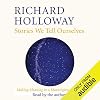
A very interesting book read by the author, who has the perfect voice for the content. The book looks at the many ways humanity has made sense of the world through the stories we tell ourselves. While other cultures and countries are touched upon the majority of the book is given over to discussing the principal story behind western Europe, that of the Bible. Mr Holloway dives eloquently into the reasons why these stories have been preserved for generations and continue to resonate up to the show more present day. This is not however a book preaching any specific religion or indeed the concept of religion at all, instead it looks to why these stories are important to remember. The author, in the last chapter, clarifies his own position describing himself as a Christian without God, following the teachings of Jesus but acting "as if God did not exist". A position I found intriguing, as I had not considered this even an option.
As I am reading the Bible in a year long cultural project I found this book very helpful to dive behind some of the main stories, the parables and sayings of Jesus, and why some have been used for good and others ill. There is so much to take in that this book is going straight to a re-read list but perhaps once I have finished the Bible reading. I particularly appreciated how Mr Holloway does not just rely on religious writers but draws in quotes from poets, philosophers, and writers to illustrate his points. Of course this perfectly highlights the enduring cultural legacy of this single book.
The main dialogue is about how as human beings we are continually searching for a sense of meaning in a universe which is vast and seemingly ever expanding. Science has on the one hand disproved absolutely a literal reading of the various creation stories, but that was never their purpose for they are about a deeper story than just how we came to be. They are a way of trying to answer the great questions of life: why am I here, what is the purpose for my existence? I appreciated that we are not provided with any definitive answer, rather the onus is on us to find a story which helps us to find meaning. That could be the purely intellectual, atheistic perspective, or perhaps we might turn to traditional stories from the cultures which surround us. I like how it is clear there is no one right answer, instead the author explains why he has decided that the story of the New Testament is the one for him, even if he can't believe in God. I suspect Mr Holloway might be an old hippie at heart, for he hints that Jesus's very revolutionary teaching is still every bit as radical now as it was two thousand years ago. Until reading this book I would have described Christianity as conventional, staid, and at least in England the epitome of the establishment, but this should not be the case. Has Mr Holloway made a case, for me at least, to reconsider Christianity as a solution to my quest for meaning? I am not sure, but it has certainly made me re-think my views on Christianity versus the Church of England, and to consider them potentially two distinct entities which may only nominally be related.
Definately worth reading for anyone interested in the history of some of the ways in which humanity has tried to find meaning. show less
As I am reading the Bible in a year long cultural project I found this book very helpful to dive behind some of the main stories, the parables and sayings of Jesus, and why some have been used for good and others ill. There is so much to take in that this book is going straight to a re-read list but perhaps once I have finished the Bible reading. I particularly appreciated how Mr Holloway does not just rely on religious writers but draws in quotes from poets, philosophers, and writers to illustrate his points. Of course this perfectly highlights the enduring cultural legacy of this single book.
The main dialogue is about how as human beings we are continually searching for a sense of meaning in a universe which is vast and seemingly ever expanding. Science has on the one hand disproved absolutely a literal reading of the various creation stories, but that was never their purpose for they are about a deeper story than just how we came to be. They are a way of trying to answer the great questions of life: why am I here, what is the purpose for my existence? I appreciated that we are not provided with any definitive answer, rather the onus is on us to find a story which helps us to find meaning. That could be the purely intellectual, atheistic perspective, or perhaps we might turn to traditional stories from the cultures which surround us. I like how it is clear there is no one right answer, instead the author explains why he has decided that the story of the New Testament is the one for him, even if he can't believe in God. I suspect Mr Holloway might be an old hippie at heart, for he hints that Jesus's very revolutionary teaching is still every bit as radical now as it was two thousand years ago. Until reading this book I would have described Christianity as conventional, staid, and at least in England the epitome of the establishment, but this should not be the case. Has Mr Holloway made a case, for me at least, to reconsider Christianity as a solution to my quest for meaning? I am not sure, but it has certainly made me re-think my views on Christianity versus the Church of England, and to consider them potentially two distinct entities which may only nominally be related.
Definately worth reading for anyone interested in the history of some of the ways in which humanity has tried to find meaning. show less
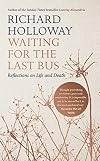
Until two years ago, no one close to me had died; not since I’d been old enough to understand it. But 2016 came with chill winds and ruthlessness, and the last two years have seen the loss of five close family members. It hasn’t been easy. But it has had one useful outcome. I used to be afraid of death. It was a terrifying transmutation that I didn’t understand and didn’t want to acknowledge. But necessity has changed that and now, in the light of my family’s losses, I’ve had to show more accept it as an unavoidable part of human life. This all explains why I was drawn to this book, in which Richard Holloway – former Bishop of Edinburgh; thinker; compassionate critic; agnostic – uses his own old age as a spur to think about how we can live well and, when it comes to it, die well. Open-hearted and generous, studded with poetry and his memories of friends, it’s rather beautiful: inspiring and, oddly enough, rather upbeat...
For the full review, please see my blog:
https://theidlewoman.net/2018/04/10/waiting-for-the-last-bus-richard-holloway/ show less
For the full review, please see my blog:
https://theidlewoman.net/2018/04/10/waiting-for-the-last-bus-richard-holloway/ show less
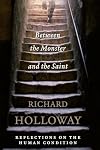
A few years ago, good friends of mine asked me to be the godfather to their eldest son. Being of no fixed religious abode, after much thought I declined: I don't believe in God, and it seemed somehow dishonest to swear to uphold his values. Ever since, while not resiling from my atheist beliefs at all, I have regretted letting dear friends down in this way, without ever having been able to rationalise why: my reasoning felt earnest, logical and therefore, I thought, impeccable. Nonetheless, show more deep down I couldn't shake the feeling it was absolutely wrong.
It was, and this wonderful little book by Richard Holloway has helped me understand why.
Holloway is, or was, formerly Bishop of Edinburgh in the Scottish Episcopal Church. More significantly, for the purposes of persuading your sceptical old goat of a correspondent, he's a learned, widely read and elegant writer who firmly sets his stall in the pragmatic, liberal tradition. Holloway appeals from the same quarter as the late Richard Rorty, and his underlying message resonates with Rorty's vision, eludicated in Contingency, Irony, and Solidarity of a diverse community characterised by its members' freedom to invoke whatever stories they feel suitable to provide meaning to their lives but bound by common assent that, such freedoms notwithstanding, as Judith Shklar put it, "cruelty is the worst thing we do".
Holloway's disposition is to frame his moral worldview in terms of lessons that can be learned from literature, philosophy and myth (science, generally, not being much help for forming moral worldviews) and, as pragmatists tend not to be, he's not bothered that complete and coherent reconciliation of all the works of literature he might cite is not possible (Holloway's range of references is as broad as it is eclectic, covering (among many others) Homer, Plato, the Bible, Descartes, Shakespeare, Shelley, Nietzsche, Marx, Freud, Dostoevsky, Tennessee Williams, Auden, Larkin, Rorty, Andrea Dworkin, Ridley Scott and Mike Newell - just try knitting that into a self-contained, consistent, coherent whole), provided that the parts he extracts, woven into the fabric of Holloway's philosophy, tell a meaningful story.
That is to say, provided our literature (however one might describe it) is deployed usefully in an instructive and metaphorical way, it doesn't matter that other aspects might suffer from internal logical inconsistencies or be at risk of factual falsification. To bother about such things is, to richard holloway, entirely to miss the point. And, while he (rightly) isn't mentioned even by name, anti-Christian aggravator-in-chief Richard Dawkins must surely be who Holloway has in mind when he alludes to the "particularly ugly debate" going on about this at the moment.
Instead, Holloway writes lyrically, elegantly, and forcefully about how we should be thinking about organising our lives, and his view is (quietly but convincingly) that pseudo-rationalists who seek societal Nirvana through squashing religions and other deemed irrationalities (Francis Wheen]] is, I suppose, another good example) are missing the point and poisoning the well from which, pragmatically, we all (religious or not) need to draw the water to irrigate our collective relations.
It is in the nature of his endeavour that it's a somewhat meandering walk, rather like the sort of woodland walk on which you can imagine Holloway embarking, but it's also a short and sweetly written one, hearty and refreshing, and for me at least it has had the restorative effect of a bracing excursion in a beautiful environment with a learned and thoughtful elder of the tribe.
I've made my apologies to my friends about the Christening, but I missed that boat. My loss. I won't do it again. show less
It was, and this wonderful little book by Richard Holloway has helped me understand why.
Holloway is, or was, formerly Bishop of Edinburgh in the Scottish Episcopal Church. More significantly, for the purposes of persuading your sceptical old goat of a correspondent, he's a learned, widely read and elegant writer who firmly sets his stall in the pragmatic, liberal tradition. Holloway appeals from the same quarter as the late Richard Rorty, and his underlying message resonates with Rorty's vision, eludicated in Contingency, Irony, and Solidarity of a diverse community characterised by its members' freedom to invoke whatever stories they feel suitable to provide meaning to their lives but bound by common assent that, such freedoms notwithstanding, as Judith Shklar put it, "cruelty is the worst thing we do".
Holloway's disposition is to frame his moral worldview in terms of lessons that can be learned from literature, philosophy and myth (science, generally, not being much help for forming moral worldviews) and, as pragmatists tend not to be, he's not bothered that complete and coherent reconciliation of all the works of literature he might cite is not possible (Holloway's range of references is as broad as it is eclectic, covering (among many others) Homer, Plato, the Bible, Descartes, Shakespeare, Shelley, Nietzsche, Marx, Freud, Dostoevsky, Tennessee Williams, Auden, Larkin, Rorty, Andrea Dworkin, Ridley Scott and Mike Newell - just try knitting that into a self-contained, consistent, coherent whole), provided that the parts he extracts, woven into the fabric of Holloway's philosophy, tell a meaningful story.
That is to say, provided our literature (however one might describe it) is deployed usefully in an instructive and metaphorical way, it doesn't matter that other aspects might suffer from internal logical inconsistencies or be at risk of factual falsification. To bother about such things is, to richard holloway, entirely to miss the point. And, while he (rightly) isn't mentioned even by name, anti-Christian aggravator-in-chief Richard Dawkins must surely be who Holloway has in mind when he alludes to the "particularly ugly debate" going on about this at the moment.
Instead, Holloway writes lyrically, elegantly, and forcefully about how we should be thinking about organising our lives, and his view is (quietly but convincingly) that pseudo-rationalists who seek societal Nirvana through squashing religions and other deemed irrationalities (Francis Wheen]] is, I suppose, another good example) are missing the point and poisoning the well from which, pragmatically, we all (religious or not) need to draw the water to irrigate our collective relations.
It is in the nature of his endeavour that it's a somewhat meandering walk, rather like the sort of woodland walk on which you can imagine Holloway embarking, but it's also a short and sweetly written one, hearty and refreshing, and for me at least it has had the restorative effect of a bracing excursion in a beautiful environment with a learned and thoughtful elder of the tribe.
I've made my apologies to my friends about the Christening, but I missed that boat. My loss. I won't do it again. show less
Lists
Awards


You May Also Like


Associated Authors
Statistics
- Works
- 44
- Also by
- 3
- Members
- 2,053
- Popularity
- #12,519
- Rating
- 3.7
- Reviews
- 31
- ISBNs
- 146
- Languages
- 11
- Favorited
- 2