
J. D. Salinger (1919–2010)
Author of The Catcher in the Rye
About the Author
J. D. Salinger was born in New York City on January 1, 1919. He attended Manhattan public schools, Valley Forge Military Academy in Pennsylvania, and three colleges, but received no degrees. He was from an upper class Jewish family and they lived on the upper west side of Manhattan on Park Avenue. show more Salinger joined the U. S. Army in 1942 and fought in the D-Day invasion at Normandy as well as the Battle of the Bulge, but suffered a nervous breakdown due to all he had seen and experienced in the war and checked himself into an Army hospital in Germany in 1945. In December 1945, his short story I'm Crazy was published in Collier's. In 1947, his short story A Perfect Day for Bananafish was published in The New Yorker. Throughout his lifetime, he wrote more than 30 short stories and a handful of novellas, which were published in magazines and later collected in works such as Nine Stories, Franny and Zooey, and Raise High the Roof Beam, Carpenters and Seymour: An Introduction. The Catcher in the Rye, published in 1951, was his only novel. His last published story, Hapworth 16, 1924, appeared in 1965. He spent the remainder of his years in seclusion and silence in a home in Cornish, New Hampshire. He died of natural causes on January 27, 2010 at the age of 91. Salinger always wanted to write the great American novel; when he succeeded in this with Catcher in the Rye, he was unprepared for the onslaught on privacy issues that this popularity brought on. He never wanted to be in the spotlight and retreated from all contacts he had in New York City. (Bowker Author Biography) show less
Image credit: Salinger in 1989
Series
Works by J. D. Salinger
Raise High the Roof Beam, Carpenters and Seymour: An Introduction (1955) — Author — 6,660 copies, 64 reviews
The Catcher in the Rye / Nine Stories / Franny and Zooey / Raise High the Roof Beam, Carpenters / Seymour–An Introduction (2010) 49 copies, 1 review
J. D. Salinger: The Last Interview: And Other Conversations (The Last Interview Series) (2016) 37 copies
The Catcher in the Rye / Franny and Zooey / Nine Stories / Raise High the Roof Beam, Carpenters (1973) 31 copies
I'm Crazy 7 copies
This Sandwich Has No Mayonnaise 6 copies
The Varioni Brothers 5 copies
Soft-Boiled Sergeant 5 copies
Last Day of the Last Furlough 5 copies
The Hang of It 5 copies
Slight Rebellion off Madison 5 copies
Elaine 4 copies
The Long Debut of Lois Taggett 4 copies
The Stranger 4 copies
Once a Week Won't Kill You 3 copies
Blue Melody 3 copies
Birthday Boy 2 copies
The Inverted Forest 2 copies
Personal Notes on an Infantryman 2 copies
1966 1 copy
אני, ניו-יורק וכל השאר 1 copy
Shazaam! 1 copy
[No title] 1 copy
Associated Works
The Graphic Canon, Vol. 3: From Heart of Darkness to Hemingway to Infinite Jest (2013) — Contributor — 162 copies, 1 review
Tagged
Common Knowledge
- Canonical name
- Salinger, J.D.
- Legal name
- Salinger, Jerome David
- Birthdate
- 1919-01-01
- Date of death
- 2010-01-27
- Gender
- male
- Education
- McBurney School
Valley Forge Military Academy
New York University
Ursinus College
Columbia University - Occupations
- novelist
short story writer
counterintelligence officer (WWII)
soldier (WWII) - Organizations
- US Army (U.S. 12th Infantry Regiment ∙ WWII)
Counter Intelligence Corps (CIC)
The New Yorker
Ramakrishna-Vivekananda Center of New York - Awards and honors
- Five Battle Stars
Presidential Unit Citation for Valor - Relationships
- Salinger, Margaret (daughter)
Douglas, Claire (1) (wife|divorced)
Maynard, Joyce (domestic partner)
Hemingway, Ernest (friend)
Maxwell, William (friend)
Ross, Lillian (friend) (show all 12)
Shawn, William (friend)
Burnett, Whit (teacher)
Hand, Learned (friend)
Hadley, Leila (friend)
Hotchner, A. E. (friend)
Salinger, Matt (son) - Short biography
- Jerome David Salinger was an American writer best known for his novel The Catcher in the Rye. Salinger published several short stories in Story magazine in the early 1940s before serving in World War II. In 1948, his critically acclaimed story "A Perfect Day for Bananafish" appeared in The New Yorker, which became home to much of his later work. The Catcher in the Rye was published in 1951 and became an immediate popular success. Salinger's depiction of adolescent alienation and loss of innocence in the protagonist Holden Caulfield was influential, especially among adolescent readers. The novel was widely read and controversial.
- Nationality
- USA
- Birthplace
- New York, New York, USA
- Places of residence
- Vienna, Austria
Windsor, Vermont, USA - Place of death
- Cornish, New Hampshire, USA
- Map Location
- USA
Members
Discussions
The Catcher In The Rye (general discussion) in J.D. Salinger: Author In The Rye (December 2025)
Nine Stories (general discussion) in J.D. Salinger: Author In The Rye (May 2025)
Catcher in the Rye in Someone explain it to me... (August 2021)
Looking ahead to Salinger in Author Theme Reads (December 2013)
Salinger: For Esmé with Love and Squalor or Nine Stories in Author Theme Reads (December 2013)
Salinger: Catcher in the Rye in Author Theme Reads (December 2013)
J.D. Salinger Died Today in 1001 Books to read before you die (January 2010)
Reviews
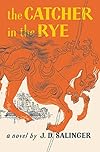
I first read this as an assignment for English sophomore lit. I was fifteen and hated it. I blamed my teacher for assigning it, and sniped at him the whole time we were working on it. We had an unusual relationship, so sniping at him was not weird or entitled, was my reasoning at the time. Now--I don't necessarily regret sniping. The book maintains its original poor rating and poor opinion. As an adult, I understand this book to be about a whiny, insufferable, boring, aggravating entitled show more teenager who hates women since they won't sleep with him. And a prostitute doesn't interest him. And he has a weird relationship to his kid sister. By page forty, I desperately wanted to stop reading. I took a break for a bit. It was--I just--why was this book written? Why is it considered a classic? It's about an incel, and actual literary critics have compared him to a sociopath. My sour opinion of this book extends such that when I meet someone who likes this book, I am actually suspicious of them until I get more comfortable. Save time and don't read this. show less
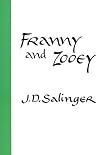
so I actually had the experience with this book that most people seem to have with the catcher in the rye. when I first read it, I thought franny was so cool and correct for disparaging college and her boring boyfriend lane and his cookie-cutter english essay. I revisited it a few years later and discovered that I'd been completely wrong. which doesn't mean that franny was wrong, but that it shouldn't matter whether people are conformist and superficial. believing that you see through all show more this superficiality and phoniness is just as, if not more, self-centred and egotistical.
and it's not that we're as bad as everybody else, it's that we're as good as everybody else. 'there isn’t anybody out there who isn’t seymour’s fat lady... and don’t you know... don’t you know who that fat lady really is?… it’s Christ himself. Christ himself, buddy.' we ought to lead lives of love and optimism and empathy, not judgement and narcissism. and this is what franny is searching for in the jesus prayer, but I think the collection of quotations in seymour and buddy's room show that these values aren't necessarily christian, or even necessarily religious, but central to what all human nature is searching for.
anyway, the bathtub scene is hilarious, and one day I will finally read the upanishads show less
and it's not that we're as bad as everybody else, it's that we're as good as everybody else. 'there isn’t anybody out there who isn’t seymour’s fat lady... and don’t you know... don’t you know who that fat lady really is?… it’s Christ himself. Christ himself, buddy.' we ought to lead lives of love and optimism and empathy, not judgement and narcissism. and this is what franny is searching for in the jesus prayer, but I think the collection of quotations in seymour and buddy's room show that these values aren't necessarily christian, or even necessarily religious, but central to what all human nature is searching for.
anyway, the bathtub scene is hilarious, and one day I will finally read the upanishads show less
I forget what book this referenced, maybe Elie Wiesel's "Night", but afterI finished Salinger's "Franny and Zooey" I couldn't help but think of this blurb: "A slim volume of devastating power,". And that's exactly what Salinger's book was, maybe not in content but definitely in style. It lures you in with a seductive readability and even a surface level simplicity. But once it has you, the book springs open like a literary trap door, dropping you into an experience, a portion of your show more thoughts, you didn't know you had to visit, to live in.
Talking it over with a friend as I sped back from Charles Bukowski's grave (a frequent site of pilgrimage for me on off days) he and I discussed how Salinger's writing struck that happy (and rare medium) between the minimalism of Hemingway and the baroque styling of "over-writers" like Saul Bellow, Norman Mailer or Stephen Frye. He tells a definite story without you having to guess at what he's talking around, but he never gives you more than you can handle and nothing superfluous comes up as random and intentioned strokes of the author's ego. Everything there is needed and placed beautifully. However, unlike a Bellow whose style is too manicured, trained, lacking in flourish and passion, Salinger invests in each of his characters and scenes more than the requisite amount of emotion and pathos. The characters and their voices are where this is most evident. Franny, Zooey, Lane, Bessie, all the characters here speak like characters in a novel, but not obnoxiously or pretentiously so. Concomitantly, they sound real, like real people with real affectations of speech and mannerism could and do sound in day to day life, but not to the point that the artifice disappears and your left with tap-water flat characters to hear recite cardboard exposition to each other. Again, Salinger strikes that golden mean and gives us a brash but controlled novel of "slim and devastating power".
Read this book. It's easily on par with "Catcher in the Rye" which I loved, and contains the usual Salinger tropes of iconoclasm, intellectual authenticity in the face of (American) cultural banality, and all with an inimitable voice that bespeaks a massive intellect and a sharp eye for what does and does not define the most precise and relevant of written story telling. show less
Talking it over with a friend as I sped back from Charles Bukowski's grave (a frequent site of pilgrimage for me on off days) he and I discussed how Salinger's writing struck that happy (and rare medium) between the minimalism of Hemingway and the baroque styling of "over-writers" like Saul Bellow, Norman Mailer or Stephen Frye. He tells a definite story without you having to guess at what he's talking around, but he never gives you more than you can handle and nothing superfluous comes up as random and intentioned strokes of the author's ego. Everything there is needed and placed beautifully. However, unlike a Bellow whose style is too manicured, trained, lacking in flourish and passion, Salinger invests in each of his characters and scenes more than the requisite amount of emotion and pathos. The characters and their voices are where this is most evident. Franny, Zooey, Lane, Bessie, all the characters here speak like characters in a novel, but not obnoxiously or pretentiously so. Concomitantly, they sound real, like real people with real affectations of speech and mannerism could and do sound in day to day life, but not to the point that the artifice disappears and your left with tap-water flat characters to hear recite cardboard exposition to each other. Again, Salinger strikes that golden mean and gives us a brash but controlled novel of "slim and devastating power".
Read this book. It's easily on par with "Catcher in the Rye" which I loved, and contains the usual Salinger tropes of iconoclasm, intellectual authenticity in the face of (American) cultural banality, and all with an inimitable voice that bespeaks a massive intellect and a sharp eye for what does and does not define the most precise and relevant of written story telling. show less
The Short of It:
Read back in high school and re-read today for book club, and it’s just as wonderful as I remembered.
The Rest of It:
The Catcher in the Rye is of course, a classic. Everyone’s heard of it but I’ll tell ya, not everyone will love it. Why? Because Holden Caulfield is a piece of work! Tossed from private school for failing nearly all of his classes, Holden goes on a three day sabbatical from life. Delaying the inevitable, when he has to return home to his family for the show more holidays and clue them in to the fact that he has once again been kicked out of school.
Holden packs up his belongings, smokes a lot of cigarettes and ponders life as he hits bar after bar, considering his options. He’s underage but wise beyond his years so he goes from place to place making observations and hoping, longingly for people to spend time with him. He makes a few calls. Meets a few friends. Feels a bit homesick for his baby sister Phoebe, but mostly just flits from one interaction to the next, lost.
Holden is ALL of us. That’s what makes this such a good read. His insecurities are balanced by his overblown opinion of himself. Minus the bluster, the fancy hat, the cigarettes and booze and what you have is a teenage boy desperate for love. His loneliness screams at you while turning those pages.
Funny story. When I was pregnant with my first child, the name Holden was a frontrunner. We decided to go with Evan, instead. But after reading this classic again, my son really IS Holden in real life. I highlighted many passages because they could have actually come right out of my son’s mouth. I shared this observation with him and he wasn’t impressed or compelled to read the book. See? He is Holden.
What stays with me after reading this book is Holden’s voice. Salinger creates this living, breathing, sometimes seething Holden. He’s not the most well-liked guy but he can be charming, and often is, when not overcome with loneliness and doubt.
If you haven’t read this classic, or you read it long ago. I mean, I was 16 the last time I read it, I highly recommend you pick up a copy. show less
Read back in high school and re-read today for book club, and it’s just as wonderful as I remembered.
The Rest of It:
The Catcher in the Rye is of course, a classic. Everyone’s heard of it but I’ll tell ya, not everyone will love it. Why? Because Holden Caulfield is a piece of work! Tossed from private school for failing nearly all of his classes, Holden goes on a three day sabbatical from life. Delaying the inevitable, when he has to return home to his family for the show more holidays and clue them in to the fact that he has once again been kicked out of school.
Holden packs up his belongings, smokes a lot of cigarettes and ponders life as he hits bar after bar, considering his options. He’s underage but wise beyond his years so he goes from place to place making observations and hoping, longingly for people to spend time with him. He makes a few calls. Meets a few friends. Feels a bit homesick for his baby sister Phoebe, but mostly just flits from one interaction to the next, lost.
Holden is ALL of us. That’s what makes this such a good read. His insecurities are balanced by his overblown opinion of himself. Minus the bluster, the fancy hat, the cigarettes and booze and what you have is a teenage boy desperate for love. His loneliness screams at you while turning those pages.
Funny story. When I was pregnant with my first child, the name Holden was a frontrunner. We decided to go with Evan, instead. But after reading this classic again, my son really IS Holden in real life. I highlighted many passages because they could have actually come right out of my son’s mouth. I shared this observation with him and he wasn’t impressed or compelled to read the book. See? He is Holden.
What stays with me after reading this book is Holden’s voice. Salinger creates this living, breathing, sometimes seething Holden. He’s not the most well-liked guy but he can be charming, and often is, when not overcome with loneliness and doubt.
If you haven’t read this classic, or you read it long ago. I mean, I was 16 the last time I read it, I highly recommend you pick up a copy. show less
Lists
Deranged Lit (1)
Fave Books (1)
AP Lit (1)
BBC Big Read (1)
First Novels (1)
BBC Big Read (1)
DELETE (1)
Fiction For Men (1)
Phoebe Bridgers (1)
BitLife (1)
Read in 2011 (1)
Modernism (1)
Tagged Runaways (1)
Books I've read (1)
100 (1)
Existentialism (1)
. (1)
recommended (1)
Overdue Podcast (1)
Franklit (1)
Short and Sweet (2)
sad girl books (2)
discontinued (2)
el (2)
Delete This List (1)
Read (1)
Best First Lines (1)
Banned Books (1)
1950s (4)
Unread books (3)
Five star books (3)
Favourite Books (3)
Nifty Fifties (3)
A Novel Cure (2)
Coming of Age (1)
storage (1)
1960s (1)
BBC Top Books (1)
Jim's Bookshelf (1)
Five Star Novels (1)
scav (1)
. (1)
Gen X Library (1)
Urban Fiction (1)
Read (1)
Cooper (1)
Pageturners (1)
Books I've Read (1)
bound (1)
Best Satire (1)
Very Very Bad (1)
Books About Boys (1)
Awards


You May Also Like


Associated Authors
Statistics
- Works
- 74
- Also by
- 11
- Members
- 113,353
- Popularity
- #74
- Rating
- 3.9
- Reviews
- 1,593
- ISBNs
- 637
- Languages
- 40
- Favorited
- 486


