
Martin Amis (1949–2023)
Author of Money: A Suicide Note
About the Author
Martin Amis, son of the novelist Kingsley Amis, was born August 25, 1949. His childhood was spent traveling with his famous father. From 1969 to 1971 he attended Exeter College at Oxford University. After graduating, he worked for the Times Literary Supplement and later as special writer for the show more Observer. Amis published his first novel, The Rachel Papers, in 1973, which received the prestigious Somerset Maugham Award in 1974. Other titles include Dead Babies (1976), Other People: A Mystery Story (1981); London Fields (1989), The Information (1995), and Night Train (1997). Martin Amis has been called the voice of his generation. His novels are controversial, often satiric and dark, concentrating on urban low life. His style has been compared to that of Graham Greene, Philip Larkin and Saul Bellow, among others. He is currently Professor of Creative Writing at the Centre for New Writing at the University of Manchester. In 2008, The Times named him one of the 50 greatest British writers since 1945. (Bowker Author Biography) show less
Image credit: Photo by Robert Birnbaum (courtesy of the photographer)
Works by Martin Amis
The Rub of Time: Bellow, Nabokov, Hitchens, Travolta, Trump: Essays and Reportage, 1994-2017 (2017) 242 copies, 8 reviews
Career Move 7 copies
Straight Fiction – Etero Fiction 2 copies
Unknown 1 copy
Unknown Known (2007), The 1 copy
Jiní lidé - Tajemný příběh 1 copy
Introduction to "Lolita" 1 copy
Oktober 1 copy
Vernon. Racconto 1 copy
Amis Martin 1 copy
Denton's Death 1 copy
Journeys 1 copy
Author, Author [short story] 1 copy
TRENI I NATËS 1 copy
Associated Works
The Story and Its Writer: An Introduction to Short Fiction (1976) — Contributor — 1,214 copies, 3 reviews
Death in the City of Light: The Serial Killer of Nazi-Occupied Paris (2011) — Cover photo, some editions — 874 copies, 57 reviews
Fierce Pajamas: An Anthology of Humor Writing from The New Yorker (2001) — Contributor — 788 copies, 5 reviews
The King's English: A Guide to Modern Usage (1997) — Introduction, some editions — 533 copies, 4 reviews
A Truth Universally Acknowledged: 33 Great Writers on Why We Read Jane Austen (2009) — Contributor — 411 copies, 18 reviews
The Art of the Story: An International Anthology of Contemporary Short Stories (1999) — Contributor — 394 copies, 5 reviews
The New Gothic: A Collection of Contemporary Gothic Fiction (1991) — Contributor — 272 copies, 2 reviews
The Vintage Book of Amnesia: An Anthology of Writing on the Subject of Memory Loss (2000) — Contributor — 227 copies, 2 reviews
Tagged
Common Knowledge
- Canonical name
- Amis, Martin
- Legal name
- Amis, Martin Louis
- Birthdate
- 1949-08-25
- Date of death
- 2023-05-19
- Gender
- male
- Education
- Exeter College, Oxford (BA|1971|English)
- Occupations
- literary editor
editorial assistant
journalist
novelist - Organizations
- The New Statesman
Times Literary Supplement - Awards and honors
- Granta's Best of Young British Novelists (1983)
Royal Society of Literature (Fellow, 1983) - Agent
- Andrew Wylie (The Wylie Agency)
- Relationships
- Amis, Kingsley (father)
Fonseca, Isabel (wife)
Howard, Elizabeth Jane (step-mother) - Cause of death
- esophageal cancer
- Nationality
- UK
- Birthplace
- Oxford, Oxfordshire, England, UK
- Places of residence
- Cardiff, Wales
Uruguay
Oxford, Oxfordshire, England, UK
Brooklyn, New York, New York, USA
Spain
London, Middlesex, England, UK - Place of death
- Lake Worth, Florida, USA
- Map Location
- England, UK
Members
Discussions
Group Read, November 2023: The Information in 1001 Books to read before you die (November 2023)
BRITISH AUTHOR CHALLENGE MAY 2015 - MARGARET DRABBLE AND MARTIN AMIS in 75 Books Challenge for 2015 (June 2015)
Reviews

Samson Young, first-person narrator of this Martin Amis novel, is a somewhat jaded, frequently sarcastic and acerbic 40-something intellectual literary writer from, not surprisingly, New York City. But his hard-edged Big Apple voice is absolutely pitch-perfect for the story he is telling, a story involving a host of memorable and very human characters, not to mention a couple of super-human characters: an Incredible Hulk-like toddler and one doozy of a MAN MAGNET, and, yes, indeed, that’s show more spelled with all capital letters. Meet the lady at the center of the novel’s vortex, Ms. Nicola Six – modern day Helen of Troy, X-rated femme fatale and manifestation of goddess Kali all rolled up into one – everything you always wanted and everything you never wanted, your most cherished dream and your most dreaded nightmare, complete with Eastern European accent, mysterious Middle Eastern origins, Ms. World face and figure, shiny dark hair and even shinier dark eyes. Oh, my goodness, what a gal.
London Fields is a loose, baggy monster if you are looking for a tight-knit murder mystery; but if you enjoy your novels with many characters finely portrayed in gritty, grimy detail along with generous portions of philosophical musing thrown in along the way, then you will enjoy taking your time with its 470 pages. Now, on one level, the men and women are stereotypes representing a particular social and cultural class, but on another level Amis fills out his characters with such vivid, visceral descriptions, their eccentricities, their passions, their intense emotions and desires, in a way, I almost had the feeling I was reading an epic with the streets of London standing in for the walls of Troy – modern city life as the ultimate human blood sport.
One major character – Keith Talent, low-class grunge par excellence, a 29-year old addicted to liquor, pornography and sex, has made a life-long career out of cheating and steeling. Any time Keith opens his mouth we hear an open sewer of words – thick, coarse, vulgar and garbled. If there was ever an example of Wittgenstein’s “The limits of your language are the limits of your world.”, Keith is our man. From what I’ve said, you might think Keith would be totally despicable, a character incapable of our empathy, yet, through the magic of Amis’ fiction, we feel Keith’s pain.
By way of example, here is a scene after Nicola, posing as a social worker, barged uninvited into his cramped, dirty, pint-sized home and accused Keith’s wife and Keith of being too poor and too ignorant to properly care for their baby girl. Shortly thereafter, Keith is at Nicola’s apartment and he looks at her and in his look he says: “Home was his secret. Nobody had ever been there before. Oh, there had been ingress: rentmen and census people, the police, and cheating electricians and would-be plumbers and so on as well as real social workers and probations officers – but nobody he knew. Not ever. Only the dog, and the woman, and the child: the insiders. They, too, were secrets. Home was his terrible secret. Home was his dirty little secret. And now the secret was out.”
Words are exchanged. Keith tells Nicola repeatedly she “shouldn’t’ve fucking done it”. Nicola replies “You didn’t want me to know, did you, that you lived like a pig.”. Keith says, “That’s so . . . That’s so out of order.” We understand the humanness of Keith’s plight – no matter how crappy and filthy his living conditions, to have his private space violated and be called a pig by such a woman.
Second major character – Guy Clinch, a wealthy, refined, well-educated gentleman with the heart of a love poet reminds me of the 1950-60s British actor Terry-Thomas. Here is Guy in Nicola’s apartment, letting her know how rude men can be about women and sex: “Guy got to his feet and came forward. In no uncertain terms, and with his mind half-remembering some analogous recital, some previous exercise in illusion-shattering (when? how long ago? what about?), he told her what Keith and his kind were really like, how they thought of women as chunks of meat, their dreams of violence and defilement.” Guy explaining the sexual dynamics of men and women to Nicola is like a university student explaining Machiavelli to Shakespeare’s Richard III. Talk about black humor.
Among the many other characters, one of my personal favorites is Marmaduke, Guy Clinch’s son who needs an army of nannies to keep him from tearing the house apart and wreaking havoc on adults, especially his mother and most especially his father. When his wife Hope was pregnant, Guy was worried about protecting his son from the world; after colossal Marmaduke’s birth, he’s worried about protecting the world from his son. Here is a taste of what our first-person narrator Samson has to say about the child: “Turn your back for ten seconds and he’s in the fire or out the window or over in the corner, fucking a light socket (he’s the right height for that, with a little bend of the knees). His chaos is strongly sexual, no question. If you enter his nursery you’ll usually find him with both hands down the front of his diaper, or behind the reinforced bars of his playpen leering over a swimsuit ad in one of the magazines that some nanny has thrown in to him. He goes at that bottle like a top-dollar Vegas call-girl, like a grand-an-hour sex diva.”
Lastly, a word about the novel’s structure: Samson Young is in the process of writing a novel about the very novel we hold in our hands, offering ongoing critique and color commentary on the art of his telling and the act of our reading. Metafiction, anyone? Nothing like heaping another layer (or two or three) on top of an already many-layered work of literary fiction. show less

Although clever, and often funny, this book is something of a one-trick pony. Once the novelty of a life viewed completely backwards wears off, there's not much story in this Holocaust novel. Yes, a Holocaust novel with bathroom humor! That's a problem too because the story is inherently serious; the "main" character is a Nazi concentration camp doctor who has evaded punishment and successfully created a new life for himself in America. Yet the extent of the doctor's lack of morals and show more complicity is hidden in a gimmicky time in reverse device.
Maybe what Amis is saying that this is the only way the doctor could be forgiven his crimes against humanity. If time were to run in reverse, Nazi doctors would put the gold back into the teeth of newly born Jews who then get healthier and healthier until they walk out of camp and are returned to their lives and families.
This book was shortlisted for the Booker Prize in 1991. Sorry, the whole thing just doesn't feel right. show less
Maybe what Amis is saying that this is the only way the doctor could be forgiven his crimes against humanity. If time were to run in reverse, Nazi doctors would put the gold back into the teeth of newly born Jews who then get healthier and healthier until they walk out of camp and are returned to their lives and families.
This book was shortlisted for the Booker Prize in 1991. Sorry, the whole thing just doesn't feel right. show less
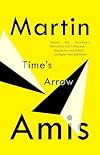
A short, strange, provocative, and deeply disturbing novel. We follow a man, a doctor, called Tod Friendly (not, we will be unsurprised to eventually learn, his real or original name) through the perceptions of a sort of disembodied presence that accompanies him throughout his life. But this presence experiences that life, and everything in it, backwards. Effects precede causes, doctors harm and violence heals, and the dark, horrible secret that lies in Tod Friendly's past moves ever closer show more to the present.
It's a conceit that seems like it shouldn't really work, not for 165 pages, but it really does. At least, it did for me. It's clever and sometimes dryly funny, and coming at life backwards makes for a fascinating and often insightful change of perspective. And a darkly unsettling one, too, as we watch historical atrocities unspooling in reverse.
I feel like this book is doing a lot of things, thematically, not all of which are easy to put my finger on, but which are certainly churning away in the back of my brain right now in some very interesting ways. Above all, perhaps, it raises the question: can there be true redemption from great evil and great guilt? Maybe only if you can turn back time. show less
It's a conceit that seems like it shouldn't really work, not for 165 pages, but it really does. At least, it did for me. It's clever and sometimes dryly funny, and coming at life backwards makes for a fascinating and often insightful change of perspective. And a darkly unsettling one, too, as we watch historical atrocities unspooling in reverse.
I feel like this book is doing a lot of things, thematically, not all of which are easy to put my finger on, but which are certainly churning away in the back of my brain right now in some very interesting ways. Above all, perhaps, it raises the question: can there be true redemption from great evil and great guilt? Maybe only if you can turn back time. show less
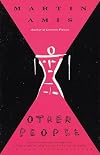
Other People isn't a tale of Visitation. The just sleep of the Elect isn't to be shattered by ghostly moralizing. The world of our entitlement is instead simply upended, allowing the dark bits to pour to the fore. London is revealed through a Ballardian lens. Colors and smells are enhanced, but thinking is pruned, reduced to Money, Sex Death.
The title refers to Hell. We harbor such within. It is nursed at our breast. Martin Amis is astonishing.
The title refers to Hell. We harbor such within. It is nursed at our breast. Martin Amis is astonishing.
Lists
Arctic novels (1)
hopes (1)
Favourite Books (1)
Backlisted (1)
Read These Too (1)
Awards


You May Also Like


Associated Authors
Statistics
- Works
- 58
- Also by
- 35
- Members
- 29,679
- Popularity
- #678
- Rating
- 3.8
- Reviews
- 496
- ISBNs
- 725
- Languages
- 24
- Favorited
- 91


