
David Rudkin
Author of New English Dramatists 7
Works by David Rudkin
Penda's Fen [1974 TV] — Writer — 15 copies
ShoreZone 6 copies
Fishbourne Roman Palace 1 copy
Artemis 81 [1981 film] — Writer — 1 copy
Associated Works
Tagged
Common Knowledge
- Birthdate
- 1936-06-29
- Gender
- male
Members
Reviews
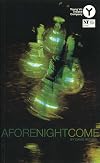
This was David Rudkin's first staged play (Royal Shakespeare Company) and contains themes that would appear later in his work, notably paganism in the English countryside and repressed homsexuality. It had Freddy Jones and Timothy West in junior roles.
It was ground breaking in 1962 because it challenged censorship on three counts - the coarse language, the homosexual sub-text and the final act of violence on stage which Rudkin himself referred to as the most climactic since the 'Jacobeans'. show more
It was introduced to the public essentially by stealth through technical legal legerdemain that resulted in media acclaim. It was an invitation only performance that the critics loved.
It is intriguing today because it is an early example of the folk horror tradition in British culture but perhaps, while it stands up as drama (although like all such texts, it really has to be performed and not read to be appreciated), it is more historically important than inspiring.
Rudkin is an outsider to the working class and it shows. He is on the edge of classing them as 'deplorables' in a way that should be as offensive today as it should have been then. There is class fear at work that may originate, for him, in working class attitudes to homosexuality at the time.
At the same time there is also resentment of the upper class in the stereotypical portrayal of the landowner and his daughter (a walk on part) and of the dynamics of the foreman's control of the work force.
Basically Rudkin wanted his cake and to eat it like so many young radicals (he was 26) then and today ... middle class ressentiment of capitalism and a distancing from the hoi polloi exploited by it (at least in their analytical view).
The literary transition from a loathing of the working class sublimated as disorderly threat in the 1940s and 1950s to the no better middle class decision to patronise them as ignorant and exploited, waiting for middle class liberalism to save them, is exemplified in this drama.
Still, as drama, a sense of menace as the sensitive bourgeois (who is actually a cypher in the drama) is displaced as the victim of weak-minded pagan deplorables by the marginal migrant is well done, showing that the devil often can have some of the best tunes.
Perhaps Rudkin (urban, brought up in the West Midlands, grammar school, Oxbridge, Signals, school teacher) had a bad experience of the working class people he had met in the military or in private life because his picture of them is close to caricature and even cruel.
Given the attitude of liberals today to a working class that refuses to be saved by their political evangelicals (Rudkin perhaps brought with him his Christian evangelical past into his rebellion), I am surprised someone has not tried to revive it to cathartise the frightened London bourgeoisie. show less
It was ground breaking in 1962 because it challenged censorship on three counts - the coarse language, the homosexual sub-text and the final act of violence on stage which Rudkin himself referred to as the most climactic since the 'Jacobeans'. show more
It was introduced to the public essentially by stealth through technical legal legerdemain that resulted in media acclaim. It was an invitation only performance that the critics loved.
It is intriguing today because it is an early example of the folk horror tradition in British culture but perhaps, while it stands up as drama (although like all such texts, it really has to be performed and not read to be appreciated), it is more historically important than inspiring.
Rudkin is an outsider to the working class and it shows. He is on the edge of classing them as 'deplorables' in a way that should be as offensive today as it should have been then. There is class fear at work that may originate, for him, in working class attitudes to homosexuality at the time.
At the same time there is also resentment of the upper class in the stereotypical portrayal of the landowner and his daughter (a walk on part) and of the dynamics of the foreman's control of the work force.
Basically Rudkin wanted his cake and to eat it like so many young radicals (he was 26) then and today ... middle class ressentiment of capitalism and a distancing from the hoi polloi exploited by it (at least in their analytical view).
The literary transition from a loathing of the working class sublimated as disorderly threat in the 1940s and 1950s to the no better middle class decision to patronise them as ignorant and exploited, waiting for middle class liberalism to save them, is exemplified in this drama.
Still, as drama, a sense of menace as the sensitive bourgeois (who is actually a cypher in the drama) is displaced as the victim of weak-minded pagan deplorables by the marginal migrant is well done, showing that the devil often can have some of the best tunes.
Perhaps Rudkin (urban, brought up in the West Midlands, grammar school, Oxbridge, Signals, school teacher) had a bad experience of the working class people he had met in the military or in private life because his picture of them is close to caricature and even cruel.
Given the attitude of liberals today to a working class that refuses to be saved by their political evangelicals (Rudkin perhaps brought with him his Christian evangelical past into his rebellion), I am surprised someone has not tried to revive it to cathartise the frightened London bourgeoisie. show less

Colin and Anne are trying to conceive & endure all kinds of graphic and humiliating medical procedures and tests in that hope. Ultimately, they fail. Colin's end-of-the-play monologue describes how his Belfast friends and relatives have rejected him because he has rejected violence as a solution to the Troubles, although he admits that violence works. Anne describes a post-apocalyptic dream in which she and Colin die an unnatural death after the birth of an unnatural child. The play ends show more with the couple together, knowing that they will be childless and must look to another purpose. The problem with it is that their predicament is related to the world's predicament only at the end of the play, which comes across as heavy-handed. One attitude the play supports is that there is not homosexuality or heterosexuality but just sexuality, an attitude that resonates with me, and always has. show less


At the beginning of the 20th century, a young servant provokes an independent Irish farm community by her relationship with two brothers. Pregnant, she refuses to reveal the name of the father. (fonte: Imdb)
Jan 29, 2022Italian
You May Also Like


Associated Authors
Statistics
- Works
- 17
- Also by
- 1
- Members
- 181
- Popularity
- #119,335
- Rating
- 4.2
- Reviews
- 5
- ISBNs
- 22
- Favorited
- 1