
Alice Thomas Ellis (1932–2005)
Author of The Inn at the Edge of the World
About the Author
Alice Thomas Ellis (also writes as Anna Margaret Haycraft), is a novelist and columnist. She was born in Liverpool, England in 1932. She attended Bangor Grammar School and the Liverpool School of Art. Ellis wrote a weekly column for the Spectator from 1985 to 1989 and for the Catholic Herald from show more 1990 to 1996. She co-wrote two books on juvenile delinquency with psychiatrist Tom Pitt-Atkins. Ellis also wrote A Welsh Childhood, a book recounting the history of Wales and featuring the photographs of Patrick Sutherland. Ellis has written several novels beginning with The Sin Eater in 1977. The novel won the Welsh Arts Council Award. Other novels include Unexplained Laughter which won the Yorkshire Post Novel of the Year in 1985 and The Inn at the End of the World which was the winner of the Writer's Guild Award for Best Fiction in 1991. Another novel, The 27th Kingdom, received a Booker Prize Nomination in 1982. She was also a Fellow of the Royal Society of Literature from 1999 until her death in 2005, due to lung cancer. (Bowker Author Biography) show less
Disambiguation Notice:
Alice Thomas Ellis is the pseudonym of Anna Margaret Haycraft.
Image credit: from Lifeinlegacy.com
Series
Works by Alice Thomas Ellis
Home life Two 2 copies
Associated Works
Femmes de Siècle: Stories from the 90s - Women Writing at the End of Two Centuries (1992) — Contributor — 18 copies
Tagged
Common Knowledge
- Canonical name
- Ellis, Alice Thomas
- Other names
- Lindholm, Anna Margaret (birth name)
Ellis, Alice Marie
O' Casey, Brenda
Haycraft, Anna Margaret
Ellis, Alice Thomas (pen name) - Birthdate
- 1932-09-09
- Date of death
- 2005-03-08
- Gender
- female
- Education
- Liverpool College of Art
Convent of Notre Dame de Namur, Liverpool, UK - Occupations
- novelist
essayist
editor
food writer - Organizations
- Duckworth and Co. [fiction editor]
The Spectator
The Catholic Herald
The Universe - Awards and honors
- Welsh Arts Council Award (1977)
Yorkshire Post Award (1986)
Fellow, Royal Society of Literature, 1999 - Relationships
- Blackwood, Caroline (friend)
Lowell, Robert (friend)
Bainbridge, Beryl (friend)
Lucie-Smith, Alexander (editor, mentor and friend)
Haycraft, Colin (husband) - Nationality
- UK
- Birthplace
- Liverpool, England, UK
- Places of residence
- Liverpool, Merseyside, UK
Penmaenmawr, Wales, UK
London, England, UK
Powys, Wales, UK - Place of death
- London, England, UK
- Disambiguation notice
- Alice Thomas Ellis is the pseudonym of Anna Margaret Haycraft.
- Associated Place (for map)
- UK
Members
Reviews

Behaving badly made Lydia feel better. She hoped she wasn't turning into one of those maniacs who murder people in order to establish their superiority over their fellows who say Please and Thank you and conform to the basic customs of society. She thought it unlikely. Murder seemed to her too intimate, too similar to giving birth. She thought she would never care enough about anyone to give birth to them or to kill them.
This is the third or fourth of Alice Thomas Ellis's offbeat and quirky show more novels that I have read and it's the second time I have read "Unexplained Laughter". It's a short but very enjoyable book, with an unforgettable heroine in the witty and amusing Lydia.
Freelance journalist Lydia, who has just broken up with her cheating boyfriend, goes to stay at her cottage in the Welsh countryside for a few weeks, and her friend (well, sort of friend) Betty goes along to keep her company. Since she has never liked Betty very much, and resents being stuck with her, Lydia makes an effort for the first time to get to know some of her neighbours.
All the way through the book, I was wondering when it was set, and how old Lydia and Betty are. The other characters describe them as girls, which would imply that they are in their twenties, but they speak and act as if they are older than that. When the BBC did a version of it in the late eighties they cast 50-year-old Diana Rigg as Lydia, but I can't believe that Lydia is meant to be anything like that old. The book was published in the mid-eighties, but the names Lydia and Betty just aren’t right for that date. Elizabeths would have nearly all shortened their name to Liz or Lizzy, possibly Beth, but definitely not Betty, which was really old-fashioned by then. So maybe it is set earlier - Lydia's comments about class would fit with an earlier date, too. show less
This is the third or fourth of Alice Thomas Ellis's offbeat and quirky show more novels that I have read and it's the second time I have read "Unexplained Laughter". It's a short but very enjoyable book, with an unforgettable heroine in the witty and amusing Lydia.
Freelance journalist Lydia, who has just broken up with her cheating boyfriend, goes to stay at her cottage in the Welsh countryside for a few weeks, and her friend (well, sort of friend) Betty goes along to keep her company. Since she has never liked Betty very much, and resents being stuck with her, Lydia makes an effort for the first time to get to know some of her neighbours.
All the way through the book, I was wondering when it was set, and how old Lydia and Betty are. The other characters describe them as girls, which would imply that they are in their twenties, but they speak and act as if they are older than that. When the BBC did a version of it in the late eighties they cast 50-year-old Diana Rigg as Lydia, but I can't believe that Lydia is meant to be anything like that old. The book was published in the mid-eighties, but the names Lydia and Betty just aren’t right for that date. Elizabeths would have nearly all shortened their name to Liz or Lizzy, possibly Beth, but definitely not Betty, which was really old-fashioned by then. So maybe it is set earlier - Lydia's comments about class would fit with an earlier date, too. show less
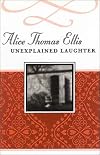
She was determined there would be no reconciliation, and even though she had found that the sound of his voice reminded her vividly and immediately that she had loved him and could do so again she lay smiling with pleasure at the sheer satisfaction of unforgiveness. It was, she decided, much sweeter than love: a sensation for the connoisseur of emotion. That it was also wicked did not greatly perturb her. It was a sin different in kind from mischief-making, and could, in Lydia's estimation, show more be excused on the grounds that it was the sexual misbehavior of another to which she was responding.
Lydia felt strongly that the author of the universe probably thought much as she did about sexual matters. She really did have a long way to go, and she had not yet learned to recognize the precise lineaments, the demeanor and the shape of the shadow of Stan.
Alice Thomas Ellis seems incapable of producing other than psychologically astute, gem-like prose. Inn at the Edge of the World is better (as is Birds of the Air), but this would serve as a good introduction to Ellisian themes. Some thoughts:
1. Poison-brewing, manipulative, but explicitly religious female protagonists -- Lydia here, Rose in The Sin Eater. These characters, I increasingly believe, represent Ellis' view of her own worst instincts. Their sins are her sins.
2. Largely irrelevant men. I am fond of the following Ellis fragment:
Men love women
Women love children
Children love hamsters
If I had my way, all boys would be forced to read Ellis. It's often a vision of the world where men are not important, or have importance only in the minds of foolish, trivial people. The main action is either in the home, or in subtle human interactions that men are too block-headed to perceive. Perhaps the cruelty with which Ellis imbues this observation derives from her giving her dark side its head. But the observation is solid as oak.
3. Plots that never quite go anywhere. The most conclusive Ellis I have ever read was the Sin Eater. In all others, we just sort of drift off. Perhaps because she regards any final sewing up of a plot as pointless as any earthly resolution. True Human resolution consists only in the last things: death, judgment, heaven, and hell. show less
Lydia felt strongly that the author of the universe probably thought much as she did about sexual matters. She really did have a long way to go, and she had not yet learned to recognize the precise lineaments, the demeanor and the shape of the shadow of Stan.
Alice Thomas Ellis seems incapable of producing other than psychologically astute, gem-like prose. Inn at the Edge of the World is better (as is Birds of the Air), but this would serve as a good introduction to Ellisian themes. Some thoughts:
1. Poison-brewing, manipulative, but explicitly religious female protagonists -- Lydia here, Rose in The Sin Eater. These characters, I increasingly believe, represent Ellis' view of her own worst instincts. Their sins are her sins.
2. Largely irrelevant men. I am fond of the following Ellis fragment:
Men love women
Women love children
Children love hamsters
If I had my way, all boys would be forced to read Ellis. It's often a vision of the world where men are not important, or have importance only in the minds of foolish, trivial people. The main action is either in the home, or in subtle human interactions that men are too block-headed to perceive. Perhaps the cruelty with which Ellis imbues this observation derives from her giving her dark side its head. But the observation is solid as oak.
3. Plots that never quite go anywhere. The most conclusive Ellis I have ever read was the Sin Eater. In all others, we just sort of drift off. Perhaps because she regards any final sewing up of a plot as pointless as any earthly resolution. True Human resolution consists only in the last things: death, judgment, heaven, and hell. show less
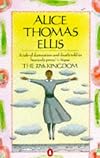
I give this book 5 stars not because it is Literature with a capital L but because it succeeds in being a work of comic genius. From the very first page we are made acquainted with a cast of eccentric characters who have been antagonizing each other in small ways for years. If you like Muriel Spark you will like this, which is equally roughly told, but with more whimsy. The ending is disappointing, yes, but not ruiniously so. This is a book that can be read in one sitting, and once you get show more started you will have very little reason to stop reading. Delightfuly wicked! show less

Alice Thomas Ellis practices a peculiar form of aesthetic satire: pastiche in domestic decor. Rose, in The sin eater, parodies periods in her rooms: `Part of her fondness for the house was based on the ease with which she could make a fool of it'. Likewise of her guests: `"This is a lovely room," said Angela, ... "It's what I always call a traditional drawing room". The element of pastiche introduced by Rose -- the tropical shells displayed on a small table, the wax flowers under a glass show more dome -- seemed to have escaped her notice'. Rose stages her meals. Planning a tea to follow the cricket match, she considers, `An Edwardian tea on the lawn, white cloths and the Crown Derby ... a thirties tea on the terrace ... a traditional farmhouse meal ...'.
`Once she had cooked dinner for a Midland client of Henry's ... she had given him prawn cocktail, steak and pretty little chips, and an antipodean thing called a pavlova - the sort of meal the family described as "Uxbridge Country Club" ... he was a nice man and appreciative, and had left happily, sure he had had a splendid evening'.
Ellis's views are based on deeply held traditional moral values (she is a fervent Roman Catholic). She deplores and condemns the vulgar modernization of village life and of the church, bitterly presented in The sin eater as corruption:.
Through the bitter satire comes a yearning for the old, cherished values and ways: `Violets and wild strawberries had grown in that field once, and the ewes with their lambs had found it comforting after the winds on the hills. ... Once, when you went out you could hope to see at least a few beautiful [nuns] in ample shapely robes, veils lifting on the wind real clothes, with the significance clothes should have: reassuring, decisive. Now nuns were the ugliest people on the street.' show less
`Once she had cooked dinner for a Midland client of Henry's ... she had given him prawn cocktail, steak and pretty little chips, and an antipodean thing called a pavlova - the sort of meal the family described as "Uxbridge Country Club" ... he was a nice man and appreciative, and had left happily, sure he had had a splendid evening'.
Ellis's views are based on deeply held traditional moral values (she is a fervent Roman Catholic). She deplores and condemns the vulgar modernization of village life and of the church, bitterly presented in The sin eater as corruption:.
Through the bitter satire comes a yearning for the old, cherished values and ways: `Violets and wild strawberries had grown in that field once, and the ewes with their lambs had found it comforting after the winds on the hills. ... Once, when you went out you could hope to see at least a few beautiful [nuns] in ample shapely robes, veils lifting on the wind real clothes, with the significance clothes should have: reassuring, decisive. Now nuns were the ugliest people on the street.' show less
Lists
Awards


You May Also Like


Associated Authors
Statistics
- Works
- 31
- Also by
- 1
- Members
- 2,018
- Popularity
- #12,749
- Rating
- 3.6
- Reviews
- 43
- ISBNs
- 169
- Languages
- 3
- Favorited
- 7