
Santiago Roncagliolo
Author of Red April
About the Author
Image credit: Manuel González Olaechea y Franco
Works by Santiago Roncagliolo
EL VIENTO 2 copies
Rugor, el dragón enamorado 2 copies
La pelea de los números 1 copy
La casa más oscura 1 copy
Cuentos embrujados 1 copy
Uranito en el planeta tierra 1 copy
රතු අප්රියෙල් 1 copy
Jaimito el angelito 1 copy
La nariz que se fue 1 copy
Associated Works
Granta 113: The Best of Young Spanish Language Novelists (2011) — Contributor — 164 copies, 3 reviews
McSweeney's 46: Thirteen Crime Stories from Latin America (2014) — Contributor — 102 copies, 5 reviews
Tagged
Common Knowledge
- Canonical name
- Roncagliolo, Santiago
- Legal name
- Lohmann, Santiago Rafael Roncagliolo
- Birthdate
- 1975-03-29
- Gender
- male
- Education
- Colegio de la Inmaculada (Lima, Peru)
- Occupations
- writer
journalist - Nationality
- Peru
Spain - Birthplace
- Lima, Peru
- Places of residence
- Barcelona, Spain
Arequipa, Peru - Associated Place (for map)
- Peru
Members
Reviews

Four men recall a series of events they were involved in when they were pupils at a Jesuit school in a middle-class suburb of Lima in 1992. What starts out as a childish gesture of revenge against an annoying teacher soon turns into something much darker, in an environment where adolescent angst, broken families and the traumatic effects of years of violent disorder seem to have conspired to break down moral boundaries.
It’s a deeply disturbing story, but it’s often also uncomfortably show more funny, as Roncagliolo draws us deep into the minds of the four teenage boys and their various loves, rivalries and family problems. He expertly manages the four rotating (and always slightly inconsistent) first-person narratives and the seemingly inescapable logic of the spiral of practical circumstances through which the situation escalates from puerile to tragic. If you stepped back for too long you would probably find all sorts of holes in the logic, but, like a clever film thriller, the momentum of the story is such that you don’t want to put it down and start thinking about how that would actually pan out in real life.
And, of course, in the background he is giving us plenty to think about: loyalty and betrayal; the step from childish to adult relationships with our parents; how we move from adolescent smirking about sex to first love (or don’t); and, perhaps above all, the power of fear to drive our actions in wrong directions. Uncomfortable, but oddly compelling. show less
It’s a deeply disturbing story, but it’s often also uncomfortably show more funny, as Roncagliolo draws us deep into the minds of the four teenage boys and their various loves, rivalries and family problems. He expertly manages the four rotating (and always slightly inconsistent) first-person narratives and the seemingly inescapable logic of the spiral of practical circumstances through which the situation escalates from puerile to tragic. If you stepped back for too long you would probably find all sorts of holes in the logic, but, like a clever film thriller, the momentum of the story is such that you don’t want to put it down and start thinking about how that would actually pan out in real life.
And, of course, in the background he is giving us plenty to think about: loyalty and betrayal; the step from childish to adult relationships with our parents; how we move from adolescent smirking about sex to first love (or don’t); and, perhaps above all, the power of fear to drive our actions in wrong directions. Uncomfortable, but oddly compelling. show less
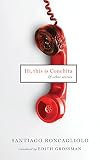
The Spanish title of this book is Pussy al habla y otros cuentos. I’m always amazed by the art of translation. Edith Grossman is a great and experienced translator of Spanish language books but titles always seems to be a tricky thing for translators and publishers alike. Can you do a literal translation? Or do you go with something that is close and captures the spirit of the book in the new language? Or if the title is untranslatable, do you try something completely different that might show more approximate the untranslatable phrase? Or do you completely mangle it because you think a literal translation would be offensive? My daughter, who is fluent in Latin American Spanish, believes that conchita might be slang for vagina in some countries. Hmmm…that could make sense.
What about Hello, Pussy Talking? That seems to make sense after reading the short story for which the book is named. After all, Conchita is a phone-sex worker. Title aside, this must have been a doozy for Grossman to translate as Conchita’s dialogue with her nutty client must be full of sexual slang words that would not appear in your average translator’s reference dictionary. Roncagliolo does a masterful job of capturing the awkwardness of a phone-sex conversation, especially as the worker tries to understand what it is that the client wants. Then he continues to weave a complex web of inter-related characters including the phone-sex company customer support representative, a mistress, a hit man, and an unfortunate ex-lover with a stalker boyfriend. I finally had to take notes to try to keep it straight and figure out the inter-relationships. You should try to figure it out as well. It’s worth the effort.
Three more stories round out the collection. In Despoiler, we have a loner who believes her body has an expiration date and that celebrating the passage of time showed bad taste. Butterflies Fastened With Pins goes down a list of the protagonist’s friends who have committed suicide. And The Passenger Beside You is dead. All of these stories show imagination, with death in some form or the other being a recurring theme. Usually that death takes the gruesome, sometimes comic form that seems to be a characteristic of South American fiction.
This book was reviewed for the LibraryThing Early Reviewers Program. show less
What about Hello, Pussy Talking? That seems to make sense after reading the short story for which the book is named. After all, Conchita is a phone-sex worker. Title aside, this must have been a doozy for Grossman to translate as Conchita’s dialogue with her nutty client must be full of sexual slang words that would not appear in your average translator’s reference dictionary. Roncagliolo does a masterful job of capturing the awkwardness of a phone-sex conversation, especially as the worker tries to understand what it is that the client wants. Then he continues to weave a complex web of inter-related characters including the phone-sex company customer support representative, a mistress, a hit man, and an unfortunate ex-lover with a stalker boyfriend. I finally had to take notes to try to keep it straight and figure out the inter-relationships. You should try to figure it out as well. It’s worth the effort.
Three more stories round out the collection. In Despoiler, we have a loner who believes her body has an expiration date and that celebrating the passage of time showed bad taste. Butterflies Fastened With Pins goes down a list of the protagonist’s friends who have committed suicide. And The Passenger Beside You is dead. All of these stories show imagination, with death in some form or the other being a recurring theme. Usually that death takes the gruesome, sometimes comic form that seems to be a characteristic of South American fiction.
This book was reviewed for the LibraryThing Early Reviewers Program. show less
 This review was written for LibraryThing Early Reviewers.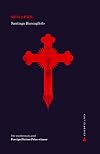
How best to express the horrors of a bloody civil war whose memory is still painful? How can one probe into wounds which are still open and smarting? An answer might be provided by literature in general, and genre literature in particular. One could cite as an example Carlos Ruiz Zafon’s “Cemetery of Forgotten Books” series, haunted by the memories of the Spanish Civil War. Zafon’s bestselling novels have shown that how the Gothic, so often dismissed as ‘mere’ entertainment, can show more successfully engage with and comment on troublesome recent history.
Peruvian writer and journalist Santiago Roncagliolo did something similar with his crime thriller Red April (Abril Rojo), originally published in Spanish in 2006 and subsequently in an English rendition by veteran translator Edith Grossman (it won the Independent Foreign Fiction Prize for 2011).
The civil war which acts as a backdrop to the events in this book is the armed conflict in Roncagliolo’s native country between the Government, the Communist Party (also known as Sendero Luminoso or Shining Path) and the Tupac Amaru Revolutionary Movement. The conflict started in 1980 and has been largely dormant since 2000, albeit with occasional resurgences of violence.
The plot unfolds around the period of the presidential elections before Holy Week in the year 2000. In the context of this campaign, the Government is keen to make a statement that communist insurgents have been defeated. However, during Carnival, in the town of Ayacucho, a gruesome murder raises suspicions that Sendero Luminoso might once again be rearing its head. Associate District Prosecutor Félix Chacaltana Saldívar investigates the matter and prepares a convoluted report which conveniently makes no mention of terrorism. And, possibly for this very reason, when this murder is followed by others, all bearing the stamp of a deranged serial killer or ritual murderer, the authorities assign the case to none other than Chacaltana. He is hardly the ideal detective but, in the eyes of his seniors, appears to be an official who can be easily manipulated.
As evidenced by the style of the legal reports spread throughout the text, Chacaltana is well-versed in the letter of the law, which he tries to follow with pedantic conscientiousness, but this hardly equips him for the complexities of life and for the intricacies of the tense political climate of his country. Abandoned by his wife and obsessed with the memory of his long-dead mother, the Prosecutor is often naïve and ingenuous, reminding me of Umberto Eco’s claim that “real literature is about losers”. Perhaps for this very reason, the novel’s protagonist brought to my mind failed journalist Colonna in Eco’s own Numero Zero or, to cite another Italian novel, Paolo Laurana in Sciascia’s A Ciascuno il Suo: hapless figures who end up embroiled in matters beyond their ken. Over the course of the novel, Chacaltana starts to wise up, and this change is not all to the good. Indeed, some unsavoury aspects of his character come to the fore and contributed to some of my dissatisfaction with what is an otherwise engrossing book.
As a crime novel, Red April is thrilling and intriguing. Much of its dark feel is given by the elements it borrows from the horror – and particularly the folk horror – genre. Indeed, we start to realise that the serial killer is borrowing imagery both from Christian traditions linked to Holy Week and from pagan Andean myths and rituals. An underlying theme of the novel, is the friction between Andean/pre-Colombian culture (as represented by the Quechua-speaking “natives”) and the subsequent Christian traditions imported by the Spanish-speaking settlers. It is suggested that underneath the veneer of Christian ritual, the old rites have never died out. The language/culture barrier becomes a symbol of this perennial conflict, which seems to fuel present-day violence. As one of the characters puts it:
"Ayacucho is a strange place. The seat of the Wari culture was here, and then the Chanka people, who never allowed themselves to be subjugated by the Incas. And later were the indigenous uprisings because Ayacucho was the half-way point between Cuzco, the Inca capital, and Lima, the Spaniards’ capital. And independence in Quinia. And Sendero. This place is condemned to be bathed in blood and fire forever."
Some readers have been put off by the very graphic murders. To be honest, however, an act of senseless sexual violence towards the end disturbed me much more than the admittedly gruesome crime scene descriptions. Plot-wise, the solution to the “whodunit” is rather too convenient – I believe that this is a novel which is best enjoyed by soaking up its dark atmosphere tempered by a streak of black humour.
Full review, with music to listen to at: http://endsoftheword.blogspot.com/2019/04/red-april-roncagliolo.html show less
Peruvian writer and journalist Santiago Roncagliolo did something similar with his crime thriller Red April (Abril Rojo), originally published in Spanish in 2006 and subsequently in an English rendition by veteran translator Edith Grossman (it won the Independent Foreign Fiction Prize for 2011).
The civil war which acts as a backdrop to the events in this book is the armed conflict in Roncagliolo’s native country between the Government, the Communist Party (also known as Sendero Luminoso or Shining Path) and the Tupac Amaru Revolutionary Movement. The conflict started in 1980 and has been largely dormant since 2000, albeit with occasional resurgences of violence.
The plot unfolds around the period of the presidential elections before Holy Week in the year 2000. In the context of this campaign, the Government is keen to make a statement that communist insurgents have been defeated. However, during Carnival, in the town of Ayacucho, a gruesome murder raises suspicions that Sendero Luminoso might once again be rearing its head. Associate District Prosecutor Félix Chacaltana Saldívar investigates the matter and prepares a convoluted report which conveniently makes no mention of terrorism. And, possibly for this very reason, when this murder is followed by others, all bearing the stamp of a deranged serial killer or ritual murderer, the authorities assign the case to none other than Chacaltana. He is hardly the ideal detective but, in the eyes of his seniors, appears to be an official who can be easily manipulated.
As evidenced by the style of the legal reports spread throughout the text, Chacaltana is well-versed in the letter of the law, which he tries to follow with pedantic conscientiousness, but this hardly equips him for the complexities of life and for the intricacies of the tense political climate of his country. Abandoned by his wife and obsessed with the memory of his long-dead mother, the Prosecutor is often naïve and ingenuous, reminding me of Umberto Eco’s claim that “real literature is about losers”. Perhaps for this very reason, the novel’s protagonist brought to my mind failed journalist Colonna in Eco’s own Numero Zero or, to cite another Italian novel, Paolo Laurana in Sciascia’s A Ciascuno il Suo: hapless figures who end up embroiled in matters beyond their ken. Over the course of the novel, Chacaltana starts to wise up, and this change is not all to the good. Indeed, some unsavoury aspects of his character come to the fore and contributed to some of my dissatisfaction with what is an otherwise engrossing book.
As a crime novel, Red April is thrilling and intriguing. Much of its dark feel is given by the elements it borrows from the horror – and particularly the folk horror – genre. Indeed, we start to realise that the serial killer is borrowing imagery both from Christian traditions linked to Holy Week and from pagan Andean myths and rituals. An underlying theme of the novel, is the friction between Andean/pre-Colombian culture (as represented by the Quechua-speaking “natives”) and the subsequent Christian traditions imported by the Spanish-speaking settlers. It is suggested that underneath the veneer of Christian ritual, the old rites have never died out. The language/culture barrier becomes a symbol of this perennial conflict, which seems to fuel present-day violence. As one of the characters puts it:
"Ayacucho is a strange place. The seat of the Wari culture was here, and then the Chanka people, who never allowed themselves to be subjugated by the Incas. And later were the indigenous uprisings because Ayacucho was the half-way point between Cuzco, the Inca capital, and Lima, the Spaniards’ capital. And independence in Quinia. And Sendero. This place is condemned to be bathed in blood and fire forever."
Some readers have been put off by the very graphic murders. To be honest, however, an act of senseless sexual violence towards the end disturbed me much more than the admittedly gruesome crime scene descriptions. Plot-wise, the solution to the “whodunit” is rather too convenient – I believe that this is a novel which is best enjoyed by soaking up its dark atmosphere tempered by a streak of black humour.
Full review, with music to listen to at: http://endsoftheword.blogspot.com/2019/04/red-april-roncagliolo.html show less
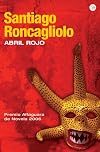
Policial muy bien hecho, basado en elementos de la historia reciente del Perú. El relato se desarrolla, de forma bastante tradicional, a lo largo de la Semana Santa en Ayacucho y otras ciudades, donde las huellas la guerra de los años 80 no han de todo desaparecido. A veces una novela de genero tal como un policial o un suspense transmite mejor el clima emocional de un momento histórico que una ficción literaria o una no-ficción. En Abril Rojo la narración cambia de voz, lo que no show more sólo amplía nuestra visión de los eventos o realza el suspense pero también nos trae más detalles del cuadro de personajes y de su ambiente. Releo muy pocos libros pero me gustaría releer este. show less
Lists
Awards


You May Also Like


Associated Authors
Statistics
- Works
- 31
- Also by
- 6
- Members
- 881
- Popularity
- #29,073
- Rating
- 3.5
- Reviews
- 56
- ISBNs
- 119
- Languages
- 10
- Favorited
- 1
