
Willie Morris (1934–1999)
Author of My Dog Skip
About the Author
Willie Morris is the author of "North Toward Home", "New York Days", "My Dog Skip", "My Cat Spit McGee", and numerous other works of fiction & nonfiction. As the imaginative and creative editor of "Harper's Magazine" in the 1960s, he published such writers as William Styron, Gay Talese, David show more Halberstam, and Norman Mailer. He was a major influence in changing our postwar literary & journalistic history. He died in August 1999 at the age of sixty-four. (Bowker Author Biography) Willie Morris, 1934 - 1999 William Weaks Morris was born in Jackson, Mississippi in 1934 to a family of storytellers. He graduated valedictorian of his high school class in 1952 and went on to attend the University of Texas in Austin. He was the editor of their newspaper the Daily Texan. He continued his education as a Rhodes Scholar studying history at Oxford University. Morris was the editor of the liberal weekly newspaper, Texas Observer, from 1960-62. He was associate editor of Harper's magazine in 1963 and then became their youngest editor-in-chief, in1967. Morris turned Harper's into one of the most influential magazines in the country, attracting contributions from well-known writers, but because of editorial disputes, he quit in 1971. His leaving caused mass resignations of most of Harper's contributing editors. In 1980, Morris returned to Mississippi as writer-in-residence at the University of Mississippi in Oxford. Morris' publications included nonfiction, fiction, children's books and essay collections. "North Toward Home" (1967) was a bestseller and received the prestigious Houghton Mifflin Literary Fellowship Award for nonfiction and was a selection of the Literary Guild. "Yazoo: Integration in a Deep-Southern Town" (1971) was published not long after a difficult divorce. The book tells how a Deep-Southern town is affected by forced integration of the public schools. "Good Old Boy: A Delta Boyhood" (1971) and "Good Old Boy and the Witch of Yazoo" (1989) are two of the children's classics by Morris. His fiction novel "The Last of the Southern Girls" (1973) tells of a Southern debutante who goes to Washington D.C. In 1996, Morris received the third annual Richard Wright Medal for Literary Excellence. On August 2, 1999, Willie Morris died of a heart attack in Jackson, Mississippi. He was almost finished with a project he was working on with his son about Mississippi's history and future. (Bowker Author Biography) show less
Image credit: www.nndb.com
Works by Willie Morris
The Ghosts of Medgar Evers: A Tale of Race, Murder, Mississippi, and Hollywood (1998) 43 copies, 1 review
Conversation Starter 1 copy
Associated Works
For Us, the Living: The Widow of Civil Rights Leader Medger Evers Tells the Story of Their Life Together in Mississippi and of His Tragic Assassination (1967) — Introduction, some editions — 96 copies
Here Lies My Heart: Essays on Why We Marry, Why We Don't, and What We Find There (1999) — Contributor — 62 copies, 3 reviews
Tagged
Common Knowledge
- Birthdate
- 1934-11-29
- Date of death
- 1999-08-02
- Gender
- male
- Awards and honors
- Houghton Mifflin Literary Fellowship Award (nonfiction)
- Short biography
- Born: 29-Nov-1934
Birthplace: Jackson, MS
Died: 2-Aug-1999
Location of death: Jackson, MS
Cause of death: Heart Failure
Remains: Buried, Glenwood Cemetery, Yazoo City, MS
Gender: Male
Race or Ethnicity: White
Sexual orientation: Straight
Occupation: Author
Nationality: United States
Executive summary: North Toward Home
Father: Henry Rae Morris
Mother: Marian Weaks Morris
Wife: Celia Ann Buchan (m. 30-Aug-1958, one son)
Son: David Rae Morris (b. 1-Nov-1959)
Wife: JoAnne Prichard (m. 1990)
High School: Yazoo City High School, Yazoo, MS
University: University of Texas at Austin (1956)
University: New College, Oxford University (on a Rhodes Scholarship)
Scholar: Writer-in-Residence, University of Mississippi
Harper's Associate Editor (1963-67), Editor-in-Chief (1967-71)
Rhodes Scholarship
FILMOGRAPHY AS ACTOR:
Baseball (18-Sep-1994) · Himself - Nationality
- USA
- Birthplace
- Jackson, Mississippi, USA
- Place of death
- Jackson, Mississippi, USA
- Burial location
- Glenwood Cemetery, Yazoo City, Mississippi, USA
- Associated Place (for map)
- Mississippi, USA
Members
Reviews

I'm going to admit right up front that I have always had a soft spot when it comes to Southern writers who write well about growing up in the American South of the first half of the twentieth century. That positive prejudice comes from how easily I can identify with the stories that these writers have to tell. Willie Morris is one of those writers and, sadly, we lost him in 1999 at the relatively young age of 64.
Taps turned out to be Willie's last book and it was not published until 2001 show more after his wife, JoAnne Prichard Morris, working from notations that Morris made on the original manuscript, released it to Houghton Mifflin for publication. Willie Morris treasured his memories of growing up in Mississippi during the forties and fifties and, in Taps, he does a wonderful job of creating the atmosphere which he remembered so well. The story takes place in early 1950s Fisk's Landing, Mississippi, and is told through the eyes of Swayze Barksdale, a young high school student who finds his life forever changed by the Korean War.
The changes begin when Swayze and a friend of his are recruited by World War II hero Luke Cartwright to play "Taps" at the funerals of the many Fisk's Landing boys who are so steadily being killed in Korea. Fisk's Landing is small enough that Swayze can easily recall each of the boys being buried in the town cemetery and, in fact, some of them had been classmates of his until they dropped out of high school to join the military. The circumstances of 1951-52 force Swayze to mature in ways, and at a pace, that few 15-year-old boys ever face. He has to deal with the fact that his mother is more than just a little "odd," he finds his first love, discovers sex, gets drawn into a conspiracy to help his two best adult friends hide their own love affair, and loses his girl to the football captain.
But it is when Swayze finds himself playing "Taps" for his closest friend in the world that he really understands what it is to be a man. He has learned lessons in that one year that will serve him well for the remainder of his life and he will never forget the people of Fisk's Landing who helped make him into the man that he ultimately became. Taps is a touching story and Willie Morris wrote it in the style that the best southern writers have, a style that seems to come from growing up in the South during a certain period in time. Frankly, I haven't read all that much of his work, but I suppose I can look at that neglect as being a good thing because now I can look forward to reading the rest of it.
Rated at: 3.5 show less
Taps turned out to be Willie's last book and it was not published until 2001 show more after his wife, JoAnne Prichard Morris, working from notations that Morris made on the original manuscript, released it to Houghton Mifflin for publication. Willie Morris treasured his memories of growing up in Mississippi during the forties and fifties and, in Taps, he does a wonderful job of creating the atmosphere which he remembered so well. The story takes place in early 1950s Fisk's Landing, Mississippi, and is told through the eyes of Swayze Barksdale, a young high school student who finds his life forever changed by the Korean War.
The changes begin when Swayze and a friend of his are recruited by World War II hero Luke Cartwright to play "Taps" at the funerals of the many Fisk's Landing boys who are so steadily being killed in Korea. Fisk's Landing is small enough that Swayze can easily recall each of the boys being buried in the town cemetery and, in fact, some of them had been classmates of his until they dropped out of high school to join the military. The circumstances of 1951-52 force Swayze to mature in ways, and at a pace, that few 15-year-old boys ever face. He has to deal with the fact that his mother is more than just a little "odd," he finds his first love, discovers sex, gets drawn into a conspiracy to help his two best adult friends hide their own love affair, and loses his girl to the football captain.
But it is when Swayze finds himself playing "Taps" for his closest friend in the world that he really understands what it is to be a man. He has learned lessons in that one year that will serve him well for the remainder of his life and he will never forget the people of Fisk's Landing who helped make him into the man that he ultimately became. Taps is a touching story and Willie Morris wrote it in the style that the best southern writers have, a style that seems to come from growing up in the South during a certain period in time. Frankly, I haven't read all that much of his work, but I suppose I can look at that neglect as being a good thing because now I can look forward to reading the rest of it.
Rated at: 3.5 show less

Very well-written coming-of-age story set in the 1950s in Fisk's Landing, Mississippi. Swayze is a teen-ager whose father died some time ago and whose mother, it is quite obvious, suffers from some kind of mental illness. Swayze creates his own family including his best friend Arch, veteran Luke, the funeral home director, his girlfriend Georgia, and many others in his small town. Swayze and Arch are trumpet players in the high school band and are drafted into playing "Taps" at the funerals show more for the local boys who have died in the Korean War. The book focuses on Swayze and the ups and downs of his relationship with Georgia, basketball, the war, bigotry, and there is a sense of foreboding that builds throughout the book and which leads up to the dramatic last scene involving Swayze and Arch and Luke. Excellent read and highly recommended to all. show less
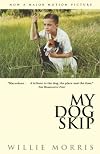
This is a sweet, gentle memoir of a boy and his dog, growing up in 1940s rural Mississippi. Willie's parents get a fox terrier puppy when Willie is nine, and Willie and Skip quickly become best friends. In an earlier time and in a small town where everyone knows everyone, they're free to roam all day during the summer months, with friends and on their own, having adventures and playing pranks that sixty years later, would not be tolerated.
There is no plot here. There isn't supposed to be a show more plot. Morris simply reminisces about his dog and his friends, in no particular chronological order. They play football (Skip too!), have chinaberry wars, and make silly bets, such as Willie and Skip spending a night in the cemetery. Kids started driving the family car early, and Willie teaches Skip to sit with his paws on the wheel, so that at opportune moments Willie can duck out of sight and make it look like Skip is driving.
They (Willie and Skip) travel on the bus to see Willie's grandparents, attend Boy Scout camp, and do any number of other things you'd be hard pressed to get permission to include your dog in today. It's not really true that the 1940s were a simpler time; there was a world war, and a host of social issues, almost entirely un-noted in this book, that were about to boil to the surface. It was a different time, though, and childhood was in some respects freer and less complicated. Morris does a wonderful job of capturing that feeling of innocence and freedom, and childhood adventures and pranks that were still possible in my own childhood in the fifties and sixties, but are largely gone from childhood now.
The language is rich and beautiful, too, though perhaps a bit challenging for the children likely to be pointed at this book because it's about a child and a dog. This is more intended for those of us who remember our own childhoods, than for those still experiencing theirs.
Recommended.
I borrowed this book from the library. show less
There is no plot here. There isn't supposed to be a show more plot. Morris simply reminisces about his dog and his friends, in no particular chronological order. They play football (Skip too!), have chinaberry wars, and make silly bets, such as Willie and Skip spending a night in the cemetery. Kids started driving the family car early, and Willie teaches Skip to sit with his paws on the wheel, so that at opportune moments Willie can duck out of sight and make it look like Skip is driving.
They (Willie and Skip) travel on the bus to see Willie's grandparents, attend Boy Scout camp, and do any number of other things you'd be hard pressed to get permission to include your dog in today. It's not really true that the 1940s were a simpler time; there was a world war, and a host of social issues, almost entirely un-noted in this book, that were about to boil to the surface. It was a different time, though, and childhood was in some respects freer and less complicated. Morris does a wonderful job of capturing that feeling of innocence and freedom, and childhood adventures and pranks that were still possible in my own childhood in the fifties and sixties, but are largely gone from childhood now.
The language is rich and beautiful, too, though perhaps a bit challenging for the children likely to be pointed at this book because it's about a child and a dog. This is more intended for those of us who remember our own childhoods, than for those still experiencing theirs.
Recommended.
I borrowed this book from the library. show less
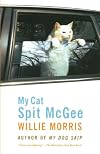
Willie Morris writes from his heart and experience of going from an ailurophile (cat hater) to a cat lover, all because of a kitten he named Spit McGee (the name of a character in one of his children's' books) and finding himself married to a Cat Woman.
Growing up and always having dogs and coming from a family who had dogs, cats were never part of his life. Skip, his boyhood dog, was a big part of his life growing up. Later, Pete was his canine companion. Both were loyal, undemanding, show more accepting, consistent and willing to do what ever he wanted. A cat is none of these things.
Through this book you find how the relationship developed between Morris and Spit. Starting when the cat is first born and not doing good. Morris does what it takes to keep the kitten alive to the point of yelling, "Live, kid! Live!" From then on the cat and Morris had a bond...a thin one to start, but it grows over the years.
Morris finds that not all cats are horrible and to be avoided, like to ones he grew up with and had nightmares about. They each have their own characteristics and quirks and favourite people. Spit is all white, with one blue eye and one yellow eye, and Morris is his human of choice.
The book is written with a humourous and humane slant about a human and feline connection. A memoir and homage to a creature who became an important Fur Person in a human's life. I took my time reading it, rather than read it all in one sitting. It isn't a big book page-wise, but I think it is story-wise. show less
Growing up and always having dogs and coming from a family who had dogs, cats were never part of his life. Skip, his boyhood dog, was a big part of his life growing up. Later, Pete was his canine companion. Both were loyal, undemanding, show more accepting, consistent and willing to do what ever he wanted. A cat is none of these things.
Through this book you find how the relationship developed between Morris and Spit. Starting when the cat is first born and not doing good. Morris does what it takes to keep the kitten alive to the point of yelling, "Live, kid! Live!" From then on the cat and Morris had a bond...a thin one to start, but it grows over the years.
Morris finds that not all cats are horrible and to be avoided, like to ones he grew up with and had nightmares about. They each have their own characteristics and quirks and favourite people. Spit is all white, with one blue eye and one yellow eye, and Morris is his human of choice.
The book is written with a humourous and humane slant about a human and feline connection. A memoir and homage to a creature who became an important Fur Person in a human's life. I took my time reading it, rather than read it all in one sitting. It isn't a big book page-wise, but I think it is story-wise. show less
Lists
Best Dog Stories (1)
Southern Fiction (1)
Awards


You May Also Like


Associated Authors
Statistics
- Works
- 27
- Also by
- 12
- Members
- 2,065
- Popularity
- #12,442
- Rating
- 3.8
- Reviews
- 39
- ISBNs
- 86
- Languages
- 3
- Favorited
- 6

