
Paul Allen (12) (1953–2018)
Author of Idea Man: A Memoir by the Cofounder of Microsoft
For other authors named Paul Allen, see the disambiguation page.
About the Author
Paul Gardner Allen was born in Seattle, Washington on January 21, 1953. He attended Washington State University for two years, before dropping out to work as a programmer for Honeywell in Boston. In 1975, he co-founded Microsoft with Bill Gates. Allen left Microsoft in the early 1980s but remained show more on the board until 2000. He was also an investor and a philanthropist. His memoir, Idea Man, was published in 2011. He died from complications of non-Hodgkin's lymphoma on October 15, 2018 at the age of 65. (Bowker Author Biography) show less
Image credit: Michael Sprague
Works by Paul Allen
Tagged
Common Knowledge
- Legal name
- Allen, Paul Gardner
- Birthdate
- 1953-01-21
- Date of death
- 2018-10-15
- Gender
- male
- Occupations
- business executive
philanthropist - Organizations
- Microsoft (Co-Founder)
Vulcan Inc. (Co-Founder) - Nationality
- USA
- Birthplace
- Seattle, Washington, USA
- Place of death
- Seattle, Washington, USA
- Associated Place (for map)
- Seattle, Washington, USA
Members
Reviews
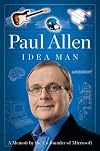
Excellent. I want to adopt him as my eccentric rich uncle and hope he sends a little my way. What does a very wealthy person do when he's no longer driving the technical side of Microsoft? Well, pretty much anything. He lived for himself - Portland Trailblazers and Seattle Seahawks, plus a 414 foot yacht that has a minisub and two helos - and others. Unlike the Koch brothers who only know how to destroy with their wealth, Allen helped so many people, including villages in Africa. Mapping the show more brain? No problem. Commercial flights into space when the US can't put it's own astronauts up there? No problem. Hodgkin and non-Hodgkin lymphoma? No problem for the first and so far so good on the second.
I liked his candor...he paints Bill Gates fairly as a conqueror, regardless of the cost, but also acknowledges that there is still a friendship after the hurt. Steve Jobs is treated almost as an afterthought. And then the fun starts. I was almost put off by the title, because after Microsoft, what was there in the way of ideas? Well... quite a lot. Allen has vision to spare and he puts his not inconsiderable money in support of those visions, even at losses unimaginable to pretty much all of us, but he persists.
So, I've read Isaacson's bio of the miserable excuse for a human that was Jobs; Woz's autobio (which was as equally low key as Allen's); and this. I suppose something from Gates is next. show less
I liked his candor...he paints Bill Gates fairly as a conqueror, regardless of the cost, but also acknowledges that there is still a friendship after the hurt. Steve Jobs is treated almost as an afterthought. And then the fun starts. I was almost put off by the title, because after Microsoft, what was there in the way of ideas? Well... quite a lot. Allen has vision to spare and he puts his not inconsiderable money in support of those visions, even at losses unimaginable to pretty much all of us, but he persists.
So, I've read Isaacson's bio of the miserable excuse for a human that was Jobs; Woz's autobio (which was as equally low key as Allen's); and this. I suppose something from Gates is next. show less
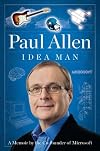
I really enjoyed this overview of Allen's life from innovative coder and visionary at Microsoft to rock-n-roll fan and scientifically inclined investor. Besides Microsoft, this includes details on the Seattle EMP institution, difficulties in trying to chart a way to a "wired" world in the early cable/internet days, space ventures, and mapping the human brain. Dated a bit and containing a lot of sports entrepreneur bits this culminates in a way with Project Halo including open problems show more detailed in an appendix.
While this is Allen's memoir, a lot of Bill Gates' apparent character comes across. Rather than a stereotypical nerd, there emerges a thrill-seeking behavior that borders on self-destructive (reckless driving, dangerous sports) and a selfish, inconsiderate sharing of credit and profit. This makes more sensible to me reporting like ""Long Before Divorce show less
While this is Allen's memoir, a lot of Bill Gates' apparent character comes across. Rather than a stereotypical nerd, there emerges a thrill-seeking behavior that borders on self-destructive (reckless driving, dangerous sports) and a selfish, inconsiderate sharing of credit and profit. This makes more sensible to me reporting like ""Long Before Divorce show less
It just goes to show you the importance of educating our children and providing them dreams. How many besides Paul Allen were inspired by the Seattle World's Fair? There are a lot of chapters that themselves could have been turned into books. An interesting man and an interesting life, I enjoyed the blend of tech history and to learn more about his impact on the NW region. Strange to learn that I've now been at MSFT longer than he was!
What a great 'fly on the wall' peek into the start of Microsoft. I was surprised at the scope and number of bad investments he made. Personally I could have skipped the sports chapter. Allen seems like 'just a guy' even with his heaps of $$$ he still is in awe of certain musicians he admires. And can't quite seem to grasp the immensity of his wealth. How terrific that he survived his 'wake-up' calls and could go on to enjoy his money and put it to good use. What a fantastic role model.
I show more supposed he wouldn't have been able to accomplish so much if he'd have to dilute his energy with a wife and family but I still can't help wishing those things for him.
How odd that I read this right after Steven's Pinker's 'the Language Instinct.' And I admit I'm fascinated with the problem of indexing and cataloging knowledge. It seems to me that if some one would use Pinker's logic to come up with an object oriented intelligence system that could be used to index the (unfathomable and undigestable) tsunami of information currently at our fingertips. show less
I show more supposed he wouldn't have been able to accomplish so much if he'd have to dilute his energy with a wife and family but I still can't help wishing those things for him.
How odd that I read this right after Steven's Pinker's 'the Language Instinct.' And I admit I'm fascinated with the problem of indexing and cataloging knowledge. It seems to me that if some one would use Pinker's logic to come up with an object oriented intelligence system that could be used to index the (unfathomable and undigestable) tsunami of information currently at our fingertips. show less
Awards

You May Also Like


Statistics
- Works
- 1
- Members
- 329
- Popularity
- #72,115
- Rating
- 3.7
- Reviews
- 11
- ISBNs
- 107
- Languages
- 4