
Carsten Jensen (1) (1952–)
Author of We, the Drowned
For other authors named Carsten Jensen, see the disambiguation page.
About the Author
Born in 1952, Carsten Jensen made his name as a columnist and literary critic for a Copenhagen daily newspaper. During the 1990s he had several major press assignments around the world, including Yugoslavia and several cities in Asia. The author of six collections of essays and two novels, Jensen show more lives in Copenhagen show less
Image credit: Carsten Jensen (author 1)
Works by Carsten Jensen
I Have Seen the World Begin: Travels through China, Cambodia, and Vietnam (1996) 193 copies, 1 review
Tagged
Common Knowledge
- Legal name
- Jensen, Carsten
- Birthdate
- 1952-07-24
- Gender
- male
- Awards and honors
- Olof Palme Prize (2009)
- Relationships
- Jensen, Liz (partner)
- Nationality
- Denmark
- Birthplace
- Marstal, Denmark
- Associated Place (for map)
- Marstal, Denmark
Members
Reviews
What an incredible book. Horrifying and hopeful in equal measure. It is a fiction, but it is born out of fact. Jensen has researched the history of Danish shipping town Marstal and woven a beautiful tale of all that is good and bad in humanity. I didn't think I was going to enjoy it at first. The opening chapter seemed flippant. However, once more characters were introduced and Jensen's almost Conradian understanding of humanity took hold, I was completely gripped. It is a tale spanning 100 show more years of a town's history, and a story of how people deal with their moments of ugliness through fellowship. I loved it. show less
I went into my reading of We, the Drowned with certain expectations. Not only was I anticipating an epic, gorgeously written story, but I was expecting a journey on the seas with one character to all ends of the earth. I don't know where I picked up this impression that We, the Drowned was largely about Albert, who searches the world for his lost father—even the novel's blurb alludes to a story much larger than Laurids and Albert—but that was what I expected nonetheless.
Because it wasn't show more what I wanted, I was disappointed in We, the Drowned. Now how petty is that? At least I'm honest. The story I wanted was nearly seven-hundred pages of a son searching for his father. There would be wonderful character building and a quest that would captivate me until its resolution. Also, there would be monsters and flying ships and unexplained occurrences because not only was I confused about the plot, but somehow I had it in mind that this was heavy in magical realism. Hmmmm. Expectations be damned. Let's just throw my expectations out and start over.
We, the Drowned is structured more like a novel in stories than a traditional novel. There's the episode of Laurids who nearly dies in battle, but miraculously survives unscathed. There is the story of his son, Albert, and his upbringing without a father who mysteriously disappeared. Then there is Albert's adventurous journey on the sea in search for his father. And then there are five hundred more pages. What I thought was the entire subject of the book is resolved in under two hundred pages. There's much more to this book than Laurids and even Albert. Each subsequent story is loosely tied into the stories that preceded it, but they span time and the globe. The thread that unites these stories have more to do with the town of Marstal and the oceans than they do with a singular event or character.
With its fragmented nature, We, the Drowned fails to be the huge epic I imagined, but that does not mean it doesn't succeed in other ways. Jensen's novel utilizes place and object how I expected it to use character and story. Not only are all these tales connected to Marstal, a town which inhabits the story as much as its characters inhabit it, but they're connected to the sea and the professional of seafaring. These are more vital to the story than any character. Once one has forgotten the names of Laurids and Albert, Klara, Knud Erik, Sophie, Herman, one still will recall the name of Marstal. They'll remember the journeys even if they've forgotten which crew sailed on them. And they'll recall the objects—the shrunken head, the boots, the vision of a bird—that outlast all but terrain itself.
It is the vivid settings and strange objects that truly occupy We, the Drowned and take the reader on an adventure. This isn't the timeless quest of a man looking for a father, it is the story of a town that strives to survive and a professional that is as old as time itself. show less
Because it wasn't show more what I wanted, I was disappointed in We, the Drowned. Now how petty is that? At least I'm honest. The story I wanted was nearly seven-hundred pages of a son searching for his father. There would be wonderful character building and a quest that would captivate me until its resolution. Also, there would be monsters and flying ships and unexplained occurrences because not only was I confused about the plot, but somehow I had it in mind that this was heavy in magical realism. Hmmmm. Expectations be damned. Let's just throw my expectations out and start over.
We, the Drowned is structured more like a novel in stories than a traditional novel. There's the episode of Laurids who nearly dies in battle, but miraculously survives unscathed. There is the story of his son, Albert, and his upbringing without a father who mysteriously disappeared. Then there is Albert's adventurous journey on the sea in search for his father. And then there are five hundred more pages. What I thought was the entire subject of the book is resolved in under two hundred pages. There's much more to this book than Laurids and even Albert. Each subsequent story is loosely tied into the stories that preceded it, but they span time and the globe. The thread that unites these stories have more to do with the town of Marstal and the oceans than they do with a singular event or character.
With its fragmented nature, We, the Drowned fails to be the huge epic I imagined, but that does not mean it doesn't succeed in other ways. Jensen's novel utilizes place and object how I expected it to use character and story. Not only are all these tales connected to Marstal, a town which inhabits the story as much as its characters inhabit it, but they're connected to the sea and the professional of seafaring. These are more vital to the story than any character. Once one has forgotten the names of Laurids and Albert, Klara, Knud Erik, Sophie, Herman, one still will recall the name of Marstal. They'll remember the journeys even if they've forgotten which crew sailed on them. And they'll recall the objects—the shrunken head, the boots, the vision of a bird—that outlast all but terrain itself.
It is the vivid settings and strange objects that truly occupy We, the Drowned and take the reader on an adventure. This isn't the timeless quest of a man looking for a father, it is the story of a town that strives to survive and a professional that is as old as time itself. show less
This epic, multigenerational novel is about the Danish seaside town of Marstal and spans a century of adventure. The men of Marstal are sailors and as such, many of them drown or disappear. The women of Marstal are left behind to live their lives the best they can in the absence of men. Taking place from the 1840s through WWII, there is a war for each generation. In between there are many seafaring adventures, some love, and some murders.
It's written masterfully - Jensen keeps track of a show more huge cast of characters and gives them all an individual personality. Lives connect in sometimes unexpected ways and the generations do as well. There's also a really clever use of "we" as narrator - the people of the town, telling their own story in the plural.
But somehow, I was still bored for large chunks of this. I loved the beginning and I was moved by the very end. But there were a couple hundred pages in the middle where I felt the book really dragged. I wasn't that interested in the characters and the situations weren't enough to keep my interest.
I think this is a great book, I just think it wasn't quite for me. I appreciated things about it, but couldn't help wishing it would end. I think it's a book that most people should give a try, but I am evidence that even a good book doesn't work for every reader. show less
It's written masterfully - Jensen keeps track of a show more huge cast of characters and gives them all an individual personality. Lives connect in sometimes unexpected ways and the generations do as well. There's also a really clever use of "we" as narrator - the people of the town, telling their own story in the plural.
But somehow, I was still bored for large chunks of this. I loved the beginning and I was moved by the very end. But there were a couple hundred pages in the middle where I felt the book really dragged. I wasn't that interested in the characters and the situations weren't enough to keep my interest.
I think this is a great book, I just think it wasn't quite for me. I appreciated things about it, but couldn't help wishing it would end. I think it's a book that most people should give a try, but I am evidence that even a good book doesn't work for every reader. show less
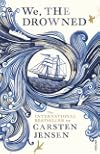
It's worth noting, in the first place, how I found this book. A year or two ago, I was looking around my favourite bookshop, telling myself to buy something I wouldn't normally buy. 'We, the Drowned' jumped out at me when I walked past it, and it's not hard to see why -- look at that cover! I bought it and, typically, it had been sitting on my bookshelf collecting dust until about a month ago, when I finally decided to conquer it.
'We, the Drowned' is set in Marstal, a small town in Denmark show more with a centuries long history of seafaring. It spans about 100 years, from the middle of the nineteenth century to the end of World War II. It can be hard for the first few hundred pages to decipher what exactly the book is about, but it became clear to me that this was less the story of a few individuals in a small Danish town, and more the story of Denmark as a whole and the way it has been shaped by European history.
This book spends roughly half its time at sea and half its time in Marstal. When at sea, it's very much your typical seafaring adventure, and the tales of corrupt sailors, dangerous storms and incredible lands would be enough to excite anyone. Back home in Marstal, we see a lot of character development take place, and we also see the conflicts between tradition and modernity, and between the men who are desperate to sail and the women who are terrified to lose them.
Manhood is a central theme in 'We, the Drowned', and this is reflected very well in Jensen's writing style, which is dry and succinct, and translates incredibly well into English. This style is something really remarkable about the book, as it perfectly conveys the mentalities of the main characters. However, it does have some limitations: the female characters in the book can seem at times awkward and unrealistic, and their dialogue is often rather stilted. Compared to the heroes of the novel, Jensen seems to have difficulty making the women of the book likable or even particularly interesting.
On the whole, though, this is a very good book. At nearly 700 pages, it's an investment, but it is an enjoyable and rewarding novel that is held together by prose that is itself full of character. Definitely a great start to my year in terms of reading! show less
'We, the Drowned' is set in Marstal, a small town in Denmark show more with a centuries long history of seafaring. It spans about 100 years, from the middle of the nineteenth century to the end of World War II. It can be hard for the first few hundred pages to decipher what exactly the book is about, but it became clear to me that this was less the story of a few individuals in a small Danish town, and more the story of Denmark as a whole and the way it has been shaped by European history.
This book spends roughly half its time at sea and half its time in Marstal. When at sea, it's very much your typical seafaring adventure, and the tales of corrupt sailors, dangerous storms and incredible lands would be enough to excite anyone. Back home in Marstal, we see a lot of character development take place, and we also see the conflicts between tradition and modernity, and between the men who are desperate to sail and the women who are terrified to lose them.
Manhood is a central theme in 'We, the Drowned', and this is reflected very well in Jensen's writing style, which is dry and succinct, and translates incredibly well into English. This style is something really remarkable about the book, as it perfectly conveys the mentalities of the main characters. However, it does have some limitations: the female characters in the book can seem at times awkward and unrealistic, and their dialogue is often rather stilted. Compared to the heroes of the novel, Jensen seems to have difficulty making the women of the book likable or even particularly interesting.
On the whole, though, this is a very good book. At nearly 700 pages, it's an investment, but it is an enjoyable and rewarding novel that is held together by prose that is itself full of character. Definitely a great start to my year in terms of reading! show less
Lists
"We" narration (1)
Havet (1)
Awards


You May Also Like


Associated Authors
Statistics
- Works
- 25
- Members
- 2,309
- Popularity
- #11,116
- Rating
- 4.1
- Reviews
- 61
- ISBNs
- 194
- Languages
- 14
- Favorited
- 3