
Jim Miller (1) (1947–)
Author of The Rolling Stone Illustrated History of Rock & Roll
For other authors named Jim Miller, see the disambiguation page.
About the Author
Image credit: James Miller on C-SPAN2, October 3, 2007
Works by Jim Miller
Democracy Is in the Streets: From Port Huron to the Siege of Chicago, With a New Preface by the Author (1987) 177 copies, 1 review
Associated Works
The Dylan Companion: A Collection of Essential Writing About Bob Dylan (1990) — Contributor, some editions — 103 copies
Tagged
Common Knowledge
- Canonical name
- Miller, Jim
- Legal name
- Miller, James Edwin
- Other names
- Miller, James
- Birthdate
- 1947-02-28
- Gender
- male
- Education
- Pomona College
Brandeis University (PhD | History of Ideas | 1976) - Occupations
- writer
educator
historian
editor - Organizations
- The New School
- Awards and honors
- Guggenheim Fellowship
NEH Fellowship - Short biography
- https://en.wikipedia.org/wiki/James_Mi...)
- Nationality
- USA
- Places of residence
- Chicago, Illinois, USA
- Associated Place (for map)
- Illinois, USA
Members
Reviews
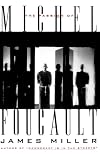
Every semester when finals roll around, I sigh and reach for my Foucault shelf, which is what I deserve for being a grad student studying mental illness and institutional power. But after a few years of cursing his name, I figured it was time to find out who this Foucault guy was, and if his life could shed any insight on his work.
In that regard, James Miller makes a heroic attempt to contextualize the events of Foucault's life with his scholarship. I say heroic, because Foucault was an show more evasive man who deliberately sought the death of the author in his public statements, and because his texts are legendarily dense. Miller more or less succeeds, finding in Foucault an attempt to fulfill the Nietzschean quest to "become oneself" through the practice of "limit-experiences" in radical politics, physical pleasure/pain, intellectual rigor, and ultimately death.
So why only four stars? Well, first, I only half buy it. I'm not an expert in Foucault scholarship by any means, but somehow it seems a little pat. And second, this is a dense book, and took me several weeks to trudge through. Someone with a lesser interest in Foucault might give up. Somebody with greater knowledge might through the book through a window. show less
In that regard, James Miller makes a heroic attempt to contextualize the events of Foucault's life with his scholarship. I say heroic, because Foucault was an show more evasive man who deliberately sought the death of the author in his public statements, and because his texts are legendarily dense. Miller more or less succeeds, finding in Foucault an attempt to fulfill the Nietzschean quest to "become oneself" through the practice of "limit-experiences" in radical politics, physical pleasure/pain, intellectual rigor, and ultimately death.
So why only four stars? Well, first, I only half buy it. I'm not an expert in Foucault scholarship by any means, but somehow it seems a little pat. And second, this is a dense book, and took me several weeks to trudge through. Someone with a lesser interest in Foucault might give up. Somebody with greater knowledge might through the book through a window. show less
Foucault would hate this book, but the freak-reader will appreciate that the guy was a total freak (in both the best and worst ways). He sounds utterly histrionic and unbearable (repeated youthful suicide attempts and social-reject-style late-night lurking in the Sorbonne's corridors), but also into fun (his less well-publicized belief that fisting is a key way to expand one's consciousness). The book is essential reading for scholars of Foucault. For example, some of the English show more translations in this book so far surpass the quality of that found in his actual books it's crazy (who knew that every time he used the word 'sex' he was referring to the male organ and not the act(s)!! Not the English-speaking reader, that's for sure!). However, the book is also essential reading for all kinds of sexual outlaws and freaks because, apparently, one of the sharpest minds of the 20th century spent a considerable amount of time pondering the meaning of gay and bdsm sex. Foucault: a freak for power. show less
Being a neophyte Foucault researcher, a Professor at my university recommended this book as a good frame for viewing the rest of his work. Context is always valuable, but I am starting to feel that for few is this more the case than for Foucault.
A lovingly crafted book, the passion with which Miller views the subject is immediately apparent, and the book certainly doesn't suffer for it in the same way that some academic books do. Whilst the author has taken a particular viewpoint of the life show more of Foucault, one must not forget that this is always the case in a biography - the only difference is how honest the writer is in how much information he has at his disposal, and how much he feels he has taken license. Miller has done well in this respect, being extensively well read on the subject; my personal feeling is that given the information at his disposal, his interpretation was more than fair.
A wonderful balance of academia and art, I would strongly recommend this book to anyone captivated by Foucault's works. I cannot wait to emerse myself in yet more. Furthermore, I have found my "to read" list rapidly expanding as I discover who really did impact his writing and theoretical leanings - Georges Bataille, Frederick Nietszche and many more have been illuminated for me by this wonderful book, which I see as the beginning, as opposed to the end. show less
A lovingly crafted book, the passion with which Miller views the subject is immediately apparent, and the book certainly doesn't suffer for it in the same way that some academic books do. Whilst the author has taken a particular viewpoint of the life show more of Foucault, one must not forget that this is always the case in a biography - the only difference is how honest the writer is in how much information he has at his disposal, and how much he feels he has taken license. Miller has done well in this respect, being extensively well read on the subject; my personal feeling is that given the information at his disposal, his interpretation was more than fair.
A wonderful balance of academia and art, I would strongly recommend this book to anyone captivated by Foucault's works. I cannot wait to emerse myself in yet more. Furthermore, I have found my "to read" list rapidly expanding as I discover who really did impact his writing and theoretical leanings - Georges Bataille, Frederick Nietszche and many more have been illuminated for me by this wonderful book, which I see as the beginning, as opposed to the end. show less

This was a great book for its time and an essential part of my exploration or rock 'n' roll as a teenager. It would still be interesting to anyone wanting to understand contemporary opinion of bands and solo performers of that time.
Lists
1960s (1)
Awards


You May Also Like


Associated Authors
Statistics
- Works
- 10
- Also by
- 2
- Members
- 1,495
- Popularity
- #17,183
- Rating
- 3.8
- Reviews
- 9
- ISBNs
- 149
- Languages
- 4