
Christophe Bataille
Author of Annam
About the Author
Image credit: Christophe Bataille en 202 0à la mairie de Trouville-sur-Mer lors de la remise de son prix Marguerite-Duras
Works by Christophe Bataille
Associated Works
The Elimination: A Survivor of the Khmer Rouge Confronts His Past and the Commandant of the Killing Fields (2012) — Collaboration, some editions — 114 copies, 5 reviews
Tagged
Common Knowledge
- Legal name
- Bataille, Christophe
- Birthdate
- 1971-10-14
- Gender
- male
- Education
- L'Ecole des Hautes Etudes, Paris
- Organizations
- Editions Grasset (Conseiller littéraire)
L'Oréal, Société, Londres (Gestionnaire, 19 93 | 19 95) - Nationality
- France
- Birthplace
- Versailles, Yvelines, Île-de-France, France
- Places of residence
- Paris, France
London, England, UK - Associated Place (for map)
- France
Members
Reviews
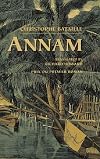
Exquisite. Beautifully produced. Jacket illo is gorgeous, and perfectly evokes the feel of the book: vaguely, Europeanly tropical, a little archaic, and serenely lovely. I admire Bataille's concise, elegant story, and translator Richard Howard's lovely prose rendering of it. It's an imperfect story, in that it has a huge scope and only unsatisfying depth. This could be several more in-depth novels. Bataille chose instead to tell all of a story, though without some characteristics of a fully show more realized novel this can't be "one for the ages."
It says here. Watch: In 200 years, this will be a celebrated non-event in publishing, like "Moby-Dick" was for 1851. show less
It says here. Watch: In 200 years, this will be a celebrated non-event in publishing, like "Moby-Dick" was for 1851. show less
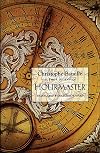
I wanted to think about this one for a few days after reading it before writing anything about it. I couldn't really decide what I thought of it.
Unfortunately, I think I've decided that I was really unimpressed by it.
Why? The writing is lyrical and beautiful, with a mythological, fairy-tale cadence to it. The author won a prize for his debut novel, Annam (which I have not read). It kind of seems like there ought to be something significant to take away from this brief novel - like it ought show more to be symbolic - or at least have something to say.
But it doesn't.
Other reviewers have described it as a "fable without a moral."
But not only does it not have a "moral," it doesn't have a proper plot structure, and it doesn't give any feeling of satisfaction.
In 17th century Europe, the duke Gonzaga employs an hourmaster to wind and repair his castle's many clocks. The first hourmaster mysteriously disappears - foul play? Another is hired. He leaves after getting beat up one night. Is someone out to assure that Gonzaga has no hourmaster? We never find out. A third man is hired for the job, Arturo, and most of the book deals with this character, and his relationship to the duke. There seems to be no point at all to the early incidents in the book.
The book ends with a tragic crime being committed - but since it happens to a character who was just introduced a few pages before, the emotional impact is very limited. I suppose we are supposed to see it as a betrayal of friendship, rather than as the crime against the individual - but I don't think it really works.
There's also a narrator who is none of the characters in the story - there are some few insights into his personality, but why? Who he is doesn't reflect on the events or themes of the book at all. (Which main theme seems to be: 'the rich and powerful are selfish and untrustworthy.' Not too earthshaking a proclamation.)
Overall, this story reminded me of something one might find in a somewhat pretentious college literary magazine which was attempting (poorly) to emulate the 19th century salons of Paris. show less
Unfortunately, I think I've decided that I was really unimpressed by it.
Why? The writing is lyrical and beautiful, with a mythological, fairy-tale cadence to it. The author won a prize for his debut novel, Annam (which I have not read). It kind of seems like there ought to be something significant to take away from this brief novel - like it ought show more to be symbolic - or at least have something to say.
But it doesn't.
Other reviewers have described it as a "fable without a moral."
But not only does it not have a "moral," it doesn't have a proper plot structure, and it doesn't give any feeling of satisfaction.
In 17th century Europe, the duke Gonzaga employs an hourmaster to wind and repair his castle's many clocks. The first hourmaster mysteriously disappears - foul play? Another is hired. He leaves after getting beat up one night. Is someone out to assure that Gonzaga has no hourmaster? We never find out. A third man is hired for the job, Arturo, and most of the book deals with this character, and his relationship to the duke. There seems to be no point at all to the early incidents in the book.
The book ends with a tragic crime being committed - but since it happens to a character who was just introduced a few pages before, the emotional impact is very limited. I suppose we are supposed to see it as a betrayal of friendship, rather than as the crime against the individual - but I don't think it really works.
There's also a narrator who is none of the characters in the story - there are some few insights into his personality, but why? Who he is doesn't reflect on the events or themes of the book at all. (Which main theme seems to be: 'the rich and powerful are selfish and untrustworthy.' Not too earthshaking a proclamation.)
Overall, this story reminded me of something one might find in a somewhat pretentious college literary magazine which was attempting (poorly) to emulate the 19th century salons of Paris. show less

I started the book "Absinthe" with some doubts, although I must admit that I was quite curious, familiar with the display of a liquor store in Amsterdam that has one of its windows full of this famous drink.
In the film Moulin Rouge with Nicole Kidman, this drink appears as a cheerful intoxicant, but history has also shown that it had dangers. While in France, as reported in the book, a ban finally came about around 1915, in the Netherlands it was already banned in 1909 because in some cases show more it would lead to madness.
The writer shows us that absinthe held people in its power, apparently inspiring them, and takes us into a biography that revolves around the distiller Jose, interwoven with the influence he had on Jean's family. Not a high-flown story, but an attractive story in which you can almost feel the scents and colors of the absinthe rising from the pages. show less
In the film Moulin Rouge with Nicole Kidman, this drink appears as a cheerful intoxicant, but history has also shown that it had dangers. While in France, as reported in the book, a ban finally came about around 1915, in the Netherlands it was already banned in 1909 because in some cases show more it would lead to madness.
The writer shows us that absinthe held people in its power, apparently inspiring them, and takes us into a biography that revolves around the distiller Jose, interwoven with the influence he had on Jean's family. Not a high-flown story, but an attractive story in which you can almost feel the scents and colors of the absinthe rising from the pages. show less
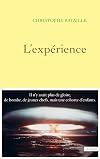
Christophe Bataille a la plume sèche et claquante, comme un éclair blanc atomique. Les mots claquent, les phrases sont cinglantes. Rien de superflu dans ces mots tirés du désert, issus du sable et de la mort. Quelles phrases pour dire l'indicible, l'absurdité de cette course à l'arme atomique, mise au point pour ne pas être utilisée, si ce n'est sur des cobayes humains ? Derrière la prouesse qui fait la fierté nationale, la vie des petites gens, les malgré-nous de la puissance show more française, les sacrifiés du "made in France". Christophe Bataille s'est bien documenté sur cet épisode souterrain de l'indépendance militaire de la France, s'appuyant sur des témoignages et des ouvrages dont on trouve la liste en fin d'ouvrage. Référence plus discrète, celle à TS Eliot et à sa "Waste land", qui imprègne en nappe phréatique toutes les pages de l'auteur. Bataille écrit page 32 : "Avril est le plus cruel des mois. Là où je suis, il n'y a pas de tombe, pas de lieu, mais des fleurs sur la terre morte". Eliot écrit dans "Terre vaine" : "Avril est le plus cruel des mois, il engendre / Des lilas qui jaillissent de la terre morte, il mêle / Souvenance et désir, il réveille / Par ses pluies de printemps les racines inertes". Reggane n'est que le lieu de la mort et de la désolation. show less
Lists
Awards


You May Also Like


Associated Authors
Statistics
- Works
- 11
- Also by
- 1
- Members
- 236
- Popularity
- #95,934
- Rating
- 3.1
- Reviews
- 7
- ISBNs
- 37
- Languages
- 6
