
Robert Boyers
Author of Laing and anti-psychiatry; (Salmagundi specials)
About the Author
Robert Boyers is editor of Salmagundi, professor of English at Skidmore College, and director of the New York State Summer Writers Institute. He is the author of ten previous books and the editor of a dozen others. He writes often for such magazines as Harper's, the New Republic, the Nation, the show more Yale Review, and American Scholar, and Granta. show less
Series
Works by Robert Boyers
The Tyranny of Virtue: Identity, the Academy, and the Hunt for Political Heresies (2019) 35 copies, 2 reviews
Jewish Themes: Dispersal, Holocaust, Preservation (Salmagundi, No. 66 (Winter/Spring 1985)) (1985) 3 copies
Lionel Trilling: Negative Capability and the Wisdom of Avoidance (A Literary frontiers edition) (1977) 3 copies
Salmagundi 2 copies
Salmagundi (146/147) 1 copy
Salmagundi (148/149) 1 copy
Salmagundi 111 1 copy
Salmagundi No. 112 1 copy
Salmagundi No 54, Fall 1981 1 copy
Vojo Stanij 1 copy
Salmagundi Spring-Summer 1986 No. 70-71 A Quarterly of the Humanities & Social Sciences (1986) 1 copy
Salmagundi (Fall 1979) 1 copy
Associated Works
Lost Classics: Writers on Books Loved and Lost, Overlooked, Under-read, Unavailable, Stolen, Extinct, or Otherwise Out of Commission (2000) — Contributor — 319 copies, 6 reviews
Mentors, Muses & Monsters: 30 Writers on the People Who Changed Their Lives (2009) — Contributor — 71 copies, 2 reviews
Tagged
Common Knowledge
- Birthdate
- 1942
- Gender
- male
- Education
- Queen's College
New York University - Occupations
- professor
editor - Organizations
- Skidmore College
Salmagundi - Nationality
- USA
- Birthplace
- New York, New York, USA
- Associated Place (for map)
- New York, USA
Members
Reviews
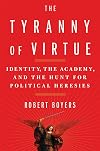
Summary: A distinguished liberal scholar critiques the new academic orthodoxy, one that defines virtue through the excoriating of privilege, identity, safety, microaggression, ableism, and appropriation, creating an academic tyranny in which people fear to speak their minds under threat of denunciation.
Robert Boyers
Perhaps the most stunning thing about this book is who wrote it. This is not one more conservative diatribe against political correctness and speech codes in the university. show more Robert Boyers is a liberal arts professor teaching English at Skidmore as well as editing the literary quarterly, Salmagundi, which he has done for fifty years. He directs the New York State Summer Writers Institute. He does not have kind words to say about religious and political conservatives.
He also writes trenchantly against a new liberal academic orthodoxy of enforced virtue. He shows how constructs like privilege, microaggression, ableism, safety, identity, and appropriation, that may have a legitimate place in social critique, have become part of a surveillance culture on campuses where fellow scholars of good will can find themselves facing universal denunciation for the smallest, often inadvertent speech infractions, enforcing, while the denouncers assert their political virtues. It creates a culture in which faculty fear to say what they think, and students are taught all the things against which they should take offense.
Boyers is concerned with how this shuts down real inquiry and discourse, and often does little, if anything, to advance real efforts toward justice and equity with persons of color, or of other identities that these enforced virtues are meant to protect. He also is concerned with the lack of real intellectual underpinnings to the slogans used in the denunciation of transgressions, using Susan Jacoby's phrase "junk thought." One example comes in his discussion of cultural appropriation. As with other matters in the book, he recognizes legitimate instances of appropriation but then shows how all writers, including writers of color appropriate. He challenges the idea that those who are not of a particular culture have no right to write about it and cites examples of those who do so with real sympathy, with the intent to honor and honestly present that culture and who get it right in the eyes of persons from that culture.
Boyers in his epilogue soberly assesses the scene:
"In many quarters we are now haunted by the specter of a liberalism increasingly drawn to denial and overt repression. Academic liberals who would have laughed thirty or forty years ago at the prospect of speech codes and draconian punishments for verbal indecorum or "presumption" are now not only compliant but enthusiastic about efforts to enforce standards many of them know to be intellectually indefensible. Those of us who are determined to call what is happening by its rightful name are astonished again and again, by the virulence of efforts to deny what is now unmistakable."
Boyers is describing the shift from the liberal value of honest, fearless exploration of ideas that allowed for difference and debate and discomfort. He decries the loss of a generosity of spirit that assumed good will of one's intellectual adversaries, replaced by a climate of suspicion, an "us versus them" mentality whose resting state is one of hostility and grievance.
What it seems to me Boyers is calling for is perspective and rigorous mental reflection. Privilege does exist. Microaggressions do occur. Sexual violence on campuses and #MeToo make it clear that campuses are often not safe places for women. "Black face" episodes remind us that cultural appropriation is all too real. It seems, though, that to find instances of this everywhere, even among those with the most impeccable liberal credentials, begs the question of whether we diminish the seriousness of flagrant instances by lumping inadvertent or even non-existent slights with these. To put all the onus of offense on the act also seems to take away the agency of being able to choose to be offended, or to choose other, perhaps more conciliatory responses that mend rather than rend the social fabric.
What Boyers doesn't address, perhaps in a desire to preserve the work he loves, is the connection between such toxic discourse and the eclipse of the humanities within the university. Yet might it not be contended that instances of the kind of speech codes and public shaming Boyers writes about occur most often with the context of the disciplines that fall within the humanities and social sciences? Might it be that the apparent dying of the humanities at many institutions is assisted by those within these disciplines digging each other's graves? What I think Boyers gets right is that these things are "not to be done" but rather vigorously resisted. Hopefully his fellow scholars will wake to this realization in time.
____________________________
Disclosure of Material Connection: I received a complimentary review e-galley of this book from the publisher via Edelweiss in exchange for an honest review. The opinions I have expressed are my own. show less
Robert Boyers
Perhaps the most stunning thing about this book is who wrote it. This is not one more conservative diatribe against political correctness and speech codes in the university. show more Robert Boyers is a liberal arts professor teaching English at Skidmore as well as editing the literary quarterly, Salmagundi, which he has done for fifty years. He directs the New York State Summer Writers Institute. He does not have kind words to say about religious and political conservatives.
He also writes trenchantly against a new liberal academic orthodoxy of enforced virtue. He shows how constructs like privilege, microaggression, ableism, safety, identity, and appropriation, that may have a legitimate place in social critique, have become part of a surveillance culture on campuses where fellow scholars of good will can find themselves facing universal denunciation for the smallest, often inadvertent speech infractions, enforcing, while the denouncers assert their political virtues. It creates a culture in which faculty fear to say what they think, and students are taught all the things against which they should take offense.
Boyers is concerned with how this shuts down real inquiry and discourse, and often does little, if anything, to advance real efforts toward justice and equity with persons of color, or of other identities that these enforced virtues are meant to protect. He also is concerned with the lack of real intellectual underpinnings to the slogans used in the denunciation of transgressions, using Susan Jacoby's phrase "junk thought." One example comes in his discussion of cultural appropriation. As with other matters in the book, he recognizes legitimate instances of appropriation but then shows how all writers, including writers of color appropriate. He challenges the idea that those who are not of a particular culture have no right to write about it and cites examples of those who do so with real sympathy, with the intent to honor and honestly present that culture and who get it right in the eyes of persons from that culture.
Boyers in his epilogue soberly assesses the scene:
"In many quarters we are now haunted by the specter of a liberalism increasingly drawn to denial and overt repression. Academic liberals who would have laughed thirty or forty years ago at the prospect of speech codes and draconian punishments for verbal indecorum or "presumption" are now not only compliant but enthusiastic about efforts to enforce standards many of them know to be intellectually indefensible. Those of us who are determined to call what is happening by its rightful name are astonished again and again, by the virulence of efforts to deny what is now unmistakable."
Boyers is describing the shift from the liberal value of honest, fearless exploration of ideas that allowed for difference and debate and discomfort. He decries the loss of a generosity of spirit that assumed good will of one's intellectual adversaries, replaced by a climate of suspicion, an "us versus them" mentality whose resting state is one of hostility and grievance.
What it seems to me Boyers is calling for is perspective and rigorous mental reflection. Privilege does exist. Microaggressions do occur. Sexual violence on campuses and #MeToo make it clear that campuses are often not safe places for women. "Black face" episodes remind us that cultural appropriation is all too real. It seems, though, that to find instances of this everywhere, even among those with the most impeccable liberal credentials, begs the question of whether we diminish the seriousness of flagrant instances by lumping inadvertent or even non-existent slights with these. To put all the onus of offense on the act also seems to take away the agency of being able to choose to be offended, or to choose other, perhaps more conciliatory responses that mend rather than rend the social fabric.
What Boyers doesn't address, perhaps in a desire to preserve the work he loves, is the connection between such toxic discourse and the eclipse of the humanities within the university. Yet might it not be contended that instances of the kind of speech codes and public shaming Boyers writes about occur most often with the context of the disciplines that fall within the humanities and social sciences? Might it be that the apparent dying of the humanities at many institutions is assisted by those within these disciplines digging each other's graves? What I think Boyers gets right is that these things are "not to be done" but rather vigorously resisted. Hopefully his fellow scholars will wake to this realization in time.
____________________________
Disclosure of Material Connection: I received a complimentary review e-galley of this book from the publisher via Edelweiss in exchange for an honest review. The opinions I have expressed are my own. show less
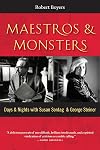
I’m a sucker for literary gossip. Boyers’s memoir of his friendship with two temperamental titans of modern letters, Susan Sontag and George Steiner, would seem to promise a lot of juicy, even gory details. There are indeed plenty of delicious anecdotes, but Maestros & Monsters goes beyond gossip. Boyers explores the purpose of criticism, the attraction of genius, how taste exposes both the subjectivity and iron authority of aesthetic experience. Above all, this loving tribute is a show more reminder to keep reading Sontag and Steiner, and by extension, to remain in the fray of words, ideas, and difficult people. show less
Worthy Conversation. Boyers is by his own admission a liberal academic. In that, he means both that he genuinely favors much of the current progressive political agenda, but also the more classical sense of liberalism at least in regards to free and open speech. This discussion is thus from that point of view, critiquing the more "hard core" progressives for their lack of civility and commitment to free speech while holding fast to his commitments to ideas such as anthropogenic climate show more change, racial justice, and other tropes of the left. Boyers is very clearly of the old and dying breed that can disagree with someone while still genuinely respecting them, and this approach is abundantly evident throughout this text. Very much recommended, though likely a fair degree academic for many. show less

Awards

You May Also Like


Associated Authors
Statistics
- Works
- 51
- Also by
- 5
- Members
- 281
- Popularity
- #82,781
- Rating
- 3.8
- Reviews
- 4
- ISBNs
- 36
- Languages
- 1