
Mark H. Podwal (1945–2024)
Author of The Menorah Story
About the Author
Image credit: Mark Podwal
Works by Mark H. Podwal
Book of Lamenatations, The 2 copies
Associated Works
Messengers of God: Biblical Portraits and Legends (1976) — Illustrator, some editions — 668 copies, 1 review
A Passover Haggadah: As Commented Upon by Elie Wiesel and Illustrated by Mark Podwal (1993) — Illustrator, some editions — 277 copies, 1 review
The Jews of Silence: A Personal Report on Soviet Jewry (1966) — Illustrator, some editions — 263 copies
The Captive Soul of the Messiah: New Tales About Reb Nachman (1979) — Illustrator, some editions — 27 copies
Tagged
Common Knowledge
- Birthdate
- 1945-06-08
- Date of death
- 2024-09-13
- Gender
- male
- Education
- New York University School of Medicine
- Occupations
- physician
artist
author
cartoonist - Agent
- Forum Gallery, New York
- Nationality
- USA
- Birthplace
- Brooklyn, New York, USA
- Places of residence
- Fresh Meadows, Queens, New York, USA
- Associated Place (for map)
- New York, USA
Members
Reviews
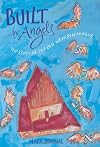
Beautiful illustrations, and hints of mystery. "A synagogue with as many stories as stones." In the end, none of these stories are really told. There is just a cursory listing of legends and superstitions. Also, it makes a political statement -- that the stones of the synagogue are only borrowed until they are used to rebuild the Temple in Jerusalem one day. The book is based on legends about an actual syngagoue, the Altneuschul or Prague, the oldest surviving synagogue in Europe. - Marla S.
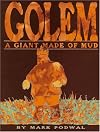
This traditional Jewish tale recounts the fabled origins of the Golem, a monstrous being created from a mixture of mud and magic, and its disastrous reign through Prague. The mystical overtones which stems from the presence of religious artifacts and European alchemy highlights the dangers of tempting powers beyond human control. A gouache and ink combination make up the soft and colorful illustrations which are the real highlights of the book.
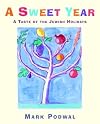
I absolutely adore everything this book represented. Jews have a history of being an oppressed people and the fact that this author chose to celebrate their culture in such a great way made me proud to read it to my child. This book included things very specific to the Jewish beliefs and customs, food is a great way to measure the year and the symbolism each item means to the Jewish culture. I would highly recommend this book to children of ALL ages! I think everyone could stand to learn show more something about cultures that aren't their own. Grades K-12 show less

There is a whole genre of books I was not aware of: the bestiaries. It originated before the printing press was developed but that helped to spread the concept. It was a collection of real and imagined beasts, often based or drawn from the Christian and Jewish Bibles. I learned this and much more from Mark Podwal's short (three and a half pages long) but information preface to "A Jewish Bestiary: a Book of Fabulous Creatures Drawn from Hebraic Legend and Lore."
The bulk of the book is made up show more from the description and drawing of 25 of such animals. Each got one page (or less) of text and a full page simple line drawing. The latter always more than just a drawing of an animal: it included an object a-or background or position that connected the animal with its characteristics as envisioned by the Bible and later sacred literature, e.g. Talmud, Midrash…
I recommend reading the stories for each animal. Some of them will sound familiar (e.g. the sly fox from Aesop, the great fish swallowing Jonah, but others may surprise you (e.g. the pious stork or the salamander that can protect you from fire. These stories were recounted with gentle humor and were fun to read. Below is a full list of creatures you can find in the book. For this overview I just picked one feature for each animal, but often there is more.
I have only two regrets about this book. One is the lack of citations. In this current format it is rather enjoyable but it is hard to find the original sources if one wants to dig further. The short biography at the end helps, but it only has 14 entries. The other caveat is the lack of niqqud, pointing in the Hebrew text to show vowels. At the bottom of the page you can find the Hebrew name of each beast, but I, not having classical Jewish education I am not familiar with all and cannot necessarily pronounce them all correctly. But these are minor issues; otherwise the book was a joyous way to educate myself about a neglected aspect of Jewish folklore. show less
The bulk of the book is made up show more from the description and drawing of 25 of such animals. Each got one page (or less) of text and a full page simple line drawing. The latter always more than just a drawing of an animal: it included an object a-or background or position that connected the animal with its characteristics as envisioned by the Bible and later sacred literature, e.g. Talmud, Midrash…
I recommend reading the stories for each animal. Some of them will sound familiar (e.g. the sly fox from Aesop, the great fish swallowing Jonah, but others may surprise you (e.g. the pious stork or the salamander that can protect you from fire. These stories were recounted with gentle humor and were fun to read. Below is a full list of creatures you can find in the book. For this overview I just picked one feature for each animal, but often there is more.
- The ant – wisest of the wise
- The serpent – who spoke Hebrew
- The lion – king of the beasts
- The stork – pious one, as in "hasidah"
- The snail – with aromatic spice, as in shehelet
- The ostrich – a cross between a bird and a camel
- Behemoth – the largest animal
- The gnat – who killed Titus
- The salamander – who can protect you from fire
- Leviathan – who rules over all the creatures of the sea
- The raven – who refused Noah's request to fly out for land
- The ass – on which the Messiah will ride in to town
- The spider - who helped to hide David from King Saul's troops in a cave
- The fox – with inordinate appetite
- The cock – who can distinguish between day and night
- The swine – referred to as "davar aher," another thing
- The Aazazel-goat – the scapegoat
- The golden calf – who could dance
- The dove – who is like Israel: the meekest and most persecuted
- The great fish – associated with Jonah
- The unicorn – whose hide was used to cover the Tabernacle
- Nebuchadnezzar – whose lower part became like a lion as a punishment for declaring himself a god
- The barnacle goose – who grows on trees near the sea
- The ziz – a bird ruling over all other birds
I have only two regrets about this book. One is the lack of citations. In this current format it is rather enjoyable but it is hard to find the original sources if one wants to dig further. The short biography at the end helps, but it only has 14 entries. The other caveat is the lack of niqqud, pointing in the Hebrew text to show vowels. At the bottom of the page you can find the Hebrew name of each beast, but I, not having classical Jewish education I am not familiar with all and cannot necessarily pronounce them all correctly. But these are minor issues; otherwise the book was a joyous way to educate myself about a neglected aspect of Jewish folklore. show less
Lists
Awards


You May Also Like


Associated Authors
Statistics
- Works
- 19
- Also by
- 10
- Members
- 566
- Popularity
- #44,191
- Rating
- 3.9
- Reviews
- 16
- ISBNs
- 32
- Languages
- 3
- Favorited
- 1