
Minae Mizumara
Author of A True Novel
About the Author
Image credit: via Goodreads
Works by Minae Mizumara
Tagged
Common Knowledge
- Canonical name
- Mizumara, Minae
- Birthdate
- 1951
- Gender
- female
- Education
- Boston School of Fine Arts, Sorbonne (Paris), Yale Graduate School (Connecticut)
- Occupations
- novelist
- Awards and honors
- 1991 Agency for Cultural Affairs New Artist Award, 1996 Noma New Artist Award, 2003 Yomiuri Prize for Literature
- Nationality
- Japan
- Birthplace
- Tokyo, Japan
- Places of residence
- Tokyo, Japan
- Map Location
- Japan
Members
Reviews

I went in expecting to find a Japanese version of Wuthering Heights, but it would be selling the richly layered storytelling of a True Novel short to label it as a mere retelling. This book is strangely engrossing for a book with so little plot for the first 400 pages. While I usually love gossip and multigenerational family drama more than anything else in a story, it was really the setting of this book that makes this novel such a memorable read. When Yusuke Kato enters the remote cottage show more in Karuizawa, he feels as though he has walked into the past. His narrative is so mesmerizing that I too felt bewitched by this cabin that has remained frozen in time. The descriptive narration combined with the full-page photographs help completely immerse the reader into the setting of post-war Japan. Life in the Japanese countryside seems to be much slower paced and quainter compared to Emily Bronte’s passionate depiction of life on the English moors, but what a True Novel lacks in drama it more than makes up for in evocative settings, complex relationships between the characters, and introspective narrative voices. show less
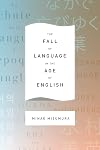
Currently, only two major works by Minae Mizumura have been translated into English. The first, and one of the best works of literature that I've read in recent years, was A True Novel. More recently, the English-language edition of Mizumura's first nonfiction work, The Fall of Language in the Age of English, was released, published in 2015 by Columbia University Press with a translation by Juliet Winters Carpenter (who was also the translator for A True Novel) and Mari Yoshihara. The Fall show more of Language in the Age of English is actually a revision of its Japanese counterpart, Mizumura rewriting portions of the book, most notably the final chapter, to better suit a non-Japanese audience. The Fall of Language in the Age of English caused something of a stir when it was originally published in Japan in 2008—the work won a Kobayashi Hideo Award, became a commercial success, and even sparked some amount of controversy.
Mizumura opens The Fall of Language in the Age of English with a personal account of her participation in the University of Iowa's International Writing Program in 2003. Afterwards, Mizumura, who studied French and French literature at Yale, proceeds to outline the rise and fall of French as one of the world's universal languages. She then discusses the concept and role of universal languages, the development of local languages into national languages, and the relationships among the three in general before specifically turning to the emergence of Japanese as a national language. From there Mizumura describes what she calls the miracle of modern Japanese literature, shedding further light upon its peculiar evolution and how it came to be considered a major world literature. Mizumura then addresses the current prevalence of English and its spread before closing with what she sees as the possible futures in store for non-English languages in the digital age.
The Fall of Langauge in the Age of English is an immensely readable and engaging work examining the place of literature, national languages, and translation in a world in which English increasingly dominates. In addition to the main text, The Fall of Language in the Age of English also includes a newly-written preface by Mizumura specifically for the English-language edition of the work, an introduction by the translators, notes, a selected bibliography, and an index. The volume is written in a very approachable manner and is intended for a general audience, Mizumura presenting ideas and concepts clearly and eloquently. I happen to already have a particular interest in the subject matter of language (I even once seriously considered pursing a career in translation or linguistics), but no specialist knowledge is needed to read, understand, or enjoy The Fall of Language in the Age of English.
I found The Fall of Language in the Age of English to be utterly fascinating. The work deftly combines many differing elements together into a single, coherent whole—autobiography, history, linguistics, literary criticism, and so on. Mizumura begins by examining language and writing from a very personal perspective before placing her experiences within a greater context. She shows how geopolitical circumstances allowed Japanese language and literature to initially develop and flourish and how those circumstances now place them in danger of becoming obsolete in the worldwide arena. Language, culture, and power are all inherently and inextricably intertwined. Though The Fall of Language in the Age of English warns of what could be lost if national languages and literatures are allowed to decline unabated, Mizumura doesn't come across to me as fatalistic or alarmist, believing there is still time to establish efforts to nourish and ensure the preservation and importance of non-English languages, cultures, and literatures.
Experiments in Manga show less
Mizumura opens The Fall of Language in the Age of English with a personal account of her participation in the University of Iowa's International Writing Program in 2003. Afterwards, Mizumura, who studied French and French literature at Yale, proceeds to outline the rise and fall of French as one of the world's universal languages. She then discusses the concept and role of universal languages, the development of local languages into national languages, and the relationships among the three in general before specifically turning to the emergence of Japanese as a national language. From there Mizumura describes what she calls the miracle of modern Japanese literature, shedding further light upon its peculiar evolution and how it came to be considered a major world literature. Mizumura then addresses the current prevalence of English and its spread before closing with what she sees as the possible futures in store for non-English languages in the digital age.
The Fall of Langauge in the Age of English is an immensely readable and engaging work examining the place of literature, national languages, and translation in a world in which English increasingly dominates. In addition to the main text, The Fall of Language in the Age of English also includes a newly-written preface by Mizumura specifically for the English-language edition of the work, an introduction by the translators, notes, a selected bibliography, and an index. The volume is written in a very approachable manner and is intended for a general audience, Mizumura presenting ideas and concepts clearly and eloquently. I happen to already have a particular interest in the subject matter of language (I even once seriously considered pursing a career in translation or linguistics), but no specialist knowledge is needed to read, understand, or enjoy The Fall of Language in the Age of English.
I found The Fall of Language in the Age of English to be utterly fascinating. The work deftly combines many differing elements together into a single, coherent whole—autobiography, history, linguistics, literary criticism, and so on. Mizumura begins by examining language and writing from a very personal perspective before placing her experiences within a greater context. She shows how geopolitical circumstances allowed Japanese language and literature to initially develop and flourish and how those circumstances now place them in danger of becoming obsolete in the worldwide arena. Language, culture, and power are all inherently and inextricably intertwined. Though The Fall of Language in the Age of English warns of what could be lost if national languages and literatures are allowed to decline unabated, Mizumura doesn't come across to me as fatalistic or alarmist, believing there is still time to establish efforts to nourish and ensure the preservation and importance of non-English languages, cultures, and literatures.
Experiments in Manga show less
A True Novel - Minae Mizumura
5 stars
I’m in the unusual position of believing that this was an exceptional 5 star book, and not knowing who I might encourage to read it. I would probably discourage most people from reading it. I liked it, but I’d hate to feel responsible for trapping another person in its 854 slow moving pages. The book has been called a Japanese Wuthering Heights. That is the description that grabbed my attention. There are also some heavy overtones of The Great Gatsby, show more which when you think about it, makes perfect sense.
The novel is structured and marketed as two books. Book One begins in New York, in 1960. This book is narrated by Minae, the self stated author of both books. Minae describes her life growing up as a Japanese national in America because her father is a low level manager in a Japanese import company. As an adolescent attending her father’s company parties, she becomes acquainted with the young and upcoming Taro Azuma. Taro begins as the chauffeur to a rich American. He attracts attention because of his willingness to work hard. He attracts attention because he doesn’t look quite Japanese enough. It takes Minae over 400 pages to describe her personal encounters with Taro. As the 20th century comes to a close Taro’s fortunes have skyrocketed as Minae’s family has come on hard times. The middle-aged Minae is a published author and a sometime Japanese language instructor at prestigious American universities. As Book One comes to an end she is suffering writer’s block over a new novel when a strange encounter brings her back to the story of Taro Azuma.
At this point, I can see many readers throwing the book across the room in frustration. Book One is just an introduction; 485 pages and the real story of Taro Azuma hasn’t even begun yet. But, I found it very easy to read. I was interested. Throughout this elaborate setup, Minae is talking about an unique immigrant experience. This part of the story is full of her adolescent observations of America in the 1960’s, of Japanese company culture during the post war economic growth, and of the class structures and prejudices of these Japanese immigrants who have no intention of becoming American citizens. She also reveals how she stumbled into a life of literature and explains the Japanese fascination with 19th century literature and its influence on the ‘True Novel’ in Japanese literature.
The ‘True Novel’ and the tragic back story of Taro Azuma begins in Book Two. It is a multi-generational, multi-family saga. It requires a family tree diagram at the beginning of the story. It’s also a Japanese perspective on post war Japan. It’s a tragic love story that exposes the collapse of a wealthy upper class and the clash of western and eastern culture. It’s far too simplistic to say that Taro Azuma is a Japanese Heathcliff, but that comparison is everywhere in the storytelling.
I think Wuthering Heights is a true masterpiece. But, for me, Heathcliff and Cathy seem just as fictional as Dracula and Mina Harker. Taro Azuma, Yoko, and Fumiko seem completely real. There are black and white photographs of some locations in this part of the story. These are real people coping with real emotional scars and the consequences of rapid social and economic changes. But the story is high drama, like an opera. I become more impressed with this book as time passes. I keep thinking about it. I wish it was better known and read more widely by an American audience, but I’m still reluctant to recommend it. show less
5 stars
I’m in the unusual position of believing that this was an exceptional 5 star book, and not knowing who I might encourage to read it. I would probably discourage most people from reading it. I liked it, but I’d hate to feel responsible for trapping another person in its 854 slow moving pages. The book has been called a Japanese Wuthering Heights. That is the description that grabbed my attention. There are also some heavy overtones of The Great Gatsby, show more which when you think about it, makes perfect sense.
The novel is structured and marketed as two books. Book One begins in New York, in 1960. This book is narrated by Minae, the self stated author of both books. Minae describes her life growing up as a Japanese national in America because her father is a low level manager in a Japanese import company. As an adolescent attending her father’s company parties, she becomes acquainted with the young and upcoming Taro Azuma. Taro begins as the chauffeur to a rich American. He attracts attention because of his willingness to work hard. He attracts attention because he doesn’t look quite Japanese enough. It takes Minae over 400 pages to describe her personal encounters with Taro. As the 20th century comes to a close Taro’s fortunes have skyrocketed as Minae’s family has come on hard times. The middle-aged Minae is a published author and a sometime Japanese language instructor at prestigious American universities. As Book One comes to an end she is suffering writer’s block over a new novel when a strange encounter brings her back to the story of Taro Azuma.
At this point, I can see many readers throwing the book across the room in frustration. Book One is just an introduction; 485 pages and the real story of Taro Azuma hasn’t even begun yet. But, I found it very easy to read. I was interested. Throughout this elaborate setup, Minae is talking about an unique immigrant experience. This part of the story is full of her adolescent observations of America in the 1960’s, of Japanese company culture during the post war economic growth, and of the class structures and prejudices of these Japanese immigrants who have no intention of becoming American citizens. She also reveals how she stumbled into a life of literature and explains the Japanese fascination with 19th century literature and its influence on the ‘True Novel’ in Japanese literature.
The ‘True Novel’ and the tragic back story of Taro Azuma begins in Book Two. It is a multi-generational, multi-family saga. It requires a family tree diagram at the beginning of the story. It’s also a Japanese perspective on post war Japan. It’s a tragic love story that exposes the collapse of a wealthy upper class and the clash of western and eastern culture. It’s far too simplistic to say that Taro Azuma is a Japanese Heathcliff, but that comparison is everywhere in the storytelling.
I think Wuthering Heights is a true masterpiece. But, for me, Heathcliff and Cathy seem just as fictional as Dracula and Mina Harker. Taro Azuma, Yoko, and Fumiko seem completely real. There are black and white photographs of some locations in this part of the story. These are real people coping with real emotional scars and the consequences of rapid social and economic changes. But the story is high drama, like an opera. I become more impressed with this book as time passes. I keep thinking about it. I wish it was better known and read more widely by an American audience, but I’m still reluctant to recommend it. show less

So far, only two works by Minae Mizumura have been translated into English. The first was the Yomiuri Prize-winning A True Novel. Originally published in Japan in 2002, A True Novel was selected for translation as part of the Japanese Literature Publishing Project. The novel was ultimately released by Other Press in 2013 with an English translation by Juliet Winters Carpenter. Other Press' edition of A True Novel is a lovely two-volume box set retaining the black-and-white images taken by show more Kyoto-based photographer Toyota Horiguchi scattered throughout the pages. Mizumura's second work to be translated, her treatise The Fall of Language in the Age of English, was published in early 2015. It was the release of The Fall of Language in the Age of English that reminded me that A True Novel had been sitting on my shelf waiting to be read for quite some time. My excuse was that I wanted to make sure that I had the time to devote to the novel that it deserved—A True Novel is a massive work well over eight hundred pages in length.
Taro Azuma immigrated to New York from Japan in the 1960s, finding a position as a personal chauffeur. Not much was known about the enigmatic young man and he was reluctant to talk about his past, but he did very well for himself in America, eventually becoming an extremely successful, wealthy, and respected businessman. It's only after he made a name and a fortune for himself that he began to return to Japan on occasion. Growing up Taro was an orphan raised in a poor and abusive household. His fate was changed when he was taken in as a helper by the well-off Utagawa family, becoming remarkably close with their youngest daughter Yoko. But as time passed, the differences between Taro and Yoko's social classes became more pronounced and more problematic for the Saegusas—Yoko's high-society relatives—especially after a series of "indiscretions." This was what prompted Taro to initially leave the country, but his destiny had already become intrinsically connected to those of Yoko and her family.
In part, A True Novel is a retelling of Emily Brontë's Wuthering Heights, Mizumura moving the setting of the story from nineteenth-century England to postwar Japan. While someone who has read Wuthering Heights will be able to appreciate the parallels between the two narratives, A True Novel stands completely on its own as a separate work. It's been a long while since I've read Wuthering Heights, but I must say I think I actually prefer A True Novel. The structure of the novel has several layers that build upon one another. The story opens with an autobiographically-influenced prologue long enough to be its own novel which outlines Mizumura's life growing up in America and her impression of Taro when she meets him there. A True Novel continues with a young editor named Yuske Kato relating to Mizumura his later encounter with Taro in Japan and the story told to him by Fumiko Tsuchiya who at one point in her life was a maid to the Utagawas. It is these two stories that Mizumura weaves together to form the main narrative of A True Novel.
Each of the three nested stories—Mizumura's, Yusuke's, and Fumiko's—draws the reader closer and closer to the heart of A True Novel. The work is tragically romantic, Yoko and Taro born into circumstances where their love for each other is all but impossible to realize, their hopes for happiness dashed by the expectations of society and matters of privilege and class. The characters and their relationships in A True Novel are marvelously complex with love and hate, redemption and revenge all playing a role. At times they can actually be infuriating, but that's part of the reason A True Novel is so compelling and engaging—the characters are believably flawed individuals navigating (not always successfully) a world that is inherently unfair. A True Novel is a tremendous work, the story tracing decades of family history and drama and the dynamics of complicated and shifting relationships. The novel may be lengthy, but it never felt overly long. If anything, while I was immensely satisfied I was still sad to see it end. A True Novel may very well be one of the best works of literature that I've read.
Experiments in Manga show less
Taro Azuma immigrated to New York from Japan in the 1960s, finding a position as a personal chauffeur. Not much was known about the enigmatic young man and he was reluctant to talk about his past, but he did very well for himself in America, eventually becoming an extremely successful, wealthy, and respected businessman. It's only after he made a name and a fortune for himself that he began to return to Japan on occasion. Growing up Taro was an orphan raised in a poor and abusive household. His fate was changed when he was taken in as a helper by the well-off Utagawa family, becoming remarkably close with their youngest daughter Yoko. But as time passed, the differences between Taro and Yoko's social classes became more pronounced and more problematic for the Saegusas—Yoko's high-society relatives—especially after a series of "indiscretions." This was what prompted Taro to initially leave the country, but his destiny had already become intrinsically connected to those of Yoko and her family.
In part, A True Novel is a retelling of Emily Brontë's Wuthering Heights, Mizumura moving the setting of the story from nineteenth-century England to postwar Japan. While someone who has read Wuthering Heights will be able to appreciate the parallels between the two narratives, A True Novel stands completely on its own as a separate work. It's been a long while since I've read Wuthering Heights, but I must say I think I actually prefer A True Novel. The structure of the novel has several layers that build upon one another. The story opens with an autobiographically-influenced prologue long enough to be its own novel which outlines Mizumura's life growing up in America and her impression of Taro when she meets him there. A True Novel continues with a young editor named Yuske Kato relating to Mizumura his later encounter with Taro in Japan and the story told to him by Fumiko Tsuchiya who at one point in her life was a maid to the Utagawas. It is these two stories that Mizumura weaves together to form the main narrative of A True Novel.
Each of the three nested stories—Mizumura's, Yusuke's, and Fumiko's—draws the reader closer and closer to the heart of A True Novel. The work is tragically romantic, Yoko and Taro born into circumstances where their love for each other is all but impossible to realize, their hopes for happiness dashed by the expectations of society and matters of privilege and class. The characters and their relationships in A True Novel are marvelously complex with love and hate, redemption and revenge all playing a role. At times they can actually be infuriating, but that's part of the reason A True Novel is so compelling and engaging—the characters are believably flawed individuals navigating (not always successfully) a world that is inherently unfair. A True Novel is a tremendous work, the story tracing decades of family history and drama and the dynamics of complicated and shifting relationships. The novel may be lengthy, but it never felt overly long. If anything, while I was immensely satisfied I was still sad to see it end. A True Novel may very well be one of the best works of literature that I've read.
Experiments in Manga show less
Lists
Awards


You May Also Like


Associated Authors
Statistics
- Works
- 7
- Members
- 597
- Popularity
- #42,084
- Rating
- 4.0
- Reviews
- 24
- ISBNs
- 34
- Languages
- 6