
Kevin Powell
Author of The Black Male Handbook: A Blueprint for Life
About the Author
Kevin Powell is the author of thirteen books, including his autobiography, The Education of Kevin Powell: A Boy's Journey into Manhood. He lives with his wife, Jinah Parker, the dancer, choreographer, and playwright, in Brooklyn, New York.
Works by Kevin Powell
Associated Works
This Is the Honey: An Anthology of Contemporary Black Poets (2024) — Contributor — 66 copies, 1 review
And It Don't Stop: The Best American Hip-Hop Journalism of the Last 25 Years (2004) — Contributor — 55 copies
Catch the Fire!!!: A Cross-Generational Anthology of Contemporary African-American Poetry (1998) — Contributor — 35 copies, 1 review
I Still Believe Anita Hill: Three Generations Discuss the Legacies of Speaking Truth to Power (2012) — Contributor — 23 copies, 1 review
Tagged
Common Knowledge
- Gender
- male
Members
Reviews
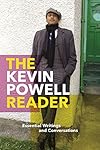
The Kevin Powell Reader is a good and necessary reminder that the Civil Rights era is not over, and that many of their leading voices are still among us, articulating modes of understanding, defending, and clarifying the struggles, joys, and every-day challenges faced by Black people in the US. It also allows us to see Powell’s intellectual evolution. It is not something that has fossilized, but rather, like a living organism, it changes, mutates, and evolves. It is quite possible to show more encounter areas in which disagreement with Powell seems but inevitable. But equally inevitable, is the desire to continue engaging with a thinker who is not only able to present his ideas with clarity and force, but equally capable of listening, learning, and incorporating new concepts into his own thinking. show less
 This review was written for LibraryThing Early Reviewers.
Perhaps the best description I can give of The Kevin Powell Reader is a comment he makes near the end of the book when discussing Kendrick Lamar’s most recent album, "Mr. Morale & the Big Steppers": “[I]t is a remarkably personal record of a life and a time, and times past, and times yet to be.”
Mr. Powell writes truth: his own truth, the truth of Black men in America, the truth of the Black experience in America, and the truth of other tyrannized members of American society.–past and show more present; and also the truth of a grievous history of the American story that continues to subject minorities and marginalized “others” to degradation and abuse. Through his own stories and poetry, as well as interviews and essays, he explores in depth a history of violence, murder, disenfranchisement, and other heinous crimes against Blacks in America, merely for being Black. He does not neglect to include the denigration of other groups who, like Blacks, are also victimized by a nation that promises equality for all, yet offers it only to some.
From his introduction to his final chapter, I often shuddered as he shared his life, the life of his parents and grandparents. His prose reads like poetry; his personal stories, interviews, and essays about others--famous, infamous, and invisible–are deeply expressive. His writing is raw, tender, tough, engaging, shattering, moving–pulling the reader into the stories he relates. Although those stories evoke empathy and outrage, and though I do not want to detract from or diminish the unique Black perspective that he paints, Powell also presents a universal truth about how we treat–and are treated by–others; and even how that experience affects how we treat ourselves. In a telling statement in a personal essay (“Will Racism Ever End? Will I Ever Stop Being a Nigger?”) he notes, “. . . I was trying to smash the mirror that was myself once and for all.” Is this not a universal cry that cuts across race, religion, nationality, gender, cultural traditions–across time itself?
This book reaches deep inside and touches the reader emotionally, intellectually, viscerally. All that being said, if one can detach and read as a historical (and current) view of the Black experience in America, Powell’s essays, poetry, interviews, and reflections offer a fascinating look at people and events–past and present–that are important to understanding who we are today as a people. Hopefully Powell's incisive look at the Black experience can help all of us move forward toward creating a society in which each person is valued for who THEY are as individuals–and maybe someday, who WE ALL can become. show less
Mr. Powell writes truth: his own truth, the truth of Black men in America, the truth of the Black experience in America, and the truth of other tyrannized members of American society.–past and show more present; and also the truth of a grievous history of the American story that continues to subject minorities and marginalized “others” to degradation and abuse. Through his own stories and poetry, as well as interviews and essays, he explores in depth a history of violence, murder, disenfranchisement, and other heinous crimes against Blacks in America, merely for being Black. He does not neglect to include the denigration of other groups who, like Blacks, are also victimized by a nation that promises equality for all, yet offers it only to some.
From his introduction to his final chapter, I often shuddered as he shared his life, the life of his parents and grandparents. His prose reads like poetry; his personal stories, interviews, and essays about others--famous, infamous, and invisible–are deeply expressive. His writing is raw, tender, tough, engaging, shattering, moving–pulling the reader into the stories he relates. Although those stories evoke empathy and outrage, and though I do not want to detract from or diminish the unique Black perspective that he paints, Powell also presents a universal truth about how we treat–and are treated by–others; and even how that experience affects how we treat ourselves. In a telling statement in a personal essay (“Will Racism Ever End? Will I Ever Stop Being a Nigger?”) he notes, “. . . I was trying to smash the mirror that was myself once and for all.” Is this not a universal cry that cuts across race, religion, nationality, gender, cultural traditions–across time itself?
This book reaches deep inside and touches the reader emotionally, intellectually, viscerally. All that being said, if one can detach and read as a historical (and current) view of the Black experience in America, Powell’s essays, poetry, interviews, and reflections offer a fascinating look at people and events–past and present–that are important to understanding who we are today as a people. Hopefully Powell's incisive look at the Black experience can help all of us move forward toward creating a society in which each person is valued for who THEY are as individuals–and maybe someday, who WE ALL can become. show less
This review was written for LibraryThing Early Reviewers.This is a good book -- one to be studied and recommended to friends who care about good writing. Powell has wisely included pieces from his early days and through to the present We are allowed to view the evolution of his writing style and his personal understanding of the world.
We are also introduced to life as a black man in America -- the omnipresent threat of violence and death.
Powell cites the work of many others -- poets, philosophers, hip-hop artists, politicians, musicians, show more feminists -- throughout the book. I learned a great deal by looking up these people and by reading brief biographies on-line. His mind and knowledge are expansive but rooted in his own experiences. He has and writes with the integrity of someone who knows himself well enough to want to write well about others.
The Kevin Powell Reader would be a useful source for writing instructors.
As a white, senior, raised-in-the-suburbs professional woman with radio dial tuned to "classical," I may not have been Powell's choice for an early reviewer. To do his book justice meant listening to artists who were decades old, but new to me. I'm grateful to Kevin Powell for writing so well that he made me want to explore, and to the Library Thing early reviewer's program for introducing us. I'll be reading more of his work. show less
We are also introduced to life as a black man in America -- the omnipresent threat of violence and death.
Powell cites the work of many others -- poets, philosophers, hip-hop artists, politicians, musicians, show more feminists -- throughout the book. I learned a great deal by looking up these people and by reading brief biographies on-line. His mind and knowledge are expansive but rooted in his own experiences. He has and writes with the integrity of someone who knows himself well enough to want to write well about others.
The Kevin Powell Reader would be a useful source for writing instructors.
As a white, senior, raised-in-the-suburbs professional woman with radio dial tuned to "classical," I may not have been Powell's choice for an early reviewer. To do his book justice meant listening to artists who were decades old, but new to me. I'm grateful to Kevin Powell for writing so well that he made me want to explore, and to the Library Thing early reviewer's program for introducing us. I'll be reading more of his work. show less
This review was written for LibraryThing Early Reviewers.The Kevin Powell Reader is an eyes -wide-open collection of candid, passionate, and thoughtful essays that speak to the lived experience of a Black man in the world. The writings contained in this book reflect the spirit of an unflinchingly candid and courageous human, committed to examining his reality and truths, even as they shift throughout his mental, spiritual, and emotional development. The ideas and insights found in these pages will keep readers engaged in a though-provoking, show more perspective-shifting dialogue with both the author and themselves. Powerful. show less
This review was written for LibraryThing Early Reviewers.Lists
Poetry (1)
You May Also Like


Associated Authors
Statistics
- Works
- 18
- Also by
- 5
- Members
- 358
- Popularity
- #66,977
- Rating
- 4.2
- Reviews
- 13
- ISBNs
- 34
