
Emmi Itäranta
Author of Memory of Water
About the Author
Emmi Elina Itäranta was born in 1976 in Finland. Itäranta holds a MA in Drama from the University of Tampere, and worked as a columnist, theatre critic, script writer and press officer after graduation. In 2007 she enrolled in the postgraduate program of University of Kent, where she began show more writing her debut novel as a part of her Creative Writing course work. Working simultaneously in English and her native Finnish, Itäranta completed both manuscripts, and in 2011 the Finnish version won the Fantasy and Sci-Fi Literary Fiction contest organised by the Finnish publishing house Teos.The novel was published by Teos in 2012 under the name Teemestarin kirja. The book won the Kalevi Jäntti Award in 2012, and the Nuori Aleksis Award in 2013. It was also shortlisted for the 2013 Tähtivaeltaja Award. The English version of the book, Memory of Water, was published by HarperCollins in 2014 in the United States, United Kingdom and Australia. It has been nominated for the 2014 Philip K. Dick Award, as well as the Golden Tentacle Award. It was also nominated for the Arthur C Clarke Award for science fiction in 2015. (Bowker Author Biography) show less
Image credit: Heini Lehväslaiho
Works by Emmi Itäranta
Associated Works
Giants at the end of the world : a showcase of Finnish weird (2017) — Contributor — 84 copies, 1 review
Sunspot Jungle: Volume Two: The Ever Expanding Universe of Fantasy and Science Fiction (2018) — Contributor — 22 copies
Stories of Hope and Wonder: In Support of the UK's Healthcare Workers (2020) — Contributor — 11 copies, 1 review
Granta : uuden kirjallisuuden areena. 3 : [Parhaat nuoret suomalaiset kertojat] (2014) — Contributor — 11 copies
Tagged
Common Knowledge
- Legal name
- Itäranta, Emmi Elina
- Birthdate
- 1976
- Gender
- female
- Education
- University of Tampere (MA, Drama)
University of Kent (MA, Creative Writing) - Agent
- Elina Ahlbäck
- Nationality
- Finland
- Birthplace
- Tampere, Finland
- Places of residence
- Canterbury, England, UK
- Associated Place (for map)
- Finland
Members
Reviews
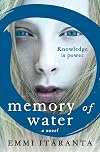
Memory of Water by Emmi Itäranta is a highly recommended, sensitive dystopian novel set in a future where water is scarce and controlled by the military.
Noria Kaitio, 17, is studying with her father to continue the family tradition of tea master. Set in future Finland, now part of the New Qian empire of Asia and Europe, global warming has made many areas of the world uninhabitable. Water shortages are common and what water there is is strictly controlled by the military and rationed out. show more When Noria learns the secrets of being a tea master, a role traditionally only held by males, and all the teahouse ceremony involves, she also learns a bigger secret: the location of a hidden spring unknown to anyone but her father.
Major Bolin has been protecting her father but when Commander Taro comes on the scene it becomes clear that he is suspicious and plans to discover their secret and destroy her family.
Noria also explores the plastic filled landfills of garbage with her friend Sanja, who is able to repair many broken things. They find a disk that mentions yet another secret, a secret Noria also wants to learn.
This dystopian novel by Finnish author Itäranta is set in one small area of a very change future world. Although some of the large global scale catastrophes are hinted at or mentioned, the setting remains in this one small part of Finland and the story stays focused on the effects the new world has on one person in that small part of the new world.
The writing in Memory of Water can be described as poetic, delicate, atmospheric, and expressive. The juxtaposition of a hard, harsh world being described in beautiful prose can be startling, but the contrast helps set the tone of despair even as the carefully crafted writing flows along so seductively. While there is tension in this novel, it is not overwhelming. It flows along at an even pace, picking up speed slowly.
Although not stated, I'd place this among other YA dystopian fiction selections based on the age of the character and the uncomplicated linear plot. The writing is a step up from most YA selections, however.
Disclosure: My Kindle edition was courtesy of HarperCollins for review purposes.
Excerpt
harpervoyagerbooks.com/2014/05/27/excerpt-of-the-memory-of-water-by-emmi-itaranta/ show less
Noria Kaitio, 17, is studying with her father to continue the family tradition of tea master. Set in future Finland, now part of the New Qian empire of Asia and Europe, global warming has made many areas of the world uninhabitable. Water shortages are common and what water there is is strictly controlled by the military and rationed out. show more When Noria learns the secrets of being a tea master, a role traditionally only held by males, and all the teahouse ceremony involves, she also learns a bigger secret: the location of a hidden spring unknown to anyone but her father.
Major Bolin has been protecting her father but when Commander Taro comes on the scene it becomes clear that he is suspicious and plans to discover their secret and destroy her family.
Noria also explores the plastic filled landfills of garbage with her friend Sanja, who is able to repair many broken things. They find a disk that mentions yet another secret, a secret Noria also wants to learn.
This dystopian novel by Finnish author Itäranta is set in one small area of a very change future world. Although some of the large global scale catastrophes are hinted at or mentioned, the setting remains in this one small part of Finland and the story stays focused on the effects the new world has on one person in that small part of the new world.
The writing in Memory of Water can be described as poetic, delicate, atmospheric, and expressive. The juxtaposition of a hard, harsh world being described in beautiful prose can be startling, but the contrast helps set the tone of despair even as the carefully crafted writing flows along so seductively. While there is tension in this novel, it is not overwhelming. It flows along at an even pace, picking up speed slowly.
Although not stated, I'd place this among other YA dystopian fiction selections based on the age of the character and the uncomplicated linear plot. The writing is a step up from most YA selections, however.
Disclosure: My Kindle edition was courtesy of HarperCollins for review purposes.
Excerpt
harpervoyagerbooks.com/2014/05/27/excerpt-of-the-memory-of-water-by-emmi-itaranta/ show less
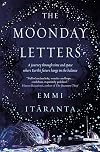
This book is outstanding. Bioethics, love, animism, shamanism, convincingly written worlds, beautiful prose, aching tenderness, and a deep connection to Nature. Also cats, David Bowie references, and orbital cylinder cities named Ursula and Octavia (because there was no need to explicitly state that they were for Ursula Le Guin and Octavia Butler).
The clever plot unfolds inexorably as Lumi becomes aware that beneath her spouse’s private side lies far more than she has realized.
The clever plot unfolds inexorably as Lumi becomes aware that beneath her spouse’s private side lies far more than she has realized.
There is nothing about Memory of Water that is far-fetched or difficult to fathom. China could in fact become a globally dominant country. The world could separate into distinct unions separated by geography and occupied by the major power sources. Yet, the true heart of the story is a slap in the face regarding the dire consequences of global warming. Not only does Itäranta show the lasting impact on weather patterns, economies, and inhabitable geography, it also details the damage our show more current garbage is doing to our environment. The descriptions of the piles and piles of plastic – those items that will never decompose and are still easily identifiable after all those years – are downright frightening.
Noria is an intriguing character. Unlike other dystopian heroines, she lives a life of privilege. She has ready access to water. Her position as the daughter of a Tea Master gives her more influence and also grants her access to more and better food. She is, in many ways, very spoiled. True, she shares her water when the secret is out, but she does not do so willingly. There is a sense of reluctance in the beginning and a feeling of coercion that she has to do so in order to avoid getting in trouble with the police state. For all her altruistic impulses, she remains more concerned about her family’s secrets and traditions than she does about fighting against the system.
Given the slow-moving nature of the story and the massive amounts of world-building to clearly establish this future version of Scandinavia, one cannot help but think that this focus on the damage done to the ecosystem and the resultant scramble for water/power is the point of the novel. The major dystopian elements of Noria’s world are avoidable, and Itäranta is trying to show readers just that. Yes, Noria’s story is interesting for its foreignness and her willingness to stand firm to her beliefs, but it is what is happening outside her sphere of influence that is truly intriguing. The scientific exploration Noria discovers on the CDs, the unique uses for the junk plastic, the structure of society, the huge Chinese influence half a world away – the sheer magnitude of the changes that are a direct result of global warming and the melting of the polar ice caps are more fascinating and chilling because of their implication of past society’s inability to properly conserve and protect the environment. Memory of Water is impressive in the warning it presents rather than the story it tells of a world gone dry. show less
Noria is an intriguing character. Unlike other dystopian heroines, she lives a life of privilege. She has ready access to water. Her position as the daughter of a Tea Master gives her more influence and also grants her access to more and better food. She is, in many ways, very spoiled. True, she shares her water when the secret is out, but she does not do so willingly. There is a sense of reluctance in the beginning and a feeling of coercion that she has to do so in order to avoid getting in trouble with the police state. For all her altruistic impulses, she remains more concerned about her family’s secrets and traditions than she does about fighting against the system.
Given the slow-moving nature of the story and the massive amounts of world-building to clearly establish this future version of Scandinavia, one cannot help but think that this focus on the damage done to the ecosystem and the resultant scramble for water/power is the point of the novel. The major dystopian elements of Noria’s world are avoidable, and Itäranta is trying to show readers just that. Yes, Noria’s story is interesting for its foreignness and her willingness to stand firm to her beliefs, but it is what is happening outside her sphere of influence that is truly intriguing. The scientific exploration Noria discovers on the CDs, the unique uses for the junk plastic, the structure of society, the huge Chinese influence half a world away – the sheer magnitude of the changes that are a direct result of global warming and the melting of the polar ice caps are more fascinating and chilling because of their implication of past society’s inability to properly conserve and protect the environment. Memory of Water is impressive in the warning it presents rather than the story it tells of a world gone dry. show less
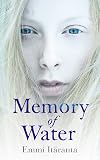
Noria is the daughter of a tea master and his apprentice, living in an unnamed village in what is now Finland, and what Noria calls the Scandinavian Union – under New Qian occupation – at an unspecified point in the distant future. Very soon it becomes clear that the world we know today has changed beyond recognition by global warming and the relentless plunder of Earth’s resources: the region where Noria and her family live is surrounded by desert; water is so scarce that it is show more rationed, and such a precious commodity that it is even used as currency, while the military controls the entire supply; there are no more winters, and the images of snow and ice can only be found in books; the world has run out of its oil reserves, so Noria’s village represents a curious mixture of a low- and high-tech society; wars were fought over oil and water in the past, while there is an ongoing war somewhere on the continent. Before Noria’s graduation ceremony that will see her become a tea master in her own right, her father takes her into the fells and shows her a secret spring that generations of tea masters – as watchers of water – have had the duty to protect, and makes her promise that she honour the secret too. But events have already been set in motion that will make Noria realise that sometimes it is the duty of a tea master to break with tradition …
One of the joys of discovering a new author is that you don’t always know where – or for that matter when – you’ll end up; this is exactly the case here. Memory of Water is a thought-provoking coming-of-age tale written in the most beautiful, almost lyrical, prose, but there’s no getting away from the fact that the portrayed events are very bleak and that from the opening lines of the prologue the novel is moving towards its inevitable conclusion. One of the things that struck me was that Noria’s society appears to be dominated by women; there are men around, but they are usually of Noria’s father’s age and traders or merchants, and there is a distinct lack of young men, and I could only assume they were away fighting in the war; the men that do appear in the village are often not local and in the military, and as such to be feared. There is a tangential thread to the story about a past-world expedition that took up too much room in the novel and left too many questions unanswered, and one of these highly unlikely coincidences that are difficult to get away with, even when they’re written with the best intentions; yet for all that, there is some memorable imagery to be found within its pages: for example, the so-called plastic grave, where Noria and her friend Sanja like to dig for artefacts from the past-world; secrets acting like water; the painting of a blue circle on the door of someone’s house where the military decides a water crime has been committed; a poignant version of a cremation, where the dead person’s water is used to nourish the earth; and the ancient Greek notion that one has to cross the river to the underworld after death takes on an added significance.
There were also powerful scenes that spoke to me as a mother, especially when they cannot provide water for their thirsty and sick children; coincidentally, my son had a high temperature this week and it felt like a complete luxury to simply open the tap and give him all the cold, clean water he needed straight away after reading about how the rations given out to the villagers are never enough. No second guesses where the author’s sympathies lie in the current environmental debates, and I believe we can all do with acting more responsibly, but for all that her novel does not come across as preachy. I can only guess that the epilogue contains a glimmer of hope, but I personally can’t see it and the novel is simply too bleak to be picked up again.
I will end this review with the most powerful sentiment the novel has to offer in my opinion, spoken by Noria’s friend Sanja: when talking about the people in the past-world, she tells Noria that it is not them but their relics she’s thinking of, because they didn’t think about them, i.e. future generations, either.
(This review was originally written as part of Amazon's Vine programme.) show less
One of the joys of discovering a new author is that you don’t always know where – or for that matter when – you’ll end up; this is exactly the case here. Memory of Water is a thought-provoking coming-of-age tale written in the most beautiful, almost lyrical, prose, but there’s no getting away from the fact that the portrayed events are very bleak and that from the opening lines of the prologue the novel is moving towards its inevitable conclusion. One of the things that struck me was that Noria’s society appears to be dominated by women; there are men around, but they are usually of Noria’s father’s age and traders or merchants, and there is a distinct lack of young men, and I could only assume they were away fighting in the war; the men that do appear in the village are often not local and in the military, and as such to be feared. There is a tangential thread to the story about a past-world expedition that took up too much room in the novel and left too many questions unanswered, and one of these highly unlikely coincidences that are difficult to get away with, even when they’re written with the best intentions; yet for all that, there is some memorable imagery to be found within its pages: for example, the so-called plastic grave, where Noria and her friend Sanja like to dig for artefacts from the past-world; secrets acting like water; the painting of a blue circle on the door of someone’s house where the military decides a water crime has been committed; a poignant version of a cremation, where the dead person’s water is used to nourish the earth; and the ancient Greek notion that one has to cross the river to the underworld after death takes on an added significance.
There were also powerful scenes that spoke to me as a mother, especially when they cannot provide water for their thirsty and sick children; coincidentally, my son had a high temperature this week and it felt like a complete luxury to simply open the tap and give him all the cold, clean water he needed straight away after reading about how the rations given out to the villagers are never enough. No second guesses where the author’s sympathies lie in the current environmental debates, and I believe we can all do with acting more responsibly, but for all that her novel does not come across as preachy. I can only guess that the epilogue contains a glimmer of hope, but I personally can’t see it and the novel is simply too bleak to be picked up again.
I will end this review with the most powerful sentiment the novel has to offer in my opinion, spoken by Noria’s friend Sanja: when talking about the people in the past-world, she tells Noria that it is not them but their relics she’s thinking of, because they didn’t think about them, i.e. future generations, either.
(This review was originally written as part of Amazon's Vine programme.) show less
Lists
Awards


You May Also Like


Associated Authors
Statistics
- Works
- 6
- Also by
- 8
- Members
- 1,114
- Popularity
- #23,058
- Rating
- 3.7
- Reviews
- 76
- ISBNs
- 61
- Languages
- 12
- Favorited
- 1