
Arthur Ransome (1884–1967)
Author of Swallows and Amazons
About the Author
Children's author Arthur Ransome was born in Leeds, England on January 18, 1884. As a child, he spent many vacations sailing, camping, and exploring the countryside in England's Lake Country. He studied chemistry for one year at Yorkshire College before dropping out to become a writer. He worked show more for a London publisher and then for the Manchester Guardian newspaper. He wrote his first book, Bohemia in London, in 1907 and went to study folklore in Russia in 1913. In 1916, he published Old Peter's Russian Tales, a collection of 21 folktales. During World War I, he became a reporter for the Daily News and covered the war on the Eastern Front. While in Russia, he also covered the Russian Revolution in 1917. He eventually settled in England's Lake District with his second wife. In 1929, he wrote Swallows and Amazons, which was the first book in his well-know Swallows and Amazons series about children who sail and explore the lakes and mountains of England. He drew inspiration for the books from his own childhood memories. In 1936, he won the Carnegie Medal for children's literature for Pigeon Post. He died on June 3, 1967. (Bowker Author Biography) show less
Series
Works by Arthur Ransome
The twilight years 3 copies
Swallows and Amazons Series Collection Series 4 Books (Winter Holiday, Peter Duck, Swallowdale, Swallows and Amazons) Book for Childrens (2018) 3 copies
Svalerne på Opdagelse 2 copies
Svalerne og Piraterne 2 copies
Highways and byways in fairy land 2 copies
Svalerne som Guldgravere 2 copies
Svalerne og Den mystiske Mand 2 copies
Svalerne på Skatteneøen 2 copies
Svalerne og den Sorte Skonnert 2 copies
Svalerne på Fastlandet 2 copies
Svalerne Gar I Land 2 copies
Fecske-vl̲gy. Regňy 1 copy
Drawn at a venture 1 copy
Pierre Canné [manuscript] 1 copy
[Unknown] 1 copy
Associated Works
Daemon Voices: On Stories and Storytelling (2017) — Illustrator, some editions — 727 copies, 9 reviews
Sailing alone around the world, and Voyage of the Liberdade (1948) — Introduction, some editions — 156 copies, 3 reviews
Oscar Wilde: Collection of 300 Classic Works with Analysis and Historical Background (2013) — Contributor — 13 copies
Stories by Daudet and Coppée — Editor — 3 copies
Then and Now. A Selection of Articles, Stories & Poems, Taken from the First Fifty Numbers of ‘Now & Then’, 1921–35. Together with Some Illustrations, etc. (1935) — Contributor — 2 copies
You and your reading — Contributor, some editions — 1 copy
Stories for girls — Contributor — 1 copy
Tagged
Common Knowledge
- Legal name
- Ransome, Arthur Michell
- Other names
- Ransome, Arthur M.
Blunt, William (pseudonym|1939-1940) - Birthdate
- 1884-01-18
- Date of death
- 1967-06-03
- Gender
- male
- Education
- Old College, Windermere
Rugby School
Yorkshire College - Occupations
- journalist
foreign correspondent
literary critic
columnist
sailor
fisherman (show all 9)
children's author
illustrator
autobiographer - Organizations
- Temple Bar Magazine (editor)
Daily News
Manchester Guardian
London Library (1903-)
Garrick Club (member|1943-) - Awards and honors
- DLitt (h.c. ∙ Durham University)
- Relationships
- Ransome, Cyril (father)
Lupton, Joyce (sister)
Lupton, Hugh (great-nephew) - Short biography
- Arthur Ransome used the pseudonym William Blunt as a reviewer of new detective novels for The Observer between 1939 and 1940.
- Nationality
- UK
- Birthplace
- Leeds, Yorkshire, England, UK
- Places of residence
- Leeds, Yorkshire, England, UK (birthplace)
London, England, UK
Petersfield, Hampshire, England, UK
Hatch, Wiltshire, England, UK
St. Petersburg, Russia
Riga, Latvia (show all 10)
Ludderburn, Cumbria, England, UK
Levington, Suffolk, England, UK
Nibthwaithe, Lancashire, England, UK
Haverthwaite, Lancashire, England, UK - Place of death
- Cheadle, Cheshire, UK
- Burial location
- Rusland churchyard, England
- Map Location
- England, UK
Members
Discussions
Arthur Ransome in Legacy Libraries (August 2013)
Reviews
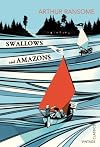
Having recently dabbled in nostalgia and re-read Arthur Ransome’s ‘Winter Holiday’ and ‘Pigeon Post’ I suppose it was almost inevitable that I would find myself embarking on ‘Swallows and Amazons’ for the first time in some forty years. And why not! From the opening scene, with Roger ‘tacking’ up the field to check with his mother whether he would be allowed to join the rest of the Walker children camping on Wild Cat Island, through to the close, and the imminent return to show more the real world of school and city life, the book is totally delightful.
Of course, life is very different now from when Arthur Ransome wrote this classic story, and Mrs Walker would find herself castigated, and probably even prosecuted, for neglect if she were to allow her four children, aged presumably between seven and eleven, to going camping and sailing, wholly unaccompanied; the children themselves would probably be taken into care. The only vague concession to health and safety is Mrs Walker’s ruling that Roger is not allowed to carry or use matches. The book was first published in 1930, and was probably already eulogising a Corinthian past largely of Ransome’s own imagining.
Ransome’s own imagining is pretty powerful though. He succeeds in creating six child characters, all of whom have clearly contrasting personalities, and he captures their perspective of the world with great clarity. He also pulls off the harder trick of writing adults who meld into the children’s world seamlessly. At the risk of sinking into technicality, he is also a master of metafiction. The children themselves all have marvellous imaginations, recasting the Cumbrian lake into a new world waiting to be explored, reassigning all the local features with names drawn from maritime history. Perhaps he overendows the children in this way – given their ages, it seems amazing that they have heard of half the places or books that they talk about so readily. This, however, could not matter less, and it merely adds to the reader’s sense of complete immersion in the fantasy world that Ransome has created.
Most importantly, though, it is simply a rattling good story that resonates with the joy of unfettered imagination. show less
Of course, life is very different now from when Arthur Ransome wrote this classic story, and Mrs Walker would find herself castigated, and probably even prosecuted, for neglect if she were to allow her four children, aged presumably between seven and eleven, to going camping and sailing, wholly unaccompanied; the children themselves would probably be taken into care. The only vague concession to health and safety is Mrs Walker’s ruling that Roger is not allowed to carry or use matches. The book was first published in 1930, and was probably already eulogising a Corinthian past largely of Ransome’s own imagining.
Ransome’s own imagining is pretty powerful though. He succeeds in creating six child characters, all of whom have clearly contrasting personalities, and he captures their perspective of the world with great clarity. He also pulls off the harder trick of writing adults who meld into the children’s world seamlessly. At the risk of sinking into technicality, he is also a master of metafiction. The children themselves all have marvellous imaginations, recasting the Cumbrian lake into a new world waiting to be explored, reassigning all the local features with names drawn from maritime history. Perhaps he overendows the children in this way – given their ages, it seems amazing that they have heard of half the places or books that they talk about so readily. This, however, could not matter less, and it merely adds to the reader’s sense of complete immersion in the fantasy world that Ransome has created.
Most importantly, though, it is simply a rattling good story that resonates with the joy of unfettered imagination. show less

It's the Swallows' third summer in the Lakes, and once again Ransome is faced with the challenge of not writing Swallows and Amazons again. This time the reasoning is that the rather scatter-brained Mrs Blackett is sole responsible adult in charge of all eight children. Uncle Jim and the other parents are all otherwise engaged — Dick and Dorothea seem to be having a particularly bad year for seeing their parents, with four holidays away on their own and the rest of the year at boarding show more school. As she's also supervising the redecoration of the house at Beckfoot, Mrs B decides that it would be unwise to allow them to go off to camp on the island, so they have to think of something less dangerous. So they come up with gold-mining...
This idea works rather better than you might expect. As others have said, this is one of the highspots of the Swallows and Amazons series. Practically no sailing, but a lot of incident and variety. There's a comic misunderstanding at the core of the plot, and Ransome is careful not to give away what it is (of course, you'll see it coming if you've read the book before, so it's not quite as much fun to re-read as some of the others). There's a mysterious stranger who gives a John Buchan/Riddle of the Sands flavour to the book, with a lot of clandestine observation and scout-work on the moors (in a very Buchanish touch, the children know the man only as "squashy hat").
Ransome takes advantage of having the full set of eight children to work with by bringing out a few of the more obscure characters and putting John and Nancy in the background a bit. Dick is definitely the key character this time, all-too-conscious of how heavily the others rely on his inevitably somewhat patchy technical knowledge of metallurgy and geology. Titty has a memorable chapter to herself as well, and Roger gets plenty to do: he's not just the random element of chaos that he is reduced to in many of the books, but a believable small boy we can identify with. Even the infuriatingly-competent Susan gets to display her human side a few times.
The pigeons turn out to be a bit less important to the story than we think they're going to be, but they provide a bit of comedy. They provide a bit of a puzzle, too. Playing at being pirates is not very surprising behaviour for a tomboyish, rural, middle-class girl like Nancy, with plenty of access to boats and to adventure stories, but in British culture pigeon-keeping is something very strongly associated with urban, working-class men. You could easily imagine that Ransome knew people who kept pigeons when he was a child in Leeds, but it's very odd that Nancy's uncle should think of giving her a pigeon. But we shouldn't complain about it, it makes for a great story. show less
This idea works rather better than you might expect. As others have said, this is one of the highspots of the Swallows and Amazons series. Practically no sailing, but a lot of incident and variety. There's a comic misunderstanding at the core of the plot, and Ransome is careful not to give away what it is (of course, you'll see it coming if you've read the book before, so it's not quite as much fun to re-read as some of the others). There's a mysterious stranger who gives a John Buchan/Riddle of the Sands flavour to the book, with a lot of clandestine observation and scout-work on the moors (in a very Buchanish touch, the children know the man only as "squashy hat").
Ransome takes advantage of having the full set of eight children to work with by bringing out a few of the more obscure characters and putting John and Nancy in the background a bit. Dick is definitely the key character this time, all-too-conscious of how heavily the others rely on his inevitably somewhat patchy technical knowledge of metallurgy and geology. Titty has a memorable chapter to herself as well, and Roger gets plenty to do: he's not just the random element of chaos that he is reduced to in many of the books, but a believable small boy we can identify with. Even the infuriatingly-competent Susan gets to display her human side a few times.
The pigeons turn out to be a bit less important to the story than we think they're going to be, but they provide a bit of comedy. They provide a bit of a puzzle, too. Playing at being pirates is not very surprising behaviour for a tomboyish, rural, middle-class girl like Nancy, with plenty of access to boats and to adventure stories, but in British culture pigeon-keeping is something very strongly associated with urban, working-class men. You could easily imagine that Ransome knew people who kept pigeons when he was a child in Leeds, but it's very odd that Nancy's uncle should think of giving her a pigeon. But we shouldn't complain about it, it makes for a great story. show less

The four Walker children are back on Wild Cat Island, eager for another summer of adventure with the pirates, Nancy and Peggy. Unfortunately, the Blackett girls are marooned at home with a dreadfully traditional great-aunt, who wants them in pinafores and reciting poetry. While out exploring, John runs the Swallow into a rock, and they must swim for it. Shipwrecked on shore while the Swallow is under repairs, they discover a hidden vale, perfect for a temporary camp. More adventures await as show more they cross the moors to sneak into Beckfoot under cover of darkness to meet the crew of the Amazon, climb the rugged Kanchenjunca, get lost in fog, and more. Swallows and Amazons forever!
I love both the idea of children having adventures without adult hovering and Ransome's writing. The kids are allowed to create imaginary worlds and test themselves in the real one. Sailing, camping, and hiking on their own gives them a resiliency and ability to problem-solve that makes them seem older than they are, yet their make-believe world is very much the product of children. Ransome writes with such detail and understanding that it is no surprise to me that his books draw upon his own experiences with his brother and sisters growing up. Like the Walkers, they would go to a lake for the summer holidays and were set free to explore the lake and hills. What I wouldn't give to have had such a childhood! Fortunately, landlubbers like myself have the books to carry us away and let us live such a childhood vicariously.
"It's no good their trying to make the owl call," said Roger. "They can't do it."
"What they're good at is ducks," said John. "I've never heard anybody quack so well as Peggy."
"Nobody can be good at everything," said Titty. show less
I love both the idea of children having adventures without adult hovering and Ransome's writing. The kids are allowed to create imaginary worlds and test themselves in the real one. Sailing, camping, and hiking on their own gives them a resiliency and ability to problem-solve that makes them seem older than they are, yet their make-believe world is very much the product of children. Ransome writes with such detail and understanding that it is no surprise to me that his books draw upon his own experiences with his brother and sisters growing up. Like the Walkers, they would go to a lake for the summer holidays and were set free to explore the lake and hills. What I wouldn't give to have had such a childhood! Fortunately, landlubbers like myself have the books to carry us away and let us live such a childhood vicariously.
"It's no good their trying to make the owl call," said Roger. "They can't do it."
"What they're good at is ducks," said John. "I've never heard anybody quack so well as Peggy."
"Nobody can be good at everything," said Titty. show less
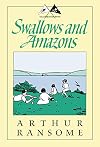
I couldn't believe how long this book is (500 pages). I'd seen the film, which has very little plot, so I thought 'I guess a lot more happens in the book'. Nope. Having finished it, I still don't know how it is so long. I have vague recollections of being read Swallows and Amazons stories as a young child so I wanted to revisit as an adult. And despite the lack of a plot and some pretty heavy boat descriptions that I didn't understand at all, I loved it. This is pure escapism. Four children show more in 1929 are given total freedom to camp on an island and sail around a lake with no adult supervision and they revel in their imagination. That's it. It's glorious. Also pleasingly not sexist with almost no interest in traditional gender roles. show less
Lists
BBC Big Read (1)
Books About Boys (1)
Ambleside Y3 (1)
1930s (1)
4th Grade Books (1)
Spirit of Place (4)
Put a Bird On It (3)
Ambleside Books (2)
2024-25 reading (2)
Elevenses (2)
Best Sea Stories (2)
Favorite Series (1)
Ambleside Year 3 (1)
BBC Big Read (1)
Awards


You May Also Like


Associated Authors
Statistics
- Works
- 99
- Also by
- 62
- Members
- 18,400
- Popularity
- #1,190
- Rating
- 4.0
- Reviews
- 312
- ISBNs
- 473
- Languages
- 13
- Favorited
- 50
