
Christina Rossetti (1830–1894)
Author of Goblin Market and Other Poems {Dover Thrift Edition}
About the Author
Image credit: Portrait of Christina Rossetti, by her brother Dante Gabriel Rossetti (Public domain ; Wikipedia)
Works by Christina Rossetti
Delphi Complete Poetical Works of Christina Rossetti (Illustrated) (Delphi Poets Series Book 12) (2012) 18 copies
Speaking likenesses / by Christina Rossetti ; With pictures thereof by Arthur Hughes. (2006) 11 copies
The Letters of Christina Rossetti, Vol. 1, 1843-1873 (Victorian Literature and Culture Series) (1997) 9 copies
The Letters of Christina Rossetti: 1887-1894 (Victorian Literature and Culture Series) (2004) 6 copies
El panqueque (Lecturas Gráficas/ Graphic Readers: De Impacto ninos) (Spanish Edition) (2015) 5 copies
Monna Innominata: Sonnets and Songs 4 copies
A Pageant and Other Poems 4 copies
Time Flies: a Reading Diary 3 copies
The family letters of Christina Georgina Rossetti : with some supplementary letters and appendices 3 copies
Christina Rossetti 3 copies
The Letters of Christina Rossetti: 1843-1894 (Victorian Literature and Culture Series) (Vol 1-4) (2004) 3 copies
A Christmas carol 2 copies
Family of Strangers 1 copy
How Many Seconds? 1 copy
Story Clouds 1 copy
The Poetry 1 copy
Goblin Market [in Hebrew] 1 copy
Poems (Carr's Pocket Book) 1 copy
Christ Our All In All 1 copy
Christina Rossetti 1 copy
Bird Raptures 1 copy
When I am dead, my dearest 1 copy
Time Flies A Reading Diary 1 copy
Passion & Devotion 1 copy
Christina Rossetti: 'Maude' and Dinah Mulock Craik: 'On Sisterhoods' and 'A Woman's Thoughts About Women' (Women's Classics Series) — Author — 1 copy
Illustrated Poets, The 1 copy
Poems by Christina Rosetti 1 copy
Collected Poems 1 copy
Sonnets 1 copy
Rossetti Poetry 1 copy
Associated Works
The Making of a Poem: A Norton Anthology of Poetic Forms (2000) — Contributor — 1,474 copies, 9 reviews
The Best Poems of the English Language: From Chaucer Through Robert Frost (2004) — Contributor — 1,253 copies, 3 reviews
Literature: An Introduction to Fiction, Poetry, and Drama (1995) — Contributor, some editions — 1,017 copies, 7 reviews
The Illustrated Treasury of Children's Literature, Volumes 1-2 (1955) — Contributor — 523 copies, 4 reviews
Chloe Plus Olivia: An Anthology of Lesbian Literature from the 17th Century to the Present (1994) — Contributor — 482 copies, 1 review
Women in Praise of the Sacred: 43 Centuries of Spiritual Poetry by Women (1994) — Contributor — 391 copies, 5 reviews
The Norton Anthology of English Literature, 4th Edition, Volume 2 (1979) — Contributor — 271 copies, 1 review
Wise Women: Over Two Thousand Years of Spiritual Writing by Women (1996) — Contributor — 231 copies, 1 review
Poems Bewitched and Haunted (Everyman's Library Pocket Poets Series) (2005) — Contributor — 230 copies
Beyond the Looking Glass: Extraordinary Works of Fairy Tale & Fantasy (1985) — Contributor — 183 copies, 7 reviews
An American Album: One Hundred and Fifty Years of Harper's Magazine (2000) — Contributor — 145 copies, 1 review
Forbidden Journeys: Fairy Tales and Fantasies by Victorian Women Writers (1992) — Contributor — 141 copies
Poems to See By: A Comic Artist Interprets Great Poetry (2020) — Contributor — 130 copies, 33 reviews
Answering Back: Living Poets Reply to the Poetry of the Past (2007) — Contributor — 119 copies, 1 review
The Sophisticated Cat: A Gathering of Stories, Poems, and Miscellaneous Writings About Cats (1992) — Contributor — 112 copies, 1 review
Poems Between Women: Four Centuries of Love, Romantic Friendship, and Desire (1997) — Contributor — 97 copies, 1 review
Our Haunted Shores: Tales from the Coasts of the British Isles (2022) — Contributor — 67 copies, 2 reviews
Lovers & Other Monsters: A Collection of Amorous Tales of Fantasy, Old and New (1993) — Contributor — 64 copies, 1 review
Buzz Words: Poems About Insects (Everyman's Library Pocket Poets Series) (2021) — Contributor — 56 copies
The Dedalus Book of British Fantasy: 19th Century (European Literary Fantasy Anthologies) (1991) — Contributor — 47 copies
Alternative Alices: Visions and Revisions of Lewis Carroll's Alice Books : An Anthology (1997) — Contributor — 43 copies, 1 review
Out of the Best Books: An Anthology of Literature, Vol. 2: Love, Marriage, and the Family (1966) — Contributor — 36 copies
The Roads from Bethlehem: Christmas Literature from Writers Ancient and Modern (1993) — Contributor — 34 copies, 1 review
Out of the Best Books: An Anthology of Literature, Vol. 3: Intelligent Family Living (1967) — Contributor — 34 copies
Pre-Raphaelite Circle: NPG Insights, The Pre-Raphaelite Circle (National Portrait Gallery Insights) (2005) — Featured Artist — 33 copies
Kingfisher Christmas Book: A Collection of Stories, Poems and Carols for the Twelve Days of Christmas (1985) — Contributor — 29 copies
Out of the Best Books: An Anthology of Literature, Vol. 4: The World Around Us (1968) — Contributor — 28 copies
A Quaint and Curious Volume: Tales and Poems of the Gothic (2019) — Contributor — 19 copies, 1 review
The Afterlife of Frankenstein: A Century of Mad Science, Automata, and Monsters Inspired by Mary Shelley, 1818-1918 (Clockwork Editions) (2023) — Contributor — 13 copies
Edexcel Poetry Anthology for Advanced subsidiary and advanced GCE examinations in English Literature (2000) — Contributor, some editions — 6 copies
In the bleak midwinter G-7793 — Author — 2 copies
Tagged
Common Knowledge
- Canonical name
- Rossetti, Christina
- Legal name
- Rossetti, Christina Georgina
- Other names
- Alleyne, Ellen
- Birthdate
- 1830-12-05
- Date of death
- 1894-12-29
- Gender
- female
- Education
- private tutors
- Occupations
- poet
artist's model - Organizations
- Oxford Movement
- Relationships
- Rossetti, Dante Gabriel (brother)
Rossetti, William Michael (brother)
Rossetti, Maria Francesca (sister)
Rossetti, Gabriele (father)
Polidori, John William (uncle)
Angeli, Helen Rossetti (niece) (show all 7)
Polidori, Gaetano (maternal grandfather) - Short biography
- Christina Rossetti's popularity grew after her death and she is now considered one of the leading English Victorian poets. She was born in London, one of four children of aristocratic Italian parents who had emigrated to the UK after her father Gabriele Rossetti was forced into political exile. At age 12, she wrote her first poems, which were printed in the private press of her grandfather. In 1850, under the pseudonym "Ellen Alleyne," she contributed seven poems to the Pre-Raphaelite journal The Germ, founded by her brother William Michael Rossetti and his friends. By the 1880s, Christina had become an invalid from recurring bouts of thyroid disease, which ended her attempts to work as a governess. However, she continued to write. In 1891, Christina apparently developed cancer, and died three years later. Her work influenced that of other writers such as Virginia Woolf, Gerard Manley Hopkins, and Philip Larkin. Although not a member of the Pre-Raphaelite Brotherhood, Christina was engaged for a time to the painter James Collinson, who was a founder of that group with her brothers Dante Gabriel Rossetti and William Michael, and she sat as a model for several of Dante Gabriel Rossetti's most famous paintings.
- Nationality
- UK
- Birthplace
- Marylebone, London, England, UK
- Places of residence
- London, Middlesex, England, UK
- Place of death
- Bloomsbury, London, England, UK
- Burial location
- Highgate Cemetery, Highgate, London, England, UK
- Map Location
- England, UK
Members
Discussions
Victorian Poetry: In Memoriam A.H.H., Goblin Market and Other Poems, and other treasures in Club Read 2022 (November 2022)
Reviews

Christina was the youngest of the glamorous and talented Rossetti siblings, three-quarter-Italian and brought up in England in the intellectual afterglow of the Byron circle. Apart from being one of the most distinguished women poets of her time (her only real competitor on this side of the Atlantic being Elizabeth Barrett Browning), she's also remembered as the model for many of her big brother's paintings, especially as the Virgin Mary. And, like her brother and the other Pre-Raphaelites, show more she was heavily involved with the Oxford Movement, a religious revival that aimed to restore some lost medieval piety and glamour to Anglicanism, but ended up sending some of its most prominent followers into the arms of Rome. Partly for religious reasons, Christina never married, although she had at least three offers.
Goblin Market and other poems was Christina's first properly-published collection. The title-poem — her best-known piece after "In the bleak midwinter" — is an odd kind of fairy-tale ballad about two sisters who get involved with a bunch of dodgy supernatural fruit-and-veg salesmen, naive on the surface, but full of all kinds of troubling sexual and religious undercurrents when you start to look at it closely — perfect exam-syllabus material, especially since it's written with so much verve and assurance that it's always great fun to re-read. And the girls come out on top in the end, which helps!
The rest of the collection is a bit mixed, but there's a lot of good stuff there. Short lyric poems where the poet imagines herself abandoned by her lover, rejecting a suitor, widowed, marrying in the presence of a former lover's ghost, lamenting the transience of life and the seasons, etc. Possibly there is a little more focus on death than we might be entirely comfortable with as modern readers: there is a remarkable number of poems in which the speaker of the poem turns out to be talking to us from beyond the grave. Not surprising to learn that Christina had some struggles with depression during her life. But some of these poems are among the strongest in the collection, like the sonnets "After Death" and "Dead before death". Or "Sweet Death" in the religious section at the end. And just occasionally there's a wry touch of humour, as in "No, thank you, John", a woman's exasperated complaint to a tedious suitor straight out of a three-volume novel, who thinks he just has to go on proposing to her for her to realise that she loves him.
Another notable long poem is "The convent threshold", which seems to be a kind of pendant to her brother's "Blessed Damozel" — the speaker of the poem is a woman who has been involved in a relationship that has gone wrong in some unspecified but spectacular way involving lots of blood. She has repented and is entering a convent, but on the doorstep she pauses to urge her lover to do the same, so that they can be reunited in Paradise later.
You sinned with me a pleasant sin:
Repent with me, for I repent.
Woe's me the lore I must unlearn!
Woe's me that easy way we went,
So rugged when I would return!
It's fun to re-read these poems after a gap without much exposure to Victorian poetry: sometimes what Rossetti has to say about religious and female experience might seem a little trite and obvious in hindsight, but that probably wasn't the case at the time, and it's clear that she meant every word of it. What remains striking above all is the confidence and strength with which she fits her deceptively simple language into a precision-aligned poetic structure. show less
Goblin Market and other poems was Christina's first properly-published collection. The title-poem — her best-known piece after "In the bleak midwinter" — is an odd kind of fairy-tale ballad about two sisters who get involved with a bunch of dodgy supernatural fruit-and-veg salesmen, naive on the surface, but full of all kinds of troubling sexual and religious undercurrents when you start to look at it closely — perfect exam-syllabus material, especially since it's written with so much verve and assurance that it's always great fun to re-read. And the girls come out on top in the end, which helps!
The rest of the collection is a bit mixed, but there's a lot of good stuff there. Short lyric poems where the poet imagines herself abandoned by her lover, rejecting a suitor, widowed, marrying in the presence of a former lover's ghost, lamenting the transience of life and the seasons, etc. Possibly there is a little more focus on death than we might be entirely comfortable with as modern readers: there is a remarkable number of poems in which the speaker of the poem turns out to be talking to us from beyond the grave. Not surprising to learn that Christina had some struggles with depression during her life. But some of these poems are among the strongest in the collection, like the sonnets "After Death" and "Dead before death". Or "Sweet Death" in the religious section at the end. And just occasionally there's a wry touch of humour, as in "No, thank you, John", a woman's exasperated complaint to a tedious suitor straight out of a three-volume novel, who thinks he just has to go on proposing to her for her to realise that she loves him.
Another notable long poem is "The convent threshold", which seems to be a kind of pendant to her brother's "Blessed Damozel" — the speaker of the poem is a woman who has been involved in a relationship that has gone wrong in some unspecified but spectacular way involving lots of blood. She has repented and is entering a convent, but on the doorstep she pauses to urge her lover to do the same, so that they can be reunited in Paradise later.
You sinned with me a pleasant sin:
Repent with me, for I repent.
Woe's me the lore I must unlearn!
Woe's me that easy way we went,
So rugged when I would return!
It's fun to re-read these poems after a gap without much exposure to Victorian poetry: sometimes what Rossetti has to say about religious and female experience might seem a little trite and obvious in hindsight, but that probably wasn't the case at the time, and it's clear that she meant every word of it. What remains striking above all is the confidence and strength with which she fits her deceptively simple language into a precision-aligned poetic structure. show less
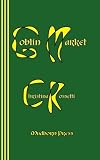
I enjoyed some of Rossetti's shorter poems as I child (not that this is especially long), but was not familiar with this until I heard an extraordinary reading on BBC Radio 4 by Shirley Henderson. (There was an excerpt here, but it's no longer playable.)
It is a hypnotic poem about temptation, salivation, and salvation via sacrifice, told in contrasts: a sensible sister and a weak-willed one, getting gorgeous fruit from hideous goblins. It repeatedly combines religious and carnal imagery.
It show more can happily be read by or to a child, though as an adult, it's impossible to ignore the sensual allusions, starting on the very first page, with the goblins' tempting fare including “plump unpecked cherries”.
The whole story is dripping with the juice of ripe fruit, and the beguiling words of the hideous goblins trying to sell it.
Image: Arthur Rackham’s 1933 illustration is overtly sexual. The first illustrations were by Christina's brother, Dante Gabriel Rossetti, but I prefer Rackham's. (Source)
This story is about the language and imagery more than the plot, but if you don't want spoilers, stop reading now.
Story
Laura and Lizzie are sisters who come across the goblin men in the forest. Lizzie is all-too-aware of the dangers (later, she reminds her sister of how Jeanie wasted away after she “ate their fruits and wore their flowers”), but Lizzie lingers. She has no money, so pays with a lock of her golden hair, which in a mythical world, is clearly dangerous. But she tastes their fruit, and is euphoric at the sensations:
“She suck’d until her lips were sore...
And knew not was it night or day.”
Lizzie gets home safely, but craves more goblin fruit. Next morning, “the first cock crowed his warning” (Biblical and phallic!). The sisters go about their chores as normal.
“At length slow evening came:
They went with pitchers to the reedy brook;
Lizzie most placid in her look,
Laura most like a leaping flame.”
Laura listens for the call, and is shocked to realise her pure sister can hear it, but she no longer can.
“Day after day, night after night,
Laura kept watch in vain.
In sullen silence of exceeding pain.
She never caught again the goblin cry.
‘Come buy, come buy’.”
Just as her sister warned, Laura fades away:
“She dwindled, as the fair full moon does turn
To swift decay and burn
Her fire away”.
Yet every day, Lizzie is tormented by hearing the goblins' cry.
She “Long’d to buy the fruit to comfort her [Lizzie],
But fear’d to pay too dear.”
Nevertheless, eventually she takes a penny, and decides to get what her sister craves. Thus Lizzie has turned from tempted to temptress.
But instead of taking her money, the goblins assault her:
“Held her hands and squeezed their fruits
Against her mouth to make her eat”.
She resits, but is covered in pulp and juice - which she then urges her sister to take:
“Eat me, drink me, love me”
Is that eucharistic or sexual?
“Shaking with anguish fear, and pain,
She [Laura] kiss’d and kiss’d her with a hungry mouth”.
This time the juice is more like poison to her, yet it is also purgative, and restores her. The power of the love of a pure sister is thus demonstrated, and handed down to their own children.
Image: A moral makes a wholesome ending, by Arthur Rackham (Source)
Contrasts
There is a stark contrast in revulsion at the goblins themselves and the irresistible appeal of their fruit: like drugs and indeed, Victorian attitudes to sex.
Of the goblins:
“One tramp’d at a rat's pace...
One like a wombat prowl’d obtuse and furry.”
When they sense a victim, their movements are hungry:
“Came towards her hobbling,
Flying, running, leaping,
Puffing and blowing,
Chuckling, clapping, crowing.”
They fear she might leave without succumbing:
“Grunting and snarling...
One call’d her proud,
Cross-grain’d, uncivil;
Their tones wax’d loud,
Their looks were evil…
Barking, mewing, hissing, mocking,
Tore her gown and soil’d her stocking.”.
And, ah, the fruit:
“Bloom-down-cheek’d peaches...
Wild free-born cranberries…
Pears red with basking
Out in the sun,
Plums on their twigs;
Pluck them and suck them,
Pomegranates, figs.”
Who would not be tempted - are you Laura or Lizzie?
You can read the whole poem HERE. show less
It is a hypnotic poem about temptation, salivation, and salvation via sacrifice, told in contrasts: a sensible sister and a weak-willed one, getting gorgeous fruit from hideous goblins. It repeatedly combines religious and carnal imagery.
It show more can happily be read by or to a child, though as an adult, it's impossible to ignore the sensual allusions, starting on the very first page, with the goblins' tempting fare including “plump unpecked cherries”.
The whole story is dripping with the juice of ripe fruit, and the beguiling words of the hideous goblins trying to sell it.
Image: Arthur Rackham’s 1933 illustration is overtly sexual. The first illustrations were by Christina's brother, Dante Gabriel Rossetti, but I prefer Rackham's. (Source)
This story is about the language and imagery more than the plot, but if you don't want spoilers, stop reading now.
Story
Laura and Lizzie are sisters who come across the goblin men in the forest. Lizzie is all-too-aware of the dangers (later, she reminds her sister of how Jeanie wasted away after she “ate their fruits and wore their flowers”), but Lizzie lingers. She has no money, so pays with a lock of her golden hair, which in a mythical world, is clearly dangerous. But she tastes their fruit, and is euphoric at the sensations:
“She suck’d until her lips were sore...
And knew not was it night or day.”
Lizzie gets home safely, but craves more goblin fruit. Next morning, “the first cock crowed his warning” (Biblical and phallic!). The sisters go about their chores as normal.
“At length slow evening came:
They went with pitchers to the reedy brook;
Lizzie most placid in her look,
Laura most like a leaping flame.”
Laura listens for the call, and is shocked to realise her pure sister can hear it, but she no longer can.
“Day after day, night after night,
Laura kept watch in vain.
In sullen silence of exceeding pain.
She never caught again the goblin cry.
‘Come buy, come buy’.”
Just as her sister warned, Laura fades away:
“She dwindled, as the fair full moon does turn
To swift decay and burn
Her fire away”.
Yet every day, Lizzie is tormented by hearing the goblins' cry.
She “Long’d to buy the fruit to comfort her [Lizzie],
But fear’d to pay too dear.”
Nevertheless, eventually she takes a penny, and decides to get what her sister craves. Thus Lizzie has turned from tempted to temptress.
But instead of taking her money, the goblins assault her:
“Held her hands and squeezed their fruits
Against her mouth to make her eat”.
She resits, but is covered in pulp and juice - which she then urges her sister to take:
“Eat me, drink me, love me”
Is that eucharistic or sexual?
“Shaking with anguish fear, and pain,
She [Laura] kiss’d and kiss’d her with a hungry mouth”.
This time the juice is more like poison to her, yet it is also purgative, and restores her. The power of the love of a pure sister is thus demonstrated, and handed down to their own children.
Image: A moral makes a wholesome ending, by Arthur Rackham (Source)
Contrasts
There is a stark contrast in revulsion at the goblins themselves and the irresistible appeal of their fruit: like drugs and indeed, Victorian attitudes to sex.
Of the goblins:
“One tramp’d at a rat's pace...
One like a wombat prowl’d obtuse and furry.”
When they sense a victim, their movements are hungry:
“Came towards her hobbling,
Flying, running, leaping,
Puffing and blowing,
Chuckling, clapping, crowing.”
They fear she might leave without succumbing:
“Grunting and snarling...
One call’d her proud,
Cross-grain’d, uncivil;
Their tones wax’d loud,
Their looks were evil…
Barking, mewing, hissing, mocking,
Tore her gown and soil’d her stocking.”.
And, ah, the fruit:
“Bloom-down-cheek’d peaches...
Wild free-born cranberries…
Pears red with basking
Out in the sun,
Plums on their twigs;
Pluck them and suck them,
Pomegranates, figs.”
Who would not be tempted - are you Laura or Lizzie?
You can read the whole poem HERE. show less
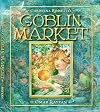
What a work of fantastical whimsy! The poem, hand lettered through the march of bewitching watercolor pages, is at once a celebration and a caution of hedonism and decadence. The illustrations themselves throw the caution to the wind and revel in excess. The characters are many and varied, with expressions that convey the sly sense of humor of their creator. I especially enjoyed the drunkard birds - ravens and then owls - and the steadfast and ever-present otter fisher (fisher otter?)
Lists
Awards


You May Also Like


Associated Authors
Statistics
- Works
- 137
- Also by
- 101
- Members
- 5,513
- Popularity
- #4,520
- Rating
- 4.0
- Reviews
- 64
- ISBNs
- 228
- Languages
- 9
- Favorited
- 35
