
Eric Hobsbawm (1917–2012)
Author of The Age of Extremes : A History of the World, 1914-1991
About the Author
Eric Hobsbawm is a neo-Marxist historian of the Industrial Revolution who pays particular attention to the inequities toward the lower classes, especially in law and politics. (Bowker Author Biography)
Image credit: Eric Hobsbawm, circa June 2007
Series
Works by Eric Hobsbawm
The Making of the Modern World (4 Volume Set Consisting of: The Age of Revolution; the Age of Capital; the Age of Empire; the Age of Extremes) (2005) 34 copies, 1 review
Behind the Times: The Decline and Fall of the Twentieth-Century Avant Gardes (1998) 24 copies, 1 review
Marx vivo: la presenza di Karl Marx nel pensiero contemporaneo (1969) — Contributor — 4 copies, 1 review
História do marxismo - Volume X. O marxismo na época da terceira internacional: de Gramsci à crise do stalinismo (2005) 3 copies
El sentido de Europa 3 copies
Sobre la Historia 3 copies
História do marxismo - Volume 8. O marxismo na época da terceira internacional: o novo capitalismo, o imperialismo, o terceiro mundo (1990) 2 copies
Birth of a holiday: The First of May : the first annual Bindoff lecture delivered 3 May 1990 (1991) 2 copies
Marxism & anarchism 1 copy
Revolucionários 1 copy
ΣΤΟΥΣ ΟΡΙΖΟΝΤΕΣ ΤΟΥ 21ου ΑΙΩΝΑ ΜΕΤΑ ΤΗΝ ΕΠΟΧΗ ΤΩΝ ΑΚΡΩΝ - ΣΥΝΟΜΙΛΙΑ ΜΕ ΤΟΝ ANTONIO POLITO (2000) 1 copy, 1 review
SOSYAL İSYANCILAR 1 copy
Storia del marxismo 1 copy
Kapitalets tidsålder — Author — 1 copy
Industria e imperio 1 copy
The age of Empire 1875-1914 1 copy
Poonji Ka Yug (1848-1875) 1 copy
Storia del marxismo. 2. Il Marxismo nell’età della Seconda Internazionale. (Giulio Einaudi Editore) 1 copy
Samrajya Ka Yug (1875-1914) 1 copy
Historia del siglo XX 1 copy
Dialogue of Comfort Against Tribulation / With Modifications To Obsolete Language By Monica Stevens 1 copy
SHPIKJA E TRADITËS 1 copy
The History of Marxism 1 copy
Mundo do trabalho 1 copy
Kranti Ka Yug (1789-1848) 1 copy
Marxismo e historial social 1 copy
Storia del Marxismo 1 copy
Revolucionários 1 copy
'Vulnerable Japan' 1 copy
Pendits 1 copy
Industry and Empire 1 copy
Sanayi ve İmparatorluk 1 copy
Del artesano al socialismo 1 copy
Historia do Marxismo 11 1 copy
Hobsbawm Eric 1 copy
Haydutlar 1 copy
Associated Works
Capital, Vol. 1: A Critique of Political Economy (1867) — Introduction, some editions — 3,238 copies, 31 reviews
The Condition of the Working Class in England (1844) — Introduction, some editions — 1,251 copies, 10 reviews
The Antonio Gramsci Reader: Selected Writings 1916-1935 (1988) — Introduction — 420 copies, 3 reviews
The Standard of Living in Britain in the Industrial Revolution (Debates in Economic History) (1975) — Contributor — 12 copies
Workers in the Industrial Revolution: Recent Studies of Labor in the United States and Europe (1974) — Contributor — 11 copies
Archives: The Journal of the British Records Association, Vol IV, No 23 — Contributor — 1 copy
New Left Review I/105: The Nationalist Enigma, Sept/Oct 1977 — Contributor — 1 copy
New Left Review I/125: Unions and the Capitalist State, Jan/Feb 1981 — Contributor — 1 copy
Tagged
Common Knowledge
- Canonical name
- Hobsbawm, Eric
- Legal name
- Hobsbawm, Eric John Ernest
- Other names
- Newton, Francis
- Birthdate
- 1917-06-09
- Date of death
- 2012-10-01
- Gender
- male
- Education
- King's College, Cambridge (BA | 1939 | MA | 1942 | PhD | 1951 | History)
Prinz Heinrich Gymnasium, Berlin
St. Marylebone Grammar School - Occupations
- historian
university professor
public intellectual - Organizations
- Communist Party of Great Britain
Cambridge Apostles
Communist Party Historians Group
Birbeck College, University of London
British Army
Athenaeum Club - Awards and honors
- Order of the Companions of Honour (1998)
Royal Society of Literature (Fellow, 2006)
British Academy (Fellow, 1978)
American Academy of Arts & Sciences (Foreign Member, 1971)
Bochum Historian Prize (2008)
Balzan Prize (2003) (show all 11)
Ernst Bloch Prize (2000)
Leipziger Buchpreis zur Europäischen Verständigung (1999)
Wolfson History Oeuvre Prize (1997)
Lionel Gelber Prize (1995)
Deuthscher Memorial Prize (1995) - Relationships
- Sassoon, Donald (student)
Dobb, Maurice (teacher)
Grenville, J. A. S. (student) - Cause of death
- pneumonia (complications)
leukemia (complications) - Nationality
- UK
- Birthplace
- Alexandria, Egypt
- Places of residence
- Vienna, Austria
Berlin, Germany
London, England, UK
Alexandria, Egypt - Place of death
- London, England, UK
- Burial location
- Highgate Cemetery, London, England, UK
- Map Location
- England, UK
Members
Discussions
Eric Hobsbawm obituary in Pro and Con (October 2012)
Reviews

The world may yet regret that, faced with Rosa Luxemburg's alternative of socialism or barbarism, it decided against socialism.
Eric Hobsbawm was the star historian in a generation of exceptional British historians, and one of the star Marxists in a generation where to be a public intellectual (if there was ever such a thing in Britain, he has to be one of the best candidates for it) was to be on the Left. He was an unrepentant Communist — in fact there can have been few British Party show more members who kept their membership active for as long as he did. And it turns out that he was also a very engaging autobiographer.
He is quite upfront about the problem of balancing his historian’s instinct and duty to present us with objective evidence and analysis against his memoirist’s obligation to be subjective and personal — the result tends to lean a little more to the former than the latter, and there’s certainly not much revealing indiscretion, but we get a very clear and incisive picture of the “short twentieth century” as it might have been (was, actually) experienced by someone born at the time of the Russian revolution, growing up first as a Mitteleuropäer in Vienna and Berlin, then as British in London and at King’s College Cambridge. It’s interesting how he refuses ever to tell us what he thought or how he felt about something, unless he happens to have written something down at the time. What he remembers now about his own subjective experience is not evidence.
The book shifts gear about halfway through, where he switches from more-or-less chronological narrative — the lives of respectable middle-class adults are not interesting enough to chronicle that way after the point that they settle into careers and family life, he feels — and instead gives us a series of thematic chapters, covering topics like his travels in different parts of the world (including one ostensibly about the cottage where they spent their family holidays for many years that gradually turns into a social history of North Wales in the late 20th century), the development of the discipline of history during his lifetime, his lifelong passion for jazz, and of course his long engagement with Communism through the shocks and disillusionments of the period after 1956 and his increasingly pessimistic view of the British Left (he was writing this during the Blair years, of course; I don’t imagine he would have seen Starmer any more positively).
Brilliant writing, of course, as you would expect from Hobsbawm, and a book it’s hard to put down even when it’s describing the procedure of Party meetings 90 years ago. But certainly one of the odder autobiographies I’ve read as far as the author’s relationship with the subject goes. show less

The third part of Hobsbawm’s big review of the “long 19th century” in world history covers the period when Big Capital and western imperialism went full-on global, when the “old empires” (China, Persia, Ottoman, Austria-Hungary, Russia) were visibly crumbling, when Britain stopped ruling the waves, when the USA and Japan emerged fully as new international powers, when workers’ movements challenged the liberal orthodoxy, when millions of people (especially Europeans) migrated to show more other parts of the world, when feminism began to be taken seriously, and when new technologies like the motor car, aircraft, electric light, the cinema, radio and telephones began to impinge on people’s lives around the world. Science broke with the mechanistic universe of Newton and Galileo to give us Freud and Einstein and Heisenberg, artists and writers invented modernism. And the European powers somehow managed to start a World War. There was a lot going on.
As usual, Hobsbawm moves fast with his high-level analysis and avoids getting bogged down in detail — you’ll probably find this hard to follow unless you already have at least a broad outline of the history of the period in mind before you start, but if you can keep up, it’s a very rewarding process, and it will give you a lot to think about, even if you don’t share his Marxist viewpoint. He manages to touch on a surprising number of topics in a relatively small space, and draws them all into his big picture — it’s not often that you read someone who can jump between Keynes and Schoenberg and quantum physics and the Mexican revolution and tell you something interesting and new about all of them. He doesn’t get unduly bogged down in the most widely-rehashed question of the period — why did World War I start? — but he does point out the factors that were different in the international situation by 1914 and made war a more likely outcome of incidental conflicts. show less
As usual, Hobsbawm moves fast with his high-level analysis and avoids getting bogged down in detail — you’ll probably find this hard to follow unless you already have at least a broad outline of the history of the period in mind before you start, but if you can keep up, it’s a very rewarding process, and it will give you a lot to think about, even if you don’t share his Marxist viewpoint. He manages to touch on a surprising number of topics in a relatively small space, and draws them all into his big picture — it’s not often that you read someone who can jump between Keynes and Schoenberg and quantum physics and the Mexican revolution and tell you something interesting and new about all of them. He doesn’t get unduly bogged down in the most widely-rehashed question of the period — why did World War I start? — but he does point out the factors that were different in the international situation by 1914 and made war a more likely outcome of incidental conflicts. show less
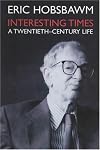
I hear the news that Hobsbawm has died at the venerable age of 95. I search for and read again his autobiography. He writes less about himself than about how he, an indefatigable curious observer – hence the title of the book – more so than participant, has experienced the turbulent times he has lived through, that means most of the 20th and the beginning of the 21st century in Vienna, Berlin, London, New York and many other places. In this, his personal point of view lays the interest show more and value of his account. He is uniquely placed: “Age produces one kind of historical perspective”, he writes; after all he has witnessed events, which almost none of us, his readers, have personal experience of. But through his peripatetic life always “belonging to untypical minorities” he also maintained a certain distance to his surroundings and events. A historian needs it, he says: “History needs distance, not only from the passions, emotions, ideologies … but from the even more dangerous temptations of ‘identity’. […] I felt at home in several countries … in all of them … I have been someone who does not wholly belong to where he finds himself, whether as an Englishman among the central Europeans, a continental immigrant in Britain, a Jew everywhere – even, indeed in Israel – an anti-specialist in a world of specialist, a polyglot cosmopolitan, … even, for much of my life, an anomaly among communists, …” (415-16). Some accused him of seeing the world blinkered by communist ideology. This accusation is not justified. Like the later Djilas , he has not compromised his independent thinking and judgment. He talks about the dangers history as a science (i.e. “distinguishing between fact and fiction, … what is the case and what we would like to be so” ) is facing today from two sides despite unprecedented prominence in the media: on the one hand history perceived “not as a way of interpreting the world, but a means of collective self-discovery”, on the other hand “More history than ever is today being revised or invented by people who do not want the real past, but only a past that suits their purpose. Today is the great age of historical mythology.” (296). He sees that today a “framework for a genuinely global history exists which can be given “its proper central place, neither within the humanities nor the natural and mathematical sciences, nor separated from them, but essential to both.” (297).
As far as EH’s personal life is concerned he seems to be silent or has glossed over many things. In a very critical review Perry Anderson (London Review of Books, Vol. 24 No. 19 • 3 October 2002) ) details much. EH summarises his life thus: “It has been an extraordinarily enjoyable life – he writes, “It has been given me more private happiness than I ever expected. … It would be pointless to regret that it has turned out this way.” But a small uneasiness persists: “… somewhere inside me there is a small ghost who whispers: ’One should not be at ease in a world such as ours.’ As the man said when I read him in my youth: ‘The point is to change it.’” (313) But EH’s strength was not action but the word. And he left us his writings, in particular his brilliant 4 volume history of the 19th and 20th Century (‘The age of …’) .
Khrushchev’s denunciation of Stalin in 1956 at the 20th Congress of the USSR precipitated a traumatic crisis that split the world for a communist into a before and after. EH’s description of its impact on the British CP is strangely impersonal. Why did he remain in the Communist Party while so many of his friends left? In retrospect, he says, he allowed himself to stay, because “emotionally, as one converted as a teenager in the Berlin of 1932, I belonged to the generation tied by an almost unbreakable umbilical cord to hope of the world revolution, and of its original home, the October Revolution, however skeptical or critical of the USSR. For someone who joined the movement where I came from and when I did, it was quite simply more difficult to break with the Party than for those who came later and from elsewhere.” (218)
I found the most interesting his writings on France, Spain, Italy, some Latin-American countries and the USA – all countries he got to know well.
Interviews and talks on YouTube:
EH remembering the rise of Hitler January 1933 Berlin; (BBC World Service, 2012)
on Gramsci; (1987)
EH talks to Michael Ignatieff (BBC Ch4, 1994) and more, all interesting
The German edition was published under the title ‘Gefährliche Zeiten’ (Dangerous times). Why this change? Was the original title deemed too detached to be palatable for German readers? (XI-12)
(XI-22) After reading Nadeschda Mandelstam’s account just how and to what extend the Bolsheviks and Stalin had corrupted the communist ideas I was curious how Hobsbawm could remain faithful to communism considering that, whenever and wherever the idea was set into practice, coercive authoritarianism was the result.
A large part in embracing communist ideas seems to have played by him experiencing the fight against Nazism in 1932/33 Berlin as a young adult (he was then just 15/16 year old) as a ‘final crisis (of the Weimar Republic) heading to a cataclysmic resolution’. The Comintern line saw Social democracy as ‘the greatest danger’: in hind-sight he labeled it ‘politics of insanity’ and ‘suicidal idiocy’ (68), then to some extend experienced in that demonstrators were shot by police under social-democratic command. But the line had to be followed regardless of your views.
The divided Germany after the war he thus compares: ‘the GDR’s system was shabby but relatively unsanguinary, the all-embracing bureaucracy did not terrorise but chivvied, the new society had positive sides: work for all, universal education, health, social security, pensions etc., but citizens had no control over their lives; they were treated like ‘minors by strict 19th century parents’(149f). In West Germany the lure of good life and wealth and old Nazis in high-ranking government positions (Globke (https://en.wikipedia.org/wiki/Hans_Globke ), Gehlen (the Gehlen Organisation set up by the CIA: https://en.wikipedia.org/wiki/Reinhard_Gehlen ) with former staff-members, …
Hobsbawm ‘swallowed his mental reservations and defended the Soviet Union in the Cold War ‘as the decolonized world depended on its existence’, or rather, as he writes, ‘attacked the capitalist camp for preferring a West Germany run by old Nazis to an East Germany run by old prisoners of Nazi concentration camps, …, and a USA which made Franco’s Spain its military base against those who had supported the Republic.’ (195) Who can blame him?
For a broad discussion see his WP entry (https://en.wikipedia.org/wiki/Eric_Hobsbawm) show less
As far as EH’s personal life is concerned he seems to be silent or has glossed over many things. In a very critical review Perry Anderson (London Review of Books, Vol. 24 No. 19 • 3 October 2002) ) details much. EH summarises his life thus: “It has been an extraordinarily enjoyable life – he writes, “It has been given me more private happiness than I ever expected. … It would be pointless to regret that it has turned out this way.” But a small uneasiness persists: “… somewhere inside me there is a small ghost who whispers: ’One should not be at ease in a world such as ours.’ As the man said when I read him in my youth: ‘The point is to change it.’” (313) But EH’s strength was not action but the word. And he left us his writings, in particular his brilliant 4 volume history of the 19th and 20th Century (‘The age of …’) .
Khrushchev’s denunciation of Stalin in 1956 at the 20th Congress of the USSR precipitated a traumatic crisis that split the world for a communist into a before and after. EH’s description of its impact on the British CP is strangely impersonal. Why did he remain in the Communist Party while so many of his friends left? In retrospect, he says, he allowed himself to stay, because “emotionally, as one converted as a teenager in the Berlin of 1932, I belonged to the generation tied by an almost unbreakable umbilical cord to hope of the world revolution, and of its original home, the October Revolution, however skeptical or critical of the USSR. For someone who joined the movement where I came from and when I did, it was quite simply more difficult to break with the Party than for those who came later and from elsewhere.” (218)
I found the most interesting his writings on France, Spain, Italy, some Latin-American countries and the USA – all countries he got to know well.
Interviews and talks on YouTube:
EH remembering the rise of Hitler January 1933 Berlin; (BBC World Service, 2012)
on Gramsci; (1987)
EH talks to Michael Ignatieff (BBC Ch4, 1994) and more, all interesting
The German edition was published under the title ‘Gefährliche Zeiten’ (Dangerous times). Why this change? Was the original title deemed too detached to be palatable for German readers? (XI-12)
(XI-22) After reading Nadeschda Mandelstam’s account just how and to what extend the Bolsheviks and Stalin had corrupted the communist ideas I was curious how Hobsbawm could remain faithful to communism considering that, whenever and wherever the idea was set into practice, coercive authoritarianism was the result.
A large part in embracing communist ideas seems to have played by him experiencing the fight against Nazism in 1932/33 Berlin as a young adult (he was then just 15/16 year old) as a ‘final crisis (of the Weimar Republic) heading to a cataclysmic resolution’. The Comintern line saw Social democracy as ‘the greatest danger’: in hind-sight he labeled it ‘politics of insanity’ and ‘suicidal idiocy’ (68), then to some extend experienced in that demonstrators were shot by police under social-democratic command. But the line had to be followed regardless of your views.
The divided Germany after the war he thus compares: ‘the GDR’s system was shabby but relatively unsanguinary, the all-embracing bureaucracy did not terrorise but chivvied, the new society had positive sides: work for all, universal education, health, social security, pensions etc., but citizens had no control over their lives; they were treated like ‘minors by strict 19th century parents’(149f). In West Germany the lure of good life and wealth and old Nazis in high-ranking government positions (Globke (https://en.wikipedia.org/wiki/Hans_Globke ), Gehlen (the Gehlen Organisation set up by the CIA: https://en.wikipedia.org/wiki/Reinhard_Gehlen ) with former staff-members, …
Hobsbawm ‘swallowed his mental reservations and defended the Soviet Union in the Cold War ‘as the decolonized world depended on its existence’, or rather, as he writes, ‘attacked the capitalist camp for preferring a West Germany run by old Nazis to an East Germany run by old prisoners of Nazi concentration camps, …, and a USA which made Franco’s Spain its military base against those who had supported the Republic.’ (195) Who can blame him?
For a broad discussion see his WP entry (https://en.wikipedia.org/wiki/Eric_Hobsbawm) show less

This very influential collection of essays grew out of a conference organised by Past & Present, the academic journal Hobsbawm co-founded. The contributors look into some of the ways that nations and other social groups have created, or attempted to create, new "traditions" that look back to some more-or-less fictitious glorious past, and the purposes that these invented traditions serve.
The way this process works is perhaps seen at its bluntest and most absurd extreme in Hugh show more Trevor-Roper's opening essay on Scotland, where there was a clear need to define a distinct national identity after the political upheavals of the 17th and 18th centuries. Bizarrely, most of the cultural symbols adopted as "Scottish" were not drawn from mainstream Scots culture but from an exotic, fringe minority that was completely foreign to most Scots, the Catholic, Gaelic-speaking, harp-playing highlanders, who had up to that point drawn their cultural identity mostly from Ireland. Moreover, most of these adopted symbols turn out to have been either blatant forgeries like Macpherson's "Poems of Ossian" or new ideas introduced to the highlands by outsiders after the Stuart rebellions (kilts, tartans, bagpipes, etc.). Trevor-Roper very neatly exposes where all these things came from, and how they came to be reinforced as "Scottish traditions" through their adoption by Queen Victoria (and Sir Walter Scott, who should have known better, and regretted it afterwards...). It would perhaps have been nice to have a bit more explanation about how they still persist in the popular image of Scotland, even though "everyone knows" how bogus they are.
Prys Morgan does a similar kind of hatchet job on Wales, looking into the reinvention of the "druidic tradition" in the 18th and 19th century and its later extinction in the appropriation of notions of Welshness by Methodists and Socialists, and David Cannadine does what he does best by picking out the way the British royal family rediscovered the uses of royal ceremonial from the 1870s on (and the interesting way that the ceremonial became more important and more "traditional" in direct proportion to the decline of the political influence of the crown).
Another, perhaps less obvious, aspect of the uses of tradition is covered by Bernard S Cohn's essay on India after 1858 and Terence Ranger's piece on colonial Africa: Britain and other colonial powers arbitrarily reinvented the pre-colonial past of the territories they were ruling in order to create a "traditional" hook to define their right to political power, in the process often making fixed hierarchical structures out of relationships of authority that had previously been much more fluid and dynamic, and leaving a mess for their post-colonial successors to sort out. One interesting aspect of this that Ranger picks up is the way that invented colonial traditions provided structure and status for people like soldiers, teachers, bureaucrats and ministers of religion, but did nothing for productive workers (where there were strong working-class traditions, e.g. in South African mines, they were carefully kept exclusive to white skilled workers).
Hobsbawm concludes the book with an essay on Europe between 1870 and 1914, where he looks at the ways new polities like the German Empire and the French Second Republic selectively used "historical" symbols to define themselves, and at the rapid development of new class-based traditions, including of course his old favourite, the invention of the 1st of May as a workers' holiday, but also looking into the role of sport, where there were clearly separate developments for working-class (professional soccer, cycle racing) and middle-class (tennis, golf). Another way the (upper-)middle-class defined itself was through education, and Hobsbawm also charts the development of Greek-letter fraternities in the US, the student Korps in Germany, and the "old-school-tie" network in Britain, all of which saw a rapid acceleration during this period.
The essays are very interesting in themselves, and all the contributors are capable, lively writers. The concept of "invented tradition" has embedded itself into mainstream history long ago, so there's not much that you are likely to find radical and shocking any more 35 years on, but this is certainly a book that it's still worth reading. Even if you take the line that the question is rather academic because all traditions are human inventions at some point in their history, this stuff still matters, because people around the world are still justifying unpleasant acts and attitudes with the argument that "it's our tradition". If you have an understanding of where traditions come from, you are in a better position to challenge (or defend) such things. show less
The way this process works is perhaps seen at its bluntest and most absurd extreme in Hugh show more Trevor-Roper's opening essay on Scotland, where there was a clear need to define a distinct national identity after the political upheavals of the 17th and 18th centuries. Bizarrely, most of the cultural symbols adopted as "Scottish" were not drawn from mainstream Scots culture but from an exotic, fringe minority that was completely foreign to most Scots, the Catholic, Gaelic-speaking, harp-playing highlanders, who had up to that point drawn their cultural identity mostly from Ireland. Moreover, most of these adopted symbols turn out to have been either blatant forgeries like Macpherson's "Poems of Ossian" or new ideas introduced to the highlands by outsiders after the Stuart rebellions (kilts, tartans, bagpipes, etc.). Trevor-Roper very neatly exposes where all these things came from, and how they came to be reinforced as "Scottish traditions" through their adoption by Queen Victoria (and Sir Walter Scott, who should have known better, and regretted it afterwards...). It would perhaps have been nice to have a bit more explanation about how they still persist in the popular image of Scotland, even though "everyone knows" how bogus they are.
Prys Morgan does a similar kind of hatchet job on Wales, looking into the reinvention of the "druidic tradition" in the 18th and 19th century and its later extinction in the appropriation of notions of Welshness by Methodists and Socialists, and David Cannadine does what he does best by picking out the way the British royal family rediscovered the uses of royal ceremonial from the 1870s on (and the interesting way that the ceremonial became more important and more "traditional" in direct proportion to the decline of the political influence of the crown).
Another, perhaps less obvious, aspect of the uses of tradition is covered by Bernard S Cohn's essay on India after 1858 and Terence Ranger's piece on colonial Africa: Britain and other colonial powers arbitrarily reinvented the pre-colonial past of the territories they were ruling in order to create a "traditional" hook to define their right to political power, in the process often making fixed hierarchical structures out of relationships of authority that had previously been much more fluid and dynamic, and leaving a mess for their post-colonial successors to sort out. One interesting aspect of this that Ranger picks up is the way that invented colonial traditions provided structure and status for people like soldiers, teachers, bureaucrats and ministers of religion, but did nothing for productive workers (where there were strong working-class traditions, e.g. in South African mines, they were carefully kept exclusive to white skilled workers).
Hobsbawm concludes the book with an essay on Europe between 1870 and 1914, where he looks at the ways new polities like the German Empire and the French Second Republic selectively used "historical" symbols to define themselves, and at the rapid development of new class-based traditions, including of course his old favourite, the invention of the 1st of May as a workers' holiday, but also looking into the role of sport, where there were clearly separate developments for working-class (professional soccer, cycle racing) and middle-class (tennis, golf). Another way the (upper-)middle-class defined itself was through education, and Hobsbawm also charts the development of Greek-letter fraternities in the US, the student Korps in Germany, and the "old-school-tie" network in Britain, all of which saw a rapid acceleration during this period.
The essays are very interesting in themselves, and all the contributors are capable, lively writers. The concept of "invented tradition" has embedded itself into mainstream history long ago, so there's not much that you are likely to find radical and shocking any more 35 years on, but this is certainly a book that it's still worth reading. Even if you take the line that the question is rather academic because all traditions are human inventions at some point in their history, this stuff still matters, because people around the world are still justifying unpleasant acts and attitudes with the argument that "it's our tradition". If you have an understanding of where traditions come from, you are in a better position to challenge (or defend) such things. show less
Lists
Awards


You May Also Like


Associated Authors
Statistics
- Works
- 161
- Also by
- 22
- Members
- 18,818
- Popularity
- #1,160
- Rating
- 3.7
- Reviews
- 158
- ISBNs
- 683
- Languages
- 26
- Favorited
- 35

