
Ruchir Sharma
Author of Breakout Nations: In Pursuit of the Next Economic Miracles
About the Author
Ruchir Sharma penned the international bestseller Breakout Nations and writes commentary for the New York Times, the Wall Street Journal, Foreign Affairs, and other publications. One of the world's largest investors, he is chief global strategist and head of emerging markets at Morgan Stanley show more Investment Management, based in New York. show less
Works by Ruchir Sharma
The Rise and Fall of Nations: Forces of Change in the Post-Crisis World (2016) 209 copies, 5 reviews
Os Rumos da Prosperidade 1 copy
The Rise of the Rest of India: How States Have Become the Engines of Growth [journal article] 1 copy
Nazioni in fuga 1 copy
NGRITJA DHE RËNIA E KOMBEVE 1 copy
Tagged
Common Knowledge
- Gender
- male
- Education
- Shri Ram College of Commerce
- Occupations
- investor
- Organizations
- Morgan Stanley
- Nationality
- India
- Birthplace
- Jaipur, Rajasthan, India
- Associated Place (for map)
- Rajasthan, India
Members
Reviews
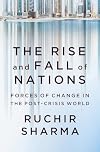
Аналитик инвестиционного подразделения Morgan Stanley решил поделиться своими соображениями о причинах экономического и социального успеха или прозябания стран на основании своего обширного опыта: «Эта книга о том, как, пропуская мимо ушей посторонние звуки и назойливую show more шумиху, уловить четкие признаки грядущего подъема и падения государств». Шарме удалась на редкость интересная и небанальная работа. Взять хотя бы его деление миллиардеров на «хороших» и «плохих». В Москве проживает самое большое количество в мире именно последних. России вообще уделено немало места, и кое-что даже предсказано (например, пенсионная реформа). Экономические решения правительств, часто скрывающиеся за малопонятными формулировками и аббревиатурами, в книге начинают «говорить», когда их результаты, во-первых, рассмотрены в долгосрочной перспективе, а во-вторых, показаны на конкретных примерах, например, индийском «индексе лука». В далеко идущие прогнозы Шарма не верит, но считает, что «Cледующая глобальная рецессия, похоже, будет «сделана в Китае». show less
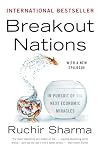
Its difficult to exaggerate the quality of this book. Ruchir Sharma searches for the real keys to national development which are often not so obvious or easy to identify.
His whole analysis deals with probabilities rather the pseudo-scientific laws, formulas and equations that have reduced post-war economics to a turgid mess. If the situation is probabilistic then his “Rules of the Road” are perfect guides to policy, pointing countries in the right direction without claiming to understand show more exactly how the mechanisms work.
His detailed look at development by country quickly disposes of misleading generalizations like BRICS. For example, India and Brazil prove incapable of building infrastructure (unlike China), guaranteeing growth = inflation in both cases, and Russia has yet to manufacture anything that the world wants to buy.
Equally the book is very revealing of the qualitative differences between successful developing nations.
A good example is the contrast on P.166 between South Korea and Taiwan. He says, “Though South Korean has a significantly larger manufacturing sector than Taiwan, it employs a much smaller factory workforce (about 15% of total labour, compared to 25% in Taiwan). It also has one of the most dense robot populations in the world. That means South Korea is doing a lot more with fewer workers and is much more productive than Taiwan.”
Unexpected countries such as Turkey, Sri Lanka and Indonesia are following successful development paths and Sharma is quite happy to evaluate the sociological background to their policies.
In 1948 Sri Lanka received a British ex colonial favoured Tamil immigrant minority elite dominating the Sinhalese majority. This divided country slid into civil war with the Sinhalese eventually recovering power in their own country. Events such as these are ignored by approved economic “science” but Sharma convincingly shows unity in national recovery allowed Sri Lanka to exploit its long standing strengths of a highly literate population and a location on the key shipping routes to India and China.
He quickly disposes of the orchestrated western media view that Turkey is sliding into militant Islam. As he says, “There is almost no support for this worldview in Turkey where – even under the AKP – the state enforces a single moderate interpretation of Islam in schools and through the Religious Affairs Directorate. The vast majority of Turks see religion as a strictly personal matter ...”
The last part of the book looks at the poorest countries and the rich world in an equally enlightening way. As he says, “The boundaries of the Fourth World are defined not by poverty but by the rule of law, or the lack of it”, and he evaluates the way that the flood of liquidity into the rich world forces speculation through taxing savings (interest rates lower than inflation).
Even Rupert Sheldrake gets a mention although Sharma doesn't give this reviewer's favourite Sheldrake Sheep Rolling story. show less
His whole analysis deals with probabilities rather the pseudo-scientific laws, formulas and equations that have reduced post-war economics to a turgid mess. If the situation is probabilistic then his “Rules of the Road” are perfect guides to policy, pointing countries in the right direction without claiming to understand show more exactly how the mechanisms work.
His detailed look at development by country quickly disposes of misleading generalizations like BRICS. For example, India and Brazil prove incapable of building infrastructure (unlike China), guaranteeing growth = inflation in both cases, and Russia has yet to manufacture anything that the world wants to buy.
Equally the book is very revealing of the qualitative differences between successful developing nations.
A good example is the contrast on P.166 between South Korea and Taiwan. He says, “Though South Korean has a significantly larger manufacturing sector than Taiwan, it employs a much smaller factory workforce (about 15% of total labour, compared to 25% in Taiwan). It also has one of the most dense robot populations in the world. That means South Korea is doing a lot more with fewer workers and is much more productive than Taiwan.”
Unexpected countries such as Turkey, Sri Lanka and Indonesia are following successful development paths and Sharma is quite happy to evaluate the sociological background to their policies.
In 1948 Sri Lanka received a British ex colonial favoured Tamil immigrant minority elite dominating the Sinhalese majority. This divided country slid into civil war with the Sinhalese eventually recovering power in their own country. Events such as these are ignored by approved economic “science” but Sharma convincingly shows unity in national recovery allowed Sri Lanka to exploit its long standing strengths of a highly literate population and a location on the key shipping routes to India and China.
He quickly disposes of the orchestrated western media view that Turkey is sliding into militant Islam. As he says, “There is almost no support for this worldview in Turkey where – even under the AKP – the state enforces a single moderate interpretation of Islam in schools and through the Religious Affairs Directorate. The vast majority of Turks see religion as a strictly personal matter ...”
The last part of the book looks at the poorest countries and the rich world in an equally enlightening way. As he says, “The boundaries of the Fourth World are defined not by poverty but by the rule of law, or the lack of it”, and he evaluates the way that the flood of liquidity into the rich world forces speculation through taxing savings (interest rates lower than inflation).
Even Rupert Sheldrake gets a mention although Sharma doesn't give this reviewer's favourite Sheldrake Sheep Rolling story. show less
Ruchir Sharma – Head of Emerging Markets at Morgan Stanley gives a very comprehensive analysis of the worlds leading economies and factors affecting the GDP from raising inequality to immigration , currency devaluation to effect on aging populations in US and EU etc , which I thought radiates rationality and his deductive skills .
One of the key points regarding how slow the revival has been after 2008 ; with staggering rise of
inequality of income in the US primarily due to lack of show more manufacturing jobs which was the backbone for many decades and with automation now poised to penetrate multiple sectors other than the assembly line industries , pose a serious threat to a nation’s GDP and further antagonize the already burdened middle class ; India on the other hand does not have the luxury of time which enabled China to mobilize it vast population to under cut wages for three decades and rise as a superpower ; Current right wing govt is already faltering on the employment , inflation and favoritism to certain industrial dynasties is quite evident , with increasing turmoil along religious fault lines can derail India’s prospects .
Sharma ( and Doug Rushkoff too ) also made a very crucial distinguishing point regarding the difference between yester-year billionaires and today’s current technocrats – WalMart , Stat Oil etc may have rose to prominence by predatory business tactics but their industries did provide mass employment to many a generation of Americans ; which is quite contradictory to the current top four . SnapChat & PokemonGo billionaires exemplifies this point where human productivity as a whole has stagnated yet few individuals has been able create vast amounts of wealth and further exacerbates the income inequality .
Overall I found it very informative , analytical and backed by factual evidence which epitomizes the author’s three decades of experience . show less
One of the key points regarding how slow the revival has been after 2008 ; with staggering rise of
inequality of income in the US primarily due to lack of show more manufacturing jobs which was the backbone for many decades and with automation now poised to penetrate multiple sectors other than the assembly line industries , pose a serious threat to a nation’s GDP and further antagonize the already burdened middle class ; India on the other hand does not have the luxury of time which enabled China to mobilize it vast population to under cut wages for three decades and rise as a superpower ; Current right wing govt is already faltering on the employment , inflation and favoritism to certain industrial dynasties is quite evident , with increasing turmoil along religious fault lines can derail India’s prospects .
Sharma ( and Doug Rushkoff too ) also made a very crucial distinguishing point regarding the difference between yester-year billionaires and today’s current technocrats – WalMart , Stat Oil etc may have rose to prominence by predatory business tactics but their industries did provide mass employment to many a generation of Americans ; which is quite contradictory to the current top four . SnapChat & PokemonGo billionaires exemplifies this point where human productivity as a whole has stagnated yet few individuals has been able create vast amounts of wealth and further exacerbates the income inequality .
Overall I found it very informative , analytical and backed by factual evidence which epitomizes the author’s three decades of experience . show less
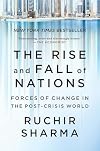
Mr. Sharma is obviously a supply-sider with neoliberal tendencies whose bias shines through more strenuously in the first half of the book. There is some interesting information in the latter half that has value so the read isn't a total loss. It would be interesting to have current data to see if his forecasts are playing out.
It's a lot of subject area with limited points of view. I would recommend books dedicated to a particular subject, for instance Jared Diamond's "Collapse", Naomi show more Kline's "No Logo", David Harvey's "Seventeen Contradictions of Capitalism...", Mehrsa Baradaran's "How the Other Half Banks" for a more in-depth look at 'why past societies collapsed', 'corporate de-investment in America', 'an alternate view of capitalism', 'alternatives to banking in the U.S.', and other topics that seemed to get only a one-sided perspective in this book. show less
It's a lot of subject area with limited points of view. I would recommend books dedicated to a particular subject, for instance Jared Diamond's "Collapse", Naomi show more Kline's "No Logo", David Harvey's "Seventeen Contradictions of Capitalism...", Mehrsa Baradaran's "How the Other Half Banks" for a more in-depth look at 'why past societies collapsed', 'corporate de-investment in America', 'an alternate view of capitalism', 'alternatives to banking in the U.S.', and other topics that seemed to get only a one-sided perspective in this book. show less
Lists
el (1)
Awards


You May Also Like


Statistics
- Works
- 21
- Members
- 555
- Popularity
- #44,975
- Rating
- 3.6
- Reviews
- 9
- ISBNs
- 50
- Languages
- 4