
Ryszard Kapuściński (1932–2007)
Author of The Shadow of the Sun
About the Author
Ryszard Kapuscinski was born in Pinsk, a city now in Belarus on March 4, 1932. He received a master's degree in history from the University of Warsaw. He worked for the Communist journal Sztandar Mlodych, The Flag of Youth. He wrote an article describing the misery and despair of steel workers at a show more new steel plant outside of Krakow that the party bosses had extolled as a showpiece of proletarian culture. He was fired and forced into hiding. Later his findings were confirmed by a blue-ribbon task force and he was awarded Poland's Golden Cross of Merit. In 1962, PAP, the Polish news agency, appointed him its only correspondent in the third world. His articles about third world conflicts eventually appeared in a series of books including The Emperor: Downfall of an Autocrat, about the lapsed life of Haile Selassie's imperial court; The Soccer War, which dealt with Latin American conflicts; Another Day of Life, about Angola's civil war; Shah of Shahs, about the rise and fall of Iran's last monarch; and Imperium, an account of his travels through Russia and its neighbors after the collapse of the Soviet Union. He also wrote for The New Yorker, The New York Times Magazine, and Granta. In 1981, the government of General Wojciech Jaruzelski stripped him of his journalistic credentials after he committed himself to the Solidarity trade union movement. He then began working with underground publishers, contributing poems, and supporting the dissident culture. He died January 23, 2007 at the age of 74. (Bowker Author Biography) show less
Image credit: wikimedia commons
Series
Works by Ryszard Kapuściński
Ryszard Kapuscinski: Un día más con vida / Ébano / Los cínicos no sirven para este oficio / Viajes con Heródoto (Spanish Edition) (2019) 18 copies
Die Erde ist ein gewalttätiges Paradies. Reportagen, Essays, Interviews aus vierzig Jahren. (2000) 16 copies
Spacer poranny = My morning walk = Morgendlicher Spaziergang = Paseo matutino : fotografiami z Pola Mokotowskiego (2009) 3 copies
Notes 2 copies
Gỗ Mun 1 copy
Gorzki smak wody 1 copy
Cisár 1 copy
TJETRI 1 copy
PERANDORI 1 copy
UDHËTIME ME HERODOTIN 1 copy
In viaggio con Erodoto 1 copy
Hoàng Đế 1 copy
2 1 copy
Şahların Şahı 1 copy
Ebbenhout 1 copy
Associated Works
The Art of Fact: A Historical Anthology of Literary Journalism (1997) — Contributor — 225 copies, 1 review
An American Album: One Hundred and Fifty Years of Harper's Magazine (2000) — Contributor — 145 copies, 1 review
The Wall in My Head: Words and Images from the Fall of the Iron Curtain (2009) — Contributor — 57 copies, 4 reviews
Op reis met — Contributor — 6 copies
Tagged
Common Knowledge
- Canonical name
- Kapuściński, Ryszard
- Legal name
- Kapuściński, Ryszard
- Birthdate
- 1932-03-04
- Date of death
- 2007-01-23
- Gender
- male
- Education
- Stanisław Staszic Gymnasium, Warsaw, Poland
Warsaw University, Poland - Occupations
- journalist
historian
photographer
poet - Organizations
- Polska Agencja Prasowa (Polish Press Agency)
- Nationality
- Poland
- Birthplace
- Pińsk, Poland
- Places of residence
- Pińsk, Poland
Warsaw, Poland - Place of death
- Warsaw, Poland
- Burial location
- Cmentarz Powązkowski, Warsaw, Poland
- Associated Place (for map)
- Warsaw, Poland
Members
Discussions
Folio Archives 289: Travels with Herodotus by Ryszard Kapuściński 2012 in Folio Society Devotees (October 2022)
Reviews

Written by a Polish journalist this is a book in two strands. In one he reviews some of his past assignments, in the other he reviews his reading and relationship to Herodotus and his Histories. I enjoyed both. The fish out of water beginner who is entranced by every country he visits becomes a seasoned journalist but still retains some of that wonder. His interpretation of Herodotus was equally fascinating. He examines his technique as well as the content and proposes that Herodotus should show more be know n as the first journalist and The Histories would be better called The Investigation and is the first piece of reportage. I liked both strands and they way the interlinked.
I must re-read Herodotus. show less
I must re-read Herodotus. show less
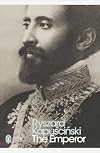
Great insight into Heile Selassie's realm through the collection of oral histories of surviving members of his personal court. It has a more universal meaning as well about how regimes maintain the acquiscence of the people. As one former servant recounts "a singular misfortune happened to me, my son began to think... and in those days thinking was a painful inconvenience and a troubling deformity". Similarly, it recounts the importance of keeping people permanently hungry on a day to day show more basis, literally and figuratively, so that they never have time to consider the wider structures and inequalities that oppress them. The servants truly believed in Selassie and his project, throughout human history such figures have dominated as gods on earth. show less

The marriage of a persistent stream of lucid writing with flashes of genuine insight makes Ryszard Kapuściński's The Shadow of the Sun a treat, and one of the more original travel books I have read. Many travel books – particularly those about Africa – can't resist a sort of fawning orientalism, a fetishization of the 'dark continent' that presents it either as a hellish wasteland of rape and war or a vibrant, drum-playing kumbaya that puts the stolid West to shame. Perhaps show more Kapuściński is too worldly-wise, or too good a writer for untruths to survive in his prose, but The Shadow of the Sun manages to resist the allure of these fetishes and is bracingly realistic about Africa.
Kapuściński maintains a good balance between the two extremes. He can wax lyrical about the continent's treasures, but doesn't shy away from its poisons either; nowhere is this better shown than in the chapter on Rwanda (pp165-82), which remarks upon the beauty of the Rwandan mountains (pg. 170) but also gives an excellent summary of the tribal animosities that led to the appalling Rwandan genocide. And while Kapuściński is willing to discuss the very real effects of colonialism on the continent, he does not fall into the self-hating Western panacea of blaming all of Africa's problems on the white man's predation. The freed African-American slaves who returned to found Liberia established a caste system which enslaved the natives. The mountainous Rwanda, he notes, was largely untouched by the 18th- and 19th-century slave trade which impacted the plains societies; the murderous rancour between Hutu and Tutsi was something they generated themselves.
Kapuściński eulogises the immediate colours of the African dawn, but is also unperturbed about documenting some of the societies' self-defeating behaviours – for example, the unpaid airport staff who make their money from corruption, and so steal Kapuściński's travel documents upon arrival so he must buy them back from them (pg. 236). Another good example of this is the following observation: "If a tree trunk falls across the road, it will not be removed; people will go around it, onto the adjoining field, and eventually beat out a new road" (pg. 259). Endurance and a stoical determination, but also a short-termism that ensures the future will ultimately have the same unresolved problems as the present.
For all the criticism of Kapuściński that he may have invented or embellished certain stories, on a more fundamental level of writing he refuses to editorialise. The willingness to people his book with the idle "gapers of the world" (pg. 138) as well as with industrious and philosophical Africans gives you a sense of Africa that, you suspect, is a closer approximation of the truth. In one of his most astute observations in the book, he notes that when cultures meet it is not always in the best of circumstances, and "first contacts… were most frequently carried out by the worst sorts of people: robbers, soldiers of fortune, adventurers, criminals, slave traders". Such encounters set the tone, and naturally "respect for other cultures, a desire to learn about them, to find a common language, were the furthest things from the minds of such folk" (pg. 321). Kapuściński laments that this "cultural monopoly of crude know-nothings" (pg. 322) has had such a deep and destructive impact on our world but, in spending his own thoughtful words on the matter in The Shadow of the Sun, he has done what he can to try to break that monopoly. show less
Kapuściński maintains a good balance between the two extremes. He can wax lyrical about the continent's treasures, but doesn't shy away from its poisons either; nowhere is this better shown than in the chapter on Rwanda (pp165-82), which remarks upon the beauty of the Rwandan mountains (pg. 170) but also gives an excellent summary of the tribal animosities that led to the appalling Rwandan genocide. And while Kapuściński is willing to discuss the very real effects of colonialism on the continent, he does not fall into the self-hating Western panacea of blaming all of Africa's problems on the white man's predation. The freed African-American slaves who returned to found Liberia established a caste system which enslaved the natives. The mountainous Rwanda, he notes, was largely untouched by the 18th- and 19th-century slave trade which impacted the plains societies; the murderous rancour between Hutu and Tutsi was something they generated themselves.
Kapuściński eulogises the immediate colours of the African dawn, but is also unperturbed about documenting some of the societies' self-defeating behaviours – for example, the unpaid airport staff who make their money from corruption, and so steal Kapuściński's travel documents upon arrival so he must buy them back from them (pg. 236). Another good example of this is the following observation: "If a tree trunk falls across the road, it will not be removed; people will go around it, onto the adjoining field, and eventually beat out a new road" (pg. 259). Endurance and a stoical determination, but also a short-termism that ensures the future will ultimately have the same unresolved problems as the present.
For all the criticism of Kapuściński that he may have invented or embellished certain stories, on a more fundamental level of writing he refuses to editorialise. The willingness to people his book with the idle "gapers of the world" (pg. 138) as well as with industrious and philosophical Africans gives you a sense of Africa that, you suspect, is a closer approximation of the truth. In one of his most astute observations in the book, he notes that when cultures meet it is not always in the best of circumstances, and "first contacts… were most frequently carried out by the worst sorts of people: robbers, soldiers of fortune, adventurers, criminals, slave traders". Such encounters set the tone, and naturally "respect for other cultures, a desire to learn about them, to find a common language, were the furthest things from the minds of such folk" (pg. 321). Kapuściński laments that this "cultural monopoly of crude know-nothings" (pg. 322) has had such a deep and destructive impact on our world but, in spending his own thoughtful words on the matter in The Shadow of the Sun, he has done what he can to try to break that monopoly. show less

Polish journalist Ryszard Kapuscinski spent a lot of time in Central Africa over the course of 40 years. He saw the end of colonialism as country after country declared independence, and the ensuing rise of the African warlords.
The Shadow Of The Sun is presented as a series of connected vignettes on Africa. 15 countries are covered in detail, with brief glimpses offered on life in several more regions. Kapuscinski explains the varying cultural, spiritual and religious traditions, differences show more in everyday life in the various African environments, the city versus country lifestyle, tribal allegiances and feuds, and poverty.
This is an extremely interesting book, well written, informative and filled with insight. It offers a great mix of journalistic reporting, personal observation and lyrical description which is very readable.
There were three chapters that I found particularly interesting. The chapter on Liberia describes how freed slaves from America were returned to the African continent where they promptly enslaved the local tribes’ people and began imitating the behaviour of the Americans and British who had enslaved them. The irony is awful. The historical grievances between the Hutu and Tutsi people were explained, giving me a greater understanding of the origins of the Rwandan massacres which took place in the early 90’s. And the early chapter on the Zanzibar coup highlights the ingenuity of journalists on the hunt for a story, and when they try to leave the island they get themselves into ridiculous trouble.
I did have some problems following the chronology of the book; I could only loosely keep track of the timeline based on the dates of some events mentioned that I had some prior knowledge of. And while I knew which countries most of the capital cities belonged to, there were a number of occasions where a smaller town was the reference point and it was several pages before I worked out which country the vignette was set in. These issues could have been easily cleared up by including a quick heading, or something similar, at the beginning of each chapter.
This is a fantastic read where the huge diversity in Africa is emphasized, but it’s also heartbreaking. The overwhelming prevalence of poverty, the child soldiers and endless tribal feuding and civil wars (and some African ideas on revenge are telling) make some passages difficult to comprehend.
The Shadow Of The Sun combines African history and politics with anthropological topics and Kapuscinski’s personal adventures in one memorable, eye opening book. show less
The Shadow Of The Sun is presented as a series of connected vignettes on Africa. 15 countries are covered in detail, with brief glimpses offered on life in several more regions. Kapuscinski explains the varying cultural, spiritual and religious traditions, differences show more in everyday life in the various African environments, the city versus country lifestyle, tribal allegiances and feuds, and poverty.
This is an extremely interesting book, well written, informative and filled with insight. It offers a great mix of journalistic reporting, personal observation and lyrical description which is very readable.
There were three chapters that I found particularly interesting. The chapter on Liberia describes how freed slaves from America were returned to the African continent where they promptly enslaved the local tribes’ people and began imitating the behaviour of the Americans and British who had enslaved them. The irony is awful. The historical grievances between the Hutu and Tutsi people were explained, giving me a greater understanding of the origins of the Rwandan massacres which took place in the early 90’s. And the early chapter on the Zanzibar coup highlights the ingenuity of journalists on the hunt for a story, and when they try to leave the island they get themselves into ridiculous trouble.
I did have some problems following the chronology of the book; I could only loosely keep track of the timeline based on the dates of some events mentioned that I had some prior knowledge of. And while I knew which countries most of the capital cities belonged to, there were a number of occasions where a smaller town was the reference point and it was several pages before I worked out which country the vignette was set in. These issues could have been easily cleared up by including a quick heading, or something similar, at the beginning of each chapter.
This is a fantastic read where the huge diversity in Africa is emphasized, but it’s also heartbreaking. The overwhelming prevalence of poverty, the child soldiers and endless tribal feuding and civil wars (and some African ideas on revenge are telling) make some passages difficult to comprehend.
The Shadow Of The Sun combines African history and politics with anthropological topics and Kapuscinski’s personal adventures in one memorable, eye opening book. show less
Lists
Favourite Books (1)
5 Best 5 Years (1)
Central America (1)
Read These Too (1)
Antigua Grecia (1)
Folio Society (1)
Africa (1)
Morphy Pick! (1)
Awards


You May Also Like


Associated Authors
Statistics
- Works
- 86
- Also by
- 20
- Members
- 10,438
- Popularity
- #2,278
- Rating
- 4.1
- Reviews
- 209
- ISBNs
- 545
- Languages
- 25
- Favorited
- 59

