
Jay McInerney
Author of Bright Lights, Big City
About the Author
Jay McInerney was born in 1955 in Hartford, Conn. and earned his B.A from Williams College in 1976. He did postgraduate study at Syracuse University, and was a Princeton in Asia fellow in 1977. McInerney's career includes stints as a newspaper reporter, a textbook editor, and a fact checker for the show more New Yorker magazine. His writing has appeared in a variety of periodicals including Paris Review, Vogue, and Atlantic Monthly. His books include "Model Behavior," "The Last of the Savages," and "Bright Lights, Big City." (Bowker Author Biography) Jay McInerney is the author of "Bright Lights, Big City," "Ransom," "Story of My Life," "Brightness Falls," "The Last of the Savages," & "Model Behavior." He is a contributing writer for "House & Garden" & "The New Yorker," & lives near Nashville, Tennessee. (Publisher Provided) show less
Series
Works by Jay McInerney
The Madonna of Turkey Season 5 copies
Chloë’s Scene 4 copies
Con Doctor 2 copies
Come te non c'è nessuno 1 copy
Raya my life 1 copy
Third Party 1 copy
Philomena 1 copy
Het goede leven 1 copy
Associated Works
A Truth Universally Acknowledged: 33 Great Writers on Why We Read Jane Austen (2009) — Contributor — 411 copies, 18 reviews
New York Stories [Everyman's Library Pocket Classics] (2011) — Contributor, some editions — 197 copies, 5 reviews
Tagged
Common Knowledge
- Canonical name
- McInerney, Jay
- Legal name
- McInerney, John Barrett, Jr.
- Birthdate
- 1955-01-13
- Gender
- male
- Education
- Williams College (BA|1976)
Syracuse University (MA) - Occupations
- food critic
writer
novelist
wine writer - Organizations
- The New Yorker
Wall Street Journal - Awards and honors
- MFK Fisher Distinguished Writing Award (2006)
- Nationality
- USA
- Birthplace
- Hartford, Connecticut, USA
- Associated Place (for map)
- Connecticut, USA
Members
Reviews
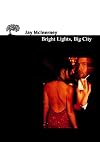
While reading Bright Nights, Big City you want to call its protagonist a sucker. He buys fake Rolex watches, falls for fake schemes, follows around false friends, and believes a model could love him enough to stay married until death do them part. You want to call him a loser because you know there isn't a happy ending for this guy. Drugs constantly addle his mind to the point where he loses his fact checking job, loses his freak friends, and nearly loses his mind. What he doesn't realize is show more that he has a lot to mourn. He is literally drowning his deep seeded grief over losing his mother to cancer in an avalanche of cocaine and bright lights. The end comes when rock bottom is met and he has an awakening of sorts. show less
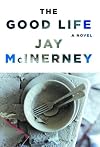
Loved it. No ifs, ands, or buts. Wasn't sure at first.....it starts with a dinner party and lots of name dropping of famous writers...but it's not about that. It's about relationships, love, loyalties, and how an external event (in this case, 9/11) can bring our lives into focus. What I liked about this novel was that it talked about individuals -- not a pulling together as a society -- and this made it different. I loved the deep character development, and felt I came to know the two main show more characters (Corrine and Luke) very well. So well that I predicted the ending, but in a good way -- the way you sometimes just know what a good friend or family member will do. show less
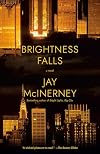
There was something wonderfully escapist and other-worldly about reading this - set in New York (a place I've never been) amongst people who just love socialising (I hate socialising). Fascinating and informative and safe, reading about all that mingling without actually having to mingle myself. Perfect. It manages to make management buyouts sexy, and it also contributed vast swathes of new words to my vocabulary - at one point in the early stages I was having to consult the online show more dictionary around once a page. But the writing is razor sharp, and when a long and unfamiliar word is used, it's always perfect for the job. How come I have never encountered this author before? Discovering that this is just the first in a trilogy about these characters came as very welcome news indeed. show less
FINAL REVIEW
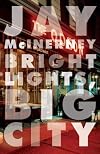
“Your brain at this moment is composed of brigades of tiny Bolivian soldiers. They are tired and muddy from their long march through the night. There are holes in their boots and they are hungry. They need to be fed. The need the Bolivian Marching Powder.” Quote from the opening scene of this 1984 Jay McInerney novel told in cool, hip, drug-hyped second person. But, alas, this is merely the surface. Each time I read this book, I comprehend more clearly how the words on every show more page have sharp razor-like edges that cut into the heart of the narrator. However, to say specifically why this is so would be to say too much since the more complete story of what the narrator is going through is not disclosed until the closing chapters.
Below are my comments coupled with one-line snappers from the novel’s main character, a 24-year old coke-snorting would-be writer working as a fact-checker for a New Yorker-like magazine and living in a downtown apartment by himself after Amanda, his fashion model wife, called telling him she isn’t coming back and he will be hearing from her lawyer to settle the divorce:
“The girl with the shaved head has a scar tattooed on her scalp. It looks like a long, sutured gash. You tell her it is very realistic. She takes this as a compliment and thanks you. You meant as opposed to romantic. “I could use one of those right over my heart,” you say.” ---------- The narrator’s words foreshadow how he really isn’t after the thrills of the hip scene but something emotionally deeper and much more personal. I can appreciate how many dislike the novel and the whining, distressed voice of the narrator since, in many respects, his emotional turmoil is similar to that other sensitive, distraught, whining 16-year old back in the late 1940s – Holden Caulfield in J. D. Salinger’s classic.
“It’s 10:58. You’ve worn out the line about the subway breaking down. Maybe tell Clara you stopped to take a free look at Kinky Karla and got bitten by her snake.” --------- Clara is the narrator’s boss at the fact finding department; Kinky Karla and her snake one of the thrills the old street hawkers hawk out on the street. Both of these worlds – the clock-driven, drab, humdrum office and the blaring girls-girls--girls sleaze – are exactly what the narrator in his current anguished state does not need.
“There was a cartoon you used to watch with a time-traveling turtle and a benevolent wizard. The turtle would journey back to say, the French revolution, inevitably getting in way over his head. At the last minute, when he was stretched out under the guillotine, he would cry out, “Help, Mr. Wizard!” And the wizard, on the other end of the time warp, would wave his wand and rescue the hapless turtle.” ---------- Ha! A common wish, particularly among young adults, to be saved from the need to do a 9-5 pressure-cooker job. All of my education for this? Mr. Wizard, please get me the hell out of here! Sorry, life isn’t a cartoon – you will have to find your own way out.
“You insert another piece of paper, again you type the date. At the left margin you type, “Dear Amanda,” but when you look at the paper it reads, “Dead Amanda.” Screw this. You are not going to commit any great literature tonight.” ---------- So telling. Writing fiction nearly always requires an emotional distance; when one is undergoing extreme personal upset, such as our novel’s narrator, it is next to impossible to move past drafting the first paragraph.
“Wade saunters in and stops in front of your desk. He looks at you and clicks his tongue. “What kind of flowers do you want on your grave? I already have the epitaph: He didn’t face facts.” -------- This exchange after the narrator, by his own admission, completely screwed up in performing his job. His refusal to face and deal with his life beyond the office gives an ironic twist to 'He didn’t face facts'.
“When you first came to the city you spent a night here with Amanda. You have friends to stay with but you wanted to spend that first night at the Plaza. . . . Your tenth-floor room was tiny and overlooked an airshaft; though you could not see the city out the window, you believed that it was spread out at your feet. The limousines around the entrances seemed like carriages, and you felt that someday one would wait for you. Today they put you in mind of carrion birds, and you cannot believe your dreams were so shallow. ---------- Such is the truth of the city: if you have money and are on the rise, the Big Apple is a dream come true; if you are penniless and on the skids, it quickly turns into a cold, cruel deathtrap.
This was Jay McInerney’s first novel. He went on to write a half a dozen more, but none having nearly the hype and fame as this one. Curiously, from what I gather, Jay has spent much of the last thirty years attempting to separate his personal identity from the identity of this novel’s narrator. Such is the power of literature.
show less
Lists
100 New Classics (1)
A Novel Cure (1)
First Novels (1)
Books with Twins (1)
Favourite Books (1)
1980s (3)
Awards


You May Also Like


Associated Authors
Statistics
- Works
- 40
- Also by
- 21
- Members
- 8,291
- Popularity
- #2,916
- Rating
- 3.7
- Reviews
- 142
- ISBNs
- 301
- Languages
- 16
- Favorited
- 19
