
Anthony T. Kronman
Author of Education's End: Why Our Colleges and Universities Have Given Up on the Meaning of Life
About the Author
Anthony T. Kronman is Sterling Professor of Law, Yale Law School. Since stepping down as Dean of the Law School in 2004
Works by Anthony T. Kronman
Education's End: Why Our Colleges and Universities Have Given Up on the Meaning of Life (2007) 192 copies, 1 review
Tagged
Common Knowledge
- Canonical name
- Kronman, Anthony T.
- Legal name
- Kronman, Anthony Townsend
- Birthdate
- 1945-05-12
- Gender
- male
- Education
- Yale University (Ph.D|1972|JD|1975)
Williams College (BA|1968) - Occupations
- professor
lawyer - Organizations
- Yale Law School
University of Chicago School of Law
University of Minnesota Law School
Council on Foreign Relations - Awards and honors
- American Academy of Arts & Sciences (1994)
Commandeur, l'Ordre National du Mérite (2004)
Kellogg Award (2018) - Relationships
- Kronman, Harry (father)
Towne, Rosella (mother) - Nationality
- USA
- Birthplace
- Los Angeles, California, USA
- Places of residence
- New Haven, Connecticut, USA
- Associated Place (for map)
- USA
Members
Reviews
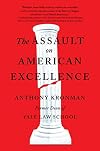
The image on the book cover is perfectly emblematic of the book's content: the contemporary university's soul has died. The relentless emphasis on diversity as well as the distrust of excellence (the canon is just an elitist notion entrenching power asymmetries of dead white men) has changed university culture in the twenty first century. And yet Kronman makes rightly argues that universities should be places where excellence - in the sense of more developed humans - can flourish and be show more respected. This book is a strong rallying cry for the immense value of universities as places where students can study the humanities and be exposed to greatness and complexity and wonder and grow as humans. The ivory tower can, and traditionally has, housed an aristocracy of the spirit. Use this book as a weapon. show less
Summary: A call to a humane conservatism that embraces enlightenment ideals without enlightenment prejudices or oversimplification.
Anthony T. Kronman, like many of us, decries the stridency of the left and the reactionary character of modern conservatives. In this book, Kronman makes the argument that true conservatism embraces ideals both have in common without their prejudices. In his preface, he writes:
“A truer conservatism is needed to remind us of the worth of custom and inheritance; show more the splendor of what is excellent and rare; the expansive solidarity of our friendship for the dead; and the dignity, indeed necessity, of the human longing for connection to the eternal and divine–and to persuade us that these timeless goods are compatible with the modern ideals of liberty, toleration, and reasoned argument.”
Kronman begins by arguing that three prejudices hinder our full embrace of a true conservatism. The first of these is that we make equality the highest value at the expense of excellence and beauty. The second is that we treat the past as a storehouse to which we turn only as needed. Third is a prejudice against belief in God’s existence. Thus we treat it at best a matter of private opinion, which fails to reckon with the basic human longing for eternity.
With regard to equality, he describes “bullied pulpits” from which the egalitarian absolutism denigrates excellence as a cover for power and beauty as a distraction from oppression. Hence, Kronman argues for the sovereignty of excellence. He notes how Christianity tempers excellence with charity and humility.
Kronman invokes Machiavelli, Burke and other past “greats” to urge the value of friendship with the dead. They are models, not monuments. Therefore, we assess both their greatness and flaws, learning from both. We are their friends, not their hagiographers or sycophants. In the following chapter, he applies a similar rubric to our relationship with the character of our country.
Chapter six addresses the perennial tension of the enlightenment ideals of The Declaration of Independence and the tempering, conservative character of The Constitution. He observes Abraham Lincoln’s metaphor of golden apples in a silver frame. Then, he highlights Alexander Bickel’s book, The Least Dangerous Branch. Specifically, he highlights the built-in dynamic of delay in the Constitution, and in the adjudication of constitutional questions.
In chapter seven, Kronman turns to religion, and in the end, affirms Jefferson’s wisdom in both protecting religious liberty for all, while keeping religion out of politics. Then, chapters 8 and 9 explore reason and religion with Kronman proposing Spinoza as the one who reconciles Hume and Kant. As well, he commends the modesty, the caution of Spinoza’s ethics.
Anthony Kronman teaches a version of Great Books with students at Yale. Thus, his deep immersion in these great thinkers is evident throughout the book. He argues that the enlightenment values of equality, reason, and toleration must be tempered by our value of excellence, beauty, friendship with the past, and the importance of the Transcendent. He makes clear that contemporary conservatism falls short of these values.
However, I think he fails to reckon with a politics of power that is neither progressive nor conservative and has no regard for any of the ideals Kronman affirms. Finally, I wonder how Kronman would have us live in such times and how his conservative philosophy helps him live through these times. That would be an interesting conversation! show less
Anthony T. Kronman, like many of us, decries the stridency of the left and the reactionary character of modern conservatives. In this book, Kronman makes the argument that true conservatism embraces ideals both have in common without their prejudices. In his preface, he writes:
“A truer conservatism is needed to remind us of the worth of custom and inheritance; show more the splendor of what is excellent and rare; the expansive solidarity of our friendship for the dead; and the dignity, indeed necessity, of the human longing for connection to the eternal and divine–and to persuade us that these timeless goods are compatible with the modern ideals of liberty, toleration, and reasoned argument.”
Kronman begins by arguing that three prejudices hinder our full embrace of a true conservatism. The first of these is that we make equality the highest value at the expense of excellence and beauty. The second is that we treat the past as a storehouse to which we turn only as needed. Third is a prejudice against belief in God’s existence. Thus we treat it at best a matter of private opinion, which fails to reckon with the basic human longing for eternity.
With regard to equality, he describes “bullied pulpits” from which the egalitarian absolutism denigrates excellence as a cover for power and beauty as a distraction from oppression. Hence, Kronman argues for the sovereignty of excellence. He notes how Christianity tempers excellence with charity and humility.
Kronman invokes Machiavelli, Burke and other past “greats” to urge the value of friendship with the dead. They are models, not monuments. Therefore, we assess both their greatness and flaws, learning from both. We are their friends, not their hagiographers or sycophants. In the following chapter, he applies a similar rubric to our relationship with the character of our country.
Chapter six addresses the perennial tension of the enlightenment ideals of The Declaration of Independence and the tempering, conservative character of The Constitution. He observes Abraham Lincoln’s metaphor of golden apples in a silver frame. Then, he highlights Alexander Bickel’s book, The Least Dangerous Branch. Specifically, he highlights the built-in dynamic of delay in the Constitution, and in the adjudication of constitutional questions.
In chapter seven, Kronman turns to religion, and in the end, affirms Jefferson’s wisdom in both protecting religious liberty for all, while keeping religion out of politics. Then, chapters 8 and 9 explore reason and religion with Kronman proposing Spinoza as the one who reconciles Hume and Kant. As well, he commends the modesty, the caution of Spinoza’s ethics.
Anthony Kronman teaches a version of Great Books with students at Yale. Thus, his deep immersion in these great thinkers is evident throughout the book. He argues that the enlightenment values of equality, reason, and toleration must be tempered by our value of excellence, beauty, friendship with the past, and the importance of the Transcendent. He makes clear that contemporary conservatism falls short of these values.
However, I think he fails to reckon with a politics of power that is neither progressive nor conservative and has no regard for any of the ideals Kronman affirms. Finally, I wonder how Kronman would have us live in such times and how his conservative philosophy helps him live through these times. That would be an interesting conversation! show less
The first half of this book was excellent. A discussion of western religion and philosophy and how they evolved out of Homer through Aristotle and Plato through Christ and Rome and into the modern age. It led me back to Bertrand Russell and the history of Catholicism.
The second half was spotty. He brought in Einstein and Stephen J. Gould but lost me there. He did explain Spinoza and Nietzsche which was interesting as was his discussion on the Italian Renaissance and the novel.
His thesis show more was basically pantheistic and that there is divinity in the world that is not the result of the "childish" belief of a God outside the Universe. His use of the words divine, infinite, eternal, and measureless in regards to the physical world were never explained, just labeled as. As did his focus on diversity, which to me is inherent.
But this was an epic read and kudos to ATK for writing this. It took me a few years to finish and I am sure it took him many more to write it. show less
The second half was spotty. He brought in Einstein and Stephen J. Gould but lost me there. He did explain Spinoza and Nietzsche which was interesting as was his discussion on the Italian Renaissance and the novel.
His thesis show more was basically pantheistic and that there is divinity in the world that is not the result of the "childish" belief of a God outside the Universe. His use of the words divine, infinite, eternal, and measureless in regards to the physical world were never explained, just labeled as. As did his focus on diversity, which to me is inherent.
But this was an epic read and kudos to ATK for writing this. It took me a few years to finish and I am sure it took him many more to write it. show less
The Assault on American Excellence, Anthony T. Kronman, author and narrator
Anthony Kronman is a professor at Yale who has been startled by the school’s acquiescence to activists. He believes that schools should educate minds before encouraging the students to act on issues they cannot fully understand. He understands that certain issues are triggers for some groups and might make them feel uncomfortable, but he believes that in order to educate the mind and allow the cream to rise to the show more top, a student must be challenged with ideas that force them to think, even if it makes them uncomfortable. In social situations, he understands the need for fairness, equality and comfort, but in the classroom, he believes it is more important to deal with controversy by studying it, rather than ignoring it or erasing it. There is a democracy of the community but an aristocracy of the mind.
Kronman cites several instances of controversy which he finds difficult to comprehend. Some concern the idea of appropriate/inappropriate Halloween costumes, another is the idea of offensive speech and/or behavior that is offensive because it triggers a memory of something the student might not have even experienced but is still uncomfortable thinking about, then there is the controversial effort to remove historic statues because something in that person’s past that is being memorialized is found to be offensive to some, while another is the removal of the term Master from the school because some students felt it is a negative trigger hearkening back to the time of slavery, even though the way in which the term is being used indicates superior achievement and not the master/slave concept. The term in the environment of Yale, had nothing to do with that shameful part of our history. The Halloween costume controversy actually caused the removal of two beloved educators who chose to leave after being attacked and is a sad result of narrow minds.
Kronman makes the case for the aristocracy of the mind, rather than the aristocracy of the social classes, by citing the thoughts of many historic authorities and philosophers, like Babbits, Holmes, DeToqueville, Mencken, Nietsche and many more, revealing their quotes, ideas and explanations. He explains how the cream should rise to the top and be rewarded in an educational environment in order to allow the best and the brightest to succeed, while also allowing those not quite so intellectually gifted the opportunity to improve and achieve good results. We are all socially equal, but we are not intellectually equal, therefore there is a value to allowing the idea of encouraging inequality in the educational environment without which we might all be content being mediocre.
The message I received from the book is that while diversity in all areas of life is to be aspired to on the campus and in the greater world, so that people from all walks of life learn to live together in peace and harmony, it is also necessary to be able to tolerate a diversity of thought so that critical thinking is the end result rather than an emotionally immature student body that cannot deal with reality and must all think alike so that success is not valued.
The author narrated his own novel. I believe that was a mistake since his voice droned on in a monotone, often sounding hoarse and without energy. Without a hard copy, one would be hard pressed to truly take in and absorb the entire book. show less
Anthony Kronman is a professor at Yale who has been startled by the school’s acquiescence to activists. He believes that schools should educate minds before encouraging the students to act on issues they cannot fully understand. He understands that certain issues are triggers for some groups and might make them feel uncomfortable, but he believes that in order to educate the mind and allow the cream to rise to the show more top, a student must be challenged with ideas that force them to think, even if it makes them uncomfortable. In social situations, he understands the need for fairness, equality and comfort, but in the classroom, he believes it is more important to deal with controversy by studying it, rather than ignoring it or erasing it. There is a democracy of the community but an aristocracy of the mind.
Kronman cites several instances of controversy which he finds difficult to comprehend. Some concern the idea of appropriate/inappropriate Halloween costumes, another is the idea of offensive speech and/or behavior that is offensive because it triggers a memory of something the student might not have even experienced but is still uncomfortable thinking about, then there is the controversial effort to remove historic statues because something in that person’s past that is being memorialized is found to be offensive to some, while another is the removal of the term Master from the school because some students felt it is a negative trigger hearkening back to the time of slavery, even though the way in which the term is being used indicates superior achievement and not the master/slave concept. The term in the environment of Yale, had nothing to do with that shameful part of our history. The Halloween costume controversy actually caused the removal of two beloved educators who chose to leave after being attacked and is a sad result of narrow minds.
Kronman makes the case for the aristocracy of the mind, rather than the aristocracy of the social classes, by citing the thoughts of many historic authorities and philosophers, like Babbits, Holmes, DeToqueville, Mencken, Nietsche and many more, revealing their quotes, ideas and explanations. He explains how the cream should rise to the top and be rewarded in an educational environment in order to allow the best and the brightest to succeed, while also allowing those not quite so intellectually gifted the opportunity to improve and achieve good results. We are all socially equal, but we are not intellectually equal, therefore there is a value to allowing the idea of encouraging inequality in the educational environment without which we might all be content being mediocre.
The message I received from the book is that while diversity in all areas of life is to be aspired to on the campus and in the greater world, so that people from all walks of life learn to live together in peace and harmony, it is also necessary to be able to tolerate a diversity of thought so that critical thinking is the end result rather than an emotionally immature student body that cannot deal with reality and must all think alike so that success is not valued.
The author narrated his own novel. I believe that was a mistake since his voice droned on in a monotone, often sounding hoarse and without energy. Without a hard copy, one would be hard pressed to truly take in and absorb the entire book. show less
You May Also Like


Statistics
- Works
- 14
- Members
- 549
- Popularity
- #45,446
- Rating
- 3.7
- Reviews
- 6
- ISBNs
- 28
- Languages
- 2