
Richard A. Posner
Author of Law and Literature
About the Author
Richard A. Posner is Circuit Judge, the United States Court of Appeals for the Seventh Circuit, and a senior lecturer at the University of Chicago Law School
Disambiguation Notice:
Please do not combine with "Richard Posner", the author of crime fiction. If your book on law does not show up here, consider correcting your book's author field to read "Posner, Richard A."
Image credit: Photo courtesy the University of Chicago Experts Exchange (link)
Works by Richard A. Posner
A Failure of Capitalism: The Crisis of '08 and the Descent into Depression (2009) 186 copies, 2 reviews
Public Intellectuals: A Study of Decline, With a New Preface and Epilogue (2002) 134 copies, 3 reviews
An Affair of State: The Investigation, Impeachment, and Trial of President Clinton (1999) 98 copies, 3 reviews
Breaking the Deadlock: The 2000 Election, the Constitution, and the Courts (2001) 48 copies, 2 reviews
Preventing Surprise Attacks: Intelligence Reform in the Wake of 9/11 (Hoover Studies in Politics, Economics, and Society) (2005) 41 copies
Uncertain Shield: The U.S. Intelligence System in the Throes of Reform (Hoover Studies in Politics, Economics, and Society) (2006) 28 copies
The Behavior of Federal Judges: A Theoretical and Empirical Study of Rational Choice (2013) 14 copies
Reforming the Federal Judiciary: My Former Court Needs to Overhaul Its Staff Attorney Program and Begin Televising Its Oral Arguments (2017) 7 copies
On Liberty: A Revaluation 1 copy
Associated Works
For the Love of Books: 115 Celebrated Writers on the Books They Love Most (1999) — Contributor — 479 copies, 4 reviews
The Essential Holmes: Selections from the Letters, Speeches, Judicial Opinions, and Other Writings of Oliver Wendell Holmes, Jr. (1992) — Editor, some editions — 102 copies
Public Intellectuals: An Endangered Species? (Rights & Responsibilities) (2006) — Contributor — 10 copies
The Journal of Law & Economics Vol. XIX (3): 1776: The Revolution in Social Thought — Contributor — 1 copy
Tagged
Common Knowledge
- Canonical name
- Posner, Richard A.
- Legal name
- Posner, Richard Allen
- Birthdate
- 1939-01-11
- Gender
- male
- Education
- Yale University (A.B.|1959)
Harvard University (LL.B.|1962) - Occupations
- lawyer
professor (law)
Judge of the United States Court of Appeals for the Seventh Circuit (1981- )
jurist - Awards and honors
- Thomas Jefferson Foundation Medal in Law (1994)
- Relationships
- Posner, Eric (son)
- Nationality
- USA
- Birthplace
- New York, New York, USA
- Places of residence
- New York, New York, USA (birth)
- Map Location
- USA
- Disambiguation notice
- Please do not combine with "Richard Posner", the author of crime fiction. If your book on law does not show up here, consider correcting your book's author field to read "Posner, Richard A."
Members
Reviews
Not a Suicide Pact: The Constitution in a Time of National Emergency (Inalienable Rights) by Richard A. Posner
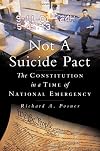
In Not a Suicide Pact: The Constitution in a Time of National Emergency, Richard A. Posner confronts one of the most challenging questions facing American constitutional law: Are the courts the primary guardians of our rights, or must they defer to the executive during times of national emergency? Posner, a renowned legal pragmatist, offers a thought-provoking analysis that challenges the traditional views of constitutional rights and their application in the context of national show more security.
Introduction
Posner begins his exploration by challenging the conventional understanding of constitutional rights. In Chapter 1, he argues that these rights are not fixed by the Founding Fathers but are instead shaped and reshaped by Supreme Court justices over time. This perspective aligns with a non-Originalist view, where constitutional interpretation is seen as fluid, adapting to the evolving needs of society. Posner's approach sets the stage for his broader thesis: in times of national emergency, the interpretation of rights must be flexible enough to allow for the protection of the state, even if this means temporarily curtailing certain freedoms.
Key Points
Constitutional Rights as Evolving Constructs: Posner asserts that constitutional rights are not absolute. Instead, they are constructs that evolve over time through judicial interpretation. This fluidity, he argues, is necessary to address the changing challenges that society faces, particularly in times of crisis. By rejecting strict Originalism, Posner opens the door to a more pragmatic approach where the demands of the moment can justify deviations from traditional interpretations of rights.
Civil Liberties vs. National Security: In Chapter 2, Posner delves into the tension between civil liberties and national security. He argues that while civil liberties are essential, they cannot be treated as inviolable in the face of existential threats. Posner’s pragmatism shines here, as he suggests that the preservation of the state might necessitate temporary compromises on individual rights to ensure the greater good.
Detention (Fifth and Fourteenth Amendments):
Interrogation, Searches, and Seizures (Fourth Amendment):
Free Speech (First Amendment):
Privacy (Fourth Amendment and Implied Right to Privacy):
My Interpretation
Posner’s work was written in the shadow of the 9/11 terrorist attacks, a time when the United States was grappling with unprecedented security challenges. His arguments about the need to balance civil liberties with national security were particularly relevant in the early 2000s, as the country sought to prevent further attacks while navigating the legal and ethical implications of counterterrorism measures.
Fast forward to today, and the landscape has shifted. The United States has faced new types of national emergencies, such as the COVID-19 pandemic and the attempted coup on January 6, 2021. These events have tested the boundaries of constitutional rights in different ways. For example, during the pandemic, public health measures such as lockdowns, mask mandates, and vaccination requirements raised questions about the limits of individual freedoms. Meanwhile, the attempted coup brought into sharp focus the tension between free speech, the right to assemble, and the need to protect democratic institutions from violent insurrection.
Let's look at each one of these:
Public Health and Civil Liberties: Posner’s framework for balancing rights and security is still highly relevant. During the COVID-19 pandemic, the government’s imposition of restrictions to protect public health mirrored Posner’s arguments for flexibility in times of crisis. The temporary suspension or alteration of rights, such as the right to freely assemble, was justified by the need to prevent widespread harm. However, as Posner would likely argue, these measures must remain temporary and subject to oversight to ensure that they do not permanently erode civil liberties.
National Security and Domestic Terrorism: The attempted coup highlighted the need to revisit the balance between free speech and national security. Posner’s thesis supports the idea that speech that incites violence or poses a direct threat to democracy may need to be restricted, particularly in moments of crisis. However, this must be done carefully, with a clear distinction between protecting public safety and suppressing dissent.
Conclusion
Posner’s Not a Suicide Pact presents a rational and pragmatic argument for the need to balance civil liberties with national security in times of crisis. His position is particularly compelling from a utilitarian perspective, where the emphasis is on achieving the greatest good for the greatest number. Posner’s approach is grounded in the belief that constitutional rights, while fundamental, must be flexible enough to allow for the protection of the nation as a whole, even if this means temporarily curtailing certain freedoms.
However, the need for temporary measures must be rigorously upheld to prevent the normalization of rights curtailment. As we face these new crises, Posner’s work serves as a reminder of the delicate balance between preserving security and safeguarding the freedoms that define our society. The preservation of both security and freedom requires a careful balance, and any curtailment of rights should be narrowly tailored, transparent, and subject to rigorous oversight to ensure that they do not become permanent fixtures. show less
Introduction
Posner begins his exploration by challenging the conventional understanding of constitutional rights. In Chapter 1, he argues that these rights are not fixed by the Founding Fathers but are instead shaped and reshaped by Supreme Court justices over time. This perspective aligns with a non-Originalist view, where constitutional interpretation is seen as fluid, adapting to the evolving needs of society. Posner's approach sets the stage for his broader thesis: in times of national emergency, the interpretation of rights must be flexible enough to allow for the protection of the state, even if this means temporarily curtailing certain freedoms.
Key Points
Constitutional Rights as Evolving Constructs: Posner asserts that constitutional rights are not absolute. Instead, they are constructs that evolve over time through judicial interpretation. This fluidity, he argues, is necessary to address the changing challenges that society faces, particularly in times of crisis. By rejecting strict Originalism, Posner opens the door to a more pragmatic approach where the demands of the moment can justify deviations from traditional interpretations of rights.
Civil Liberties vs. National Security: In Chapter 2, Posner delves into the tension between civil liberties and national security. He argues that while civil liberties are essential, they cannot be treated as inviolable in the face of existential threats. Posner’s pragmatism shines here, as he suggests that the preservation of the state might necessitate temporary compromises on individual rights to ensure the greater good.
Detention (Fifth and Fourteenth Amendments):
-
Constitutional Basis: The right to due process is enshrined in the Fifth and Fourteenth Amendments, which guarantee that no person shall be "deprived of life, liberty, or property, without due process of law." This means that individuals have the right to a fair trial before being deprived of their liberty.
-
Posner’s Argument: Posner contends that in times of national emergency, this right may need to be temporarily suspended to allow the government to detain individuals who pose a significant threat to national security. He argues that while due process is fundamental, the immediate protection of the public might necessitate preemptive detention. However, Posner emphasizes that such measures should be exceptional and accompanied by appropriate oversight.
Interrogation, Searches, and Seizures (Fourth Amendment):
-
Constitutional Basis: The Fourth Amendment protects individuals against "unreasonable searches and seizures," ensuring that the government cannot arbitrarily invade a person’s privacy without probable cause and a warrant.
-
Posner’s Argument: Posner suggests that during national emergencies, the threshold for what constitutes "reasonable" searches and seizures may need to be adjusted. He argues that the need to prevent terrorist attacks or other catastrophic events might justify more aggressive search and interrogation methods, even if they would normally be considered violations of the Fourth Amendment. Posner's stance is that the urgent need to gather intelligence and prevent harm can, in some cases, outweigh the strict adherence to traditional Fourth Amendment protections.
Free Speech (First Amendment):
-
Constitutional Basis: The First Amendment guarantees the right to free speech, stating that "Congress shall make no law... abridging the freedom of speech." This protection is a cornerstone of American democracy, ensuring that individuals can express their opinions without government interference.
-
Posner’s Argument: Posner acknowledges the importance of free speech but argues that this right is not absolute, especially in times of national crisis. He contends that speech that poses a direct threat to public safety, such as incitement to violence or the dissemination of harmful misinformation, may need to be curtailed. Posner advocates for a carefully defined and temporary restriction of speech rights when such speech could lead to significant harm or undermine national security.
Privacy (Fourth Amendment and Implied Right to Privacy):
-
Constitutional Basis: While the Fourth Amendment addresses protections against unreasonable searches and seizures, the broader right to privacy is implied through various amendments and has been recognized by the Supreme Court in cases such as *Griswold v. Connecticut* and *Roe v. Wade*. This right encompasses a range of personal liberties, including the protection of personal information from government intrusion.
-
Posner’s Argument: Posner argues that the right to privacy must be balanced against the government’s need to protect national security, particularly in the digital age where surveillance is a key tool in preventing terrorism. He suggests that privacy rights may need to be compromised in certain situations to allow for effective surveillance and intelligence gathering. However, Posner insists that such compromises should be subject to strict oversight and should not become a permanent erosion of privacy rights.
My Interpretation
Posner’s work was written in the shadow of the 9/11 terrorist attacks, a time when the United States was grappling with unprecedented security challenges. His arguments about the need to balance civil liberties with national security were particularly relevant in the early 2000s, as the country sought to prevent further attacks while navigating the legal and ethical implications of counterterrorism measures.
Fast forward to today, and the landscape has shifted. The United States has faced new types of national emergencies, such as the COVID-19 pandemic and the attempted coup on January 6, 2021. These events have tested the boundaries of constitutional rights in different ways. For example, during the pandemic, public health measures such as lockdowns, mask mandates, and vaccination requirements raised questions about the limits of individual freedoms. Meanwhile, the attempted coup brought into sharp focus the tension between free speech, the right to assemble, and the need to protect democratic institutions from violent insurrection.
Let's look at each one of these:
Public Health and Civil Liberties: Posner’s framework for balancing rights and security is still highly relevant. During the COVID-19 pandemic, the government’s imposition of restrictions to protect public health mirrored Posner’s arguments for flexibility in times of crisis. The temporary suspension or alteration of rights, such as the right to freely assemble, was justified by the need to prevent widespread harm. However, as Posner would likely argue, these measures must remain temporary and subject to oversight to ensure that they do not permanently erode civil liberties.
National Security and Domestic Terrorism: The attempted coup highlighted the need to revisit the balance between free speech and national security. Posner’s thesis supports the idea that speech that incites violence or poses a direct threat to democracy may need to be restricted, particularly in moments of crisis. However, this must be done carefully, with a clear distinction between protecting public safety and suppressing dissent.
Conclusion
Posner’s Not a Suicide Pact presents a rational and pragmatic argument for the need to balance civil liberties with national security in times of crisis. His position is particularly compelling from a utilitarian perspective, where the emphasis is on achieving the greatest good for the greatest number. Posner’s approach is grounded in the belief that constitutional rights, while fundamental, must be flexible enough to allow for the protection of the nation as a whole, even if this means temporarily curtailing certain freedoms.
However, the need for temporary measures must be rigorously upheld to prevent the normalization of rights curtailment. As we face these new crises, Posner’s work serves as a reminder of the delicate balance between preserving security and safeguarding the freedoms that define our society. The preservation of both security and freedom requires a careful balance, and any curtailment of rights should be narrowly tailored, transparent, and subject to rigorous oversight to ensure that they do not become permanent fixtures. show less
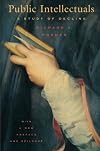
I’ve always been interested in the idea of the intellectual, and especially our ideas about whether or not the intellectual has special work to do in the public sphere. This idea of the “public intellectual,” which Richard Posner defines as someone who is brought up in the academy but often writes on topics outside their area of expertise or spends time popularizing their own work, seems to be a relatively new one. There have always been intellectuals who wrote for popular audiences show more and there have always been those who never leave the small islands of their balkanized academic specialties. Posner, however, isn’t interested in these; he’s only interested in those who have taught in in universities, but have somehow – whether through media popularity, popularizing books, or commenting on current events – made themselves known to an audience that would have been otherwise unreachable to them.
I was interested in Posner’s take on this subject because I know him as a sort of intellectual curmudgeon, fiercely critical of most ideas (not least his own), and independent political bent. In fact, most of the intellectuals that spend time getting raked over the coals in these pages are liberals – Martha Nussbaum, Ronald Dworkin, Paul Krugman, Stephen Jay Gould, and the list goes on. He does really get down on two well-known conservatives – Robert Bork and Gertrude Himmelfarb – for being public “Jeremiahs” (see below).
Perhaps the biggest problem with the book, and its most clumsy part, comes from Posner’s insistence on defining a marketplace for public intellectuals, and I use the word “marketplace” in the strict economic sense. He uses theories of supply and demand to analyze precisely why so many people who have such horrible predictive abilities often keep popping up over and over again in the media, and never seem to be held accountable for their inaccurate accounts of events. He harps on Jeane Kirkpatrick for saying in 1979 that “communist regimes, unlike right-wing autocracies, would never evolve into democratic societies” and Daniel Bell for suggesting that “traditional ideologies of the West were exhausted” (p. 139). Admittedly, Kirkpatrick and Bell weren’t the most public of public intellectuals, but we can see where he’s going with this. His response is that the decreasing size of academic specialization contributes to this and makes the “market” weaker. It does seem reasonable to point out that someone who has spent their entire life studying nineteenth century British poetry might not have that much interesting or new to say about, for example, U.S.-Israeli relations or gay marriage. However, the general public seems to be blinded by the idea that anyone in a position of academic authority must know everything about everything, when clearly they don’t. As the quote above points out, even Jeane Kirkpatrick made critical mistakes even within her area of specialty, international diplomacy.
There is a one-sentence summary hidden away on page 75 which adumbrates most of Posner’s discontents. Public intellectuals, he says, have “a proclivity for taking extreme positions, a taste for universals and abstraction, a desire for moral purity, a lack of worldliness, and intellectual arrogance” which work together “to induce selective empathy, a selective sense of justice, an insensitivity to context, a lack of perspective, a denigration of predecessors as lacking moral insight, an impatience with prudence and sobriety, a lack of realism, and excessive self-confidence.”
The second half of the book sets up five kinds of thought and criticism that is often produced by public intellectuals. The chapters are called “The Literary Critical as Public Intellectual” (which mostly takes down some of Martha Nussbaum’s much too egalitarian, liberal readings of several novels), “Political Satire” (which looks at Huxley and Orwell), “The Jeremiah School” (consisting mostly of conservatives who think the world is going to Hell in a hand basket – nota bene Kirkpatrick and Robert Bork), “The Public Philosopher” (Thomas Nagel and others), and “The Public Intellectual and the Law” (mostly a criticism of Ronald Dworkin, including commentary on his involvement with the Clinton impeachment).
At the end of the book, I didn’t feel like I had taken away much from what Posner had to say. It’s true that when you turn on the television or the radio, you seem to hear from the same public intellectuals repeatedly, and that they aren’t held responsible for their mistakes to the extent that they make them. I read this mostly for its witty, coruscating takedowns of some well-known thinkers. The few words he saves for Camille Paglia are priceless. He even vents toward some thinkers toward whom I feel some personal affinity, but this definitely isn’t a book-length polemic. Also, he must have a wonderful sense of humor, because in the Acknowledgements, he thanks many of the people he criticized most harshly for reading his first draft. show less
I was interested in Posner’s take on this subject because I know him as a sort of intellectual curmudgeon, fiercely critical of most ideas (not least his own), and independent political bent. In fact, most of the intellectuals that spend time getting raked over the coals in these pages are liberals – Martha Nussbaum, Ronald Dworkin, Paul Krugman, Stephen Jay Gould, and the list goes on. He does really get down on two well-known conservatives – Robert Bork and Gertrude Himmelfarb – for being public “Jeremiahs” (see below).
Perhaps the biggest problem with the book, and its most clumsy part, comes from Posner’s insistence on defining a marketplace for public intellectuals, and I use the word “marketplace” in the strict economic sense. He uses theories of supply and demand to analyze precisely why so many people who have such horrible predictive abilities often keep popping up over and over again in the media, and never seem to be held accountable for their inaccurate accounts of events. He harps on Jeane Kirkpatrick for saying in 1979 that “communist regimes, unlike right-wing autocracies, would never evolve into democratic societies” and Daniel Bell for suggesting that “traditional ideologies of the West were exhausted” (p. 139). Admittedly, Kirkpatrick and Bell weren’t the most public of public intellectuals, but we can see where he’s going with this. His response is that the decreasing size of academic specialization contributes to this and makes the “market” weaker. It does seem reasonable to point out that someone who has spent their entire life studying nineteenth century British poetry might not have that much interesting or new to say about, for example, U.S.-Israeli relations or gay marriage. However, the general public seems to be blinded by the idea that anyone in a position of academic authority must know everything about everything, when clearly they don’t. As the quote above points out, even Jeane Kirkpatrick made critical mistakes even within her area of specialty, international diplomacy.
There is a one-sentence summary hidden away on page 75 which adumbrates most of Posner’s discontents. Public intellectuals, he says, have “a proclivity for taking extreme positions, a taste for universals and abstraction, a desire for moral purity, a lack of worldliness, and intellectual arrogance” which work together “to induce selective empathy, a selective sense of justice, an insensitivity to context, a lack of perspective, a denigration of predecessors as lacking moral insight, an impatience with prudence and sobriety, a lack of realism, and excessive self-confidence.”
The second half of the book sets up five kinds of thought and criticism that is often produced by public intellectuals. The chapters are called “The Literary Critical as Public Intellectual” (which mostly takes down some of Martha Nussbaum’s much too egalitarian, liberal readings of several novels), “Political Satire” (which looks at Huxley and Orwell), “The Jeremiah School” (consisting mostly of conservatives who think the world is going to Hell in a hand basket – nota bene Kirkpatrick and Robert Bork), “The Public Philosopher” (Thomas Nagel and others), and “The Public Intellectual and the Law” (mostly a criticism of Ronald Dworkin, including commentary on his involvement with the Clinton impeachment).
At the end of the book, I didn’t feel like I had taken away much from what Posner had to say. It’s true that when you turn on the television or the radio, you seem to hear from the same public intellectuals repeatedly, and that they aren’t held responsible for their mistakes to the extent that they make them. I read this mostly for its witty, coruscating takedowns of some well-known thinkers. The few words he saves for Camille Paglia are priceless. He even vents toward some thinkers toward whom I feel some personal affinity, but this definitely isn’t a book-length polemic. Also, he must have a wonderful sense of humor, because in the Acknowledgements, he thanks many of the people he criticized most harshly for reading his first draft. show less
A somewhat technical book. Part memoir, tips and general observations on judging. Not for everyone. Despite having an interest in the law, I found some parts of the book are a bit dry and get technical. I enjoyed the book generally.
In particular, I found his sections criticizing both Amar and Scalia very interesting. I like Posner's digs at both the Invisible Constitution and Unwritten Constitution, two books I found less than satisfying. I find great appeal in Posner's urging to turn away show more from formalist thought (that kind that generalizes and seeks abstract principles) towards realist thought, which amongst other things tries to root itself in empirical data and evidence. It was interesting to see Posner describe judicial restraint, from its intellectual foundation from Trayer to the various judges that practiced their variations. I have yet to actually work on the blue book, but I enjoy Posner's critique of it, which demonstrates his economic thinking both in his cases and towards the practice of law in general. I also thought his observations on judges, (the increase of clerk written opinions, and the increasingly abstract bent of the legal academy) insightful, if unrelatable at the moment. It's definitely a practical book, pointing to tips on managing clerks, instructing juries and writing simple opinions.
If anything the book has inspired me to follow its author more closely. It's generally insightful, controversial and interesting (Posner has interesting opinions on topics as wide as patents for software to semantics to the use of google maps in litigation, and he seems to calls it as it is). My only complaint is that the topics are so wide that it's hard to see the common thread behind the topics. The general theme is that the external world is becoming more complicated, and the judicial system needs to address that head on, not generate internal complexity (through formalism) to escape it. I'll probably reread this book later on when I engage in the profession more. Maybe it's a catcher in the rye sort of book for law students! show less
In particular, I found his sections criticizing both Amar and Scalia very interesting. I like Posner's digs at both the Invisible Constitution and Unwritten Constitution, two books I found less than satisfying. I find great appeal in Posner's urging to turn away show more from formalist thought (that kind that generalizes and seeks abstract principles) towards realist thought, which amongst other things tries to root itself in empirical data and evidence. It was interesting to see Posner describe judicial restraint, from its intellectual foundation from Trayer to the various judges that practiced their variations. I have yet to actually work on the blue book, but I enjoy Posner's critique of it, which demonstrates his economic thinking both in his cases and towards the practice of law in general. I also thought his observations on judges, (the increase of clerk written opinions, and the increasingly abstract bent of the legal academy) insightful, if unrelatable at the moment. It's definitely a practical book, pointing to tips on managing clerks, instructing juries and writing simple opinions.
If anything the book has inspired me to follow its author more closely. It's generally insightful, controversial and interesting (Posner has interesting opinions on topics as wide as patents for software to semantics to the use of google maps in litigation, and he seems to calls it as it is). My only complaint is that the topics are so wide that it's hard to see the common thread behind the topics. The general theme is that the external world is becoming more complicated, and the judicial system needs to address that head on, not generate internal complexity (through formalism) to escape it. I'll probably reread this book later on when I engage in the profession more. Maybe it's a catcher in the rye sort of book for law students! show less
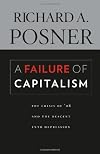
A clear, informed explanation of what's happening in this recession. A ground-up lesson on deflation, liquidity, deficit spending, banking, and finance. As in his other books, the policy diagnoses and recommendations are fresh, and the style is spare and plainspoken.
(I have one small complaint regarding tone, however. In one passage he deploys--without irony--the dated cliche "politically incorrect" to describe his policy prescriptions. He probably does not realize what a right-wing show more shibboleth this has become for younger, blog-savvy generations.) show less
(I have one small complaint regarding tone, however. In one passage he deploys--without irony--the dated cliche "politically incorrect" to describe his policy prescriptions. He probably does not realize what a right-wing show more shibboleth this has become for younger, blog-savvy generations.) show less
Lists
Awards


You May Also Like


Associated Authors
Statistics
- Works
- 45
- Also by
- 5
- Members
- 2,800
- Popularity
- #9,183
- Rating
- 3.7
- Reviews
- 39
- ISBNs
- 140
- Languages
- 4
- Favorited
- 6
