
Jimmy Breslin (1928–2017)
Author of The Gang That Couldn't Shoot Straight
About the Author
Jimmy Breslin was born James Earle Breslin on October 17, 1928 in Queens, New York. In the late 1940's, The Long Island Press hired him as a copy boy. After getting a job as a sportswriter for The New York Journal-American, he wrote a book about the first season of the Mets entitled Can't Anybody show more Here Play This Game? This book led to him being hired as a news columnist for The New York Herald Tribune in 1963. He later wrote for The New York Post, The Daily News, New York Newsday, and New York magazine. He wrote both fiction and nonfiction books. His novels included The Gang That Couldn't Shoot Straight; World Without End, Amen; and Table Money. His nonfiction books included The Good Rat, The Short Sweet Dream of Eduardo Gutierrez, I Want to Thank My Brain for Remembering Me, The Church That Forgot Christ, and biographies of Damon Runyon and Branch Rickey. He died on March 19, 2017 at the age of 88. (Bowker Author Biography) show less
Image credit: Credit: David Shankbone, Brooklyn Book Festival, Sept. 14, 2008
Works by Jimmy Breslin
Associated Works
Pogo: The Complete Syndicated Comic Strips, Vol. 1: Through the Wild Blue Wonder (2011) — Foreword — 230 copies, 5 reviews
The Art of Fact: A Historical Anthology of Literary Journalism (1997) — Contributor — 225 copies, 1 review
Pogo: The Complete Syndicated Comic Strips, Vols. 1 & 2: Through the Wild Blue Wonder and Bona Fide Balderdash (2012) — Foreword — 46 copies
America's Mayor, America's President?: The Strange Career of Rudy Giuliani (2007) — Preface — 4 copies
Tagged
Common Knowledge
- Canonical name
- Breslin, Jimmy
- Legal name
- Breslin, James Earle
- Birthdate
- 1928-10-17
- Date of death
- 2017-03-19
- Gender
- male
- Education
- Long Island University
- Occupations
- columnist
novelist - Organizations
- New York magazine
New York Newsday
Daily News
New York Post
New York Herald Tribune
New York Journal-American (show all 7)
Long Island Press - Awards and honors
- Pulitzer Prize (Commentary, 1986)
George Polk Award (Metropolitan Reporting, 1985) - Cause of death
- pneumonia
- Nationality
- USA
- Birthplace
- Jamaica, Queens, New York, USA
- Places of residence
- New York, New York, USA
- Place of death
- New York, New York, USA
- Associated Place (for map)
- New York, USA
Members
Reviews
Can't Anybody Here Play This Game?: The Improbable Saga of the New York Mets' First Year by Jimmy Breslin

Jimmy Breslin’s Can’t Anybody Here Play This Game? is a great baseball book, hilariously recounting the horrendous first year of the New York Mets, the 1962 season in which the team lost an incredible 120 games, while winning only 40. For the best effect, you need to conjure up Breslin’s distinctive cadence and thick New Yawk accent as you’re reading it.
Full of anecdotes and Breslin’s fine wit, and spooled out in his conversational style, this is a really quick, really fun read: show more tales of their colorful manager Casey Stengel; team owner Joan Payson; General Manager George Weiss; the scheming National League brass; the hapless first baseman Marv Throneberry, the perfect embodiment of the team; the other woeful castoff players selected in the expansion draft; the growing “new breed” of die-hard fans; and, by way of prologue, the Brooklyn Dodgers and New York Giants, who left town after the 1957 season, paving the way for the birth of the Mets and the return of National League Baseball to New York. The chronicling of the Mets special brand of ineptitude that year is, well, amazin’.
The book ends with a story about Gil Hodges, who was then at the tail end of a great career. It’s a reflective story about the passage of time, and how growing old just kind of sneaks up on you. That’s classic Breslin, making you think about such things as you lay the book down. show less
Full of anecdotes and Breslin’s fine wit, and spooled out in his conversational style, this is a really quick, really fun read: show more tales of their colorful manager Casey Stengel; team owner Joan Payson; General Manager George Weiss; the scheming National League brass; the hapless first baseman Marv Throneberry, the perfect embodiment of the team; the other woeful castoff players selected in the expansion draft; the growing “new breed” of die-hard fans; and, by way of prologue, the Brooklyn Dodgers and New York Giants, who left town after the 1957 season, paving the way for the birth of the Mets and the return of National League Baseball to New York. The chronicling of the Mets special brand of ineptitude that year is, well, amazin’.
The book ends with a story about Gil Hodges, who was then at the tail end of a great career. It’s a reflective story about the passage of time, and how growing old just kind of sneaks up on you. That’s classic Breslin, making you think about such things as you lay the book down. show less

I celebrated the beginning of the 2015 baseball season by pulling this wonderful, short, book down off my shelf, where it had been waiting patiently for my attention for many years. This is Breslin's look at the very first season of the New York Mets. Those 1962 Mets set a record for futility, losing 120 of their 162 games. But in the process, they created a sensation, becoming much beloved in New York City, which had been starved for National League baseball since the Giants and Dodgers had show more left for California in 1957. Breslin has a breezy, Runyonesque writing style, and since the book was written and published in 1963, before the team even began their second season, it really is a time-piece.
While Breslin chronicles in detail the ways in which the 1962 Mets were terrible, describing many of the bonehead plays they pulled off during the year, he also gets inside the phenomenon they created on the way to their wild popularity. Breslin makes a believable case that the team came to represent an era that New Yorkers instinctually felt was fading in the city, a time of community and fun. He decries the ways in which the coming of television has kept people inside and away from smaller events like sandlot ballgames. So we get, in this book, not just a picture of the Mets, but one writer's look at New York in the early 60s, and earlier. For example, there is the following passage that comes up as Breslin is describing Joan Payson, the Mets' first owner, about a group of fans of those departed New York Giants:
"{Payson} was talking about the late Jack White, a comedian who subsisted on brandy and ran a saloon called the 18 Club. White was considered the town's number one Giant fan. It was natural that he considered Joan Payson a pal. The 18 Club is no more, and the only reminders of it are Pat Harrington, the great old comic, and Jackie Gleason, who was a third-stringer in the 18 Club lineup. When the 18 was operating, waiters would spit ice cubes at customers, and White either was loaded or was out on the floor telling unprintable stories. A linescore of the day's Giant game was always hung in front of the bandstand. But only if they won. The "No Game" sign went out after a loss. It was Mrs. Payson's idea of a helluva night joint.
Every afternoon when the Giants were at home, a mob from the 18 Club, White, Harrington, bartenders, waiters, a big singer named Hazel McNulty and the inevitable group of loan sharks would sit in the upper tier in left field, open shirt collars, lean back and get the sun. . . . "
Breslin also spends a lot of time quoting and describing the great and colorful Casey Stengel and providing snapshot profiles of some of those original Mets. He tries to understand what it must have been like to be a player on that team, often through the eyes of the players themselves, and tells us what it was like to root for them. show less
While Breslin chronicles in detail the ways in which the 1962 Mets were terrible, describing many of the bonehead plays they pulled off during the year, he also gets inside the phenomenon they created on the way to their wild popularity. Breslin makes a believable case that the team came to represent an era that New Yorkers instinctually felt was fading in the city, a time of community and fun. He decries the ways in which the coming of television has kept people inside and away from smaller events like sandlot ballgames. So we get, in this book, not just a picture of the Mets, but one writer's look at New York in the early 60s, and earlier. For example, there is the following passage that comes up as Breslin is describing Joan Payson, the Mets' first owner, about a group of fans of those departed New York Giants:
"{Payson} was talking about the late Jack White, a comedian who subsisted on brandy and ran a saloon called the 18 Club. White was considered the town's number one Giant fan. It was natural that he considered Joan Payson a pal. The 18 Club is no more, and the only reminders of it are Pat Harrington, the great old comic, and Jackie Gleason, who was a third-stringer in the 18 Club lineup. When the 18 was operating, waiters would spit ice cubes at customers, and White either was loaded or was out on the floor telling unprintable stories. A linescore of the day's Giant game was always hung in front of the bandstand. But only if they won. The "No Game" sign went out after a loss. It was Mrs. Payson's idea of a helluva night joint.
Every afternoon when the Giants were at home, a mob from the 18 Club, White, Harrington, bartenders, waiters, a big singer named Hazel McNulty and the inevitable group of loan sharks would sit in the upper tier in left field, open shirt collars, lean back and get the sun. . . . "
Breslin also spends a lot of time quoting and describing the great and colorful Casey Stengel and providing snapshot profiles of some of those original Mets. He tries to understand what it must have been like to be a player on that team, often through the eyes of the players themselves, and tells us what it was like to root for them. show less
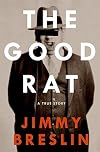
A surprisingly entertaining book considering the topic. Jimmy Breslin has built a story of the Mafia old and current around the court case against two extremely “dirty” cops in the NYPD. Burt Kaplan, working for the Mafia for decades, is the witness; now in his 70s and tired of prison life, he has turned “rat”. Kaplan is, from the book cover in this version “one of the most devastating turncoats of all time”. The court transcripts have a certain fascination which give great show more insight into the minds of the Mafia. Everything is run like a business, as is fairly well-known, but to hear it in the words of Kaplan, the descriptions of murder, making people disappear, comes across as just a day in the office. He tells everything straight as if describing ordering a meal to be delivered, or shipping a parcel out. Kaplan’s “voice” and Breslin’s style are what make the story so entertaining.
Breslin fills in background between sessions of the transcript with what appears to be the results of interviews through the years. Raised in the same location as the Families, he knew them personally and by reputation. This is what makes the story. He knows what he is talking about and has a wonderful flow between the transcripts and the “normal” lives of the people referred to. He gives us perhaps the most accurate picture of the history from the 1950s to the present of the “families” including their movement from Brooklyn to Staten Island, and on into the final crumbling days of the Dons. I was pleasantly surprised by this book, I thought it would be a lot of blood and guts described in great detail and do not usually read books to do with the Mafia. This book is so unexpected, I’m inclined to read Breslin’s other books on the same topics. I would recommend this book for it’s courtroom interest, it’s historical fact, and it’s entertainment value. Very good. show less
Breslin fills in background between sessions of the transcript with what appears to be the results of interviews through the years. Raised in the same location as the Families, he knew them personally and by reputation. This is what makes the story. He knows what he is talking about and has a wonderful flow between the transcripts and the “normal” lives of the people referred to. He gives us perhaps the most accurate picture of the history from the 1950s to the present of the “families” including their movement from Brooklyn to Staten Island, and on into the final crumbling days of the Dons. I was pleasantly surprised by this book, I thought it would be a lot of blood and guts described in great detail and do not usually read books to do with the Mafia. This book is so unexpected, I’m inclined to read Breslin’s other books on the same topics. I would recommend this book for it’s courtroom interest, it’s historical fact, and it’s entertainment value. Very good. show less

Dedicated to the 922,530 brave souls who paid their way into the Polo Grounds in 1962. Never has so much misery loved so much company.
Right off the bat I knew I was in good hands with Mr. Breslin, as he recounts the historical ineptitude of the New York Mets in 1962, their first year of existence in the National League. The '62 Mets set a record for futility, losing 120 of the 160 games they played, that still stands. Of course, any expansion team is bound to struggle at first, but Breslin show more recounts — between one-liners — all the ways that the National League and its owners put their thumb on the scale to make sure the Mets were worse than bad. Greedy owners and collusion have always been with us in baseball, it seems.
I was born and spent the first 8 years of my life on Long Island (or Lawn Guyland, as the local accent renders it), so I came by my Mets fandom honestly, even though they are two years older than I am. I can still rattle off many names of players from the era, from Ed Kranepool (my favorite) to Marv Throneberry to Gil Hodges. They were terrible, but they were ours:
You see, the Mets are losers, just like nearly everybody else in life. This is a team for the cab driver who gets held up and the guy who loses out on a promotion because he didn't maneuver himself to lunch with the boss enough. It is the team for every guy who has to get out of bed in the morning and go to work for short money on a job he does not like. And it is the team for every woman who looks up ten years later and sees her husband eating dinner in a T-shirt and wonders how the hell she ever let this guy talk her into getting married.
In some ways, reading Jimmy Breslin on baseball is a lot like reading Roger Angell, another favorite of mine. Both have a keen eye and a gift for description that gives you a perfect picture. But while the writing of Angell (an editor at The New Yorker) wears a bespoke three-piece suit, Breslin's writing does its best work in shirtsleeves, with the collar unbuttoned and the tail half untucked.
(Congressman) Keating brought with him all the attributes of a great campaigner. An excellent right hand, for one thing. This is a man who can shake hands with a polar bear and the bear is going to let out the first yelp.
(William) Shea has dark hair, blue eyes, and the square jaw of a guy who would know how to punch back.
I don't know if Breslin ever wrote a sequel to Can't Anybody Here Play This Game? to detail the Mets' triumph in the 1969 World Series (just seven seasons removed from the utter haplessness he chronicles here. Imagine!). On the other hand, maybe it's better to quite while you're behind. Losers are a lot more interesting than winners. show less
Right off the bat I knew I was in good hands with Mr. Breslin, as he recounts the historical ineptitude of the New York Mets in 1962, their first year of existence in the National League. The '62 Mets set a record for futility, losing 120 of the 160 games they played, that still stands. Of course, any expansion team is bound to struggle at first, but Breslin show more recounts — between one-liners — all the ways that the National League and its owners put their thumb on the scale to make sure the Mets were worse than bad. Greedy owners and collusion have always been with us in baseball, it seems.
I was born and spent the first 8 years of my life on Long Island (or Lawn Guyland, as the local accent renders it), so I came by my Mets fandom honestly, even though they are two years older than I am. I can still rattle off many names of players from the era, from Ed Kranepool (my favorite) to Marv Throneberry to Gil Hodges. They were terrible, but they were ours:
You see, the Mets are losers, just like nearly everybody else in life. This is a team for the cab driver who gets held up and the guy who loses out on a promotion because he didn't maneuver himself to lunch with the boss enough. It is the team for every guy who has to get out of bed in the morning and go to work for short money on a job he does not like. And it is the team for every woman who looks up ten years later and sees her husband eating dinner in a T-shirt and wonders how the hell she ever let this guy talk her into getting married.
In some ways, reading Jimmy Breslin on baseball is a lot like reading Roger Angell, another favorite of mine. Both have a keen eye and a gift for description that gives you a perfect picture. But while the writing of Angell (an editor at The New Yorker) wears a bespoke three-piece suit, Breslin's writing does its best work in shirtsleeves, with the collar unbuttoned and the tail half untucked.
(Congressman) Keating brought with him all the attributes of a great campaigner. An excellent right hand, for one thing. This is a man who can shake hands with a polar bear and the bear is going to let out the first yelp.
(William) Shea has dark hair, blue eyes, and the square jaw of a guy who would know how to punch back.
I don't know if Breslin ever wrote a sequel to Can't Anybody Here Play This Game? to detail the Mets' triumph in the 1969 World Series (just seven seasons removed from the utter haplessness he chronicles here. Imagine!). On the other hand, maybe it's better to quite while you're behind. Losers are a lot more interesting than winners. show less
Lists
Awards


You May Also Like


Associated Authors
Statistics
- Works
- 31
- Also by
- 11
- Members
- 1,855
- Popularity
- #13,873
- Rating
- 3.7
- Reviews
- 37
- ISBNs
- 114
- Languages
- 5
- Favorited
- 1