
Nathan Englander
Author of The Ministry of Special Cases
About the Author
Image credit: Elena Seibert
Works by Nathan Englander
The Reader {story} 5 copies
How We Avenged the Blums (in The Best American Short Stories 2006 - KENISON) — Contributor, some editions — 1 copy
Associated Works
The Art of the Story: An International Anthology of Contemporary Short Stories (1999) — Contributor — 394 copies, 5 reviews
Know the Past, Find the Future: The New York Public Library at 100 (2011) — Contributor — 133 copies, 4 reviews
The Worst Years of Your Life: Stories for the Geeked-Out, Angst-Ridden, Lust-Addled, and Deeply Misunderstood Adolescent in All of Us (2007) — Contributor — 94 copies, 1 review
The New Diaspora: The Changing Landscape of American Jewish Fiction (2015) — Contributor — 17 copies
Tagged
Common Knowledge
- Birthdate
- 1970
- Gender
- male
- Education
- State University of New York, Binghamton (Liberal Arts)
University of Iowa (Iowa Writers' Workshop)
Hebrew Academy of Nassau County - Occupations
- novelist
short story writer - Awards and honors
- PEN/Malamud Award (2000)
- Agent
- Nicole Aragi
- Nationality
- USA
- Birthplace
- West Hempstead, New York, USA
- Places of residence
- Jerusalem, Israel
New York, New York, USA
Madison, Wisconsin, USA - Associated Place (for map)
- USA
Members
Reviews

People compare Nathan Englander to Philip Roth and it's a fair comparison only in that they are both Jewish and they both have a talent for writing scenes that include masturbation.
But Roth lived at a time when he felt his goals included defining for his readers what it meant to be a secular American Jew--with the emphasis on "American." His characters are Jewish, yes, but in a mostly secular way, where the obligation and identity are sublimated, and where their greater goal as characters show more is to be as mainstream-American as possible. Roth lived through a time when redlining was still an open secret, and when people went out of their way to not hire Jews, or allow them in their clubs; his novels worked, on one level, to unmask the absurdity that Jewish Americans were different from any other Americans.
Englander is a couple of generations younger than Roth. The goal of his Jewish characters feels different. They are thinking about the downside of being as secular and as assimilated as possible. Englander makes his characters think more deeply about their faith than Roth does. They think about the weight of obligation they have to remain Jews, and to carry forward faith traditions intact from one generation to the next.
In kaddish.com the protagonist, Larry, seems at first as if he has wandered out of a Roth novel. He has left his traditions behind. He is an atheist and a sensualist. When his father dies he refuses to take on the obligation that would fall on him traditionally, were he observant, of reciting the Kaddish. The refusal catapults him into a very different direction for his life than what he'd planned.
Most of the novel is an exploration of what it might be like for an American Jew to turn away from mainstream American life and to return to an Orthodox way of life. And it is like nothing Roth ever wrote, because from about page 45 on it immerses the reader in the rhythms of Orthodox-Jewish traditions, where the characters are people of deep faith, who believe, for instance, that their prayers have consequences in the afterlife, and who observe traditions with, well, religious intensity.
There is a thread of the surreal here that reminds me of Englander's first story collection, [b:For the Relief of Unbearable Urges|29788|For the Relief of Unbearable Urges|Nathan Englander|https://images.gr-assets.com/books/1388236876s/29788.jpg|80586], and there is also a touch of the comic, but on the whole I experienced the novel as a serious reflection on what it means to be an observant Jew in the modern world. show less
But Roth lived at a time when he felt his goals included defining for his readers what it meant to be a secular American Jew--with the emphasis on "American." His characters are Jewish, yes, but in a mostly secular way, where the obligation and identity are sublimated, and where their greater goal as characters show more is to be as mainstream-American as possible. Roth lived through a time when redlining was still an open secret, and when people went out of their way to not hire Jews, or allow them in their clubs; his novels worked, on one level, to unmask the absurdity that Jewish Americans were different from any other Americans.
Englander is a couple of generations younger than Roth. The goal of his Jewish characters feels different. They are thinking about the downside of being as secular and as assimilated as possible. Englander makes his characters think more deeply about their faith than Roth does. They think about the weight of obligation they have to remain Jews, and to carry forward faith traditions intact from one generation to the next.
In kaddish.com the protagonist, Larry, seems at first as if he has wandered out of a Roth novel. He has left his traditions behind. He is an atheist and a sensualist. When his father dies he refuses to take on the obligation that would fall on him traditionally, were he observant, of reciting the Kaddish. The refusal catapults him into a very different direction for his life than what he'd planned.
Most of the novel is an exploration of what it might be like for an American Jew to turn away from mainstream American life and to return to an Orthodox way of life. And it is like nothing Roth ever wrote, because from about page 45 on it immerses the reader in the rhythms of Orthodox-Jewish traditions, where the characters are people of deep faith, who believe, for instance, that their prayers have consequences in the afterlife, and who observe traditions with, well, religious intensity.
There is a thread of the surreal here that reminds me of Englander's first story collection, [b:For the Relief of Unbearable Urges|29788|For the Relief of Unbearable Urges|Nathan Englander|https://images.gr-assets.com/books/1388236876s/29788.jpg|80586], and there is also a touch of the comic, but on the whole I experienced the novel as a serious reflection on what it means to be an observant Jew in the modern world. show less
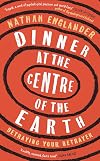
I thought this was very fine. Perhaps the most Israeli novel I have ever read, combining a deep love of the country with real ambivalence for the things such love demands of its people. It's a bold narrative choice to write a number of chapters from the POV of Ariel Sharon... while he was in permanent vegetative state, but that's just the kind of book this is. Probably not for everyone, but very definitely for me.
Englander is one of my favorite writers. I have read all of his previous short story collections and novels. Although he does write about Jewish characters, there is a universality to his stories. It also allows the non-Jew to have a glimpse into the Jewish world . In this case it is the world of orthodox judaism. It is 1999 and Larry is in the home of his sister Dina in Memphis. His religious father has died and Larry has renounced his connection to his orthodox upbringing. It is the week show more of mourning(shiva) in the Jewish tradition. He is in conflict with the religious bubble that his sister lives in. The book centers around the obligation of the Jewish male to say the prayer for the dead for 11 months 8 times a day at three daily religious services. Instead of doing this, he engages a website Kaddish.com that will do the praying for him. This is considered acceptable. Of course I found the idea for the book very creative. Once this premise was established, Englander flips it by going 20 years into the future with Larry recovering his faith and becoming a orthodox rabbi (now using the name Shuli)i who teaches in Brooklyn. He has a wife and 2 kids and lives a good religious life. The rest of the book deals with a crisis of faith as he deals with what he did 20 years before. I found the book to be a great commentary about the good and bad of organized religion. The certainty which the Orthodox Jewish community believes as it relates to all of the rituals and roles that they demand is what has turned me off to religion. The question comes up in the book and gives the reader time to contemplate religious belief and the importance of the rituals that are part of it. The book creates a bit of a mystery as Shuli finds out the truth about Kaddish. com. Englander is an excellent writer and this book which is 200 pages is a good introduction to him. Worth the time. show less

When Larry's Orthodox father dies, he finds himself in the uncomfortable position of being responsible for saying the Kaddish. He resents this obligation, is offended by its spiritual necessity and rebels against his family's blind devotion to a silly religious protocol. He intends to perform it in a half-hearted and imperfect way. However, his sister goes berserk, accuses him of lying and has a huge and public fight with him. She says that if he will not do this one thing for his father show more that is demanded of him, then he will have to find someone who will.
After a disappointing revenge wank in his sister's home, Larry finds a website which offers to have the ritual performed by a school of religious students in Israel. He immediately has a feeling of relief and satisfaction that his father will, despite it all, be getting the service he deserves. This simple transaction brings on a religious transformation in Larry of epic proportions. He returns to his faith, becomes a rabbi, marries, and even returns to teach at the Jewish school where he taught.
However, after many years of piety, his failure to perform the Kaddish for his father weighs on him. Moreover, he worries that some child in Israel is now the true son of his father. He has essentially sold his birthright and he is obsessed with recovering it. This leads him on a madcap mission to the Holy Land to find the person running a transactional prayer business on the other side of the world.
This book is darkly funny and strangely touching. The protagonist is silly and loveable and his journey of faith is sometimes poignant and sometimes hilarious. This was a great read and a light hearted look at Orthodox Judaism that is rarely portrayed in media. show less
After a disappointing revenge wank in his sister's home, Larry finds a website which offers to have the ritual performed by a school of religious students in Israel. He immediately has a feeling of relief and satisfaction that his father will, despite it all, be getting the service he deserves. This simple transaction brings on a religious transformation in Larry of epic proportions. He returns to his faith, becomes a rabbi, marries, and even returns to teach at the Jewish school where he taught.
However, after many years of piety, his failure to perform the Kaddish for his father weighs on him. Moreover, he worries that some child in Israel is now the true son of his father. He has essentially sold his birthright and he is obsessed with recovering it. This leads him on a madcap mission to the Holy Land to find the person running a transactional prayer business on the other side of the world.
This book is darkly funny and strangely touching. The protagonist is silly and loveable and his journey of faith is sometimes poignant and sometimes hilarious. This was a great read and a light hearted look at Orthodox Judaism that is rarely portrayed in media. show less
Lists
Jewish Books (3)
Awards


You May Also Like


Associated Authors
Statistics
- Works
- 20
- Also by
- 25
- Members
- 3,885
- Popularity
- #6,521
- Rating
- 3.7
- Reviews
- 122
- ISBNs
- 124
- Languages
- 13
- Favorited
- 12
