
Elaine Pagels
Author of The Gnostic Gospels
About the Author
Elaine Pagels is the Harrington Spear Paine Professor of Religion at Princeton University. She is the recipient of a MacArthur Fellowship best known for her studies and writing on the Gnostic Gospels. Pagels graduated from Stanford University receiving a B.A. in 1964 and an M.A. in 1965. She show more received a Ph.D in religion from Harvard University in 1970. She is the author of The Gnostic Gospels (1979), which won the National Book Award (Religion 1980) and the National Book Critics Circle Award (Criticism 1979). Pagels is also the author of Adam, Eve and the Serpent (1988), The Origin of Satan (1995), Beyond Belief: The Secret Gospel of Thomas (2003), Reading Judas: The Gospel of Judas and the Shaping of Christianity (2007), and Revelations: Visions, Prophecy, and Politics in the Book of Revelation (2012). (Bowker Author Biography) show less
Image credit: Elaine Hiesey Pagels, Harrington Spear Paine Foundation Professor of Religion, Princeton University. Photo by Denise Applewhite, 1996 (photo courtesy of Princeton University)
Works by Elaine Pagels
The Origin of Satan: How Christians Demonized Jews, Pagans, and Heretics (1995) 2,450 copies, 22 reviews
Revelations: Visions, Prophecy, and Politics in the Book of Revelation (2012) 853 copies, 23 reviews
I will lift up mine yes. 2 copies
Adam and the Serpent 1 copy
Lesson Plan The Gnostic Gospels by Elaine Pagels — Author — 1 copy
The Gnostic Gospels - 273.1 1 copy
Associated Works
The Nag Hammadi Library in English, Fourth Revised Edition (1996) — Contributor — 614 copies, 3 reviews
A World of Ideas : Conversations With Thoughtful Men and Women About American Life Today and the Ideas Shaping Our Future (1989) — Interviewee — 603 copies, 1 review
Face to Face: Women Writers on Faith, Mysticism, and Awakening (2004) — Contributor — 39 copies, 1 review
Whose Torah? A Concise Guide to Progressive Judaism (2008) — Foreword, some editions — 36 copies, 1 review
Images of the Feminine in Gnosticism (Studies in Antiquity & Christianity) (1988) — Contributor — 35 copies, 1 review
Heresy and Identity in Late Antiquity (Texts and Studies in Ancient Judaism) (2008) — Contributor — 9 copies
Tagged
Common Knowledge
- Canonical name
- Pagels, Elaine
- Legal name
- Pagels, Elaine Hiesey
- Birthdate
- 1943-02-13
- Gender
- female
- Education
- Stanford University (B.A.|1964|M.A.|1965)
Harvard University (Ph.D.|1970) - Occupations
- professor
religion scholar - Organizations
- Barnard College
Princeton University - Awards and honors
- MacArthur Fellowship (1981)
Guggenheim Fellowship (1979)
Rockefeller Foundation Fellowship (1978)
National Book Award (1980)
National Book Critics Circle Award (1980)
Howard T. Behrman Award for Distinguished Achievement in the Humanities (2012) - Relationships
- Pagels, Heinz R. (husband)
Hiesey, William (father) - Short biography
- Elaine Pagels (1943- ), American professor of religion and Gnosticism scholar, born Elaine Hiesey
- Nationality
- USA
- Birthplace
- Palo Alto, California, USA
- Places of residence
- Princeton, New Jersey, USA
- Associated Place (for map)
- USA
Members
Discussions
Gnostic Gospels Group Read in 75 Books Challenge for 2012 (April 2012)
Reviews
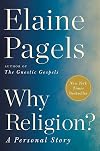
It would be easy to get lost in theology, doctrine, and dogmas. But to do so, I believe, would mean missing an incredibly painful and poignant account of a mother and wife coping with nearly unfathomable loss. Pagels five-year-old son died of a rare condition, and a year later her husband died from a fall on a climbing outing. Ms. Pagels offers little in the way of answers, but a great deal in the tremendously honest and frantic grasping of a wounded soul. It is in that frightening struggle show more that strength, love, and hope are found. show less
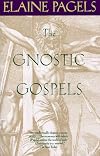
Elaine Pagels writes here a lucid and fascinating historical study of the Gnostic Gospels, among them 52 texts discovered by accident at Nag Hammadi, including the Gospel of Thomas, the Gospel of Philip, the Apocalypse of Peter and more.
She argues that Gnostic Christianity was overtaken by Roman Catholicism because Roman Catholicism was organized, and codified and open to everyone. It was more "social." Gnostic Christianity is a lot more open. She depicts the Gnostics as, in some sense, show more artists, creators, who express their own insights (their gnosis) by creating new myths, poems, rituals, "dialogues" with Christ, revelations, and accounts of their visions. Women are much more active in the Gnostic traditions. There's a lot of unorthodoxy. Some typical Gnostic conjectures: Eve is not from Adam's rib, but Sophia's daughter, sent to prod the cast-down Adam to life and knowledge. The resurrection is seen metaphorically. Mary Magdalene perhaps married to Christ, and was one of only two or three people to whom Christ explained the secrets of the universe. There are conceptions of the Creator as both male and female, and Creators before the Old Testament God.
Essentially, orthodox Catholic leaders, attempting inclusion, created a simple framework of doctrine, ritual and political structure that proved amazingly effective. Gnostics, on the other hand were more concerned with personal enlightenment. Gnostics tended to regard all doctrines as approaches to the truth, rather than the orthodox, which viewed their specific doctrines as the truth and the sole legitimate form of Christian faith. Self-knowledge is knowledge of God, to the Gnostics: "Why do you pursue the darkness, though the light is available to you within?" This does not lend itself to religion for the masses, for, Pagels says, "ideas alone do not make a religion powerful, although it cannot succeed without them; equally important are social and political structures that unite people into a common affiliation."
Although occasionally I experienced a twitch of unease about the Gnostics ideas of redemption and initiation resembling the excesses of evangelical fundamentalists, most of their ideas were so far afield from mainstream Christianity as to be incredibly refreshing, not to mention poetic. Gnostics seem to be more about questions than answers. As Pagels says near the end of the book, “All the old questions are being reopened--what is the resurrection, the role of women, who was Christ, what are the similarities with other religions.” The crucial question for Pagels is "what is the relationship between the authority of one’s own experience and that claimed for the scriptures, the ritual and the clergy?" An important question among many intriguing questions raised in this astounding read. show less
She argues that Gnostic Christianity was overtaken by Roman Catholicism because Roman Catholicism was organized, and codified and open to everyone. It was more "social." Gnostic Christianity is a lot more open. She depicts the Gnostics as, in some sense, show more artists, creators, who express their own insights (their gnosis) by creating new myths, poems, rituals, "dialogues" with Christ, revelations, and accounts of their visions. Women are much more active in the Gnostic traditions. There's a lot of unorthodoxy. Some typical Gnostic conjectures: Eve is not from Adam's rib, but Sophia's daughter, sent to prod the cast-down Adam to life and knowledge. The resurrection is seen metaphorically. Mary Magdalene perhaps married to Christ, and was one of only two or three people to whom Christ explained the secrets of the universe. There are conceptions of the Creator as both male and female, and Creators before the Old Testament God.
Essentially, orthodox Catholic leaders, attempting inclusion, created a simple framework of doctrine, ritual and political structure that proved amazingly effective. Gnostics, on the other hand were more concerned with personal enlightenment. Gnostics tended to regard all doctrines as approaches to the truth, rather than the orthodox, which viewed their specific doctrines as the truth and the sole legitimate form of Christian faith. Self-knowledge is knowledge of God, to the Gnostics: "Why do you pursue the darkness, though the light is available to you within?" This does not lend itself to religion for the masses, for, Pagels says, "ideas alone do not make a religion powerful, although it cannot succeed without them; equally important are social and political structures that unite people into a common affiliation."
Although occasionally I experienced a twitch of unease about the Gnostics ideas of redemption and initiation resembling the excesses of evangelical fundamentalists, most of their ideas were so far afield from mainstream Christianity as to be incredibly refreshing, not to mention poetic. Gnostics seem to be more about questions than answers. As Pagels says near the end of the book, “All the old questions are being reopened--what is the resurrection, the role of women, who was Christ, what are the similarities with other religions.” The crucial question for Pagels is "what is the relationship between the authority of one’s own experience and that claimed for the scriptures, the ritual and the clergy?" An important question among many intriguing questions raised in this astounding read. show less

Frustrated again.
I should know by now not to make assumptions based on the subtitle. When I read, “Visions, Prophecy, & Politics in the Book of Revelation,” I assumed Pagels would be exploring the politically subversive nature of John’s Revelation. Instead, I read a book about the reconstructed political factions of the early church that Pagels believes comes to light in John’s Revelation.
An example of this is her discussion of John’s message to Smyrna:
"I know your tribulation and show more your poverty (but you are rich) and the slander of those who say that they are Jews and are not, but are a synagogue of Satan" (Revelation 2:9 ESV).
Pagels suggests that John’s talking about Paul and his disciples here—those Gentile believers who claim to be included in the seed of Abraham but who eschew Jewish law.
Returning to her bread-and-butter, Pagels describes a conspiracy by who would later be called Orthodox Christians to suppress minority opinions and alternate writings. For her, John’s revelation is the only one which survived because the powerful could use it to increase their power.
While I do agree that many scriptural books have been horribly misused in the name of power against the aims of Jesus, I can’t give the alternate books the credit Pagels does. When I read (what remains of) alternate texts like the Secret Revelation of John, and the Gospel of Truth, I don’t see the sort of sort of scripture-soaked reflection I find in John’s Revelation.
Of course, given my theological viewpoint, I believe the Holy Spirit had a role in preserving the canon. If God could use tyrants like Nebuchadnezzar to accomplish his purpose, he could certainly use Constantine.
If you’re intrigued by Pagels’ thesis and have spent time reading scripture, I encourage you to read the apocryphal texts for yourself. Form your own opinion before turning to Pagels’ Revelations. show less
I should know by now not to make assumptions based on the subtitle. When I read, “Visions, Prophecy, & Politics in the Book of Revelation,” I assumed Pagels would be exploring the politically subversive nature of John’s Revelation. Instead, I read a book about the reconstructed political factions of the early church that Pagels believes comes to light in John’s Revelation.
An example of this is her discussion of John’s message to Smyrna:
"I know your tribulation and show more your poverty (but you are rich) and the slander of those who say that they are Jews and are not, but are a synagogue of Satan" (Revelation 2:9 ESV).
Pagels suggests that John’s talking about Paul and his disciples here—those Gentile believers who claim to be included in the seed of Abraham but who eschew Jewish law.
Returning to her bread-and-butter, Pagels describes a conspiracy by who would later be called Orthodox Christians to suppress minority opinions and alternate writings. For her, John’s revelation is the only one which survived because the powerful could use it to increase their power.
While I do agree that many scriptural books have been horribly misused in the name of power against the aims of Jesus, I can’t give the alternate books the credit Pagels does. When I read (what remains of) alternate texts like the Secret Revelation of John, and the Gospel of Truth, I don’t see the sort of sort of scripture-soaked reflection I find in John’s Revelation.
Of course, given my theological viewpoint, I believe the Holy Spirit had a role in preserving the canon. If God could use tyrants like Nebuchadnezzar to accomplish his purpose, he could certainly use Constantine.
If you’re intrigued by Pagels’ thesis and have spent time reading scripture, I encourage you to read the apocryphal texts for yourself. Form your own opinion before turning to Pagels’ Revelations. show less
Elaine Pagels is best known for her works on ancient Christian heterodoxies such as The Gnostic Gospels and Beyond Belief. Several of her later books, however, use related research to invert the question, and to interrogate the sources and effects of orthodoxy. These titles include The Origin of Satan and Adam, Eve, and the Serpent. The 2012 volume Revelations belongs to this later class. It examines the Johannine Apocalypse in its original historical context and its early reception, up to show more and barely through the formation of the Christian scriptural canon. In the process, Pagels paints pictures of early Christianity that are likely to be unfamiliar to the wide audience to whom the book is addressed.
In particular, and contrary to standard Christian framings of the text of Revelation, she observes that its author John was almost certainly not a self-identifying "Christian." He was instead a Jew who identified Jesus as the Messiah. He was concerned with Roman persecution of Jews, and overtly resentful of gentile converts to Pauline proto-Christianity whom he regarded as pseudo-Jews. She contrasts John with his contemporary Ignatius Christophoros, a chief originator of the concept and pattern of the Christian orders of clergy. It is one of many ironies concerning John's Revelation that it would eventually be used by Christians to vilify Jews and to enforce the political structures of orthodox Christianity.
Given my own longstanding interests, I was especially tickled that Pagels spent nine pages on Apuleius of Madaurus, whom she used to provide a window on the pagan intellectual and religious context in the second century. In her account, Apuleius comes off rather like an ancient Roman Robert Anton Wilson.
Other key figures in the book include Irenaeus, a founder of Christian heresiological thought, and Athanasius, a Constantinian bishop at the core of the effort to unify "creed, clergy, and canon" (169). The history attempts to account for the fact that John's Revelation went from being one of many such visionary documents in circulation to its later status as the only "authorized" Christian text of its type. (It was, of course, still in the company of its Hebrew precedents in Isaiah and Daniel.) In a way, it became the vision to end all visions, a "seal" forbidding the canonization of other such writings and inoculating against them.
Only in a short "Conclusion" is there any treatment of more recent receptions of Revelation, and it pivots on the Reformation and the US Civil War. It doesn't even mention the subsequent widespread reading of the text as a curious species of allegorical science fiction, nor the way that it has been influential in the genesis of new religious movements--Christian and post-Christian--in the modern era. Inasmuch as the Revelation to John forms the locus classicus for many of the central mythemes of Thelema, I would strongly recommend this book to Thelemites. It supplies an overview of positive history to complement psychological treatments of the vision such as Lawrence's Apocalypse and esoteric exegesis like that of Pryse's Apocalypse Unsealed. show less
In particular, and contrary to standard Christian framings of the text of Revelation, she observes that its author John was almost certainly not a self-identifying "Christian." He was instead a Jew who identified Jesus as the Messiah. He was concerned with Roman persecution of Jews, and overtly resentful of gentile converts to Pauline proto-Christianity whom he regarded as pseudo-Jews. She contrasts John with his contemporary Ignatius Christophoros, a chief originator of the concept and pattern of the Christian orders of clergy. It is one of many ironies concerning John's Revelation that it would eventually be used by Christians to vilify Jews and to enforce the political structures of orthodox Christianity.
Given my own longstanding interests, I was especially tickled that Pagels spent nine pages on Apuleius of Madaurus, whom she used to provide a window on the pagan intellectual and religious context in the second century. In her account, Apuleius comes off rather like an ancient Roman Robert Anton Wilson.
Other key figures in the book include Irenaeus, a founder of Christian heresiological thought, and Athanasius, a Constantinian bishop at the core of the effort to unify "creed, clergy, and canon" (169). The history attempts to account for the fact that John's Revelation went from being one of many such visionary documents in circulation to its later status as the only "authorized" Christian text of its type. (It was, of course, still in the company of its Hebrew precedents in Isaiah and Daniel.) In a way, it became the vision to end all visions, a "seal" forbidding the canonization of other such writings and inoculating against them.
Only in a short "Conclusion" is there any treatment of more recent receptions of Revelation, and it pivots on the Reformation and the US Civil War. It doesn't even mention the subsequent widespread reading of the text as a curious species of allegorical science fiction, nor the way that it has been influential in the genesis of new religious movements--Christian and post-Christian--in the modern era. Inasmuch as the Revelation to John forms the locus classicus for many of the central mythemes of Thelema, I would strongly recommend this book to Thelemites. It supplies an overview of positive history to complement psychological treatments of the vision such as Lawrence's Apocalypse and esoteric exegesis like that of Pryse's Apocalypse Unsealed. show less
Lists
readingList (1)
Nonfiction (2)
Awards


You May Also Like


Associated Authors
Statistics
- Works
- 32
- Also by
- 13
- Members
- 15,550
- Popularity
- #1,460
- Rating
- 3.9
- Reviews
- 196
- ISBNs
- 170
- Languages
- 16
- Favorited
- 51