
Natascha Wodin
Author of Sie kam aus Mariupol
About the Author
Image credit: Natascha Wodin Leipzig Book Fair 2017 By Heike Huslage-Koch - Own work, CC BY-SA 4.0, https://commons.wikimedia.org/w/index.php?curid=57372731
Works by Natascha Wodin
Associated Works
Mit verdeckten Karten: Anastasijas dritter Fall (1995) — Translator, some editions — 44 copies, 4 reviews
Tagged
Common Knowledge
- Canonical name
- Wodin, Natascha
- Birthdate
- 1945-12-08
- Gender
- female
- Occupations
- translator
writer - Awards and honors
- August-Graf-von-Platen-Preis (2017)
Alfred-Döblin-Preis (2015)
Adelbert-von-Chamisso-Preis (1998) - Relationships
- Hilbig, Wolfgang (Ehepartner, 1994-2002)
- Nationality
- Germany
Russia - Birthplace
- Fürth, Bayern, Deutschland
- Places of residence
- Berlin, Deutschland
- Associated Place (for map)
- Deutschland
Members
Reviews
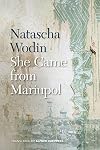
A compelling and fascinating mixture of biography, memoir, and history, Wodin's book tells of her search to understand her mother, Evgenia Yakovleva Ivashchenko, a Ukrainian forced labourer in Germany, whose life was "shredded" by the Stalinist and Nazi regimes. Over six decades after her mentally ill mother's suicide by drowning in Germany's Regnitz River, Wodin, now in her 70s, plugged Evgenia's name into a Russian internet search engine, something she'd done multiple times before with show more little to show for it. This time, though, something extraordinary happened. She came upon an Azov Greek forum for those with family links to Mariupol. The online group was run by by an engineer originally from the southern Ukrainian city who now lived in Russia. Konstantin, an indefatigable and passionate investigator, aided Wodin in going back some generations in her mother's family history, allowing her to construct a maternal family tree.
Wodin would learn of her roots in the nobility, the intelligentsia, and the merchant class and how these details factored into two members of her family, her grandfather and her mother's older sister, Lidia, being exiled as enemies of the people. She'd also find an opera singer uncle (a card-carrying Communist Party member), his eccentric physician daughter whose life had been dedicated to his care, and another cousin's murderous son, a bizarre man who'd smothered his own mother. This and other information Wodin stumbled upon was at times deeply unsettling, enough to make her question what she'd gotten herself into.
Wodin's is a richly detailed, gripping book, which is necessarily speculative at times. Wodin observes that the experiences of forced slave labourers from the East, "untermenschen" (non-Aryan, racially inferior people)--many of them Ukrainian and regarded as only slightly superior to Jews--are often marginalia to the Holocaust. This exceptional work made me aware of lives I'd never before considered. It deserves to be widely read.
I am grateful to Michigan State University Press and to Net Galley for providing me with a digital copy for review purposes. show less
Wodin would learn of her roots in the nobility, the intelligentsia, and the merchant class and how these details factored into two members of her family, her grandfather and her mother's older sister, Lidia, being exiled as enemies of the people. She'd also find an opera singer uncle (a card-carrying Communist Party member), his eccentric physician daughter whose life had been dedicated to his care, and another cousin's murderous son, a bizarre man who'd smothered his own mother. This and other information Wodin stumbled upon was at times deeply unsettling, enough to make her question what she'd gotten herself into.
Wodin's is a richly detailed, gripping book, which is necessarily speculative at times. Wodin observes that the experiences of forced slave labourers from the East, "untermenschen" (non-Aryan, racially inferior people)--many of them Ukrainian and regarded as only slightly superior to Jews--are often marginalia to the Holocaust. This exceptional work made me aware of lives I'd never before considered. It deserves to be widely read.
I am grateful to Michigan State University Press and to Net Galley for providing me with a digital copy for review purposes. show less
I was only twenty-three and in a new city when the lady from across the street came to the door. She came every morning that summer. She brought us cherry dumplings–with cherry pits still intact. She asked me to sew her a dress with a high neckline to hide her creased neck. Nadia told me a few things about her life, but I was too young and ignorant to understand the life behind those few facts.
Nadia was twenty when she volunteered to stand in for her father as a worker on a Nazi farm, a show more work camp. She believed they sterilized her, because she was never able to have a child. After the war, she met her husband John and they were lucky to be selected to immigrate. They could go to Canada, Brazil, or New Jersey. They came to America.
We only lived in that place for two years and I often wondered about Nadia over the years. Reading She Came From Mariupol, I kept thinking about her. Natasha Wodin’s story of her mother’s life gave me insight into what Nadia, born in the Ukraine, had experienced.
She Came From Mariupol is Natascha Wodin’s journey to understand the mother who killed herself when she was ten years old. Evgenia Yakovlevna, born in 1920 in Mariupol, had been beautiful. And, she was desperately unhappy and unable to cope with life. Wodin hoped to learn about her mother’s life and her family thorough genealogical research online.
I once heard my mother play the piano–something so unspeakably beautiful and sad, like nothing I had ever heard before. On the way home, my mother held my hand and said it was the “Raindrop” prelude by Frederic Chopin…
from She Came From Mariupol by Natascha Wodin
Wodin remembered stories her mother had told her, and she remembered the years after the war, hiding in a shed so the family wasn’t sent to the violence of the displaced persons camp. If they were returned to Russia, they would have been considered traitors and sent to Siberia, or shot. In school, Wodin was shunned as a Russian. She was always hungry. Her father was sullen and angry. Her mother depressed, malnourished, suffering from PTSD.
I only knew that I belonged to a type of human refuse, to some sort of garbage that was left over from the war.
from She Came From Mariupol by Natascha Wodin
The first part of the book relates her personal memories and the stories she recalls and her genealogical research. In the second part, Wodin narrates her aunt’s sister’s story as told in a journal she wrote in late life, her life of privilege in the international city of Mariupol, her time in Germany, and as a displaced person in postwar Germany. Wodin’s mother was born after the family’s financial losses, smack in the middle of turmoil and violence that continued throughout her life. Wodin’s parents were deported to Germany in 1944 as slave labor in Germany’s factories so the German men were freed up for military service.
Wodin was shocked by the atrocities her family endured, wondering how we could have forgotten. The continual violence as the Red, White, and Black armies battled across Russia. The suffering at the forced labor camps, the slaves dispensable and mistreated, starving and ill, working twelve hour days. The millions of displaced persons after the slave workers were freed, hated if they stayed in Germany, hated if they returned home, considered collaborators with the Nazis. Viewed with suspicion by their American and British liberators.
I was riveted by Wodin’s narrative, appalled, and my heart breaking.
I received a free egalley from the publisher through NetGalley. My review is fair and unbiased. show less
Nadia was twenty when she volunteered to stand in for her father as a worker on a Nazi farm, a show more work camp. She believed they sterilized her, because she was never able to have a child. After the war, she met her husband John and they were lucky to be selected to immigrate. They could go to Canada, Brazil, or New Jersey. They came to America.
We only lived in that place for two years and I often wondered about Nadia over the years. Reading She Came From Mariupol, I kept thinking about her. Natasha Wodin’s story of her mother’s life gave me insight into what Nadia, born in the Ukraine, had experienced.
She Came From Mariupol is Natascha Wodin’s journey to understand the mother who killed herself when she was ten years old. Evgenia Yakovlevna, born in 1920 in Mariupol, had been beautiful. And, she was desperately unhappy and unable to cope with life. Wodin hoped to learn about her mother’s life and her family thorough genealogical research online.
I once heard my mother play the piano–something so unspeakably beautiful and sad, like nothing I had ever heard before. On the way home, my mother held my hand and said it was the “Raindrop” prelude by Frederic Chopin…
from She Came From Mariupol by Natascha Wodin
Wodin remembered stories her mother had told her, and she remembered the years after the war, hiding in a shed so the family wasn’t sent to the violence of the displaced persons camp. If they were returned to Russia, they would have been considered traitors and sent to Siberia, or shot. In school, Wodin was shunned as a Russian. She was always hungry. Her father was sullen and angry. Her mother depressed, malnourished, suffering from PTSD.
I only knew that I belonged to a type of human refuse, to some sort of garbage that was left over from the war.
from She Came From Mariupol by Natascha Wodin
The first part of the book relates her personal memories and the stories she recalls and her genealogical research. In the second part, Wodin narrates her aunt’s sister’s story as told in a journal she wrote in late life, her life of privilege in the international city of Mariupol, her time in Germany, and as a displaced person in postwar Germany. Wodin’s mother was born after the family’s financial losses, smack in the middle of turmoil and violence that continued throughout her life. Wodin’s parents were deported to Germany in 1944 as slave labor in Germany’s factories so the German men were freed up for military service.
Wodin was shocked by the atrocities her family endured, wondering how we could have forgotten. The continual violence as the Red, White, and Black armies battled across Russia. The suffering at the forced labor camps, the slaves dispensable and mistreated, starving and ill, working twelve hour days. The millions of displaced persons after the slave workers were freed, hated if they stayed in Germany, hated if they returned home, considered collaborators with the Nazis. Viewed with suspicion by their American and British liberators.
I was riveted by Wodin’s narrative, appalled, and my heart breaking.
I received a free egalley from the publisher through NetGalley. My review is fair and unbiased. show less

Ich finde dieses Buch großartig, weil es etwas bietet, was viele Biografien nicht tun: Es zeigt, dass das Leben ganz normaler Menschen, eines der vielen Millionen und Milliarden in der Geschichte, genauso spannend und bewegend ist wie die vielen "berühmten" Menschen, über die die meisten Biografien geschrieben werden.
Das Leben von Menschen wie Nastja ist das Leben, das uns wirklich inspirieren sollte. Denn trotz aller Entbehrungen und beschissenen Situationen, die ihnen der Zufall, andere show more Menschen und Staaten bescheren, behalten sie ihren Kopf oben und ihre Würde hoch. Und das alles, während sie sich um ihre Mitmenschen kümmern.
Mehr Biografien wie diese bitte.
//
I think this book is great because it offers something that a lot of biographies do not: It shows that the life of ordinary people, one of the many million and billion throughout history, are just as exciting and moving as the many "famous" people that most biographies are written about.
The lives of people like Nastja are the lives that should really inspire us. Because against all hardships and the shitty situations that chance, other people and states throw at them, they keep their head up and their dignity high. And all of this while caring for others around them.
More biographies like these please. show less
Das Leben von Menschen wie Nastja ist das Leben, das uns wirklich inspirieren sollte. Denn trotz aller Entbehrungen und beschissenen Situationen, die ihnen der Zufall, andere show more Menschen und Staaten bescheren, behalten sie ihren Kopf oben und ihre Würde hoch. Und das alles, während sie sich um ihre Mitmenschen kümmern.
Mehr Biografien wie diese bitte.
//
I think this book is great because it offers something that a lot of biographies do not: It shows that the life of ordinary people, one of the many million and billion throughout history, are just as exciting and moving as the many "famous" people that most biographies are written about.
The lives of people like Nastja are the lives that should really inspire us. Because against all hardships and the shitty situations that chance, other people and states throw at them, they keep their head up and their dignity high. And all of this while caring for others around them.
More biographies like these please. show less

Autobiografische roman waarin de auteur een somber maar boeiend beeld schetst van het huidige Rusland.
Lists
Awards


You May Also Like


Associated Authors
Statistics
- Works
- 15
- Also by
- 8
- Members
- 205
- Popularity
- #107,801
- Rating
- 3.7
- Reviews
- 12
- ISBNs
- 52
- Languages
- 8
