

Rokeya Sakhawat Hossain (1880–1932)
Author of Sultana's Dream: A Feminist Utopia and Selections from The Secluded Ones
About the Author
Works by Rokeya Sakhawat Hossain
Sultana's Dream: A Feminist Utopia and Selections from The Secluded Ones (1988) 139 copies, 8 reviews
Associated Works
The Big Book of Science Fiction: The Ultimate Collection (2016) — Contributor — 522 copies, 8 reviews
The Lifted Veil: The Book of Fantastic Literature by Women 1800-World War II (1806) — Contributor — 45 copies
Tagged
Common Knowledge
- Other names
- Rokeya, Begum
Sakhawat Hossain, Begum Rokeya - Birthdate
- 1880-12-09
- Date of death
- 1932-12-09
- Gender
- female
- Occupations
- women's rights activist
feminist
educator
social reformer
short story writer
novelist (show all 7)
essayist - Organizations
- Muslim Women’s Association
- Nationality
- British India
- Birthplace
- Pairabondh, Mithapukur, Rangpur, Bengal Presidency, British India
- Place of death
- Calcutta, Bengal Presidency, British India
- Map Location
- India
Members
Reviews
Short and packs a punch.
Written by a Bengali Muslim woman, this satirical short story imagines a world where women are allowed to live to their fullest intellectual and economic potential. A sultan's wife travels to LadyLand, where the women run the world, for lack of a better term.
It was written in 1905.
This story was written, it was published, but more astonishingly, it survived. Science fiction is a testament not only to who we are, but who we can be. It allows us to shed our supposed show more rigid social barriers and imagine who we could be if we didn't have those constraints. Here is a woman of colour imagining a future in which other women of colour exist, contribute, are listened to, are an integral piece of society.
I... honestly really don't like when people say sexist / racist / homophobic comments or views were just 'products of their time'. Sure they were. But we had allies and we've had people who were at the forefront of all of that prejudice since the beginning and we will always have people like that.
Rokeya Sakhawat Hossain is one such example.
Imagine reading this the year it was published. Feeling validated, feeling seen, feeling as if you could've come from LadyLand, as if you were suddenly made of star stuff, infinite in all your opportunities.
This story isn't just important 'for its time', it's important because it survived. show less
Written by a Bengali Muslim woman, this satirical short story imagines a world where women are allowed to live to their fullest intellectual and economic potential. A sultan's wife travels to LadyLand, where the women run the world, for lack of a better term.
It was written in 1905.
This story was written, it was published, but more astonishingly, it survived. Science fiction is a testament not only to who we are, but who we can be. It allows us to shed our supposed show more rigid social barriers and imagine who we could be if we didn't have those constraints. Here is a woman of colour imagining a future in which other women of colour exist, contribute, are listened to, are an integral piece of society.
I... honestly really don't like when people say sexist / racist / homophobic comments or views were just 'products of their time'. Sure they were. But we had allies and we've had people who were at the forefront of all of that prejudice since the beginning and we will always have people like that.
Rokeya Sakhawat Hossain is one such example.
Imagine reading this the year it was published. Feeling validated, feeling seen, feeling as if you could've come from LadyLand, as if you were suddenly made of star stuff, infinite in all your opportunities.
This story isn't just important 'for its time', it's important because it survived. show less
https://nwhyte.livejournal.com/2881596.html
I spotted this as an interesting feminist story from India in 1905 - in fact, it was originally published in English, in the Indian Ladies' Magazine. I am intrigued that the English "lady" is translated into "ইউরোপীয় রমণীকে", "i'urōpīẏa ramaṇīkē," "European woman" in the standard Bengali version - I wonder if that is how the author intended it to be understood? (Of course she was probably more comfortable in Urdu show more than Bengali.)
It's a very short story in which Sultana finds herself in a world where men suffer the same discrimination that women suffer in our world, and as a result things run much better. Solar-powered technology has enabled Ladyland to repel male invaders and establish a new way of life, with decent showers and flying cars. Then, alas, Sultana wakes up; for it was all a dream. Begum Rokeya was a leading Islamic feminist writer, and the story is basically a thought-provoking vignette, with some shafts of wit - the fact that men's brains are bigger does not show that they are superior, because elephants have bigger brains than men. Great fun, but very short. show less
I spotted this as an interesting feminist story from India in 1905 - in fact, it was originally published in English, in the Indian Ladies' Magazine. I am intrigued that the English "lady" is translated into "ইউরোপীয় রমণীকে", "i'urōpīẏa ramaṇīkē," "European woman" in the standard Bengali version - I wonder if that is how the author intended it to be understood? (Of course she was probably more comfortable in Urdu show more than Bengali.)
It's a very short story in which Sultana finds herself in a world where men suffer the same discrimination that women suffer in our world, and as a result things run much better. Solar-powered technology has enabled Ladyland to repel male invaders and establish a new way of life, with decent showers and flying cars. Then, alas, Sultana wakes up; for it was all a dream. Begum Rokeya was a leading Islamic feminist writer, and the story is basically a thought-provoking vignette, with some shafts of wit - the fact that men's brains are bigger does not show that they are superior, because elephants have bigger brains than men. Great fun, but very short. show less
Rokeya Sakhawat Hossain, commonly known as Begum Rokeya, was a Bengali feminist thinker, writer, educator and political activist from British India (present day Bangladesh). I am ashamed to say that I had never heard of her until I saw this book appear on a friend’s GoodReads feed. I honestly wonder why this work isn’t more celebrated. This is one heck of a story if you consider when it was written. The ideas are decades ahead of that time. I still can't believe that this short story was show more written in 1905! It is said to be one of the earliest science fiction stories written by a woman.
The protagonist, Sultana, seems to be an upper-class Muslim lady. She wakes up in her dream to find herself in a utopian feminist society named “Ladyland”. As the name suggests, this society is dominated by women. They walk freely, they invent freely, they live freely. There are no wars with the neighbouring countries, so there’s basically peace and prosperity everywhere. The men meanwhile are declared to be “fit for nothing” and hence locked up in “mardana” (the supposed male equivalent of “zenana”) I wish there had been more about how these women got around the problem of needing men for pregnancy, but then, a short story can cover only so much. :P
Sultana’s dream is mind-blowing not just for its feminist stance but also for its scientific details. There is mention of various inventions such as solar ovens, flying cars, and cloud condensers that offer abundant clean water. The author seems to be flipping her finger at the patriarchy in science (which, unfortunately, is true even today.) Another question raised by the author that merits thinking - Must technology be created for social progress or military prowess?
Sister Sara, the leader of Ladyland and also Sultana’s tour host, seems to be providing a voice for the author’s opinions while Sultana herself represents the traditional thinking of the women of that era. Begum Rokeya seems to charge no holds barred at every dominant patriarchal social structure, including the British empire. I love her barb aimed at the Britishers: “We do not covet other people's land. We do not fight for a piece of diamond, even if it is the Kohinoor, nor do we envy others their peacock thrones. We dive deep into the ocean of knowledge and try to find the precious gems which Nature has kept in store for us.”
The story talks not just of feministic ideals but also of scientific thinking, progress on equalitarian grounds rather than patriarchal. It is satirical and witty. It stresses on pursuing “knowledge and peace rather than wealth and power”. Need I say more?
Some parts of the story haven’t aged as well, the language is quite simple, and some of the male bashing is a tad extreme from a 21st century perspective (though I must confess, I enjoyed it wholeheartedly :D ). But for a story written in 1905 to have even conceived of such futuristic elements (some of which aren’t reality even 116 years later!) and declare a revolt against patriarchy, it gets a hearty 4 stars from me.
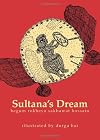
Archive.org has the textual version of this story. But if you want a different and more visual experience, you could go for the edition that has illustrations by Durga Bai, an artist from the Gond tribe of central India.
***********************
Join me on the Facebook group, Readers Forever!, for more reviews, book-related discussions and fun.
Follow me on Instagram: RoshReviews show less
The protagonist, Sultana, seems to be an upper-class Muslim lady. She wakes up in her dream to find herself in a utopian feminist society named “Ladyland”. As the name suggests, this society is dominated by women. They walk freely, they invent freely, they live freely. There are no wars with the neighbouring countries, so there’s basically peace and prosperity everywhere. The men meanwhile are declared to be “fit for nothing” and hence locked up in “mardana” (the supposed male equivalent of “zenana”) I wish there had been more about how these women got around the problem of needing men for pregnancy, but then, a short story can cover only so much. :P
Sultana’s dream is mind-blowing not just for its feminist stance but also for its scientific details. There is mention of various inventions such as solar ovens, flying cars, and cloud condensers that offer abundant clean water. The author seems to be flipping her finger at the patriarchy in science (which, unfortunately, is true even today.) Another question raised by the author that merits thinking - Must technology be created for social progress or military prowess?
Sister Sara, the leader of Ladyland and also Sultana’s tour host, seems to be providing a voice for the author’s opinions while Sultana herself represents the traditional thinking of the women of that era. Begum Rokeya seems to charge no holds barred at every dominant patriarchal social structure, including the British empire. I love her barb aimed at the Britishers: “We do not covet other people's land. We do not fight for a piece of diamond, even if it is the Kohinoor, nor do we envy others their peacock thrones. We dive deep into the ocean of knowledge and try to find the precious gems which Nature has kept in store for us.”
The story talks not just of feministic ideals but also of scientific thinking, progress on equalitarian grounds rather than patriarchal. It is satirical and witty. It stresses on pursuing “knowledge and peace rather than wealth and power”. Need I say more?
Some parts of the story haven’t aged as well, the language is quite simple, and some of the male bashing is a tad extreme from a 21st century perspective (though I must confess, I enjoyed it wholeheartedly :D ). But for a story written in 1905 to have even conceived of such futuristic elements (some of which aren’t reality even 116 years later!) and declare a revolt against patriarchy, it gets a hearty 4 stars from me.
Archive.org has the textual version of this story. But if you want a different and more visual experience, you could go for the edition that has illustrations by Durga Bai, an artist from the Gond tribe of central India.
***********************
Join me on the Facebook group, Readers Forever!, for more reviews, book-related discussions and fun.
Follow me on Instagram: RoshReviews show less
Sultana's Dream and Selections from The Secluded Ones (A Feminist Press Sourcebook) by Rokeya Sakhawat Hossain
This book, and the fact that it's title story was written over 100 years ago, put a lie to the "You've come a long way baby - the fight is over you won" rhetoric. Rokeya Sakhawat Hossain spent her life fighting the custom of purdah. Purdah is at one point broadly defined in the book as the practice of setting women aside from society either through the use of distinctive clothing - veils to burqas- to the actual physical separation of women and men in living quarters to make sure women never show more come into contact with men who are not their "sacred relations". From the introduction in 1981: "Once again, women are being used as the targets of fears and resentments generated by rapid social social change. Repressive regimes and powerful social movements in many parts of the world are once again trying to restrict the human rights of women as part of their attempts to bring to their societies the imagined stability of a mythic past."
The first part of the book is a reprint of Rokeya Sakhawat Hossain's 1905 story, Sultana's Dream, about a reverse purdah in which men are kept indoors and women interact in a scientifically advanced and peaceful world. The rest of the book is non fiction commentary on the subject of the oppression of women for political purposes masquerading as religion.
There's a brief biography of Rokeya who was a Bengali woman who became famous for writing humorous and caustic articles attacking the concept of purdah. She also founded girls' schools in Bhagalpurl and Calcutta. There are excerpts from her 1928 book The Secluded Ones ( original title Avarodhbasini) which gives personal experiences of purdah. One of the most shocking is of a woman who is falls on railroad tracks and is allowed to be run over because there are no women strong enough to move her and the men acquiesce to her maid's pleas not to assault her virtue by touching her.
The afterword is an essay, "Caging the Lion: A Fable for Our Time" by Hanna Papanek written in 1981 and pertinent now. "Many religions want to use women, once again to show that men are right-minded...There is something wrong in the world and one way to fix it is to put women 'in their place'...Purdah, for example, is by no means universal in Muslim populations, and, where it does exist, it varies widely in form and severity...Similarly, in other (Judeo-Christian) religions, ideas about abortion and contraception have varied over time...but are presented as if they have always existed in precisely their present form...Social and religious movements construct what might be called 'synthetic traditions' to embody the goals and needs of the present, clothed in ancient garb to make them more powerful."
Papanek states that the imposition of purdah waxes and wanes according to political needs. When Eastern cultures were mobilized to to reject colonial rule women were encouraged to join nationalistic movements, to appear in public in order to portray the culture as modern and able to self govern. Then once independence was achieved they were again encouraged to be humble and modest and stay in the background. (I was reminded here of the way Mormons tout the fact that Utah women had the vote before women in the rest of the country as Utah was seeking statehood.) Of particular interest is her assertion that the reason many women so willingly and completely submit to these laws is that such submission is the only access to power that they have.
Parts of this book were written from 1905 to 1981, we face the same problems now, with the same need to shine a light on the use of oppression of women as a mode of advancing or claiming political power. show less
The first part of the book is a reprint of Rokeya Sakhawat Hossain's 1905 story, Sultana's Dream, about a reverse purdah in which men are kept indoors and women interact in a scientifically advanced and peaceful world. The rest of the book is non fiction commentary on the subject of the oppression of women for political purposes masquerading as religion.
There's a brief biography of Rokeya who was a Bengali woman who became famous for writing humorous and caustic articles attacking the concept of purdah. She also founded girls' schools in Bhagalpurl and Calcutta. There are excerpts from her 1928 book The Secluded Ones ( original title Avarodhbasini) which gives personal experiences of purdah. One of the most shocking is of a woman who is falls on railroad tracks and is allowed to be run over because there are no women strong enough to move her and the men acquiesce to her maid's pleas not to assault her virtue by touching her.
The afterword is an essay, "Caging the Lion: A Fable for Our Time" by Hanna Papanek written in 1981 and pertinent now. "Many religions want to use women, once again to show that men are right-minded...There is something wrong in the world and one way to fix it is to put women 'in their place'...Purdah, for example, is by no means universal in Muslim populations, and, where it does exist, it varies widely in form and severity...Similarly, in other (Judeo-Christian) religions, ideas about abortion and contraception have varied over time...but are presented as if they have always existed in precisely their present form...Social and religious movements construct what might be called 'synthetic traditions' to embody the goals and needs of the present, clothed in ancient garb to make them more powerful."
Papanek states that the imposition of purdah waxes and wanes according to political needs. When Eastern cultures were mobilized to to reject colonial rule women were encouraged to join nationalistic movements, to appear in public in order to portray the culture as modern and able to self govern. Then once independence was achieved they were again encouraged to be humble and modest and stay in the background. (I was reminded here of the way Mormons tout the fact that Utah women had the vote before women in the rest of the country as Utah was seeking statehood.) Of particular interest is her assertion that the reason many women so willingly and completely submit to these laws is that such submission is the only access to power that they have.
Parts of this book were written from 1905 to 1981, we face the same problems now, with the same need to shine a light on the use of oppression of women as a mode of advancing or claiming political power. show less
Lists
Awards

You May Also Like


Associated Authors
Statistics
- Works
- 6
- Also by
- 10
- Members
- 317
- Popularity
- #74,564
- Rating
- 3.8
- Reviews
- 17
- ISBNs
- 19
- Languages
- 1
