
Jerry Pinto
Author of Em and the Big Hoom
About the Author
Image credit: https://en.wikipedia.org/wiki/Jerry_Pinto
Works by Jerry Pinto
Associated Works
A Very Indian Christmas: The Greatest Indian Holiday Stories of All Time (2024) — Introduction — 4 copies
Tagged
Common Knowledge
- Birthdate
- 1966
- Gender
- male
- Awards and honors
- Windham–Campbell Literature Prize (2016)
- Nationality
- India
- Associated Place (for map)
- India
Members
Reviews
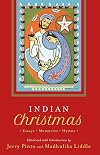
In a Nutshell: An essay collection containing various memories and accounts of Christmas celebrations in India. Writers from diverse backgrounds, stories from across the country, celebrations from varied financial and cultural strata. The essays themselves are a mixed bag, but on the whole it offers a good glimpse of that strange medley of humans known as “Indian Christians” and how they celebrate this special day.
~~~~~~~~~~~~~~~~~~~~~~~
(This will be an even longer review than usual – show more Sorry! But I have a strong personal connect with this theme, so I can’t hold back.)
As an Indian Christian, I have often been at the receiving end of befuddling reactions from friends, acquaintances, and colleagues throughout my life. Astonishment on learning that I watch Bollywood movies and know plenty of Hindi songs, shock that I am a teetotaller (“I thought all Christians drink!”), suspicion that I have “converted” to Christianity after marriage ('Coz my name ain’t a “Catholic” name!), confusion that I wear sarees and salwar-kurtas more often than I wear dresses (“Why do you go to church in Indian wear?”) From “You don't sound/look Christian” to “You don't behave like a Christian”, I have heard it all. But the one that hurt the most was one colleague announcing, “You seem more Indian than Christian!” All of this makes me wonder if anyone really knows this group of people who are called "Indian Christians." I can understand outsiders not knowing about Christians in India, but when even fellow citizens question us, it makes me feel like a misfit. An outsider. An anomaly.
That's why I HAD to get this book! Non-Indians think we aren't Christian enough, and non-Christian Indians think we aren't Indian enough. If this book could throw some light on at least a part of what Christianity in India entails, and educate people on how we are as Indian as we are Christian, it would serve its purpose.
Christians are just about 2.3% of India's population, but in a country with upwards of 1.4 billion people, the actual number turns out to be quite large: 28 million citizens. Like every other religion in India, Indian Christianity has no standardised version. There are many subsets in this category, with distinctness not just in denomination but also in the approach to faith and festivals. But one thing that is common to most of us is that we have incorporated many traditional Indian (usually but not necessarily Hindu) rituals and practices into our celebrations. As writer-editor Madhulika Liddle puts it: "This is India... a land where, instead of wholesale and mindless importing of Christmas ideas, we've been discerning. Where we bring in all our favourite (and familiar) ideas of what a celebration should be and fit them together into a fiesta all our own."
This essay collection was first published in India in 2022 under the title "Indian Christmas: Essays, Memories, Hymns". This latest edition, published in the USA in September 2024, has been slightly modified and expanded to include additional pieces by Salman Rushdie, Jhumpa Lahiri, Khushwant Singh, and Aravind Adiga. (Don’t get too excited about this: two of these four new entries are just excerpts from already-published novels.)
This collection contains twenty essays, three excerpts, two poems, and one prayer song. (The caption for the song mentions that it has been arranged for choir, but there's no clue of where to find the sheet music. I'd have loved to try that bilingual carol with my choir.) The contributors, not all of whom are authors, come from various parts of the country and from various class backgrounds (elites as well as tribals well-represented) and Christian denominations. Some of the writers are non-Catholic, with their essays demonstrating the erstwhile pluralistic attitude of the country.
Christmas in India, in general, has “considerably less glitter and a lot more joie de vivre” as compared to Christmas in the Western countries. Many of the essays contain the writers’ personal memories of Christmas. Whether celebrated in their family or not, each of them has at least a few nostalgic anecdotes about family get-togethers, community celebrations in the neighbourhood, and Christmas food, especially the scrumptious lunches and the Indo-western festive sweets. As you might guess, many of the essays made me hungry! Anupama Raju’s essay contains a yummy-sounding recipe for Pork Vindalee, which I am definitely going to try. I wish some more recipes had been included.
Did the book put me in the right mood for Christmas? Not really! Because I was already in a Christmassy mood. What this book did is to make me appreciate the beauty and diversity of my country, and of the way in which my fellow Indian Christians celebrate the birth of Jesus differently across the nation.
How effective will this book be for Westerners? In all honesty, I doubt they will perceive it the same way I did. It was easier for me to picture the components of the ‘kuswar’ such as dodol, nevrio, rose cookies, perad, and many more. I could also visualise the locations and the people without difficulty. Without this clear imagery in your mind, all you would be doing is reading some “strange”-sounding words about some “funny-sounding” locations. Most of the essays would work better for Indians, regardless of religion.
I read the US edition, with the below cover art.
This looks so lacklustre and boring that I have posted my review against the cover of the Indian edition. It is so much more desi and Christmassy! I am also unhappy with the tagline of the US edition: “The Greatest Indian Holiday Stories of All Time.” This makes the book sound like a fictional story collection, which it absolutely isn’t. And a final complaint regarding another edition-related variation: The Indian edition includes actual photographs. Why are photos missing from the US version? I hope this is only because I had the ARC, though I see no provision for the insertion of photographs.
As always, I rated every essay individually. I didn’t rate the excerpts and the poems/hymns as the former would be inaccurate and the latter, beyond my interest. Of the twenty essays, a majority rated around the midway mark, but a few really moved me. Here are my favourites with 4 stars.
show less
~~~~~~~~~~~~~~~~~~~~~~~
(This will be an even longer review than usual – show more Sorry! But I have a strong personal connect with this theme, so I can’t hold back.)
As an Indian Christian, I have often been at the receiving end of befuddling reactions from friends, acquaintances, and colleagues throughout my life. Astonishment on learning that I watch Bollywood movies and know plenty of Hindi songs, shock that I am a teetotaller (“I thought all Christians drink!”), suspicion that I have “converted” to Christianity after marriage ('Coz my name ain’t a “Catholic” name!), confusion that I wear sarees and salwar-kurtas more often than I wear dresses (“Why do you go to church in Indian wear?”) From “You don't sound/look Christian” to “You don't behave like a Christian”, I have heard it all. But the one that hurt the most was one colleague announcing, “You seem more Indian than Christian!” All of this makes me wonder if anyone really knows this group of people who are called "Indian Christians." I can understand outsiders not knowing about Christians in India, but when even fellow citizens question us, it makes me feel like a misfit. An outsider. An anomaly.
That's why I HAD to get this book! Non-Indians think we aren't Christian enough, and non-Christian Indians think we aren't Indian enough. If this book could throw some light on at least a part of what Christianity in India entails, and educate people on how we are as Indian as we are Christian, it would serve its purpose.
Christians are just about 2.3% of India's population, but in a country with upwards of 1.4 billion people, the actual number turns out to be quite large: 28 million citizens. Like every other religion in India, Indian Christianity has no standardised version. There are many subsets in this category, with distinctness not just in denomination but also in the approach to faith and festivals. But one thing that is common to most of us is that we have incorporated many traditional Indian (usually but not necessarily Hindu) rituals and practices into our celebrations. As writer-editor Madhulika Liddle puts it: "This is India... a land where, instead of wholesale and mindless importing of Christmas ideas, we've been discerning. Where we bring in all our favourite (and familiar) ideas of what a celebration should be and fit them together into a fiesta all our own."
This essay collection was first published in India in 2022 under the title "Indian Christmas: Essays, Memories, Hymns". This latest edition, published in the USA in September 2024, has been slightly modified and expanded to include additional pieces by Salman Rushdie, Jhumpa Lahiri, Khushwant Singh, and Aravind Adiga. (Don’t get too excited about this: two of these four new entries are just excerpts from already-published novels.)
This collection contains twenty essays, three excerpts, two poems, and one prayer song. (The caption for the song mentions that it has been arranged for choir, but there's no clue of where to find the sheet music. I'd have loved to try that bilingual carol with my choir.) The contributors, not all of whom are authors, come from various parts of the country and from various class backgrounds (elites as well as tribals well-represented) and Christian denominations. Some of the writers are non-Catholic, with their essays demonstrating the erstwhile pluralistic attitude of the country.
Christmas in India, in general, has “considerably less glitter and a lot more joie de vivre” as compared to Christmas in the Western countries. Many of the essays contain the writers’ personal memories of Christmas. Whether celebrated in their family or not, each of them has at least a few nostalgic anecdotes about family get-togethers, community celebrations in the neighbourhood, and Christmas food, especially the scrumptious lunches and the Indo-western festive sweets. As you might guess, many of the essays made me hungry! Anupama Raju’s essay contains a yummy-sounding recipe for Pork Vindalee, which I am definitely going to try. I wish some more recipes had been included.
Did the book put me in the right mood for Christmas? Not really! Because I was already in a Christmassy mood. What this book did is to make me appreciate the beauty and diversity of my country, and of the way in which my fellow Indian Christians celebrate the birth of Jesus differently across the nation.
How effective will this book be for Westerners? In all honesty, I doubt they will perceive it the same way I did. It was easier for me to picture the components of the ‘kuswar’ such as dodol, nevrio, rose cookies, perad, and many more. I could also visualise the locations and the people without difficulty. Without this clear imagery in your mind, all you would be doing is reading some “strange”-sounding words about some “funny-sounding” locations. Most of the essays would work better for Indians, regardless of religion.
I read the US edition, with the below cover art.
This looks so lacklustre and boring that I have posted my review against the cover of the Indian edition. It is so much more desi and Christmassy! I am also unhappy with the tagline of the US edition: “The Greatest Indian Holiday Stories of All Time.” This makes the book sound like a fictional story collection, which it absolutely isn’t. And a final complaint regarding another edition-related variation: The Indian edition includes actual photographs. Why are photos missing from the US version? I hope this is only because I had the ARC, though I see no provision for the insertion of photographs.
As always, I rated every essay individually. I didn’t rate the excerpts and the poems/hymns as the former would be inaccurate and the latter, beyond my interest. Of the twenty essays, a majority rated around the midway mark, but a few really moved me. Here are my favourites with 4 stars.
show less
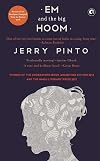
Em and The Big Hoom is a window that looks into madness and the vulnerable world of a family that hosts it without knowing what turn it might take the very next minute. It is strange how I found myself smiling at some of the dark lines that Jerry Pinto has composed. The book induces mixed emotions at many junctures. This ability to bring out the uncertainty of feelings at various levels is the winning point of Em and The Big Hoom.
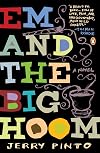
A son looks back on his life in Bombay with his larger than life mother, Em, and supportive father, affectionately known as The Big Hoom. Through Em’s letters and unreliable stories, he attempts to piece together how she met his father and fell into a lifelong cycle of manic depression.
Constantly afraid he will inherit his mother’s madness, the unnamed narrator listens carefully as Em weaves in and out of stories and styles. Em’s tales vary from hilarious, raunchy dating tips to the show more confession that her children were her undoing, with bouts of unbearable depression and regular hospitalization in between. Each member of her family becomes a carefully placed crutch in her support system, while wondering how much longer they can all hang on.
Despite its topic, Pinto keeps Em and the Big Hoom from feeling weighted or heavy, as the novel is lifted by Em’s charm and her family’s overwhelming love. Even in the darkest moments, as her words directly wound those around her, there is an understanding of the disease among her family and thought is carefully chosen over reaction. Jerry Pinto takes a subject that is often swept aside and turns it into an engaging, reflective story.
More at rivercityreading.com show less
Constantly afraid he will inherit his mother’s madness, the unnamed narrator listens carefully as Em weaves in and out of stories and styles. Em’s tales vary from hilarious, raunchy dating tips to the show more confession that her children were her undoing, with bouts of unbearable depression and regular hospitalization in between. Each member of her family becomes a carefully placed crutch in her support system, while wondering how much longer they can all hang on.
Despite its topic, Pinto keeps Em and the Big Hoom from feeling weighted or heavy, as the novel is lifted by Em’s charm and her family’s overwhelming love. Even in the darkest moments, as her words directly wound those around her, there is an understanding of the disease among her family and thought is carefully chosen over reaction. Jerry Pinto takes a subject that is often swept aside and turns it into an engaging, reflective story.
More at rivercityreading.com show less
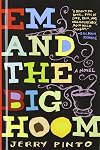
An interesting and unusual Indian novel, told from the point of view of an adult son, about a Roman Catholic Goan family set apart from other families by the manic depression of Em (Imelda) his mother. A large part of the novel focuses on Em's stories of her youth, her work as a teacher and secretary--including her ungrudging handing over of her weekly earnings to her mother, and her unusual and lengthy courtship to "the Hoom". When she's not suicidal or manic, Em is frank, opinionated, and show more ribald; Hoom, her husband, is steady, capable, and enduring.
The narrator and his sister, Susan, have grown up keenly aware that Hoom is the one who has held it all together, and fearful of the burden they would inherit were he to die. Set in Mumbai, this is a character-driven novel without much incident (apart from reminiscences). Cultural details, references, and vocabulary anchor the story in south Asia, but the exploration of this family's struggles has universal resonance.
I didn't find the work quite as hilarious and charming as the "blurbers" and, at one point, I considered abandoning it. I am glad I did not, as the conclusion of the book proved to be very satisfying. show less
The narrator and his sister, Susan, have grown up keenly aware that Hoom is the one who has held it all together, and fearful of the burden they would inherit were he to die. Set in Mumbai, this is a character-driven novel without much incident (apart from reminiscences). Cultural details, references, and vocabulary anchor the story in south Asia, but the exploration of this family's struggles has universal resonance.
I didn't find the work quite as hilarious and charming as the "blurbers" and, at one point, I considered abandoning it. I am glad I did not, as the conclusion of the book proved to be very satisfying. show less
Lists
Awards


You May Also Like


Associated Authors
Statistics
- Works
- 28
- Also by
- 3
- Members
- 470
- Popularity
- #52,370
- Rating
- 3.6
- Reviews
- 21
- ISBNs
- 43
- Languages
- 1