
Brady Udall
Author of The Lonely Polygamist
About the Author
Brady Udall, author of the highly praised "Letting Loose the Hounds", teaches at Franklin & Marshall College in Pennsylvania. (Publisher Provided) Brady Udall grew up in a large Mormon family in Arizona, where he worked on his grandfather's farm. He graduated from Brigham Young University and later show more attended the Iowa Writers' Workshop. He was formerly a faculty member of Franklin & Marshall College, then Southern Illinois University, and currently teaches writing at Boise State University, and resides in Boise. (Bowker Author Biography) show less
Image credit: Hector Udall / W.W. Norton
Works by Brady Udall
Associated Works
The Workshop: Seven Decades of the Iowa Writers Workshop - 43 Stories, Recollections, & Essays on Iowa's Place in Twentieth-Century American Literature (1999) — Contributor — 198 copies, 1 review
You Must Be This Tall to Ride: Contemporary Writers Take You Inside the Story (2009) — Contributor — 21 copies
Dialogue: A Journal of Mormon Thought - Volume 43, Number 4 (Winter 2010) (2010) — Contributor — 1 copy
Tagged
Common Knowledge
- Birthdate
- 1971-01-01
- Gender
- male
- Education
- Brigham Young University
- Occupations
- novelist
writing teacher
short story writer - Organizations
- The Church of Jesus Christ of Latter-day Saints
Boise State University - Relationships
- Udall, Stewart L. (great-uncle)
Udall, Morris K. (great-uncle) - Nationality
- USA
- Birthplace
- St. Johns, Arizona, USA
- Places of residence
- St John's, Arizona, USA
- Associated Place (for map)
- Arizona, USA
Members
Reviews
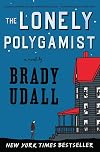
It's the title that grabbed me with this book. I've thought of polygamists as misguided (at best) and abusive to women and children at worst. But never as lonely.
Enter Golden Richards, husband to four women and father to 28 children. Golden has drifted into his life. At first, his mother was firmly in coltrol of his life; then his father and finally his first wife Beverly rules the show. Golden is lonely -- unconnected with anyone -- and has fallen in love for the first time in his life with show more a woman he meets through his out-of-state job.
But, Golden is not only person in this book who is lonely. The author uses the scene of a large, polygamist family to highlight the loneliness of Trish (wife #4) and Rusty (aged 11, one of seven children of the third wife, Rose). He provides a perspective of isolation and connectedness that is thought-provoking.
The book is very entertaining, and often funny. While most of the family members are just part of the background, the portraits of Golden, his wives and several children, notably Rusty and Faye, are well drawn. These are complex characters facing everyday problems made more difficult by their chosen lifestyle. show less
Enter Golden Richards, husband to four women and father to 28 children. Golden has drifted into his life. At first, his mother was firmly in coltrol of his life; then his father and finally his first wife Beverly rules the show. Golden is lonely -- unconnected with anyone -- and has fallen in love for the first time in his life with show more a woman he meets through his out-of-state job.
But, Golden is not only person in this book who is lonely. The author uses the scene of a large, polygamist family to highlight the loneliness of Trish (wife #4) and Rusty (aged 11, one of seven children of the third wife, Rose). He provides a perspective of isolation and connectedness that is thought-provoking.
The book is very entertaining, and often funny. While most of the family members are just part of the background, the portraits of Golden, his wives and several children, notably Rusty and Faye, are well drawn. These are complex characters facing everyday problems made more difficult by their chosen lifestyle. show less
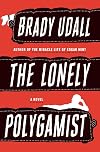
"For Golden it was hard not to think that there might be something wrong about a household in which the dog was wearing underwear and the children weren't."
Golden Richards the eponymous Lonely Polygamist is more an observer in his own life than a participant. He would rather be anywhere else than one of this three homes filled as they are with his four wives and twenty-seven children In truth, he'd rather be in Nevada where he just might be falling in love with a mysterious prostitute named show more Weela.
But despite the title of the book, the story is actually told from the point of view (third person limited) of three characters: Golden, aka the Father, aka Sasquatch; Trish, aka Mother #4; and Rusty, aka Son #5, aka “The Family Terrorist.” Each is desperately lonely in his/her own way.
Despite the frequently laugh out loud humor of everyday life (the ongoing saga of the wad of gum comes to mind) a sense of impending doom overshadows everything.
I thoroughly enjoyed this novel. Despite its length (549 pages), I finished it quickly. While I wouldn't go as far as to call it a “can't put down” novel, my interest never waned. There is a temptation to say this is a look into lifestyle most of us could never imagine, but the truth is the emotional journey each character takes is typical of many American families. There are fathers who love their children, but don't really know how to connect with them. Mothers who wonder if they made the right choices, and if it's not too late to make another decision. Pre-teen boys struggling to fit in. The setting may be unique, but the characters and their choices are hearbreakingly familiar. show less
Golden Richards the eponymous Lonely Polygamist is more an observer in his own life than a participant. He would rather be anywhere else than one of this three homes filled as they are with his four wives and twenty-seven children In truth, he'd rather be in Nevada where he just might be falling in love with a mysterious prostitute named show more Weela.
But despite the title of the book, the story is actually told from the point of view (third person limited) of three characters: Golden, aka the Father, aka Sasquatch; Trish, aka Mother #4; and Rusty, aka Son #5, aka “The Family Terrorist.” Each is desperately lonely in his/her own way.
Despite the frequently laugh out loud humor of everyday life (the ongoing saga of the wad of gum comes to mind) a sense of impending doom overshadows everything.
I thoroughly enjoyed this novel. Despite its length (549 pages), I finished it quickly. While I wouldn't go as far as to call it a “can't put down” novel, my interest never waned. There is a temptation to say this is a look into lifestyle most of us could never imagine, but the truth is the emotional journey each character takes is typical of many American families. There are fathers who love their children, but don't really know how to connect with them. Mothers who wonder if they made the right choices, and if it's not too late to make another decision. Pre-teen boys struggling to fit in. The setting may be unique, but the characters and their choices are hearbreakingly familiar. show less
 This review was written for LibraryThing Early Reviewers.
Brady Udall's name was familiar to me, but I hadn't read any of his work before The Lonely Polygamist. The story was immediately engaging, starting with Golden as a put-upon husband to four wives but quickly jumping back in time to his life as a boy. I enjoyed the shifts in time and perspective from Golden (past and present), to Trish (the fourth wife), to Rusty (one of the eleven-year-old sons)--and back around again. Other reviewers have commented that the pace is slow and that nothing show more much happens, but that's one of the things I liked most about the book. The slow pace allows the characters to develop and we as readers learn more about how complex the Richards family is. I found myself falling in love with this family, as dysfunctional as it is, and wanted to know more about the motivations of some of the characters we saw through others' eyes.
Other people have done a good job of summarizing the plot and characters. My review is more about why I enjoyed the act of reading this book. It's messy and slow, and the characters feel real and are so frustrating. If you like that kind of thing, pick this up! show less
Other people have done a good job of summarizing the plot and characters. My review is more about why I enjoyed the act of reading this book. It's messy and slow, and the characters feel real and are so frustrating. If you like that kind of thing, pick this up! show less
This review was written for LibraryThing Early Reviewers.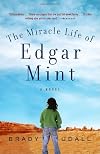
First Line: “… If I could tell you one thing about my life it would be this: when I was seven years old the mailman ran over my head”
Edgar Mint is a half Native American, half white child. His father abandoned his mother before Edgar was born. His mother, an alcoholic, deserts Edgar after his accident while he is recovering in the hospital.
Because, although grievously injured, after three months in a coma, Edgar recovers, although he is unable to write. He is sent to an Indian show more orphanage where he is ignored by the adults and abused by the other, full-blooded Indians.
He is periodically approached by the megalomaniac doctor who saved his life, and who has since been dismissed by the hospital, lost his license and become a drug dealer.
Two Mormon missionaries befriend Edgar and eventually get him placed into a Mormon foster home. Although idyllic on the surface, there are dark currents underneath.
Throughout it all, Edgar undergoes continual abuse and yet maintains his core, moral self. He believes his purpose in life is to find the mailman who ran over him and let him know that he is alive.
This is a very strange novel. I enjoyed the complexities of the quirky characters, most who have both good and bad aspects, but the Native Americans seem to tip toward the dark side. Was there a decent Indian in the entire story? The friend that Edgar cherished at the boarding school was Indian, but it calls to mind the saying from the Indian wars exterminations that “the only good Indian is a dead Indian.”
I did not read closely enough before choosing this book, and thought the author was a Native American. Instead, he is white and Mormon (which definitely informs the story). Nor did I realize that I had previously read one of Udall’s books, [The Lonely Polygamist]. show less
Edgar Mint is a half Native American, half white child. His father abandoned his mother before Edgar was born. His mother, an alcoholic, deserts Edgar after his accident while he is recovering in the hospital.
Because, although grievously injured, after three months in a coma, Edgar recovers, although he is unable to write. He is sent to an Indian show more orphanage where he is ignored by the adults and abused by the other, full-blooded Indians.
He is periodically approached by the megalomaniac doctor who saved his life, and who has since been dismissed by the hospital, lost his license and become a drug dealer.
Two Mormon missionaries befriend Edgar and eventually get him placed into a Mormon foster home. Although idyllic on the surface, there are dark currents underneath.
Throughout it all, Edgar undergoes continual abuse and yet maintains his core, moral self. He believes his purpose in life is to find the mailman who ran over him and let him know that he is alive.
This is a very strange novel. I enjoyed the complexities of the quirky characters, most who have both good and bad aspects, but the Native Americans seem to tip toward the dark side. Was there a decent Indian in the entire story? The friend that Edgar cherished at the boarding school was Indian, but it calls to mind the saying from the Indian wars exterminations that “the only good Indian is a dead Indian.”
I did not read closely enough before choosing this book, and thought the author was a Native American. Instead, he is white and Mormon (which definitely informs the story). Nor did I realize that I had previously read one of Udall’s books, [The Lonely Polygamist]. show less
Lists
Awards


You May Also Like


Associated Authors
Statistics
- Works
- 3
- Also by
- 9
- Members
- 2,843
- Popularity
- #9,025
- Rating
- 3.8
- Reviews
- 165
- ISBNs
- 74
- Languages
- 8
- Favorited
- 8
