
Lawrence Sutin
Author of Divine Invasions: A Life of Philip K. Dick
About the Author
Lawrence Sutin teaches in the MFA program at Hamline University in St. Paul, Minnesota.
Image credit: Photo by Erik Saulitis
Works by Lawrence Sutin
Associated Works
The Shifting Realities of Philip K. Dick: Selected Literary and Philosophical Writings (1995) — Editor — 738 copies, 5 reviews
Lost Classics: Writers on Books Loved and Lost, Overlooked, Under-read, Unavailable, Stolen, Extinct, or Otherwise Out of Commission (2000) — Contributor — 317 copies, 6 reviews
Tagged
Common Knowledge
- Birthdate
- 1951-10-12
- Gender
- male
- Education
- University of Michigan
Harvard University - Occupations
- author
- Relationships
- Sutin, Jack (father)
- Nationality
- USA
- Birthplace
- St Paul, Minnesota, USA
- Associated Place (for map)
- Minnesota, USA
Members
Reviews
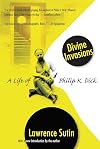
DIVINE INVASIONS is a readable, revealing biography of the 20th-century sci-fi titan into whose mind we all most wish we could climb. Philip K. Dick’s brilliance is never in doubt, even as author Lawrence Sutin guides us through the labyrinthine emotional upheavals and relationships of his life. And boy, are they fraught, particularly when it comes to women. From his love/hate vacillations with his mother to a slew of girlfriends to all five of his wives, PKD’s life reads at times like a show more hormone-filled, drug-addled teen drama. Sutin is clearly a superfan, but he presents his subject’s literary prowess and social prescience in counterpoint to a painful lifelong search for emotional wholeness. His approach feels both balanced and intimate, but isn’t afraid of a little humor now and then.
Tessa B. Dick, PKD’s fifth wife, has criticized Sutin on Amazon for giving the impression that he interviewed her for this book. But Sutin documents his sources in copious endnotes, also making clear in the text when something she says comes from a letter to him or when it comes from her writings, so careful readers shouldn’t be confused. Sutin drew on a vast number of sources throughout, including (but not limited to) extensive interviews with the people who lived and worked most closely with PKD.
Although, as a biography, DIVINE INVASIONS rightfully focuses on life events, Sutin also delves deeply into a number of PKD’s most important works, including VALIS, THE MAN IN THE HIGH CASTLE, UBIK, and FLOW MY TEARS, THE POLICEMAN SAID, and also the lengthy EXEGESIS of his final years. For everything else, Sutin provides a comprehensive bibliography of publications and lost works, including synopses and ratings. Despite its wealth of detail, this biography is quick to devour and provides a welcome insight into the man and his prolific output. show less
Tessa B. Dick, PKD’s fifth wife, has criticized Sutin on Amazon for giving the impression that he interviewed her for this book. But Sutin documents his sources in copious endnotes, also making clear in the text when something she says comes from a letter to him or when it comes from her writings, so careful readers shouldn’t be confused. Sutin drew on a vast number of sources throughout, including (but not limited to) extensive interviews with the people who lived and worked most closely with PKD.
Although, as a biography, DIVINE INVASIONS rightfully focuses on life events, Sutin also delves deeply into a number of PKD’s most important works, including VALIS, THE MAN IN THE HIGH CASTLE, UBIK, and FLOW MY TEARS, THE POLICEMAN SAID, and also the lengthy EXEGESIS of his final years. For everything else, Sutin provides a comprehensive bibliography of publications and lost works, including synopses and ratings. Despite its wealth of detail, this biography is quick to devour and provides a welcome insight into the man and his prolific output. show less
I don't read literary biographies that often. In fact, I'm hard pressed to remember the name of a single one I've read. Part of the reason is I really hate the author-worship that surrounds so much of literature these days. The writer becomes so big, I can't help but think of them even when I'm reading their stuff. This is largely why I've never read David Foster Wallace, and likely never will.
But Philip K. Dick is different and I'm willing to make an exception here. Oh, I'll make other show more exceptions if a biography looks interesting, because I enjoy reading about interesting lives. Dick's life was interesting, but in such a strange way. Yeah, he was married five times, but he didn't really do anything. Didn't go to college (for long), didn't really have a job besides writing (he had one in a record store, for a few years out of high school). Didn't do much of anything, except write science fiction.
Of course, as with any figure who is famous enough for anecdotes to be told about and create a kind of mythos around, this book served to dispel a number of rumors. Dick's drug use wasn't really that unusual for the times, and the speed he took was prescribed for him for legitimate reasons. Most of all, however, he wasn't crazy. Well, not entirely, and not in any serious way. He was odd, but he was charming, he had friends, and was generally well-liked.
So what makes him so interesting, and this book so good? Well, I was interested for one. And Dick struggled with the same kinds of hardships that I've struggled with-- nothing too terrible (mostly), but enough to create some baggage. His relationship with his parents wasn't very good, though that was likely his fault more than anything. His twin sister died in infancy, and while I'm skeptical about the idea that this psychically scars surviving twins, the way his mother handled telling young Phil certainly would have left scars.
What really interested me, and what I could relate to, is the auto-didacticism of Dick, and his interest in the nature of things. What is real? What is human? What is god? He asks, and explores, these questions repeatedly not only in his books, but in his conversations with friends and his ongoing "exegesis" that served as a thousand-page inner dialog. Phil was a seeker, in a way that I never really was, but the curiosity and imagination that drove his seeking seemingly had no limits, to the point that it made him seem, and wonder if he was, crazy. I sometimes feel the same. Minus the imagination. show less
But Philip K. Dick is different and I'm willing to make an exception here. Oh, I'll make other show more exceptions if a biography looks interesting, because I enjoy reading about interesting lives. Dick's life was interesting, but in such a strange way. Yeah, he was married five times, but he didn't really do anything. Didn't go to college (for long), didn't really have a job besides writing (he had one in a record store, for a few years out of high school). Didn't do much of anything, except write science fiction.
Of course, as with any figure who is famous enough for anecdotes to be told about and create a kind of mythos around, this book served to dispel a number of rumors. Dick's drug use wasn't really that unusual for the times, and the speed he took was prescribed for him for legitimate reasons. Most of all, however, he wasn't crazy. Well, not entirely, and not in any serious way. He was odd, but he was charming, he had friends, and was generally well-liked.
So what makes him so interesting, and this book so good? Well, I was interested for one. And Dick struggled with the same kinds of hardships that I've struggled with-- nothing too terrible (mostly), but enough to create some baggage. His relationship with his parents wasn't very good, though that was likely his fault more than anything. His twin sister died in infancy, and while I'm skeptical about the idea that this psychically scars surviving twins, the way his mother handled telling young Phil certainly would have left scars.
What really interested me, and what I could relate to, is the auto-didacticism of Dick, and his interest in the nature of things. What is real? What is human? What is god? He asks, and explores, these questions repeatedly not only in his books, but in his conversations with friends and his ongoing "exegesis" that served as a thousand-page inner dialog. Phil was a seeker, in a way that I never really was, but the curiosity and imagination that drove his seeking seemingly had no limits, to the point that it made him seem, and wonder if he was, crazy. I sometimes feel the same. Minus the imagination. show less
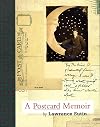
I loved this book for a couple reasons. First of all, Lawrence Sutin is a great writer - one of those guys that probably very few have ever heard of outside his home turf, which is primarily the twin cities. But the guy's been around, worked various jobs, got educated and read some of the great thinkers and thinks a few pretty deep thoughts of his own as he ponders things like reincarnation, the Dalai Lama, and the unexplainable mysteries of life. But I probably enjoyed most the short show more vignettes about his youth and young manhood wherein he speaks of baseball, dogs, friendships and the like. Best of all perhaps are his sometimes mirth-making meditations on fatherhood and step-fathering which he came to at a relatively late stage, in his thirties. For example, on his relationship with his two young stepdaughters he comments, "In matters of parenting, I try to imitate their mother. They've come to listen to me a little. I fart a lot and they think that's funny." Not quite what you'd expect from a guy who, not too many pages before, talked of "reading Evans-Wentz's translation from the Tibetan of the LIFE OF MILAREPA, the ascetic poet, illumined one of the Himalayas." So of course I laughed out loud. Because most guys never quite outgrow laughing at farts, perhaps not even the "illumined one."
And of course there are all these odd, cool old picture postcards on nearly every other page of the book, artifacts that acted as catalysts to Sutin's memories. Sutin confesses to being a compulsive collector of these cards.
The other reason I absolutely loved this book was for its physical beauty. Yeah, I'm a booklover, and books like this one make me nearly weak in the knees, with it's heavy glossy pages and its French fold cover, all beautifully designed by Jeanne Lee. While A POSTCARD MEMOIR is technically, I suppose, a paperback, it has all of the beauty and appeal of a very expensive coffee table book. I loved holding this book, feeling its weight and perfect smoothness. It was a tactile, voluptuous adventure for a true booklover like me. It's also a perfect example of why the whole idea of e-books makes me sad. Bookmaking can be an art, and A POSTCARD MEMOIR is a perfect example of that art. I loved Mr. Sutin's sly, funny wise memoir. But, nearly as much, I loved the way Graywolf Press put it all together. Bravo! show less
And of course there are all these odd, cool old picture postcards on nearly every other page of the book, artifacts that acted as catalysts to Sutin's memories. Sutin confesses to being a compulsive collector of these cards.
The other reason I absolutely loved this book was for its physical beauty. Yeah, I'm a booklover, and books like this one make me nearly weak in the knees, with it's heavy glossy pages and its French fold cover, all beautifully designed by Jeanne Lee. While A POSTCARD MEMOIR is technically, I suppose, a paperback, it has all of the beauty and appeal of a very expensive coffee table book. I loved holding this book, feeling its weight and perfect smoothness. It was a tactile, voluptuous adventure for a true booklover like me. It's also a perfect example of why the whole idea of e-books makes me sad. Bookmaking can be an art, and A POSTCARD MEMOIR is a perfect example of that art. I loved Mr. Sutin's sly, funny wise memoir. But, nearly as much, I loved the way Graywolf Press put it all together. Bravo! show less
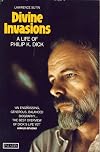
Philip K Dick was/is a difficult subject for a biography. In addition to being a writer within the science fiction genre, he believed that he had been contacted by God, or at the very least, some superior intelligence that had the solutions to man's plight. Lawrence Sutin reports this in a factual way and leaves the reader to decide as to whether Dick was some kind of John the Baptist, proclaiming a new coming, or in need of mental health treatment. This seems to have been a concern to Dick, show more as well as Sutin.
Whatever the truth of the matter (and yes, I think I know which too) Philip K Dick had an interesting life and produced some of the finest books of the science fiction oeuvre. Dick's books tend not to concentrate upon the technology of the future so much as the interactions of an advanced society and so, his personal history are an interesting insight into his working. It is not imperative to read this book to enjoy Dick's fiction, but it certainly enhances the experience. show less
Whatever the truth of the matter (and yes, I think I know which too) Philip K Dick had an interesting life and produced some of the finest books of the science fiction oeuvre. Dick's books tend not to concentrate upon the technology of the future so much as the interactions of an advanced society and so, his personal history are an interesting insight into his working. It is not imperative to read this book to enjoy Dick's fiction, but it certainly enhances the experience. show less
Lists
Awards


You May Also Like


Associated Authors
Statistics
- Works
- 7
- Also by
- 3
- Members
- 1,342
- Popularity
- #19,172
- Rating
- 3.8
- Reviews
- 22
- ISBNs
- 33
- Languages
- 5