
David Edgerton (1) (1959–)
Author of The Shock of the Old: Technology and Global History since 1900
For other authors named David Edgerton, see the disambiguation page.
About the Author
David Edgerton is Hans Rausing Professor at the Centre for the History of Science, Technology and Medicine at the Imperial College London
Works by David Edgerton
The Shock of the Old: Technology and Global History since 1900 (2007) — Author — 392 copies, 11 reviews
Britain's War Machine: Weapons, Resources and Experts in the Second World War (2011) 178 copies, 5 reviews
Associated Works
Tagged
Common Knowledge
- Birthdate
- 1959-04-16
- Gender
- male
- Education
- University of Oxford (St John's College)
Imperial College London - Occupations
- historian
professor - Organizations
- University of London (King's College)
Imperial College London
University of Manchester - Nationality
- UK
- Associated Place (for map)
- UK
Members
Reviews
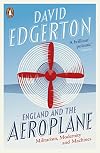
This 1991 well argued polemic has been reissued by Penguin, perhaps to set the context for Edgerton's latest book 'Britain's War Machine' but with two useful additions - a new introduction and a superbly informative historiography bringing the story right up to date.
Despite his own 2012 caveats, this book is well worth reading and Edgerton's calling it a 'polemic' does it a disservice - it is solid and well argued history. Perhaps his use of the term simply gave him space to be a bit more show more assertive early in his career.
The book is set in the context of a historical debate about 'decline' that has been the standard psychological currency for anyone educated before the mid-1990s - whether from the Right or the Left. This means policy-makers who are now over 40 and who do not 'keep up with things'.
Edgerton's politics are not worn on his sleeve but one guesses he is an industrial progressive that would have felt at home (as, with caveats, this reviewer would) in the old Labour Party before it got turned into a liberal internationalist simulacrum of the Left. Perhaps not.
Edgerton's thesis is very important. He is saying - as De Jouvenal might have done from a Republican Right tradition - that the UK as advanced liberal democracy was not a welfare state at heart but a warfare state with an ideology of liberal internationalism at its core.
Far from the UK being the first industrial nation in decline, he presents it as technocratic and modernising with immense reserves of organisational and state-directed power that out-competed all its competitors, bar, in the end, the 'American colossus'.
This is dealt with in greater detail in relation to the Second World War in his latest book which we hope to review later in the year but the point he is making is important for a reason he does not give - how our perceptions are formed by group consensus rather than the facts.
This lays us open to confusion but also to manipulation. He describes, through the medium of aviation history, how early aviation strategies were strongly lnked to the political imperial Right - as readers of Nevile Shute's novels will quickly recognise.
Although this might often shift under pressure into pro-fascist and anti-democratic tendences (there is a hint of aviation industry links to those Hess expected to meet on his ill-fated trip), the best description is of it being a liberal-democratic internationalism.
This liberal internationalism is not as lovely and cuddly it seems. This reviewer sees considerable continuities between the maintenance of empire over subject peoples, the brutality of air power strategies and the trajectory that would put the Trident-loving Blair into power.
The history of aviation is only one facet of British political history but, taken as the history of air power, it is a definer of foreign policy imperatives alongside the search for oil. Its neglect until Edgerton synthesised the work of many others has made us ignorant.
We are (as British) profoundly ignorant of the nature of our State which has learned a certain rhetoric of freedom, rights and democracy but is still the creature of the few and of its own urgent desire to survive at all costs - and I mean, at all costs.
We have reviewed some of the issues arising from this in relation to the Cold War at https://www.goodreads.com/review/show/691085842 [Peter Hennessy's 'The Secret State: Whitehall and the Cold War'] but Edgerton's book supplies us with more evidence for the prosecution.
There is so much meat in this short book about the interplay of the technology of aviation with economics, culture and politics that we should not lose contact with Edgerton's primary thesis - that the UK did not decline, it appeared to decline only because others rose.
Apart from the massive mobilisation of an empire in order to participate in a struggle to the death at mid-century, the continued mobilisation of resources directed at subsidising the military aviation (and then missiles) sector was remarkable.
The scale of the military-industrial state constructed out of the 'reforms' of 1916 (equivalent to the allegedly progressive quasi-fascism of Woodrow Wilson and the real thing produced by Mussolini) and through the Cold War saw only one serious attempted check.
Whereas Eisenhower and Reagan brilliantly used military-industrial expenditure to develop the civilian infrastructure of the US - industrialisation of the West, road systems, civil aviation, satellite technology and the internet - the traditional elite in the UK did not.
There was a moment when elite insiders (Harold Wilson and Tony Benn) made a material effort to shift expenditures from the production of nonsensical attempts to keep ahead of a military game that could not be won into civil applications but the project fell apart on politics.
The experience appears to have radicalised Tony Benn into becoming an easily discreditable target of that same elite, while Wilson developed a partially justifiable paranoia about the right's determination to destroy him.
Even in the 1990s when I was involved in Labour Party politics, the military-industrial nationalist Labour Right plotted in my hearing to restore Trident to the top of the agenda and Amicus played a critical role in putting the Brown-Blair 'team' into power.
Much of the argument was around industrial decline, maintaining skills and full employment but what it was really all about was the military-industrial interests in the State ensuring that it would be 'business as usual' as Communism collapsed.
As the Left collapsed into a ridiculous sub-Marxism that gave cause for the Right to appeal direct to the people, New Labour eventually emerged as the synthetic merger of State resistance to fundamental change and the 'useful idiocy' of ambitious former Marxists on the make.
A similar failure took place in the Soviet Union where attempts to turn war expenditure into civilian expenditure crumbled on vested interests and sclerosis until the internal contradictions of bureaucratic paranoia resulted in the collapse of Russia into populist nationalism.
Russian populist nationalism is merely the Russian version of the British solution - the power of the State allied to a rhetoric that seduces an ill-educated population whose politics are those of slogans, prejudices and hand-me-down analyses endorsed by the media.
Edgerton does not deal with any of this grand theory but he does provide another fruitful source of data on the true nature of the state and the degree to which all is not what it appears to be in quasi-democratic states - like the UK and Russia.
His work starts to strip away our myths without in the least being 'ideological' or anything other than descriptive. The facts simply speak for themselves - the class basis within the RAF, the cruel calculations behind the use of air power, the interconnections.
If the book has a message for me, it may not be one intended by Edgerton. I am sold on the idea that the UK was not subject to decline in the twentieth century or indeed in the twenty first century. The Labour Party may indeed be electorally stuffed by robust recovery.
I am also sold on the idea that an advanced technology like aviation is transformative of political and economic structures and, another Edgerton proposal, that technological progress and modernity are very much at home, possibly more at home, on the Right than on the Left.
No, the lessons for me are several. First that the British ruling elite, as a closed-in caste that ably incorporate threats and assimilates them like an amoeba ingests food, is as powerful as it has ever been but has never been truly competent in its decision-making.
Second, that the public remains a prey to the elite's command of the terms of debate about important political issues under conditions where its 'Left' and 'Right' are merely struggling to rise to the head of something that exacts its own high price for the welfare it offers.
Third, that Right and Left are meaningless because both have been captured by the State and can only become meaningful when the Right means Republican Virtue (in the manner of De Jouvenel) and the Left means the Commonweal (in the manner of the English revolutionaries).
We have a very old story here - the struggle between Crown and People which the Crown won in 1660. It has brilliantly adapted its form to exist at the expense of the people - even today.
This book is, above all, a study of the relationship between a new and advanced technology (aviation) and its adaptation to the interests of the state and its eventual reformulation as a doctrine of mass murder in the mass bombing campaigns of the 1930s and 1940s.
It is this aspect of tolerance for mass murder as instrument of policy that took the 'regimes' of 1916 (Woodrow Wilson and Lloyd George) from the more efficient use of conscripted labour to sustain the machine in the direction of two further dark ends.
The first dark end was preparedness to slaughter civilians overseas to avoid slaughtering young men at home, forgetting that the capability was mutual - and the second (see our Hennessy review) was acceptance that the nation itself could be obliterated to save the 'Crown'.
None of this was spoken of. None of this was analysed. Everything was accepted as most Germans accepted radical nationalism in the 1930s and most Russians accepted Marxism-Leninism in the 1970s. But it was no less totalitarian - simply the totalitarianism of consensual ignorance.
History may show that the conquest of the air was one of our darkest moments - darker in actual lives lost than the discovery of nuclear power (so far). This has to raise questions about a more recent invention, the internet.
Aviation was 'invented' by two brothers who had an eye to military applications from the very beginning. The internet was created by a military-industrial complex under a democratic system that saw civilian applications as a reasonable pay off for taxation.
Aviation gave us globalisation but it also gave us Dresden. The internet is currently seen as giving us 'empowerment' but also 'child porn'. 'Child porn' is the excuse for controlling action much as 'insurgency' was an excuse to drop bombs under the British Empire.
The complexities suggest a 'game' in which the State will want to command and use this tool - as Edward Snowden has apparently exposed - while getting the economic benefits for the population that supplies it with the taxes to dole out death and welfare to taste.
The question arising from the history of aviation is this - have we, the people, actually analysed correctly what is going on here and who is actually benefiting or are we taking on a narrative written by special interests for special interests?
Above all, the myth of 'decline' owed a great deal to liberal intellectuals with minimal experience of the world asserting truths without evidence because it felt right. Has much changed? A daily read of the nonsense in the Guardian's 'Comment is Free' would suggest not.
How much of the current story of the internet and its purpose and use as well as its relationship to freedom and power is truly understood by these commentators. And, if they do not understand the crude nature of power and history, why are we listening to them? show less
Despite his own 2012 caveats, this book is well worth reading and Edgerton's calling it a 'polemic' does it a disservice - it is solid and well argued history. Perhaps his use of the term simply gave him space to be a bit more show more assertive early in his career.
The book is set in the context of a historical debate about 'decline' that has been the standard psychological currency for anyone educated before the mid-1990s - whether from the Right or the Left. This means policy-makers who are now over 40 and who do not 'keep up with things'.
Edgerton's politics are not worn on his sleeve but one guesses he is an industrial progressive that would have felt at home (as, with caveats, this reviewer would) in the old Labour Party before it got turned into a liberal internationalist simulacrum of the Left. Perhaps not.
Edgerton's thesis is very important. He is saying - as De Jouvenal might have done from a Republican Right tradition - that the UK as advanced liberal democracy was not a welfare state at heart but a warfare state with an ideology of liberal internationalism at its core.
Far from the UK being the first industrial nation in decline, he presents it as technocratic and modernising with immense reserves of organisational and state-directed power that out-competed all its competitors, bar, in the end, the 'American colossus'.
This is dealt with in greater detail in relation to the Second World War in his latest book which we hope to review later in the year but the point he is making is important for a reason he does not give - how our perceptions are formed by group consensus rather than the facts.
This lays us open to confusion but also to manipulation. He describes, through the medium of aviation history, how early aviation strategies were strongly lnked to the political imperial Right - as readers of Nevile Shute's novels will quickly recognise.
Although this might often shift under pressure into pro-fascist and anti-democratic tendences (there is a hint of aviation industry links to those Hess expected to meet on his ill-fated trip), the best description is of it being a liberal-democratic internationalism.
This liberal internationalism is not as lovely and cuddly it seems. This reviewer sees considerable continuities between the maintenance of empire over subject peoples, the brutality of air power strategies and the trajectory that would put the Trident-loving Blair into power.
The history of aviation is only one facet of British political history but, taken as the history of air power, it is a definer of foreign policy imperatives alongside the search for oil. Its neglect until Edgerton synthesised the work of many others has made us ignorant.
We are (as British) profoundly ignorant of the nature of our State which has learned a certain rhetoric of freedom, rights and democracy but is still the creature of the few and of its own urgent desire to survive at all costs - and I mean, at all costs.
We have reviewed some of the issues arising from this in relation to the Cold War at https://www.goodreads.com/review/show/691085842 [Peter Hennessy's 'The Secret State: Whitehall and the Cold War'] but Edgerton's book supplies us with more evidence for the prosecution.
There is so much meat in this short book about the interplay of the technology of aviation with economics, culture and politics that we should not lose contact with Edgerton's primary thesis - that the UK did not decline, it appeared to decline only because others rose.
Apart from the massive mobilisation of an empire in order to participate in a struggle to the death at mid-century, the continued mobilisation of resources directed at subsidising the military aviation (and then missiles) sector was remarkable.
The scale of the military-industrial state constructed out of the 'reforms' of 1916 (equivalent to the allegedly progressive quasi-fascism of Woodrow Wilson and the real thing produced by Mussolini) and through the Cold War saw only one serious attempted check.
Whereas Eisenhower and Reagan brilliantly used military-industrial expenditure to develop the civilian infrastructure of the US - industrialisation of the West, road systems, civil aviation, satellite technology and the internet - the traditional elite in the UK did not.
There was a moment when elite insiders (Harold Wilson and Tony Benn) made a material effort to shift expenditures from the production of nonsensical attempts to keep ahead of a military game that could not be won into civil applications but the project fell apart on politics.
The experience appears to have radicalised Tony Benn into becoming an easily discreditable target of that same elite, while Wilson developed a partially justifiable paranoia about the right's determination to destroy him.
Even in the 1990s when I was involved in Labour Party politics, the military-industrial nationalist Labour Right plotted in my hearing to restore Trident to the top of the agenda and Amicus played a critical role in putting the Brown-Blair 'team' into power.
Much of the argument was around industrial decline, maintaining skills and full employment but what it was really all about was the military-industrial interests in the State ensuring that it would be 'business as usual' as Communism collapsed.
As the Left collapsed into a ridiculous sub-Marxism that gave cause for the Right to appeal direct to the people, New Labour eventually emerged as the synthetic merger of State resistance to fundamental change and the 'useful idiocy' of ambitious former Marxists on the make.
A similar failure took place in the Soviet Union where attempts to turn war expenditure into civilian expenditure crumbled on vested interests and sclerosis until the internal contradictions of bureaucratic paranoia resulted in the collapse of Russia into populist nationalism.
Russian populist nationalism is merely the Russian version of the British solution - the power of the State allied to a rhetoric that seduces an ill-educated population whose politics are those of slogans, prejudices and hand-me-down analyses endorsed by the media.
Edgerton does not deal with any of this grand theory but he does provide another fruitful source of data on the true nature of the state and the degree to which all is not what it appears to be in quasi-democratic states - like the UK and Russia.
His work starts to strip away our myths without in the least being 'ideological' or anything other than descriptive. The facts simply speak for themselves - the class basis within the RAF, the cruel calculations behind the use of air power, the interconnections.
If the book has a message for me, it may not be one intended by Edgerton. I am sold on the idea that the UK was not subject to decline in the twentieth century or indeed in the twenty first century. The Labour Party may indeed be electorally stuffed by robust recovery.
I am also sold on the idea that an advanced technology like aviation is transformative of political and economic structures and, another Edgerton proposal, that technological progress and modernity are very much at home, possibly more at home, on the Right than on the Left.
No, the lessons for me are several. First that the British ruling elite, as a closed-in caste that ably incorporate threats and assimilates them like an amoeba ingests food, is as powerful as it has ever been but has never been truly competent in its decision-making.
Second, that the public remains a prey to the elite's command of the terms of debate about important political issues under conditions where its 'Left' and 'Right' are merely struggling to rise to the head of something that exacts its own high price for the welfare it offers.
Third, that Right and Left are meaningless because both have been captured by the State and can only become meaningful when the Right means Republican Virtue (in the manner of De Jouvenel) and the Left means the Commonweal (in the manner of the English revolutionaries).
We have a very old story here - the struggle between Crown and People which the Crown won in 1660. It has brilliantly adapted its form to exist at the expense of the people - even today.
This book is, above all, a study of the relationship between a new and advanced technology (aviation) and its adaptation to the interests of the state and its eventual reformulation as a doctrine of mass murder in the mass bombing campaigns of the 1930s and 1940s.
It is this aspect of tolerance for mass murder as instrument of policy that took the 'regimes' of 1916 (Woodrow Wilson and Lloyd George) from the more efficient use of conscripted labour to sustain the machine in the direction of two further dark ends.
The first dark end was preparedness to slaughter civilians overseas to avoid slaughtering young men at home, forgetting that the capability was mutual - and the second (see our Hennessy review) was acceptance that the nation itself could be obliterated to save the 'Crown'.
None of this was spoken of. None of this was analysed. Everything was accepted as most Germans accepted radical nationalism in the 1930s and most Russians accepted Marxism-Leninism in the 1970s. But it was no less totalitarian - simply the totalitarianism of consensual ignorance.
History may show that the conquest of the air was one of our darkest moments - darker in actual lives lost than the discovery of nuclear power (so far). This has to raise questions about a more recent invention, the internet.
Aviation was 'invented' by two brothers who had an eye to military applications from the very beginning. The internet was created by a military-industrial complex under a democratic system that saw civilian applications as a reasonable pay off for taxation.
Aviation gave us globalisation but it also gave us Dresden. The internet is currently seen as giving us 'empowerment' but also 'child porn'. 'Child porn' is the excuse for controlling action much as 'insurgency' was an excuse to drop bombs under the British Empire.
The complexities suggest a 'game' in which the State will want to command and use this tool - as Edward Snowden has apparently exposed - while getting the economic benefits for the population that supplies it with the taxes to dole out death and welfare to taste.
The question arising from the history of aviation is this - have we, the people, actually analysed correctly what is going on here and who is actually benefiting or are we taking on a narrative written by special interests for special interests?
Above all, the myth of 'decline' owed a great deal to liberal intellectuals with minimal experience of the world asserting truths without evidence because it felt right. Has much changed? A daily read of the nonsense in the Guardian's 'Comment is Free' would suggest not.
How much of the current story of the internet and its purpose and use as well as its relationship to freedom and power is truly understood by these commentators. And, if they do not understand the crude nature of power and history, why are we listening to them? show less

Having read several of Edgerton's previous works, he's again on a mission to critique the "two-cultures" split in British academia in regards to disregarding scientific achievement unless associated with "pure" science, this time around challenging the lingering image of "Little England" gamely surviving in the face of Hitlerian might, as opposed to being a great power with great resources fighting an equal. This is fine so far as it goes, but apart from inadvertently demonstrating that show more British popular commitment to empire as a concept was not "all that," at least by World War II, I think I've finally figured out what Edgerton's blind spot as a historian of technology is.
Early in the book Edgerton extols the superior mechanization of the alliance against Germany in 1940, as a marker of the sophistication of the Imperial Technical-Economic complex. However, what he seems to miss is that those raw numbers of tanks, artillery and motor vehicles masked the lack of operational effectiveness in the British and (more so) the French armed forces due to inadequate concepts of operational art. Even if Edgerton wants to fume about the misguided extolling of the capacities of Nazi Germany, there are reasons why this myth came to exist.
So, while there is much of value to consider here, I have to consider Edgerton's own "Warfare State" to be a better book, besides being a better outline of the man's thinking (which is a useful corrective to much "declinist" analysis regarding modern British history). show less
Early in the book Edgerton extols the superior mechanization of the alliance against Germany in 1940, as a marker of the sophistication of the Imperial Technical-Economic complex. However, what he seems to miss is that those raw numbers of tanks, artillery and motor vehicles masked the lack of operational effectiveness in the British and (more so) the French armed forces due to inadequate concepts of operational art. Even if Edgerton wants to fume about the misguided extolling of the capacities of Nazi Germany, there are reasons why this myth came to exist.
So, while there is much of value to consider here, I have to consider Edgerton's own "Warfare State" to be a better book, besides being a better outline of the man's thinking (which is a useful corrective to much "declinist" analysis regarding modern British history). show less
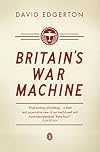
David Edgerton's book turns popular myths about Britain in the Second World War upside down and inside out. But a word of warning first.
He is making a point about history and not giving us a narrative so it would help if you already had some understanding of the course of the second world war and its past historiography.
There are times when the author revels in his piling up of data to prove his points - which are very many - so that some chapters require a fair amount of concentration of show more effort to understand fully.
But I do not want to put you off the book because it is informative, sometimes downright exciting as it shifts mental models and well illustrated with tables, maps and extensive notes.
Where to begin? I was persuaded by the sheer logic of the book that much of what I thought was true was not true ... it has even changed my view of contemporary political priorities.
He is persuasive that the British Empire was never not going to win the Second World War (with perhaps my own caveat that a lucky invasion and a bunch of quislings might have made it a very different Empire).
The scale of the trading and financial muscle of the Empire with its Dominions (four of the five 'Big Eyes' of global surveillance today) meant that what became the United Nations would conquer in the end.
By the end of the book, one might even feel sorry for Germany if it were not for the vile nature of its regime, blockaded, led by a blockhead, self-murderously running itself into the ground.
There is, of course, the story here of how the US displaced the Empire as hegemonic Western power but Edgerton is persuasive that this was not Britain declining but the US making use of spare capacity.
The difference between the two powers in 1939 was that the UK was an efficient global trading operation (which it still is) and the US had still not found a way to mop up the mass unemployed of 1929.
War permitted that massive surplus capacity to be employed. There is a fascinating transfer of capability from the UK to the US where it becomes clear that the US is simply more effective at utilising assets.
This is one of the points that come out of the book - Britain was so prosperous that it was monstrously wasteful. War is wasteful, of course, but the level of waste here was something else.
What was happening was that Churchill and his cronies exemplified a peculiar form of Liberal Militarism (still operative today) that created what amounted to a warfare state.
But the liberal part of that apparent oxymoron included an evident reluctance or perhaps political inability to expend human life with the gay abandon of the Central and East Europeans.
Edgerton has written elsewhere on this idea of a Liberal Militarist warfare state beyond categories of Right and Left (perhaps more to the Right) that saw total victory arising out of machines.
What this meant was that the right application of technology to wielding death on your opponents would permit the minimum death to your own side and the minimum disruption of the good life at home.
He makes clear that it was rather a 'good war' for Britons compared to what was experienced on the Continent. Not for some individuals or families perhaps but undoubtedly for many young workers.
In general, people were well nourished and the bombing campaigns were isolated to a relatively short period and area. When they came, they were horrific but most people most of the time were secure.
But it was no welfare state - the poor, the young, the old and the vulnerable were shunted aside to ensure that war workers and the military had the best of what was going.
Similarly, the death rates for troops were far less than the bloody milling going on from the suburbs of Moscow to Berlin. Bomber crews and merchant navy men were the worst affected with significant losses.
And that in itself tells you something - one set of men were expended to wreak greater death largely on civilians and the other lost their lives ensuring their fellows were well nourished and armed.
The US was to bring to a higher level this Anglo-Saxon belief in technology - the atom bomb and B-52 - as assurance against sending voters' kids too lightly to their deaths.
This attitude is very much part of what it is to be a modern liberal in the age of democracy and it empowered the State to allocate vast sums to armament and social control for decades to come.
Not that any liberal has ever hesitated to send another father's son to their death if it was 'the right thing to do' but only that it was deemed better to have your enemy and his mother killed remotely.
If the British Empire was never going to be defeated (and the German regime is now reliably seen as economically flawed at its very core), this was because it was never alone.
The Empire was not just a formal empire but an informal network of global relationships. Much of the world was dependent on patterns of trade and finance set by London and London dictated its terms.
The UK was quite capable of shifting its supply around from a blockaded Europe to the rest of the world in a way impossible to Hitler as much as Napoleon and to do so very quickly.
European dictators have to grab territory - drive desperately for oil fields or wheat lands - whereas the great Anglo-Saxon empires have simply sent a ship, theirs or one purchased with their geld.
Europeans within the blockade and third world suppliers of single crops that were no longer a priority suffered terribly. The Bengal Famine of 1942 was the fruit of a callous shift of shipping priorities.
The Empire treated much of the world as private property required to maintain the homeland and war then became a means of creating a strong national state that could disregard the interests of its partners.
Edgerton is persuasive that the war represents a transition not only from British to American global dominance but also from an imperial mind-set to a nationalist mind-set.
But Britain was 'never alone' - the rhetoric was nonsense and should be seen to be nonsense. The British were just the self-regarding beneficiaries of their own past piracies.
In the end, the myths were necessary to create a certain spirit or morale, helped by the fact that the Nazis really were rather vile. Perhaps we did not do bad things simply because we did not need to.
But we did. This brings us to the peculiarly Anglo-Saxon contribution to the long litany of man's inhumanity to man - the strategic bombing campaign where the British made a fetish out of area bombing.
The brutality of this is fascinating. Though we are brought up on Guernica, in fact the Nazis retaliated rather than initiated bombing and bombing of civilians was absolutely central to British strategy.
Indeed, it is interesting that it was the Americans that insisted on trying to be precise and break down transport and oil supply while the horrible Bomber Harris insisted on area bombing.
It was all part of this idea that war could be won by technology so minimising harms to the homeland. Edgerton is particularly good on this, showing not merely a warfare state but an aviation state.
The interwar ideology of world peace being enforced by a British imperial air force links us directly with the mentality behind atomic warfare and the repulsive bombing campaigns of Vietnam.
The same mentality is behind 'shock and awe', drones and surveillance as means of both crushing alternative military structures and controlling errant asymmetrical tribes people - increasingly ourselves.
The Liberal Militarism (precursor to neo-conservatism and Blairismo) of empire is matched by its wastefulness and its intense interest in technology as weapon of state expansion and social control.
I think you are beginning to see the importance of this book because, alongside the work of Peter Hennessy on the Cold War State and many others, we have a picture of the democratic state that disturbs.
Huge resources are made available to the State, justified by war or emergency, that can be applied not merely to winning the war but to controlling how we see that war. This is totalitarianism-lite.
Edgerton does not spend a lot of time on culture - his metier is science and technology - but his few examples show how the arts contributed to our own contemporary false consciousness about our past.
We need to start thinking about this. His and other historians' remorseless engagement with the facts tell us a very different picture about the Second World War than we had been led to believe.
We leave the book with a profound sense of confusion because he has dismantled a structure of belief (like Nietzsche killing God) but has not given us alternative structure.
He takes no ideological position so perhaps we have to - we might go back to the myth and say simply that this was what we were led to believe and now we have become what we believe.
This would be no different from any member of any religion who has inherited norms which scholarship will dismantle easily enough but which the believer chooses not to listen to.
What we have done is inherited a national religion - as perhaps all nations have done - and the new facts require either forgetting or a reform of our belief.
Certainly, the book has led me to 'fix' some revisions of belief that were already in my mind but has produced some new ones.
Thanks to Hennessy and others, I already knew that the United Kingdom had become a warfare state in stages throughout the last century and that welfare was a poor relation made necessary by political pressures.
I was never sold on the country having a well functioning democracy so the account of Churchill's cronyism - as oligarchical as anything to be found in Putin's Russia - did not surprise me.
Perhaps the historical depth of liberal internationalism as Liberal Militarism was new to me but not wholly a surprise.
After all, I had, when young, sat in on private meetings at which noble lords and industrialists had plotted with surety the defeat of the Left precisely in order to save the nuclear deterrent.
And, finally, no one but a fool does not understand imperialism and capitalism as essentially exploitative, although without necessarily believing that the exploitation cannot be progressive and modernising.
No, what was new was the realisation of just how much the 'ordinary folk' of Britain, the British working class, had been bamboozled about their own condition and in so many different ways.
The worst culprit is ironically the Party in which I spent much of my life - the Labour Party.
Although it did triumph in 1945 and it did shift into a welfare agenda, it never shifted out of the warfare agenda (excepting perhaps under Harold Wilson and then in its time of troubles in the 1970s).
It was brought into Government by Churchill as a political manouevre to counter the free trade and peace elements on the Right and was largely cover for his own Liberal Militarism and imperialism.
From that point on, although it captured the State through elections, in fact the State captured it, culminating in the final indignity of a full-blown Liberal Militarist running it like a dictatorship in Blair.
1926 may have proven decisively that the revolutionary path was not possible for the Left but Ramsey Macdonald and then Attlee both hammered nails of different sorts into the coffin of left democracy.
Macdonald toadied to the prevailing vision of economics when he had no need to and Attlee (far more forgivably) sacrificed democracy for the power to make material changes in the lives of the people.
Similarly, the book helps to lay to rest another set of malign myths that come from the closed elite that seems to decide how we are to think as well as live - about Europe.
The logic of the European Union for Europeans is profound in the context of world war. Any power that conquers Europe by force destroys Europe by triggering blockades on one side and Russia on the other.
From this perspective, unifying Europe and turning it into a single market by consent halts competition for internal imperial control and ensures that scarcities can be ameliorated by internal trade.
But for the United Kingdom and for Russia, the same logic does not apply. Let Russia speak for Russia but the United Kingdom only survives as an island through global and not just European trade.
Inside Europe, the United Kingdom is just a Province, outside Europe it is a wealthy Informal Empire. The welfare state depends on it being more than a Province. It requires the City and exports.
Just as the Labour Party needs to be removed or become the voice of the people, so the United Kingdom needs to recognise that what is in the interest of the people is independence of Europe.
The elite that blundered into war in 1914 and in 1939 is still with us. It still has a Liberal Militarist ideology and it still buys off any attempt to question its rule in just the way it has always done.
It is committed to its own survival by selling out a rather limited democracy and our independent cultural tradition to a bureaucracy that reproduces its own desire for waste, warfare and a trough.
Neither world war was necessary to the British people unless you are a card-carrying liberal internationalist but that is what these people are. The same people took us to edge on the Ukraine only this month.
The same bureaucrats and intellectuals from the same network of schools and universities, with the same editors, run rough-shod over both the wealth producers in business and the 'workers'.
One of the tricks is to divide us aggressively into right and left as if the worker and the financier do not actually have more in common as wealth creators than either do with those who live high on the tax hog.
Workers who won't work but want a regular wage and capitalists who are pig-greedy are minorities we can deal with but a free nation is one with absolute equality of opportunity and reward for effort.
But back to the book, where none of this politics exists, just straight talking on the facts that stands in a long tradition of independent historical thought that goes back to Angus Calder.
Each generation of historian - I admire Richard Overy in this respect too - is stripping way the mythology of power and allowing us to make choices about the narrative that works for us.
Increasingly, one sees accepted history as a form of belief, a religion of identity, and the best historians of our time as critics of culture whose impact is like that of philosophers on religion.
Identities have become fluid in the internet age. So they should be, matters of choice and not imposition, but identities have not gone away.
Just as someone might choose to be transgender, another might reaffirm their traditional masculinity. Someone might choose to be a Wiccan and another affirm an existential belief in the Lord Jesus Christ.
So it is with national identity - it is a thing that we inherit and then we have to choose what to do with the inheritance, adopt what we have been given, reject or adapt it to new conditions.
I hope the new fact-based and humane historiography of war, empire and nationality enables us to begin to analyse our position without falling into the trap of ideology.
What are our own core values - what is the good - and how do these values related to what I have been told it is to be (as I choose to be) English, British or even European.
Edgerton's book, alongside others, reaffirms that what it is to be British is my choice on the facts and I choose to be enraged at the incompetence and waste of our ruling elite and at the warfare state.
However, I also choose to be deeply impressed by the way the people of a very small island created a global trading system that, on balance, if callously, brought a positive modernity to the world.
I also choose to think that the suppressed and repressed radical democratic tradition of the English remains fundamental to reviving Britain as a peaceful, prosperous and humane nation.
An English Left, shorn of ideology, critical of power, engaged with global wealth creation and abandoning liberal internationalism and techno-warfare as false and cruel, may be far away but it can be.
If we come to see an equivalent Right that is individualistic and democratic and competes for space with neo-socialism in a free independent Britain, this will also be down to good historiography. show less
He is making a point about history and not giving us a narrative so it would help if you already had some understanding of the course of the second world war and its past historiography.
There are times when the author revels in his piling up of data to prove his points - which are very many - so that some chapters require a fair amount of concentration of show more effort to understand fully.
But I do not want to put you off the book because it is informative, sometimes downright exciting as it shifts mental models and well illustrated with tables, maps and extensive notes.
Where to begin? I was persuaded by the sheer logic of the book that much of what I thought was true was not true ... it has even changed my view of contemporary political priorities.
He is persuasive that the British Empire was never not going to win the Second World War (with perhaps my own caveat that a lucky invasion and a bunch of quislings might have made it a very different Empire).
The scale of the trading and financial muscle of the Empire with its Dominions (four of the five 'Big Eyes' of global surveillance today) meant that what became the United Nations would conquer in the end.
By the end of the book, one might even feel sorry for Germany if it were not for the vile nature of its regime, blockaded, led by a blockhead, self-murderously running itself into the ground.
There is, of course, the story here of how the US displaced the Empire as hegemonic Western power but Edgerton is persuasive that this was not Britain declining but the US making use of spare capacity.
The difference between the two powers in 1939 was that the UK was an efficient global trading operation (which it still is) and the US had still not found a way to mop up the mass unemployed of 1929.
War permitted that massive surplus capacity to be employed. There is a fascinating transfer of capability from the UK to the US where it becomes clear that the US is simply more effective at utilising assets.
This is one of the points that come out of the book - Britain was so prosperous that it was monstrously wasteful. War is wasteful, of course, but the level of waste here was something else.
What was happening was that Churchill and his cronies exemplified a peculiar form of Liberal Militarism (still operative today) that created what amounted to a warfare state.
But the liberal part of that apparent oxymoron included an evident reluctance or perhaps political inability to expend human life with the gay abandon of the Central and East Europeans.
Edgerton has written elsewhere on this idea of a Liberal Militarist warfare state beyond categories of Right and Left (perhaps more to the Right) that saw total victory arising out of machines.
What this meant was that the right application of technology to wielding death on your opponents would permit the minimum death to your own side and the minimum disruption of the good life at home.
He makes clear that it was rather a 'good war' for Britons compared to what was experienced on the Continent. Not for some individuals or families perhaps but undoubtedly for many young workers.
In general, people were well nourished and the bombing campaigns were isolated to a relatively short period and area. When they came, they were horrific but most people most of the time were secure.
But it was no welfare state - the poor, the young, the old and the vulnerable were shunted aside to ensure that war workers and the military had the best of what was going.
Similarly, the death rates for troops were far less than the bloody milling going on from the suburbs of Moscow to Berlin. Bomber crews and merchant navy men were the worst affected with significant losses.
And that in itself tells you something - one set of men were expended to wreak greater death largely on civilians and the other lost their lives ensuring their fellows were well nourished and armed.
The US was to bring to a higher level this Anglo-Saxon belief in technology - the atom bomb and B-52 - as assurance against sending voters' kids too lightly to their deaths.
This attitude is very much part of what it is to be a modern liberal in the age of democracy and it empowered the State to allocate vast sums to armament and social control for decades to come.
Not that any liberal has ever hesitated to send another father's son to their death if it was 'the right thing to do' but only that it was deemed better to have your enemy and his mother killed remotely.
If the British Empire was never going to be defeated (and the German regime is now reliably seen as economically flawed at its very core), this was because it was never alone.
The Empire was not just a formal empire but an informal network of global relationships. Much of the world was dependent on patterns of trade and finance set by London and London dictated its terms.
The UK was quite capable of shifting its supply around from a blockaded Europe to the rest of the world in a way impossible to Hitler as much as Napoleon and to do so very quickly.
European dictators have to grab territory - drive desperately for oil fields or wheat lands - whereas the great Anglo-Saxon empires have simply sent a ship, theirs or one purchased with their geld.
Europeans within the blockade and third world suppliers of single crops that were no longer a priority suffered terribly. The Bengal Famine of 1942 was the fruit of a callous shift of shipping priorities.
The Empire treated much of the world as private property required to maintain the homeland and war then became a means of creating a strong national state that could disregard the interests of its partners.
Edgerton is persuasive that the war represents a transition not only from British to American global dominance but also from an imperial mind-set to a nationalist mind-set.
But Britain was 'never alone' - the rhetoric was nonsense and should be seen to be nonsense. The British were just the self-regarding beneficiaries of their own past piracies.
In the end, the myths were necessary to create a certain spirit or morale, helped by the fact that the Nazis really were rather vile. Perhaps we did not do bad things simply because we did not need to.
But we did. This brings us to the peculiarly Anglo-Saxon contribution to the long litany of man's inhumanity to man - the strategic bombing campaign where the British made a fetish out of area bombing.
The brutality of this is fascinating. Though we are brought up on Guernica, in fact the Nazis retaliated rather than initiated bombing and bombing of civilians was absolutely central to British strategy.
Indeed, it is interesting that it was the Americans that insisted on trying to be precise and break down transport and oil supply while the horrible Bomber Harris insisted on area bombing.
It was all part of this idea that war could be won by technology so minimising harms to the homeland. Edgerton is particularly good on this, showing not merely a warfare state but an aviation state.
The interwar ideology of world peace being enforced by a British imperial air force links us directly with the mentality behind atomic warfare and the repulsive bombing campaigns of Vietnam.
The same mentality is behind 'shock and awe', drones and surveillance as means of both crushing alternative military structures and controlling errant asymmetrical tribes people - increasingly ourselves.
The Liberal Militarism (precursor to neo-conservatism and Blairismo) of empire is matched by its wastefulness and its intense interest in technology as weapon of state expansion and social control.
I think you are beginning to see the importance of this book because, alongside the work of Peter Hennessy on the Cold War State and many others, we have a picture of the democratic state that disturbs.
Huge resources are made available to the State, justified by war or emergency, that can be applied not merely to winning the war but to controlling how we see that war. This is totalitarianism-lite.
Edgerton does not spend a lot of time on culture - his metier is science and technology - but his few examples show how the arts contributed to our own contemporary false consciousness about our past.
We need to start thinking about this. His and other historians' remorseless engagement with the facts tell us a very different picture about the Second World War than we had been led to believe.
We leave the book with a profound sense of confusion because he has dismantled a structure of belief (like Nietzsche killing God) but has not given us alternative structure.
He takes no ideological position so perhaps we have to - we might go back to the myth and say simply that this was what we were led to believe and now we have become what we believe.
This would be no different from any member of any religion who has inherited norms which scholarship will dismantle easily enough but which the believer chooses not to listen to.
What we have done is inherited a national religion - as perhaps all nations have done - and the new facts require either forgetting or a reform of our belief.
Certainly, the book has led me to 'fix' some revisions of belief that were already in my mind but has produced some new ones.
Thanks to Hennessy and others, I already knew that the United Kingdom had become a warfare state in stages throughout the last century and that welfare was a poor relation made necessary by political pressures.
I was never sold on the country having a well functioning democracy so the account of Churchill's cronyism - as oligarchical as anything to be found in Putin's Russia - did not surprise me.
Perhaps the historical depth of liberal internationalism as Liberal Militarism was new to me but not wholly a surprise.
After all, I had, when young, sat in on private meetings at which noble lords and industrialists had plotted with surety the defeat of the Left precisely in order to save the nuclear deterrent.
And, finally, no one but a fool does not understand imperialism and capitalism as essentially exploitative, although without necessarily believing that the exploitation cannot be progressive and modernising.
No, what was new was the realisation of just how much the 'ordinary folk' of Britain, the British working class, had been bamboozled about their own condition and in so many different ways.
The worst culprit is ironically the Party in which I spent much of my life - the Labour Party.
Although it did triumph in 1945 and it did shift into a welfare agenda, it never shifted out of the warfare agenda (excepting perhaps under Harold Wilson and then in its time of troubles in the 1970s).
It was brought into Government by Churchill as a political manouevre to counter the free trade and peace elements on the Right and was largely cover for his own Liberal Militarism and imperialism.
From that point on, although it captured the State through elections, in fact the State captured it, culminating in the final indignity of a full-blown Liberal Militarist running it like a dictatorship in Blair.
1926 may have proven decisively that the revolutionary path was not possible for the Left but Ramsey Macdonald and then Attlee both hammered nails of different sorts into the coffin of left democracy.
Macdonald toadied to the prevailing vision of economics when he had no need to and Attlee (far more forgivably) sacrificed democracy for the power to make material changes in the lives of the people.
Similarly, the book helps to lay to rest another set of malign myths that come from the closed elite that seems to decide how we are to think as well as live - about Europe.
The logic of the European Union for Europeans is profound in the context of world war. Any power that conquers Europe by force destroys Europe by triggering blockades on one side and Russia on the other.
From this perspective, unifying Europe and turning it into a single market by consent halts competition for internal imperial control and ensures that scarcities can be ameliorated by internal trade.
But for the United Kingdom and for Russia, the same logic does not apply. Let Russia speak for Russia but the United Kingdom only survives as an island through global and not just European trade.
Inside Europe, the United Kingdom is just a Province, outside Europe it is a wealthy Informal Empire. The welfare state depends on it being more than a Province. It requires the City and exports.
Just as the Labour Party needs to be removed or become the voice of the people, so the United Kingdom needs to recognise that what is in the interest of the people is independence of Europe.
The elite that blundered into war in 1914 and in 1939 is still with us. It still has a Liberal Militarist ideology and it still buys off any attempt to question its rule in just the way it has always done.
It is committed to its own survival by selling out a rather limited democracy and our independent cultural tradition to a bureaucracy that reproduces its own desire for waste, warfare and a trough.
Neither world war was necessary to the British people unless you are a card-carrying liberal internationalist but that is what these people are. The same people took us to edge on the Ukraine only this month.
The same bureaucrats and intellectuals from the same network of schools and universities, with the same editors, run rough-shod over both the wealth producers in business and the 'workers'.
One of the tricks is to divide us aggressively into right and left as if the worker and the financier do not actually have more in common as wealth creators than either do with those who live high on the tax hog.
Workers who won't work but want a regular wage and capitalists who are pig-greedy are minorities we can deal with but a free nation is one with absolute equality of opportunity and reward for effort.
But back to the book, where none of this politics exists, just straight talking on the facts that stands in a long tradition of independent historical thought that goes back to Angus Calder.
Each generation of historian - I admire Richard Overy in this respect too - is stripping way the mythology of power and allowing us to make choices about the narrative that works for us.
Increasingly, one sees accepted history as a form of belief, a religion of identity, and the best historians of our time as critics of culture whose impact is like that of philosophers on religion.
Identities have become fluid in the internet age. So they should be, matters of choice and not imposition, but identities have not gone away.
Just as someone might choose to be transgender, another might reaffirm their traditional masculinity. Someone might choose to be a Wiccan and another affirm an existential belief in the Lord Jesus Christ.
So it is with national identity - it is a thing that we inherit and then we have to choose what to do with the inheritance, adopt what we have been given, reject or adapt it to new conditions.
I hope the new fact-based and humane historiography of war, empire and nationality enables us to begin to analyse our position without falling into the trap of ideology.
What are our own core values - what is the good - and how do these values related to what I have been told it is to be (as I choose to be) English, British or even European.
Edgerton's book, alongside others, reaffirms that what it is to be British is my choice on the facts and I choose to be enraged at the incompetence and waste of our ruling elite and at the warfare state.
However, I also choose to be deeply impressed by the way the people of a very small island created a global trading system that, on balance, if callously, brought a positive modernity to the world.
I also choose to think that the suppressed and repressed radical democratic tradition of the English remains fundamental to reviving Britain as a peaceful, prosperous and humane nation.
An English Left, shorn of ideology, critical of power, engaged with global wealth creation and abandoning liberal internationalism and techno-warfare as false and cruel, may be far away but it can be.
If we come to see an equivalent Right that is individualistic and democratic and competes for space with neo-socialism in a free independent Britain, this will also be down to good historiography. show less
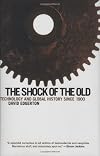
This book is an excellent antidote to the idea that humanity (or, in a more restricted sense, the economy) advances through innovation. While innovation plays a role, much more important is the way it's used, and the contexts in which that happens. David Edgerton demonstrates that with many examples of 20th-century inventions which failed to take hold. He also shows how a lot of new technologies that are touted as innovative are actually based on fairly old stuff. This book won't make you show more into a Luddite but it might make you skeptical enough of talk of innovation that people will call you one. show less
Lists
Awards

You May Also Like


Associated Authors
Statistics
- Works
- 6
- Also by
- 3
- Members
- 808
- Popularity
- #31,570
- Rating
- 3.6
- Reviews
- 19
- ISBNs
- 32
- Languages
- 2
- Favorited
- 1
