

Takashi Nagai (1908–1951)
Author of The Bells of Nagasaki
About the Author
Works by Takashi Nagai
Zvony Nagasaki 2 copies
Genshiya rokuon (原子野録音) 1 copy
Le campane di Nagasaki 1 copy
என் அன்புக்குரிய குழந்தைகளை விட்டுவிட்டு...: Leaving my Beloved Children Behind (Tamil Edition) (2021) 1 copy
From the HouseTops 1 copy
Notizen auf einem Sterbebett 1 copy
Associated Works
A Song for Nagasaki: The Story of Takashi Nagai-Scientist, Convert, and Survivor of the Atomic Bomb (1988) — Associative Name — 249 copies, 4 reviews
Tagged
Common Knowledge
- Birthdate
- 1908
- Date of death
- 1951
- Gender
- male
- Occupations
- Professor of Radiology,
- Organizations
- Roman Catholic Church
- Nationality
- Japan
- Places of residence
- Nagasaki, Japan
- Associated Place (for map)
- Nagasaki, Japan
Members
Reviews
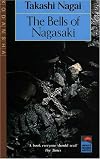
This little book certainly is a hard one to find. I've spent nearly a decade trying to find it in regular bookstores every since I first heard of it but since it's no longer in production and it costs a small fortune online, I had simply to be persistent. When it showed up at Half-Priced Books in January I knew it was finally meant to be and quickly snatched it up. Perhaps I could have found it in a library but as I never walk into those I'm glad I finally found it.
"The Bells of Nagasaki" show more is one of the top books to read about the atomic bombings in Japan. It is written by Takashi Nagai, a doctor at the University of Medicine in Nagasaki, as he describes the pre-, during, and post- events of the August 9th bombing. Although I've read a few atomic bombing books and have been both to the peace museum in Hiroshima and the peace museum in Nagasaki, this is one of the books one must read. Nagai became one of the big influences in Japan on promoting world peace and due to his direct involvement with the atomic blast, was a huge leader in investigating the medicine associated with radiation sickness.
The book is a quick read as it starts with a great introduction from William Johnston of Sophia University. Then Nagai starts with what different citizens were doing at the time of blast and their location from the epicenter. This is followed by the chapters "The Bomb", "Immediately After" and "Relief". What has always amazed me in previous readings of bomb related books has been how inspiring it was to read about those who didn't just fall straight into despair upon realizing their fate. Seeing how the doctors, after a brief understandable moment of panic, quickly came back to their feet to not only get out of their own difficult situations but to help the many wounded around them was inspiring. Quickly they gathered any utensils that survived, formed groups of surviving nurses and doctors and went on to create relief centers to aid the wounded despite their own ailments.
Nagai goes on to describe the theory behind the creation of the atomic bomb and changes the scenery from the torn apart Nagasaki to the hills beyond the city, Mitsuyama. Here we are greeted with once again green hills, thriving plants, blue skies and a gorgeous summer air. If it weren't for the wounded who had flocked from the city, there would have been no hint of the bombing. This juxtaposition was quite amazing and something I hadn't seen in other books.
The rest of the book deals with Nagai describing the symptoms and medicine involved with the different atomic bombing sicknesses ranging from lowest to greatest severity. At the time, I'm sure this was a treasure-trove of information. Months later as Nagai deals with his own ailments we admirably discover that he does not feel that the bomb was a means of punishment from God. (Nagai was deeply religious). Instead he feels that Nagasaki was God's great sacrifice to promote world peace and to prevent a future destructive atomic age.
Even now Nagai's name is synonymous with the efforts for the promotion of world peace as can be seen throughout the city of Nagasaki. I'm glad to have finally read this book. show less
"The Bells of Nagasaki" show more is one of the top books to read about the atomic bombings in Japan. It is written by Takashi Nagai, a doctor at the University of Medicine in Nagasaki, as he describes the pre-, during, and post- events of the August 9th bombing. Although I've read a few atomic bombing books and have been both to the peace museum in Hiroshima and the peace museum in Nagasaki, this is one of the books one must read. Nagai became one of the big influences in Japan on promoting world peace and due to his direct involvement with the atomic blast, was a huge leader in investigating the medicine associated with radiation sickness.
The book is a quick read as it starts with a great introduction from William Johnston of Sophia University. Then Nagai starts with what different citizens were doing at the time of blast and their location from the epicenter. This is followed by the chapters "The Bomb", "Immediately After" and "Relief". What has always amazed me in previous readings of bomb related books has been how inspiring it was to read about those who didn't just fall straight into despair upon realizing their fate. Seeing how the doctors, after a brief understandable moment of panic, quickly came back to their feet to not only get out of their own difficult situations but to help the many wounded around them was inspiring. Quickly they gathered any utensils that survived, formed groups of surviving nurses and doctors and went on to create relief centers to aid the wounded despite their own ailments.
Nagai goes on to describe the theory behind the creation of the atomic bomb and changes the scenery from the torn apart Nagasaki to the hills beyond the city, Mitsuyama. Here we are greeted with once again green hills, thriving plants, blue skies and a gorgeous summer air. If it weren't for the wounded who had flocked from the city, there would have been no hint of the bombing. This juxtaposition was quite amazing and something I hadn't seen in other books.
The rest of the book deals with Nagai describing the symptoms and medicine involved with the different atomic bombing sicknesses ranging from lowest to greatest severity. At the time, I'm sure this was a treasure-trove of information. Months later as Nagai deals with his own ailments we admirably discover that he does not feel that the bomb was a means of punishment from God. (Nagai was deeply religious). Instead he feels that Nagasaki was God's great sacrifice to promote world peace and to prevent a future destructive atomic age.
Even now Nagai's name is synonymous with the efforts for the promotion of world peace as can be seen throughout the city of Nagasaki. I'm glad to have finally read this book. show less
'Go to the mountains and meditate! If you stay in the hurly-burly of this world, you'll run around in circles without ever finding your way. You'll become the kind of person who just stamps and screams. But the blue mountains are immovable and the white clouds come and go.'
This was Takashi Nagai's advice a few weeks after the atomic bomb was dropped on Nagasaki. This book was non-fiction... unfortunately.
Takashi Nagai was a doctor, a nuclear physicist, and dean of the radiology department in show more the medical school of the University of Nagasaki and a devout Christian. On Thursday, August 9, 1945 at two minutes past eleven in the morning he was in his office about 700 meters from the epicenter of the blast. From first hand accounts he tells the story of life immediately before the blast, during the blast, and after the blast. That he survived is nothing short of miraculous.
The description of seeing up-close the results of colliding atoms is nightmarish. It starts with the sound of a plane and then... the blinding white light, darkness blacker than night caused by a cloud of debris covering the sun, the coming of a red tinted light, a drop in temperature, the invisible wind, the instant disappearance of a world known... and ends with the appearance of hell on earth.
'No. The sun must have exploded,' said Choro.
'Maybe so... the temperature has suddenly dropped.' Shiro's voice was thoughtful.
'If the sun explodes, what happens to the earth?' Now it was the anxious voice of Nurse Tsubakiyama.
'It's the end of the world,' said Choro with resignation.
They remained silent and waited. No light returned. A minute passed. Someone's watch kept ticking in the darkness. Tick, tick, tick...
Takahi was a scholarly writer before the dropping of the bomb. Afterward, before his death in 1951, he became a poet, artist, humanist, and mystic and wrote over 20 books. show less
This was Takashi Nagai's advice a few weeks after the atomic bomb was dropped on Nagasaki. This book was non-fiction... unfortunately.
Takashi Nagai was a doctor, a nuclear physicist, and dean of the radiology department in show more the medical school of the University of Nagasaki and a devout Christian. On Thursday, August 9, 1945 at two minutes past eleven in the morning he was in his office about 700 meters from the epicenter of the blast. From first hand accounts he tells the story of life immediately before the blast, during the blast, and after the blast. That he survived is nothing short of miraculous.
The description of seeing up-close the results of colliding atoms is nightmarish. It starts with the sound of a plane and then... the blinding white light, darkness blacker than night caused by a cloud of debris covering the sun, the coming of a red tinted light, a drop in temperature, the invisible wind, the instant disappearance of a world known... and ends with the appearance of hell on earth.
'No. The sun must have exploded,' said Choro.
'Maybe so... the temperature has suddenly dropped.' Shiro's voice was thoughtful.
'If the sun explodes, what happens to the earth?' Now it was the anxious voice of Nurse Tsubakiyama.
'It's the end of the world,' said Choro with resignation.
They remained silent and waited. No light returned. A minute passed. Someone's watch kept ticking in the darkness. Tick, tick, tick...
Takahi was a scholarly writer before the dropping of the bomb. Afterward, before his death in 1951, he became a poet, artist, humanist, and mystic and wrote over 20 books. show less
I re-read this on the train from Nagasaki and been meaning to combine this with an e-mail I wrote on Nagasaki and still may, but in the mean time I wanted to add some thoughts here on the book.
This, like "Japan's Longest Day" has made me realise just how little I know about the circumstances around the surrender. I also realise that we're never really going to know the truth. I think the only ones who did, mainly Churchill, Stalin and Truman, are long dead and the truth is buried with them. show more Did Japan really plan to surrender before the bombs came down? Did Truman know it and commit to dropping the bomb solely because $1B UShad already been spent? We'll never know, but it's a sad prospect to consider. Personally, I don't think they were ready to surrender before hand; reading JLD made me aware of how much tension there was behind the scenes and I don't think the relevant parties, or the Emperor could have been persuaded to act any sooner without knowing of the immediate and utter destruction that hit them. Hell, even the bombing of Nagasaki itself wasn't enough to spur them to action.
There's also a lot that is said and to be said about Nagai himself, losing everything really gave him a lot of insight into what was important. Previously he was devoted to victory for Japan; now he is devoted to World Peace. He learnt a lot both from his background as a Christian and what he saw in the days following the bombing and yet while he is a Christian and that's important to him, it doesn't cloud the story from being understood by anyone of any religion.
"...the Japanese, the first and only people to have suffered an atomic holocaust, have a vocation and a mission to abolish war, especially nuclear war, from the face of the earth." I agree 100% with Nagai but I would extend it even further. I'd say that the US, as the cause of the nuclear holocaust, has that same duty. We can go in circles on whether dropping the bomb saved lives or not but the fact is as we've learnt 60 years later, it had unknown and undreamed of effects, we can't let that happen again to further generations. One of the mottos of Nagasaki is a prayer that Nagasaki will be the last atomic wasteland, and I dread to think of 60 years later, us not learning from our history and doing it somewhere again. And "us" in this case is all people of the world. I cringe every time I hear about a country having nuclear weapons and threatening to test, haven't we learnt anything? Anything at all? But more on that later.
In Nagai's accounts on the incident from various POVs, the lack of news flow in light of the war was made obvious. Some were aware that a bomb had been dropped on Hiroshima and equated it with what happened to them while others had no idea what this was that had happened to them.
"Pumps, hoses, water tanks, energetic people--anything or anyone capable of quenching those flames had vanished in a moment." And there again is testament to the long acting power of the bomb--not only its immediate effects on those who were burnt but it's long impact due to the doctors being killed--or even when they were alive as in Nagai's case, they had such limited supplies. Even if they were physically capable of helping the victims, they had no tools with which to do it. "...We were the heroic soldiers of the era of Showa..." like the samurai that had come and gone before them, they worked and sacrificed themselves for their country. They did what was asked of them despite the factors against them.
The bamboo spear against the atomic bomb! I felt the same as Nagai did when he mentioned this, not just Japan but no one could compare with or fight against this new force. None of the weapons that had worked in the old days, even in the earlier battles of WW2 could even compare with the mighty force of the atomic bomb. show less
This, like "Japan's Longest Day" has made me realise just how little I know about the circumstances around the surrender. I also realise that we're never really going to know the truth. I think the only ones who did, mainly Churchill, Stalin and Truman, are long dead and the truth is buried with them. show more Did Japan really plan to surrender before the bombs came down? Did Truman know it and commit to dropping the bomb solely because $1B UShad already been spent? We'll never know, but it's a sad prospect to consider. Personally, I don't think they were ready to surrender before hand; reading JLD made me aware of how much tension there was behind the scenes and I don't think the relevant parties, or the Emperor could have been persuaded to act any sooner without knowing of the immediate and utter destruction that hit them. Hell, even the bombing of Nagasaki itself wasn't enough to spur them to action.
There's also a lot that is said and to be said about Nagai himself, losing everything really gave him a lot of insight into what was important. Previously he was devoted to victory for Japan; now he is devoted to World Peace. He learnt a lot both from his background as a Christian and what he saw in the days following the bombing and yet while he is a Christian and that's important to him, it doesn't cloud the story from being understood by anyone of any religion.
"...the Japanese, the first and only people to have suffered an atomic holocaust, have a vocation and a mission to abolish war, especially nuclear war, from the face of the earth." I agree 100% with Nagai but I would extend it even further. I'd say that the US, as the cause of the nuclear holocaust, has that same duty. We can go in circles on whether dropping the bomb saved lives or not but the fact is as we've learnt 60 years later, it had unknown and undreamed of effects, we can't let that happen again to further generations. One of the mottos of Nagasaki is a prayer that Nagasaki will be the last atomic wasteland, and I dread to think of 60 years later, us not learning from our history and doing it somewhere again. And "us" in this case is all people of the world. I cringe every time I hear about a country having nuclear weapons and threatening to test, haven't we learnt anything? Anything at all? But more on that later.
In Nagai's accounts on the incident from various POVs, the lack of news flow in light of the war was made obvious. Some were aware that a bomb had been dropped on Hiroshima and equated it with what happened to them while others had no idea what this was that had happened to them.
"Pumps, hoses, water tanks, energetic people--anything or anyone capable of quenching those flames had vanished in a moment." And there again is testament to the long acting power of the bomb--not only its immediate effects on those who were burnt but it's long impact due to the doctors being killed--or even when they were alive as in Nagai's case, they had such limited supplies. Even if they were physically capable of helping the victims, they had no tools with which to do it. "...We were the heroic soldiers of the era of Showa..." like the samurai that had come and gone before them, they worked and sacrificed themselves for their country. They did what was asked of them despite the factors against them.
The bamboo spear against the atomic bomb! I felt the same as Nagai did when he mentioned this, not just Japan but no one could compare with or fight against this new force. None of the weapons that had worked in the old days, even in the earlier battles of WW2 could even compare with the mighty force of the atomic bomb. show less

Thanks to lilisin for the review and recommendation. I was intrigued by what she wrote and was happy to see my library has it. And now.......this may be one of my all time top favorites. Weird to think a description of experiencing an atomic bomb could be a fav, but there it is. There is a brief introduction about what was happening with political leaders at the time, the decision making involved, to set the scene. The book itself is an insider's story about the experience. There are the show more descriptions of the specific physical occurrences as well as the psychological ones: seeing the country you love defeated, addressing feeling and desires for revenge and moving beyond that. The focus ends on the meaning of the event for the whole world rather than just those who experienced it. The author was an amazing person who saw the importance of documenting the results with a scientific eye for the benefit of the medical world, as well as the religious implications. There were a couple of pages addressing religion, from a perspective I don't share, but that seemed to be helpful for them. I wish this was required reading for high schoolers and would love to have used it for my college classes. show less
Lists
You May Also Like


Associated Authors
Statistics
- Works
- 14
- Also by
- 1
- Members
- 220
- Popularity
- #101,714
- Rating
- 4.4
- Reviews
- 11
- ISBNs
- 14
- Languages
- 5
- Favorited
- 2