
Shōhei Ōoka (1909–1988)
Author of Fires on the Plain
About the Author
Works by Shōhei Ōoka
幼年 2 copies
ながい旅 2 copies
酸素 2 copies
最初の目撃者 2 copies
事件 2 copies
ザルツブルグの小枝 アメリカ・ヨーロッパ紀行 2 copies
ながい旅 (新潮文庫) 1 copy
母六夜 1 copy
全集・現代文学の発見〈第13巻〉言語空間の探検 1 copy
レイテ戦記(四) 1 copy
レイテ戦記(三) 1 copy
レイテ戦記(二) 1 copy
レイテ戦記(一) 1 copy
Associated Works
MHQ: The Quarterly Journal of Military History — Spring 2023 (2023) — Author "Experience: Decision to Surrender" — 1 copy
Chika Engeki No.4 1 copy
海 1972年05月号 — Contributor — 1 copy
Tagged
Common Knowledge
- Canonical name
- Ōoka, Shōhei
- Legal name
- 大岡昇平
- Birthdate
- 1909-03-06
- Date of death
- 1988-12-25
- Gender
- male
- Education
- Kyoto University (Literature)
- Occupations
- journalist (Kokumin Shimbun)
lecturer (Meiji University | French Literature)
novelist - Organizations
- Imperial Japanese Army (drafted in 1944)
The Potted Cherry Tree Club (Hachi no Ki Kai) - Nationality
- Japan
- Birthplace
- Tokyo, Japan
- Place of death
- Tokyo, Japan
- Associated Place (for map)
- Tokyo, Japan
Members
Reviews
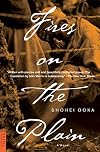
An extraordinary novel: a first person account of a conscripted Japanese soldier's fight for survival on a Philippine Island during the latter part of the second world war. It is a gruesome story told in that matter of fact way that seems to be the hallmark of English translations of Japanese literature, but also a keenly observed narrative of the natural world and the thoughts of an individual half crazed with hunger.
Originally published in 1951 this anti-war novel by Shohei Ooka drew on show more his own experiences as a conscripted soldier in the Imperial Japanese Army fighting on the Philippine islands. He survived the rout of his battalion by the American forces and witnessed the destruction of the vast majority of the men with whom he served. He was one of the lucky ones who became a prisoner of war and was eventually repatriated. Towards the end of the novel his protagonist: private Tamura reflects on his experiences as he tries to make some sense of the horrors of war and why he has been spared:
'People seem unable to admit this principle of chance. Our spirits are not strong enough to stand the idea of life being a mere succession of chances - the idea that is of infinity. Each of us in his individual existence, which is contained between the chance of his birth and the chance of his death, identifies those few incidents that have arisen through what he styles his "will" and the thing that emerges consistently from this he calls his "character" or again his "life". Thus we contrive to comfort ourselves: there is, no other way for us to think.'
During his sojourn on the Island when Tamura is lurching from one desperate situation to another he sees through the jungle a christian church, the sign of the cross beckons him down into a village. His search for salvation through a dimly remembered religion is brutally shattered by his own actions: a chance meeting destroys any hope that he will be saved.
The novel opens with private Tamura being slapped in the face by his squadron leader. He has just been released from a field hospital where he has spent three days suffering from consumption. The squadron leader deems him unfit to fight and therefore not worth sharing the limited food available, he is effectively cast out of the army and told to wait outside the hospital in the hope that he can be re-admitted. He is given six potatoes and joins a group of soldiers who are in a similar position camping around the hospital waiting to die. Chance enters the equation when an American war plane bombs and strafes the hospital, Tamura who is lucky enough to be able to walk, takes to the hillside jungle and forges his own path through the island, looking back down on the carnage below.
Tamura starts on a journey through the lush tropical island eating anything he can find to ward off starvation, despite or because of his light headiness he finds solace in the natural surroundings, the beauty of the natural world, as long as he can avoid the machinery of war and other people. He journeys through the hill country and reaches a flat cultivated plain area where he sees the bonfires. They become a mystery as to why they are lit, are they primitive smoke signals set off by the hostile indigenous population, or are they just part of the normal farming calendar. Tamura becomes fascinated by the columns of smoke: their form and intensity, their place in the natural world. Half starved he finds a hillside deserted cabin, with an abandoned potato crop, he stays, wondering what to do with himself. He is shaken from his reverie by four Japanese soldiers, led by an uncompromising corporal and feels it is his duty to follow them as they search for a way to get off the island. Tamura is soon back with the desperate column of defeated Japanese soldiers who are dying on their feet of hunger and their wounds. A desperate attempt to reach a rallying point is repulsed and individuals are reduced to cannibalism as all order breaks down.
The novel is a vivid description of the horrors of war and the desperate quest for survival. Tamura is not a young man having been conscripted late on into the army, but nothing of his previous experiences equips him to deal with the complete breakdown of civilised life that he encounters on the island. He wrestles with his own actions, how does he preserve his humanity, would he be better off dead? The beauty of the natural world is contrasted by the bestiality of human actions during wartime and Tamura's own slipping into semi delirium as a result of hunger fatigue and his illness.
From my point of view Tamura's thoughts and actions are those of a man from a different culture, certainly a different time and a man who might be more used to life in the raw and the vicissitudes of army life in wartime, but the author still manages to make his situation and his thoughts universal. The setting of the action on a tropical island where the beauty of the surroundings seems to intrude on the carnage of dead corpses makes for an authentic atmosphere. We are not spared the horror of putrefying bodies or the overwhelming stench of death, which permeate the novel, but wonder like Tamura wonders about the fires on the plains how humanity could be dealt such a savage blow. Would we in these circumstances remain sane? A five star read. show less
Originally published in 1951 this anti-war novel by Shohei Ooka drew on show more his own experiences as a conscripted soldier in the Imperial Japanese Army fighting on the Philippine islands. He survived the rout of his battalion by the American forces and witnessed the destruction of the vast majority of the men with whom he served. He was one of the lucky ones who became a prisoner of war and was eventually repatriated. Towards the end of the novel his protagonist: private Tamura reflects on his experiences as he tries to make some sense of the horrors of war and why he has been spared:
'People seem unable to admit this principle of chance. Our spirits are not strong enough to stand the idea of life being a mere succession of chances - the idea that is of infinity. Each of us in his individual existence, which is contained between the chance of his birth and the chance of his death, identifies those few incidents that have arisen through what he styles his "will" and the thing that emerges consistently from this he calls his "character" or again his "life". Thus we contrive to comfort ourselves: there is, no other way for us to think.'
During his sojourn on the Island when Tamura is lurching from one desperate situation to another he sees through the jungle a christian church, the sign of the cross beckons him down into a village. His search for salvation through a dimly remembered religion is brutally shattered by his own actions: a chance meeting destroys any hope that he will be saved.
The novel opens with private Tamura being slapped in the face by his squadron leader. He has just been released from a field hospital where he has spent three days suffering from consumption. The squadron leader deems him unfit to fight and therefore not worth sharing the limited food available, he is effectively cast out of the army and told to wait outside the hospital in the hope that he can be re-admitted. He is given six potatoes and joins a group of soldiers who are in a similar position camping around the hospital waiting to die. Chance enters the equation when an American war plane bombs and strafes the hospital, Tamura who is lucky enough to be able to walk, takes to the hillside jungle and forges his own path through the island, looking back down on the carnage below.
Tamura starts on a journey through the lush tropical island eating anything he can find to ward off starvation, despite or because of his light headiness he finds solace in the natural surroundings, the beauty of the natural world, as long as he can avoid the machinery of war and other people. He journeys through the hill country and reaches a flat cultivated plain area where he sees the bonfires. They become a mystery as to why they are lit, are they primitive smoke signals set off by the hostile indigenous population, or are they just part of the normal farming calendar. Tamura becomes fascinated by the columns of smoke: their form and intensity, their place in the natural world. Half starved he finds a hillside deserted cabin, with an abandoned potato crop, he stays, wondering what to do with himself. He is shaken from his reverie by four Japanese soldiers, led by an uncompromising corporal and feels it is his duty to follow them as they search for a way to get off the island. Tamura is soon back with the desperate column of defeated Japanese soldiers who are dying on their feet of hunger and their wounds. A desperate attempt to reach a rallying point is repulsed and individuals are reduced to cannibalism as all order breaks down.
The novel is a vivid description of the horrors of war and the desperate quest for survival. Tamura is not a young man having been conscripted late on into the army, but nothing of his previous experiences equips him to deal with the complete breakdown of civilised life that he encounters on the island. He wrestles with his own actions, how does he preserve his humanity, would he be better off dead? The beauty of the natural world is contrasted by the bestiality of human actions during wartime and Tamura's own slipping into semi delirium as a result of hunger fatigue and his illness.
From my point of view Tamura's thoughts and actions are those of a man from a different culture, certainly a different time and a man who might be more used to life in the raw and the vicissitudes of army life in wartime, but the author still manages to make his situation and his thoughts universal. The setting of the action on a tropical island where the beauty of the surroundings seems to intrude on the carnage of dead corpses makes for an authentic atmosphere. We are not spared the horror of putrefying bodies or the overwhelming stench of death, which permeate the novel, but wonder like Tamura wonders about the fires on the plains how humanity could be dealt such a savage blow. Would we in these circumstances remain sane? A five star read. show less

Ōoka Shōhei was thirty-five-years-old in 1944 when he was drafted into the Imperial Japanese Army, given cursory training, and sent to the front lines in the Philippines, where he served as a communications expert. By December he was suffering from starvation and severe malaria and had been left behind when his unit retreated. He was captured by the Americans and spent the next year in American POW camps. His account of his time as a POW is highly detailed and explores not only his show more experience, but the motivations and mindsets of those around him.
Like most Japanese soldiers, Ōoka had been instructed to never surrender and if capture was imminent, suicide was preferable. In addition, they knew how the Japanese had treated prisoners in Manchuria and the Philippines, and feared similar treatment. Many thoughts passed through Ōoka's mind in the days leading up to his capture, including a half-hearted suicide attempt, but in the end, acute illness render the issue of surrender moot. He was astonished when instead of torture or neglect and ill-treatment, he was sent to a POW hospital, treated for the malaria and given a special diet, as well as books and clothes. His dismay at being captured segued into relief at surviving.
Ōoka describes life in the POW camps in great detail, as well as his fellow prisoners and the American GIs that he met. He was highly perceptive and introspective. Prior to the war, Ōoka had studied French literature, translated [[Stendhal]], and learned English as well. He eventually becomes a translator in the camps and has access to all levels of the camp hierarchy. His insights are fascinating:
Surrender and attitude toward captors:
Surrender is a particular, individual act. On the verge of starvation in the jungles of the Pacific, a great many soldiers must have contemplated surrender, yet very few found the courage to actually turn themselves over to the enemy. At the same time, it would not have been the least bit implausible for a man who had never dreamed of surrender to suddenly find his hands in the air when confronted with the incontrovertible superiority of his foe. (p. 138)
Their confusion {as to how to behave toward their captors}, it seems to me, was quite understandable. Their military indoctrination prevented them from accepting the Americans' warm-heartedness with simple gratitude. Whereas they saw themselves as dishonorable captives, the Americans treated them as human beings, and this excessive kindness, so to speak, confounded them completely. (p. 53)
One thing that I found particularly interesting was that many Japanese gave fake names when they were captured, because they did not want their families back in Japan to know that they had suffered the ignominy of capture. They feared too that their families would be punished. This became a problem for both sides after the war. Some innocent soldiers were denied repatriation, because the name they had adopted at capture was on the list of suspected war criminals, and other guilty parties were released.
On the differences between professional soldiers and those who were drafted:
Being drafted was to him like going through some kind of natural disaster, and his only concern was to somehow weather it and make his way home alive. (p. 147)
We were an "over-the-hill" unit of mostly middle-agers, sent to the front after completing barely three months of basic training in early 1944, and we could hardly be called soldiers. When Mindoro became the Americans' next target after Leyte, we experienced great hardship and suffering, but again, not from anything that could really be called combat. Thus, we emerged from our experiences on the island with our civilian identities intact. We never became true "brothers-in-arms."
We may never have been proper soldiers, but we did become bona fide prisoners of war. (p. 149)
And in particular, he writes about the attitude of "anything goes" from the soldiers who had fought in China vs the conscripted soldiers in 1944 who were slightly horrified at their behavior. The professional soldiers and sailors (of whom there were many, whose ships had been sunk off the coast of the Philippines) maintained their military discipline and hierarchical authority much more than the civilian soldiers.
One thing that is conspicuously absent from Ōoka's account is any mention of the families the Japanese soldiers left behind, including his own. From a photograph on the back of the book, I know that he had a wife and two young children in 1944, but he never talks about them or of writing letters home, etc. I would have liked to have known how the soldiers were received when they returned to an occupied Japan. There is a lot of conjecture about this in the camps, but his account ends with the repatriation ships reaching the Japanese mainland.
Highly recommended for anyone interested in WWII and those who have read his novel, [Fires on the Plain]. show less
Like most Japanese soldiers, Ōoka had been instructed to never surrender and if capture was imminent, suicide was preferable. In addition, they knew how the Japanese had treated prisoners in Manchuria and the Philippines, and feared similar treatment. Many thoughts passed through Ōoka's mind in the days leading up to his capture, including a half-hearted suicide attempt, but in the end, acute illness render the issue of surrender moot. He was astonished when instead of torture or neglect and ill-treatment, he was sent to a POW hospital, treated for the malaria and given a special diet, as well as books and clothes. His dismay at being captured segued into relief at surviving.
Ōoka describes life in the POW camps in great detail, as well as his fellow prisoners and the American GIs that he met. He was highly perceptive and introspective. Prior to the war, Ōoka had studied French literature, translated [[Stendhal]], and learned English as well. He eventually becomes a translator in the camps and has access to all levels of the camp hierarchy. His insights are fascinating:
Surrender and attitude toward captors:
Surrender is a particular, individual act. On the verge of starvation in the jungles of the Pacific, a great many soldiers must have contemplated surrender, yet very few found the courage to actually turn themselves over to the enemy. At the same time, it would not have been the least bit implausible for a man who had never dreamed of surrender to suddenly find his hands in the air when confronted with the incontrovertible superiority of his foe. (p. 138)
Their confusion {as to how to behave toward their captors}, it seems to me, was quite understandable. Their military indoctrination prevented them from accepting the Americans' warm-heartedness with simple gratitude. Whereas they saw themselves as dishonorable captives, the Americans treated them as human beings, and this excessive kindness, so to speak, confounded them completely. (p. 53)
One thing that I found particularly interesting was that many Japanese gave fake names when they were captured, because they did not want their families back in Japan to know that they had suffered the ignominy of capture. They feared too that their families would be punished. This became a problem for both sides after the war. Some innocent soldiers were denied repatriation, because the name they had adopted at capture was on the list of suspected war criminals, and other guilty parties were released.
On the differences between professional soldiers and those who were drafted:
Being drafted was to him like going through some kind of natural disaster, and his only concern was to somehow weather it and make his way home alive. (p. 147)
We were an "over-the-hill" unit of mostly middle-agers, sent to the front after completing barely three months of basic training in early 1944, and we could hardly be called soldiers. When Mindoro became the Americans' next target after Leyte, we experienced great hardship and suffering, but again, not from anything that could really be called combat. Thus, we emerged from our experiences on the island with our civilian identities intact. We never became true "brothers-in-arms."
We may never have been proper soldiers, but we did become bona fide prisoners of war. (p. 149)
And in particular, he writes about the attitude of "anything goes" from the soldiers who had fought in China vs the conscripted soldiers in 1944 who were slightly horrified at their behavior. The professional soldiers and sailors (of whom there were many, whose ships had been sunk off the coast of the Philippines) maintained their military discipline and hierarchical authority much more than the civilian soldiers.
One thing that is conspicuously absent from Ōoka's account is any mention of the families the Japanese soldiers left behind, including his own. From a photograph on the back of the book, I know that he had a wife and two young children in 1944, but he never talks about them or of writing letters home, etc. I would have liked to have known how the soldiers were received when they returned to an occupied Japan. There is a lot of conjecture about this in the camps, but his account ends with the repatriation ships reaching the Japanese mainland.
Highly recommended for anyone interested in WWII and those who have read his novel, [Fires on the Plain]. show less
Tamura is a conscripted Japanese soldier on the island of Leyte in the Philippines late in World War II. When the novel opens, he has been discharged from the field hospital because he can no longer supply his own food, and rejected by his unit because he is too weak to forage. He wanders the forests, starving and lonely. At one point he sees the cross on the top of a Filipino church and begins reflecting on his youthful belief in God and later adult rejection of religion as childish show more illusions. Rather than the existence of evil, his focus is on his personal relationship with God and God's wishes for him. Eventually he meets up with other Japanese stragglers and joins them in making a push for the coast, where rumor has it they are to be evacuated. But the American army has cut off their escape route, and Tamura finds himself wandering alone again. As starvation and madness set in, he must confront both practical and philosophical questions about death, sin, and the role of chance in human destiny.
Like his protagonist, Shohei Ooka was a conscript sent to the Philippines late in the war. He was a student and translator of French literature and after the war was a Fulbright Scholar at Yale. He kept a journal during the war and began writing and publishing postwar. Several of his books won prominent awards, and in his Nobel acceptance speech, Kenzaburo Oe credits Ooka as an influence on his own writing.
I read [Fires on the Plain] in two sittings, unable to stop turning pages to see what would happen. The writing is clear and clean, with detailed descriptions of nature, but what I found most compelling was Tamura's struggles with survival, not only of his body, but of his Self. How do you remain true to yourself during the horrors of war, the degradation of the body, and the effects of starvation, loneliness, and guilt on the mind? show less
Like his protagonist, Shohei Ooka was a conscript sent to the Philippines late in the war. He was a student and translator of French literature and after the war was a Fulbright Scholar at Yale. He kept a journal during the war and began writing and publishing postwar. Several of his books won prominent awards, and in his Nobel acceptance speech, Kenzaburo Oe credits Ooka as an influence on his own writing.
I read [Fires on the Plain] in two sittings, unable to stop turning pages to see what would happen. The writing is clear and clean, with detailed descriptions of nature, but what I found most compelling was Tamura's struggles with survival, not only of his body, but of his Self. How do you remain true to yourself during the horrors of war, the degradation of the body, and the effects of starvation, loneliness, and guilt on the mind? show less
"People live only because they have no reason to die."
Fires on the Plain is a tremendous novel of a Japanese soldier's experiences during the 1944 Philippine campaign. In short it is about Private Tamura and his living simply because there is no purpose in dying and because life is simply a collection built off of chance. As a reader we witness an individual battling society which deteriorates into the individual versus his self which further become the individual versus man without show more humanity/purpose.
The novel builds up through an incredible sense of description, imagery (sense of smell, sight, sound), and a use of language that is beyond description. Ivan Morris is the master of this translation and certainly deserves all recognition for making this work available.
Japanese ideals such as the country before the individual are quickly broken down as soldiers try to latch onto anything that will guarantee their survival. In the presence of other soldiers they try and maintain their Japanese idealism, but when left to themselves they quickly degrade into the survival of the fittest with the fittest finding themselves feeding off the weak.
This novel will stay with me for quite a while. Certain scenes making me shudder, new philosophies on God and life made me ponder, and I will continue to question what makes up life.
Our world is the result of God's wrath and Tamura is the instrument of God's wrath. Truly truly spectacular. show less
Fires on the Plain is a tremendous novel of a Japanese soldier's experiences during the 1944 Philippine campaign. In short it is about Private Tamura and his living simply because there is no purpose in dying and because life is simply a collection built off of chance. As a reader we witness an individual battling society which deteriorates into the individual versus his self which further become the individual versus man without show more humanity/purpose.
The novel builds up through an incredible sense of description, imagery (sense of smell, sight, sound), and a use of language that is beyond description. Ivan Morris is the master of this translation and certainly deserves all recognition for making this work available.
Japanese ideals such as the country before the individual are quickly broken down as soldiers try to latch onto anything that will guarantee their survival. In the presence of other soldiers they try and maintain their Japanese idealism, but when left to themselves they quickly degrade into the survival of the fittest with the fittest finding themselves feeding off the weak.
This novel will stay with me for quite a while. Certain scenes making me shudder, new philosophies on God and life made me ponder, and I will continue to question what makes up life.
Our world is the result of God's wrath and Tamura is the instrument of God's wrath. Truly truly spectacular. show less
Lists
Awards


You May Also Like


Associated Authors
Statistics
- Works
- 31
- Also by
- 4
- Members
- 516
- Popularity
- #48,119
- Rating
- 4.0
- Reviews
- 14
- ISBNs
- 49
- Languages
- 7
- Favorited
- 2