
Masuji Ibuse (1898–1993)
Author of Black Rain
About the Author
The son of middle-class landowners, Ibuse grew up in the country, for which he always retained a special feeling. While a student majoring in French literature, he published his first story and has since won almost every literary prize in Japan. His work is known for its eloquent use of dialect, show more irony, historical settings, and dry, sometimes dark humor. (Bowker Author Biography) show less
Disambiguation Notice:
(spa) Información extraída de http://www.biografiasyvidas.com/biografia/i/ibuse.htm Editorial Libros Asteroide Wikipedia
Image credit: Writer Masuji Ibuseon May 20, 1976 in Japan
Works by Masuji Ibuse
日本の文学 53 2 copies
駅前旅館 2 copies
井伏鱒二自選全集 第5巻 2 copies
Mushinjó (無心状) 1 copy
釣師・釣場 (1964年) (新潮文庫) 1 copy
Kinó no kai (昨日の會) 1 copy
黑雨 1 copy
Two stories by Masuji Ibuse 1 copy
Sazanami gunki (さざなみ軍記) 1 copy
Tarachine (たらちね) 1 copy
Sayanotsu chakaiki (鞆ノ津茶会記) 1 copy
Shuzai ryokó (取材旅行) 1 copy
Ogikubo Fúdoki (荻窪風土記) 1 copy
Umiagari (海揚がり) 1 copy
Yakimono zakki (焼物雑記) 1 copy
Waseda no mori (早稻田の森) 1 copy
Associated Works
The Crazy Iris and Other Stories of the Atomic Aftermath (1984) — Contributor — 183 copies, 2 reviews
Cień wschodzącego słońca — Contributor, some editions — 2 copies
Tagged
Common Knowledge
- Legal name
- Ibuse Masuji
- Other names
- IBUSE, Masuji
Masuji IBUSE. - Birthdate
- 1898-02-15
- Date of death
- 1993-07-10
- Gender
- male
- Education
- Waseda University (French, School of Fine Arts)
- Occupations
- novelist
- Organizations
- Bungakukai, Magazine littéraire (Collaborateur, 19 38)
- Awards and honors
- Cultural Medal of Japan
- Short biography
- Ibuse nació en 1898 en el seno de una familia terrateniente en el Districto de Kamo, Hiroshima. A los 19 años, empezó su carrera estudiando en la Universidad de Waseda en Tokio. En principio quería estudiar poesía y pintura pero le animaron a estudiar ficción y terminó especializandose en literatura Francesa. Ibuse sufrió acoso sexual por parte de un profesor llamado Noburu Katagami, por lo que tuvo que dejar la Universidad antes de su graduación; a pesar de este mal trago, comenzó a publicar historias a comienzos de los años 20, con lo que empezó a ganar presencia en el mundo lierario, gracias a algunos críticos muy importantes de Japón, que valoraron positivamente su obra. Los temas más recurrentes en su obra fueron fantasías intelectuales (que usaban alegorías animales), ficciones históricas, y la vida del país en general. No obstante, durante la segunda guerra mundial, trabajó para su gobierno redactando la Propaganda Oficial.
Su primera obra de éxito fue el cuento alegórico-satírico La salamandra (1929). Las técnicas simbolistas, a las que Ibuse, influenciado por la literatura occidental, recurrió con bastante frecuencia, dejaron paso más tarde a la experimentación de la técnica narrativa de la novela autobiográfica, que se convertirá en una constante de gran parte de su producción.
En Ibuse es característica una tristeza latente que, sin embargo, el autor resuelve con un toque de ironía en la descripción de la gente normal y en su afán por solucionar los problemas de la vida cotidiana, como ocurre en Ninguna visita hoy, de 1950. En la variedad de sus propuestas narrativas se encuentra también la novela de argumento histórico, por ejemplo Crónica de guerra de Sazanami, de 1930-1938, ambientada en el Japón del siglo XII, y El naufragio de John Manjiro, de 1937, la historia de un náufrago que, tras haber llegado a las costas de América, consigue volver al Japón a pesar de la prohibición de las autoridades Tokugawa.
La obra más significativa de Ibuse es La lluvia negra, de 1969, en la que sin retórica, con profunda sensibilidad y un contenido y solidario sufrimiento, el autor narra el trágico holocausto de Hiroshima. - Nationality
- Japan
- Birthplace
- Hiroshima, Japan
- Place of death
- Suginami, Tokyo, Japan
- Disambiguation notice
- Información extraída de http://www.biografiasyvidas.com/biogr...
Editorial Libros Asteroide
Wikipedia - Associated Place (for map)
- Japan
Members
Reviews

I’ve read the nine short stories, but not (yet) the novella. They’re varied and quite good. But what thrilled me far more was the photo I found between the pages, and the writing on the back of it:
A friend of a friend kindly translated it:
I’m captivated by the idea of staying up till nearly 2am to watch a flower.
Awed by the coincidence of that coinciding with the unknown person’s return to Tokyo.
Tormented by wanting to know who that person is or was, and about their relationship with whoever took the picture and wrote on the back.
Entranced by the flower itself, which Google suggests is a type of Epiphyllum (aka climbing cacti, orchid cacti, or leaf cacti), which does indeed bloom for a single night!
This serendipitous find is delightfully poetic, and it’s simultaneously meaningful and obscure.
The Stories in the Book
The stories have similar qualities to the one on the back of the photo, but can’t quite compete. They were mostly written between 1930s and 1950s, in a variety of styles, themes, and lengths. All have some wry humour or outright satire. They cover topics including village gossip and rivalries, duty, divided families, military shenanigans, abandoned and adopted babies and animals, a sneering salamander, grave-robbing, bids for freedom, and accusations of "a bovine brothel"!
Plum Blossom by Night
This opens with dramatic contrast between beautiful white plum blossom and a stranger staggering into the narrator’s path, with blood on his face. He wants the narrator to claim to be a witness of the fight that left him injured. Instead, the narrator invents a plausible scenario for his wound and promises to visit the man at work the next day, to confirm the story to the man’s boss. It unravels into a tale of procrastination, lost opportunities, guilt, etiquette, and fecklessness, culminating in a pub crawl a year later, and more plum blossom.
Lieutenant Lookeast
Published in 1950, this is about Yuichi, a psychologically damaged veteran of the Korean War. It’s message is the extravagance and lunacy of war. He’s a figure of fun and curiosity in the village he returns to, but not maliciously. They play along with his delusions, except when he has angrier outbursts, when his mother locks him up in a cage in the garden. Some wonder if he’s pretending, or if he was in the army at all. The backstory of his time in service reminded me of George MacDonald Fraser (best known for Flashman, which I reviewed HERE) and Evelyn Waugh’s Sword of Honour trilogy, which I reviewed HERE. Class and appearances matter, strengthening the similarity. Years earlier, when Yuichi’s widowed mother made a little money, she installed concrete gateposts, which so elevated the family, that Yuichi was offered a coveted place at military academy.
Pilgrims’ Inn
The narrator, travelling on private business, stays in a three-room inn, run by women. The old lady who shows him to his room suggests, “How about dreaming… of a shipload of treasure coming in to port?”, which he thinks odd. More interesting, is the story of the inn, how and where its staff come from, and what that says about attitudes to women.
Salamander
An overtly comic piece about a pretentious salamander who’s grown too big to escape his home.
“The salamander liked to put his face at the entrance and watch the scene outside the cave. To peer out at a bright place from inside somewhere dime - is this not a fascinating occupation?”
Despite his predicament, he’s not a sympathetic character, as he sneers at those around:
“People who worry about things and get wrapped up in their own thoughts are stupid.”
He even takes “exquisite pleasure” in trapping others. They have the moral high ground.
Old Ushitora
This is a bucolic comedy, with sex, animals, and family estrangement! Old Ushitora breeds prime bulls he hires out to other farmers to “service” their cows. His son has always been embarrassed by this, and as an adult, says it’s immoral and adulterous, so his father attempts a degree of discretion.
Carp
Social obligation: carp are valuable, big, and long-lived, so when a friend gives you one, it’s quite a responsibility - especially when you promised never to kill it, but are moving to an apartment without a pond.
Life at Mr Tange’s
This was written in 1931, but I don’t know if the scenario was still common at the time. Mr Tange’s punishment for a sleepy elderly servant is public physical humiliation. Hearing of this, the servant’s wife, in service elsewhere, sends a scolding note, but comes to visit for the first time in a couple of years. The backstory of how the servant came to work for Mr Tange is surprising, and makes the reader reappraise their first impressions.
Yosaku the Settler
Legal drama. This is the latest story (1955) set in the most distant past (1694). It comes from archives, though whether they’re true in real life or not, I don’t know. Settlers were encouraged to move to poor land by low rent and gifts of tools. Clan officials become aware that the farmers are using a sacred tomb for storing crops and gambling, which they forbid. When one farmer is spotted with a silver pipe “of a quality unsuited to your station”, he is brought before the court. The interrogation reveals a more complex, surprising, and interesting story of faith, love, obligation, and crime.
Savan on the Roof
A man rescues an injured goose:
“The warmth of the bird’s feathers and body transmitted itself to my hands, and the unexpected weight came as a solace to my weary mind.”
He does a good, kind thing, but it’s a wild bird. The ending is unclear, but felt right.
Other Quotes
Not many, and who knows to what extend the words are Ibuse’s or those of the translator, John Bester.
• “A white heron could be seen perched on the horns of one of the buffalo.”
• “Mr Tange went both uphill and down at exactly the same pace. It takes a man born and bred in a country valley to maintain such an even pace on slopes.”
• “Putting their hands alternatively up each other’s sleeves” - a method of haggling, apparently.
• “In the cluster of trees outside the window, each twig was loaded with rain. The eaves were dewed with drops.” show less
A friend of a friend kindly translated it:
"The flowers started having buds in October. It was unusually late because they are normally done by mid September. He/she said, it was as if these flowers had been waiting to bloom until he/she came back to Tokyo. One night in mid October, theyshow more
started bloom from 8:30pm and finished at 1:50am".
I’m captivated by the idea of staying up till nearly 2am to watch a flower.
Awed by the coincidence of that coinciding with the unknown person’s return to Tokyo.
Tormented by wanting to know who that person is or was, and about their relationship with whoever took the picture and wrote on the back.
Entranced by the flower itself, which Google suggests is a type of Epiphyllum (aka climbing cacti, orchid cacti, or leaf cacti), which does indeed bloom for a single night!
This serendipitous find is delightfully poetic, and it’s simultaneously meaningful and obscure.
The Stories in the Book
The stories have similar qualities to the one on the back of the photo, but can’t quite compete. They were mostly written between 1930s and 1950s, in a variety of styles, themes, and lengths. All have some wry humour or outright satire. They cover topics including village gossip and rivalries, duty, divided families, military shenanigans, abandoned and adopted babies and animals, a sneering salamander, grave-robbing, bids for freedom, and accusations of "a bovine brothel"!
Plum Blossom by Night
This opens with dramatic contrast between beautiful white plum blossom and a stranger staggering into the narrator’s path, with blood on his face. He wants the narrator to claim to be a witness of the fight that left him injured. Instead, the narrator invents a plausible scenario for his wound and promises to visit the man at work the next day, to confirm the story to the man’s boss. It unravels into a tale of procrastination, lost opportunities, guilt, etiquette, and fecklessness, culminating in a pub crawl a year later, and more plum blossom.
Lieutenant Lookeast
Published in 1950, this is about Yuichi, a psychologically damaged veteran of the Korean War. It’s message is the extravagance and lunacy of war. He’s a figure of fun and curiosity in the village he returns to, but not maliciously. They play along with his delusions, except when he has angrier outbursts, when his mother locks him up in a cage in the garden. Some wonder if he’s pretending, or if he was in the army at all. The backstory of his time in service reminded me of George MacDonald Fraser (best known for Flashman, which I reviewed HERE) and Evelyn Waugh’s Sword of Honour trilogy, which I reviewed HERE. Class and appearances matter, strengthening the similarity. Years earlier, when Yuichi’s widowed mother made a little money, she installed concrete gateposts, which so elevated the family, that Yuichi was offered a coveted place at military academy.
Pilgrims’ Inn
The narrator, travelling on private business, stays in a three-room inn, run by women. The old lady who shows him to his room suggests, “How about dreaming… of a shipload of treasure coming in to port?”, which he thinks odd. More interesting, is the story of the inn, how and where its staff come from, and what that says about attitudes to women.
Salamander
An overtly comic piece about a pretentious salamander who’s grown too big to escape his home.
“The salamander liked to put his face at the entrance and watch the scene outside the cave. To peer out at a bright place from inside somewhere dime - is this not a fascinating occupation?”
Despite his predicament, he’s not a sympathetic character, as he sneers at those around:
“People who worry about things and get wrapped up in their own thoughts are stupid.”
He even takes “exquisite pleasure” in trapping others. They have the moral high ground.
Old Ushitora
This is a bucolic comedy, with sex, animals, and family estrangement! Old Ushitora breeds prime bulls he hires out to other farmers to “service” their cows. His son has always been embarrassed by this, and as an adult, says it’s immoral and adulterous, so his father attempts a degree of discretion.
Carp
Social obligation: carp are valuable, big, and long-lived, so when a friend gives you one, it’s quite a responsibility - especially when you promised never to kill it, but are moving to an apartment without a pond.
Life at Mr Tange’s
This was written in 1931, but I don’t know if the scenario was still common at the time. Mr Tange’s punishment for a sleepy elderly servant is public physical humiliation. Hearing of this, the servant’s wife, in service elsewhere, sends a scolding note, but comes to visit for the first time in a couple of years. The backstory of how the servant came to work for Mr Tange is surprising, and makes the reader reappraise their first impressions.
Yosaku the Settler
Legal drama. This is the latest story (1955) set in the most distant past (1694). It comes from archives, though whether they’re true in real life or not, I don’t know. Settlers were encouraged to move to poor land by low rent and gifts of tools. Clan officials become aware that the farmers are using a sacred tomb for storing crops and gambling, which they forbid. When one farmer is spotted with a silver pipe “of a quality unsuited to your station”, he is brought before the court. The interrogation reveals a more complex, surprising, and interesting story of faith, love, obligation, and crime.
Savan on the Roof
A man rescues an injured goose:
“The warmth of the bird’s feathers and body transmitted itself to my hands, and the unexpected weight came as a solace to my weary mind.”
He does a good, kind thing, but it’s a wild bird. The ending is unclear, but felt right.
Other Quotes
Not many, and who knows to what extend the words are Ibuse’s or those of the translator, John Bester.
• “A white heron could be seen perched on the horns of one of the buffalo.”
• “Mr Tange went both uphill and down at exactly the same pace. It takes a man born and bred in a country valley to maintain such an even pace on slopes.”
• “Putting their hands alternatively up each other’s sleeves” - a method of haggling, apparently.
• “In the cluster of trees outside the window, each twig was loaded with rain. The eaves were dewed with drops.” show less
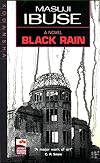
This book started as a serialization in the magazine Shincho (Shinchosha Publishing Co, Ltd) in January 1965. Masuji Ibuse used historical records and the diaries of survivors to reconstruct the experience of the devastation caused by the atomic bombing of Hiroshima.
Black Rain switches between the time & immediate aftermath of the bombing, covering the timeframe August the 6th to the 15th (1945) via the main protagonist, Shigematsu Shizuma’ s diary entries and the present (several years show more after).The book opens with Shigematsu’s concerns with his niece, Yasuko and her three failed marriage matches, the reason for which seems to be due to rumours about her health and whether she was exposed to the “Black Rain” fallout from the atomic bomb. In fact Shigematsu compiles a journal with the express aim of proving that she couldn’t have been exposed and thus didn’t have radiation sickness. We soon learn she has.
*
Although the translator John Bester, posits this book firmly within the tradition of the I-Novel (私小説 Shishōsetsu, Watakushi shōsetsu), the narrator is not Masuji Ibuse, but the primary protagonist Shigematsu, through whom we follow a period of his life as though it were laid out for our inspection – Shigematsu’s original reasoning for his journal is to prove his niece hadn’t come into contact with the black rain. By having Shigematsu write out his journal, Ibuse in a clever move, has used the I- Novel tradition to portray a realistic view of the narrator’s world, allowing us to perceive his life during the moment of the blast and the consequences that followed in the days, months and years after. Ibuse also shows us other viewpoints, by weaving them through Shigematsu’s tale, we learn of other survivors, the hibakusha*, whether family members, neighbours or other characters he meets on his journey and via their tales we learn more about this point, this ground zero that will be forever rooted deep in this nations psyche.
In his notes, John Bester writes
“ Black Rain is a portrait of a group of human beings; of the death of a great city; of a nation crumbling into defeat. It is a picture of the Japanese mind that tells more than many sociological studies. Yet more than this, it is a statement of a philosophy. Although that philosophy in its essence, is neither pessimistic nor optimistic, it seems to me to be life-affirming. Dealing with the grimmest of subjects, the work is not, in the end depressing, for the author is ultimately concerned with life rather than death, and with an overall beauty that transcends ugliness of detail. In that sense, I would suggest, Black Rain is not a “book about the bomb” at all.”
*
This is a fascinating quote and one, that with hindsight, I totally agree with, it wasn’t my original response, I think that was a feeling of being overwhelmed by the sheer horror and yet beauty of this book, of trying to come to terms with moments of absolute hell, and don’t let anyone tell you Hell is all fireworks and fiery extravaganza, it’s not. It’s watching your world disintegrate, a loved one slowly mutate and die and then there were moments of sly humour in the descriptions of the everyday reality, in the tender relationships between the characters. This is a book where nothing and everything happened, where everything changed in an instance, one giant exclamation mark decimated all that was known, and yet life in some form goes on.This is a book that the very idea of screams horror and yet where there is humanity, there is humour- where there is life you’ll find hope.
http://parrishlantern.blogspot.co.uk/2012/02/black-rainmasuji-ibuse.html show less
Black Rain switches between the time & immediate aftermath of the bombing, covering the timeframe August the 6th to the 15th (1945) via the main protagonist, Shigematsu Shizuma’ s diary entries and the present (several years show more after).The book opens with Shigematsu’s concerns with his niece, Yasuko and her three failed marriage matches, the reason for which seems to be due to rumours about her health and whether she was exposed to the “Black Rain” fallout from the atomic bomb. In fact Shigematsu compiles a journal with the express aim of proving that she couldn’t have been exposed and thus didn’t have radiation sickness. We soon learn she has.
*
Although the translator John Bester, posits this book firmly within the tradition of the I-Novel (私小説 Shishōsetsu, Watakushi shōsetsu), the narrator is not Masuji Ibuse, but the primary protagonist Shigematsu, through whom we follow a period of his life as though it were laid out for our inspection – Shigematsu’s original reasoning for his journal is to prove his niece hadn’t come into contact with the black rain. By having Shigematsu write out his journal, Ibuse in a clever move, has used the I- Novel tradition to portray a realistic view of the narrator’s world, allowing us to perceive his life during the moment of the blast and the consequences that followed in the days, months and years after. Ibuse also shows us other viewpoints, by weaving them through Shigematsu’s tale, we learn of other survivors, the hibakusha*, whether family members, neighbours or other characters he meets on his journey and via their tales we learn more about this point, this ground zero that will be forever rooted deep in this nations psyche.
In his notes, John Bester writes
“ Black Rain is a portrait of a group of human beings; of the death of a great city; of a nation crumbling into defeat. It is a picture of the Japanese mind that tells more than many sociological studies. Yet more than this, it is a statement of a philosophy. Although that philosophy in its essence, is neither pessimistic nor optimistic, it seems to me to be life-affirming. Dealing with the grimmest of subjects, the work is not, in the end depressing, for the author is ultimately concerned with life rather than death, and with an overall beauty that transcends ugliness of detail. In that sense, I would suggest, Black Rain is not a “book about the bomb” at all.”
*
This is a fascinating quote and one, that with hindsight, I totally agree with, it wasn’t my original response, I think that was a feeling of being overwhelmed by the sheer horror and yet beauty of this book, of trying to come to terms with moments of absolute hell, and don’t let anyone tell you Hell is all fireworks and fiery extravaganza, it’s not. It’s watching your world disintegrate, a loved one slowly mutate and die and then there were moments of sly humour in the descriptions of the everyday reality, in the tender relationships between the characters. This is a book where nothing and everything happened, where everything changed in an instance, one giant exclamation mark decimated all that was known, and yet life in some form goes on.This is a book that the very idea of screams horror and yet where there is humanity, there is humour- where there is life you’ll find hope.
http://parrishlantern.blogspot.co.uk/2012/02/black-rainmasuji-ibuse.html show less

Shortly after the atomic bomb fell on Hiroshima, a black rain fell from the sky that stained everything that it touched. Black Rain is a beautifully written novel exploring the effects not only of the bombing and the subsequent radiation sickness, but also of the privations and sacrifices of war and the fear of defeat. Ibuse is a wonderful writer, capable of exploring these topics without either looking away from or reveling in the horror.
The narrator of the novel is Shigematsu Shizuma, a show more mid-level factory manager, husband, and guardian of his niece, Yasuko, who lives with them. At the time the story begins, Shigematsu is worried whether they will be able to find a husband for Yasuko because a rumor is circulating that she was in Hiroshima when the bomb was dropped. In an effort to belie the rumor, Shigematsu begins copying out his journal of the days in August that detail what he and his family were doing. He plans to lend one copy to the marriage go-between and donate the other to the school collecting firsthand accounts. To support his narrative, Shigematsu asks his wife to write down her thoughts and also includes journal excerpts from two other survivors. The only voice not heard in the novel is Yasuko's.
When Shigematsu is not copying out his journal (and thus relaying to us, the reader, his story), he is with his two friends planning an elaborate carp raising endeavor. The author's ability to switch from the death and misery of the bombing to the everyday activities and concerns of the survivors is one of the things that saves the book from being overwhelmingly depressing. In addition, the way in which the story switches from the "present", nearly a year after the bombing, to the recorded past in his journal keeps the reader from experiencing everything firsthand. We know that the family survives and that in a way creates an emotional buffer which a straight narrative would not do.
Black Rain is an amazing novel as much for what it isn't as for what it is. It isn't maudlin although it is sensitive, it isn't horrific although it looks at horror unflinchingly, and it isn't dismissive when it includes everyday detail. Highly recommended. show less
The narrator of the novel is Shigematsu Shizuma, a show more mid-level factory manager, husband, and guardian of his niece, Yasuko, who lives with them. At the time the story begins, Shigematsu is worried whether they will be able to find a husband for Yasuko because a rumor is circulating that she was in Hiroshima when the bomb was dropped. In an effort to belie the rumor, Shigematsu begins copying out his journal of the days in August that detail what he and his family were doing. He plans to lend one copy to the marriage go-between and donate the other to the school collecting firsthand accounts. To support his narrative, Shigematsu asks his wife to write down her thoughts and also includes journal excerpts from two other survivors. The only voice not heard in the novel is Yasuko's.
When Shigematsu is not copying out his journal (and thus relaying to us, the reader, his story), he is with his two friends planning an elaborate carp raising endeavor. The author's ability to switch from the death and misery of the bombing to the everyday activities and concerns of the survivors is one of the things that saves the book from being overwhelmingly depressing. In addition, the way in which the story switches from the "present", nearly a year after the bombing, to the recorded past in his journal keeps the reader from experiencing everything firsthand. We know that the family survives and that in a way creates an emotional buffer which a straight narrative would not do.
Black Rain is an amazing novel as much for what it isn't as for what it is. It isn't maudlin although it is sensitive, it isn't horrific although it looks at horror unflinchingly, and it isn't dismissive when it includes everyday detail. Highly recommended. show less

Black Rain is set several years after WWII and is told through the main narrator Shigematsu Shizuma as he and a small group of local survivors, including his family, struggle with the stigma and mysterious symptoms of radiation sickness. Which the only cure seems to be that of the common cold and a lot rest; it's that last part that seems to be so upsetting to Japanese sensibility. The narrative revolves around Shigematsu Shizuma’s niece, Yasuko, who is not yet married, and rumors that she show more was hit by poisonous black rain after the Hiroshima bombing, and is now suffering from radiation sickness, lower her chances of finding someone. When someone makes inquires about her, her uncle decides to copy his diary of the days after the bombing so that he can set the record straight about what the family went through and to preserve a first hand account of the immediate aftermath for a local school.
The real power of this narrative comes from narrow focus of these one family as they struggle through the immediate aftermath and fallout. Black Rain is not about the political or social implications of nuclear warfare. Rather, it’s about its everyday consequences and impacts of war on the lives of those who lived it. Through the diary entries we get a clear picture of the hardships rationing, the stress of air raids or the lack of air raids, the complications of black market dealings, and the bureaucracy of life under army rule. Then there was the flash that changed it all for the people of Hiroshima. The Diary entries detail the bombing from several perspectives, describing the deaths and injuries of the victims in all their gory detail. Some of descriptions are extremely disturbing. But what really stands out is the chaos and confusion that prevails the situation throughout the first week. Victims not knowing were to seek safety from the flames; not knowing how to deal with the dead and dieing; the continued frustration of dealing with a never-ending bureaucracy to get help and needed supplies; and finally the surreal reaction to the final surrender. The immense suffering of and udder lack of humanity that saturates the whole situation (I'm including the victims here as well) is enough to cause me to question what the hell is wrong with the species.
Black Rain is a very moving book, written in a very quiet, restrained tone. The lack emotions stands in stark contrast to that of western writers. The casual observations that make up much of the diary entries are what make this fictional biography so disturbing. Anger or self-pity would detract from understanding the totality of this tragedy. Black Rain is one of those books that should be required reading in history class covering the war with Japan. The images from this book will linger in my mind for a long time to come. show less
The real power of this narrative comes from narrow focus of these one family as they struggle through the immediate aftermath and fallout. Black Rain is not about the political or social implications of nuclear warfare. Rather, it’s about its everyday consequences and impacts of war on the lives of those who lived it. Through the diary entries we get a clear picture of the hardships rationing, the stress of air raids or the lack of air raids, the complications of black market dealings, and the bureaucracy of life under army rule. Then there was the flash that changed it all for the people of Hiroshima. The Diary entries detail the bombing from several perspectives, describing the deaths and injuries of the victims in all their gory detail. Some of descriptions are extremely disturbing. But what really stands out is the chaos and confusion that prevails the situation throughout the first week. Victims not knowing were to seek safety from the flames; not knowing how to deal with the dead and dieing; the continued frustration of dealing with a never-ending bureaucracy to get help and needed supplies; and finally the surreal reaction to the final surrender. The immense suffering of and udder lack of humanity that saturates the whole situation (I'm including the victims here as well) is enough to cause me to question what the hell is wrong with the species.
Black Rain is a very moving book, written in a very quiet, restrained tone. The lack emotions stands in stark contrast to that of western writers. The casual observations that make up much of the diary entries are what make this fictional biography so disturbing. Anger or self-pity would detract from understanding the totality of this tragedy. Black Rain is one of those books that should be required reading in history class covering the war with Japan. The images from this book will linger in my mind for a long time to come. show less
Lists
Awards


You May Also Like


Associated Authors
Statistics
- Works
- 55
- Also by
- 6
- Members
- 1,199
- Popularity
- #21,406
- Rating
- 3.9
- Reviews
- 31
- ISBNs
- 62
- Languages
- 11
- Favorited
- 5


