

Rebecca Ore
Author of Becoming Alien
About the Author
Image credit: photo by Noemi Armstrong
Series
Works by Rebecca Ore
Becoming Alien 1 1 copy
Accelerated Grimace 1 copy
Writ of Execution 1 copy
My Mother the Alien and Me 1 copy
Writing's Writing 1 copy
Associated Works
The Year's Best Science Fiction: Eleventh Annual Collection (1994) — Contributor — 467 copies, 2 reviews
Women of Wonder, the Contemporary Years: Science Fiction by Women from the 1970s to the 1990s (1995) — Contributor — 216 copies, 2 reviews
Nebula Awards 29: SFWA's Choices For The Best Science Fiction And Fantasy Of The Year (Nebula Awards Showcase) (1995) — Contributor — 57 copies
Tagged
Common Knowledge
- Legal name
- Brown, Rebecca B.
- Birthdate
- 1948
- Gender
- female
- Education
- Columbia University
- Short biography
- [from Aqueduct Press website]
Rebecca Ore was born in Louisville, KY, out of people from Kentucky and Virginia, Irish Catholic and French Protestant turned Southern Baptist on her mother's side and Welsh and Borderer on her father's. She grew up in South Carolina and fell in love with New York City from a distance, moved there in 1968 and lived on the Upper West Side and Lower East Side for seven years. Somehow, she also attended Columbia University School of General Studies while spending most of her energy in the St. Mark's Poetry Project. In 1975, she moved to San Francisco for almost a year, then moved to Virginia, back and forth several places for several years, finished a Masters in English, then moved to rural Virginia for ten years, writing sf novels and living in her grandparent's house after they died. Next came homeownership of a small house in Philadelphia with a walled garden, one wall stone and brick, one wall stone against a hill, and the west wall not there, since the neighbor and she shared the space. She's been mostly an academic gypsy and has been variously an editorial assistant for the Science Fiction Book Club, a reporter/photographer for the Patrick County Enterprise, and a assistant landscape gardener. She left Philadelphia after 12 years and ended up in the Virginia suburbs of Washington, DC, for a time. She is currently retired and living in Nicaragua after working for government sub-contractors for over a year. - Nationality
- USA
- Birthplace
- Louisville, Kentucky, USA
- Places of residence
- South Carolina, USA
New York, New York, USA
San Francisco, California, USA
Virginia, USA
Philadelphia, Pennsylvania, USA
Nicaragua - Associated Place (for map)
- USA
Members
Discussions
Found: SciFi multi-species academy in Name that Book (March 2021)
Reviews

Strong collection of stories on humans and aliens from a woefully under-appreciated author who has specialized in the topic. These all take place on Earth. There are no secret invasions. The aliens are here, and though they disrupt the lives of those around them, it's not otherwise a big deal. Sometimes the POV is human, sometimes alien. Most of the aliens are from outer space, but in two of the stories the aliens are chimera -- pets+human DNA mixtures created for the rich. An interesting show more albeit disjointed closing essay makes clear that while Ore takes as given that we tell stories of aliens as a metaphor of human relationships, but she also takes the science part of her fiction seriously.
All the stories are strong. "Alien Bootlegger", the first and longest story, is about a small community where everyone either is a bootlegger or deals with them. A cryptic alien sets up shop and clearly baits the bootlegger in charge. What would be a comic tale in 1950s SF is dead serious here. Of the two chimera stories, the stronger is "The Tyrant that I Serve", told from the POV of a terror chimera, i.e., a pet forced by programming and electronics to repeatedly try and kill its thrill-seeking master. The roller coaster of emotions here and the social background implied make the other chimera story pale in comparison. That story is "Giant Flesh Holograms Keep My Baby's Eyes Warm", told from the POV of a human whose ex-lover makes a miniature chimera copy of him. "Ice-gouged Lakes, Glacier-bound Times", POV human, is the most traditional SF, as a human xenobiologist in a near future ice age, trying to determine if an imported group of aliens who are hunted for their fur are actually intelligent. She spends the winter alone with them. "Farming in Virginia", POV alien, places aliens in the hands of exploitive human bureaucracy, an element common in many of her stories. "Projectile Weapons", POV alien, mixes two tropes -- aliens who have adapted to live only in spaceships, and aliens who learn about Earth from TV shows -- into a strong story about who should be responsible for dealing with a criminal event.
Highly recommended. show less
All the stories are strong. "Alien Bootlegger", the first and longest story, is about a small community where everyone either is a bootlegger or deals with them. A cryptic alien sets up shop and clearly baits the bootlegger in charge. What would be a comic tale in 1950s SF is dead serious here. Of the two chimera stories, the stronger is "The Tyrant that I Serve", told from the POV of a terror chimera, i.e., a pet forced by programming and electronics to repeatedly try and kill its thrill-seeking master. The roller coaster of emotions here and the social background implied make the other chimera story pale in comparison. That story is "Giant Flesh Holograms Keep My Baby's Eyes Warm", told from the POV of a human whose ex-lover makes a miniature chimera copy of him. "Ice-gouged Lakes, Glacier-bound Times", POV human, is the most traditional SF, as a human xenobiologist in a near future ice age, trying to determine if an imported group of aliens who are hunted for their fur are actually intelligent. She spends the winter alone with them. "Farming in Virginia", POV alien, places aliens in the hands of exploitive human bureaucracy, an element common in many of her stories. "Projectile Weapons", POV alien, mixes two tropes -- aliens who have adapted to live only in spaceships, and aliens who learn about Earth from TV shows -- into a strong story about who should be responsible for dealing with a criminal event.
Highly recommended. show less
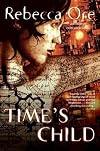
How about this for a wild premise? In the 24th century, pandemics have decimated the population. But all is not lost. There is a time machine that can scoop up people who are about to die and be lost to history. Harvest a little DNA, and the species gets a fresh start.
One of the rescued is a woman who posed for Leonardo da Vinci. Another is a Viking who jumped overboard so he would not be killed by some bandits who weren’t worthy warriors.
Moral: be careful who you bring back. Not everyone show more adapts well to life in the 24th century. If you bring back a Templar, what are you going to say about the fate of Jerusalem? And do you really want to resurrect an Internet troll?
I like the shifting narrative point of view, but the pacing is uneven. The last half seems rushed. Jodi Taylor would be my go-to author for this kind of story. show less
One of the rescued is a woman who posed for Leonardo da Vinci. Another is a Viking who jumped overboard so he would not be killed by some bandits who weren’t worthy warriors.
Moral: be careful who you bring back. Not everyone show more adapts well to life in the 24th century. If you bring back a Templar, what are you going to say about the fate of Jerusalem? And do you really want to resurrect an Internet troll?
I like the shifting narrative point of view, but the pacing is uneven. The last half seems rushed. Jodi Taylor would be my go-to author for this kind of story. show less

Rebecca Ore seems to be one seriously underrated writer of science fiction. The back of the jacket of my copy of this book has a list of stellar SF writers singing her praises, but she never comes up in discussions of SF or even of SF writers. On a quick search, I found about a dozen passing references to her in LT Talk. I can't find her at all at SF Mistressworks, even though her novel Becoming Human should certainly count as a minor classic. My hypothesis is that she's just too damn show more uncompromising. When you enter her future world, it takes quite a few chapters to figure out exactly where you are. This is true even in this book, which has clear ties as an extrapolation of concerns from the 1990's, particularly genetic engineering and eco-terrorism. When you get to the end, there are resolutions but no simple happy endings.
There are three character arcs: two told in third-person subjective, the other in first-person. Willie is a drode-head. It's clear his life involves being used for some tasks, perhaps unsavory, but what they are, he never remembers. He's basically at the bottom of society, just above living purely on the dole. What exactly drode-heads are isn't explored until halfway through the book. Dorca is an assistant in an academic genetic research lab, who self-admits to sleeping her way into her jobs. Both she and her boss siphon funds and materials for side projects, but while his is for potential riches, she is engineering insects to change human behavior, in order to reduce humanity's damaging effects on the world. We meet Allison, the main protagonist, when she is captured in an act of eco-terrorism. Her treatment by the Fed is pretty brutal -- not torture, per se, but a total invasion of her mind and body. But her friends were no better. They sent her off to be blown up by a hidden nuke. The Feds offer her a deal to work with them to find whoever is creating the insects. Throughout the book, neither Allison nor the reader is ever sure what agendas anyone has, but clearly she -- and Willie, and eventually Dorca -- are pawns in multiple games.
One caution for sensitive readers: Ore's books have frequent explicit sex elements. Not extended erotic passages, but very few pages go by without some form of sex occurring.
Unique and recommended. show less
There are three character arcs: two told in third-person subjective, the other in first-person. Willie is a drode-head. It's clear his life involves being used for some tasks, perhaps unsavory, but what they are, he never remembers. He's basically at the bottom of society, just above living purely on the dole. What exactly drode-heads are isn't explored until halfway through the book. Dorca is an assistant in an academic genetic research lab, who self-admits to sleeping her way into her jobs. Both she and her boss siphon funds and materials for side projects, but while his is for potential riches, she is engineering insects to change human behavior, in order to reduce humanity's damaging effects on the world. We meet Allison, the main protagonist, when she is captured in an act of eco-terrorism. Her treatment by the Fed is pretty brutal -- not torture, per se, but a total invasion of her mind and body. But her friends were no better. They sent her off to be blown up by a hidden nuke. The Feds offer her a deal to work with them to find whoever is creating the insects. Throughout the book, neither Allison nor the reader is ever sure what agendas anyone has, but clearly she -- and Willie, and eventually Dorca -- are pawns in multiple games.
One caution for sensitive readers: Ore's books have frequent explicit sex elements. Not extended erotic passages, but very few pages go by without some form of sex occurring.
Unique and recommended. show less

Of Mythoconstructs and Men
* Caution: minor spoilers ahead! Also, trigger warning for discussions of rape. *
Billy the Kid keeps dying.
Night after night, it seems, Sheriff Pat Garrett guns down Henry McCarty in Pete Maxwell's darkened bedroom - after, of course, an evening romp with Celsa Gutierrez, one of The Kid's many female admirers. But bleeding through these "real" memories come images of a distant, nightmare world: a trocar jammed in Billy's neck. A coffin filled with a warm salt bath. show more Dozens of Celsas: always the same, but different. A man - Pat Garrett, but not really - spying, killing, reviving. "Like a God."
Henry McCarty has been dead for centuries, but in 2067 his memories - or rather, the history books' construction of them - live on in a Billy the Kid chimera. Commonly referred to as "nonhumans," "animals," and "dog meat," chimeras are beings made out of "rebuilt" animal cells. Purchased by wealthy civilians as pets and exploited by the government as "meat-robot" spies, many chimera look physically human - though they can be made to a variety of weird specifications (Luna, for example, has fangs like a vampire). While their DNA is indistinguishable from that of "real" humans, by law the DNA of chimeras must be branded with a special DNA marker. The recreation of criminal personalities is outlawed.
Simon Boyle, a chimera technician for the CIA, made his illegal construct to earn a little extra money. Simon rents out Billy the Kid to rich women, who delight in forcing Billy to relive the last few hours of his life, over and over again, so that they can stand in as his last sexual partner. All goes according to plan until one of these "Joans" steals Billy and he escapes into the world. Now the hunt is on: rogue maker Simon must recapture his chimera before the CIA discovers his betrayal. Caught in the middle is Jane, an employee at the SPCA, which cares for wayward chimera until their "owners" come to reclaim them - or they can be ferried away to safety on a cultural park or Buddhist preserve.
A unique piece of alternate history, Rebecca Ore's The Illegal Rebirth of Billy the Kid broaches a number of questions - including the search for identity, the nature of consent, and what it means to be human - without fully resolving any of them.
Chimera Billy, for example, is best described as a sex slave - he was created for the expressed purpose of being pimped out, raped, time and again - as are many "pet" chimeras. Yet a human cannot legally be said to rape a chimera and, in many cases, chimera are created with the inability to even say no; they are conditioned to enjoy and even desire their own abuse. Luna is a constant visitor to the SPCA; her most recent stay is instigated by an especially brutal attack wherein her owner ripped one of her fangs from her mouth with a pair of pliers. Despite the SPCA's offer of relocation, Luna continues to return to her human, who the staff believes will eventually kill her. "Don't they make you feel happy when they hurt you? I think it's illegal not to," Luna asks Billy.
Killing chimera? Also not a crime. But a chimera who harms a human - or commits any number of minor offenses, such as theft - may be sentenced to death (bringing to mind the animal trials that continued into the 18th century).
The cultural construction and romanticization of Billy the Kid is also a key element of the story; the chimera isn't Henry McCarty per se, but rather a "mythoconstruct" built on the Billy the Kid legends. Because he's physically true to type - short, with small hands and feet, and almost comical buck teeth - Simon's customers aren't buying Billy for his beauty, but rather the mythology surrounding this historic figure. It's significant, then, that it's always his last night that the women choose to replay: they're aroused by the tragedy of it all. Through it all, the chimera struggles to find himself - uncover his own personality, make his own true memories - among the fragments of Billy the Kid. When Lisa, his rescuer-slash-thief, reconnects with Billy at story's end, she remarks, "You don't seem as innocent as you were, as fresh." In becoming an actualized person, he's ceased being Lisa's fantasy of the Historic Billy (as chimera Billy has come to think of his doppleganger).
In many ways, The Illegal Rebirth of Billy the Kid is an indictment of the cult of celebrity worship, while also pointing out the depravity inherent in fetishizing the (presumed) pain and misfortune suffered by another.
There also exist some rather interesting parallels between the push for chimera rights in the future, and the present-day animal liberation movement. The language used to refer to chimera is dehumanizing, likening them to nonhuman animals rather than humans - much as the language we apply to nonhumans suggests that they are somethings rather than someones. Chimera are "dog meat," "pets," and "toys"; the doctors who treat them are "vets"; and they are cared for at the Society for the Prevention of Cruelty to Animals, which seems to have ceased rescuing "lesser" animals like dogs and cats. (Or perhaps future dogs and cats are all lab-created as well.) The "Animal Defense" underground smuggles especially endangered chimera to safety. While Buddhists, like Catholics, view chimera as animals, the difference is that the Buddhist philosophy of non-violence extends to human and non-human animals alike.
Weirdly enough, by story's end Jane has begun breeding "fighting cocks" with Billy, in order to while away the decades of boredom she's facing living an old-fashioned existence on an agricultural park. I guess this suggests that her career rescuing chimera at the SPCA was more about nonconformity than compassion, but it's a disturbing twist nonetheless.
Gendered slurs are common, both from Billy (unsurprising, given the time period from which he hails) and Simon (at one point, Billy's internal monologue brings him to the realization that "the man who made him had weird ideas about women") - but also Buddhist Yaffe (boo!), from whom such sexist language seems out of character. Additionally, Jane refers to an Asian man as "Oriental" - and the author, to someone of biracial heritage as a "half-breed" - derogatory terms which I thought had fallen out of favor by 1991. Also a general trigger warning for rape, which is a fundamental part of the story.
3.5 stars, rounded up to 4 on Amazon.
http://www.easyvegan.info/2013/11/08/the-illegal-rebirth-of-billy-the-kid-by-reb... show less
* Caution: minor spoilers ahead! Also, trigger warning for discussions of rape. *
Billy the Kid keeps dying.
Night after night, it seems, Sheriff Pat Garrett guns down Henry McCarty in Pete Maxwell's darkened bedroom - after, of course, an evening romp with Celsa Gutierrez, one of The Kid's many female admirers. But bleeding through these "real" memories come images of a distant, nightmare world: a trocar jammed in Billy's neck. A coffin filled with a warm salt bath. show more Dozens of Celsas: always the same, but different. A man - Pat Garrett, but not really - spying, killing, reviving. "Like a God."
Henry McCarty has been dead for centuries, but in 2067 his memories - or rather, the history books' construction of them - live on in a Billy the Kid chimera. Commonly referred to as "nonhumans," "animals," and "dog meat," chimeras are beings made out of "rebuilt" animal cells. Purchased by wealthy civilians as pets and exploited by the government as "meat-robot" spies, many chimera look physically human - though they can be made to a variety of weird specifications (Luna, for example, has fangs like a vampire). While their DNA is indistinguishable from that of "real" humans, by law the DNA of chimeras must be branded with a special DNA marker. The recreation of criminal personalities is outlawed.
Simon Boyle, a chimera technician for the CIA, made his illegal construct to earn a little extra money. Simon rents out Billy the Kid to rich women, who delight in forcing Billy to relive the last few hours of his life, over and over again, so that they can stand in as his last sexual partner. All goes according to plan until one of these "Joans" steals Billy and he escapes into the world. Now the hunt is on: rogue maker Simon must recapture his chimera before the CIA discovers his betrayal. Caught in the middle is Jane, an employee at the SPCA, which cares for wayward chimera until their "owners" come to reclaim them - or they can be ferried away to safety on a cultural park or Buddhist preserve.
A unique piece of alternate history, Rebecca Ore's The Illegal Rebirth of Billy the Kid broaches a number of questions - including the search for identity, the nature of consent, and what it means to be human - without fully resolving any of them.
Chimera Billy, for example, is best described as a sex slave - he was created for the expressed purpose of being pimped out, raped, time and again - as are many "pet" chimeras. Yet a human cannot legally be said to rape a chimera and, in many cases, chimera are created with the inability to even say no; they are conditioned to enjoy and even desire their own abuse. Luna is a constant visitor to the SPCA; her most recent stay is instigated by an especially brutal attack wherein her owner ripped one of her fangs from her mouth with a pair of pliers. Despite the SPCA's offer of relocation, Luna continues to return to her human, who the staff believes will eventually kill her. "Don't they make you feel happy when they hurt you? I think it's illegal not to," Luna asks Billy.
Killing chimera? Also not a crime. But a chimera who harms a human - or commits any number of minor offenses, such as theft - may be sentenced to death (bringing to mind the animal trials that continued into the 18th century).
The cultural construction and romanticization of Billy the Kid is also a key element of the story; the chimera isn't Henry McCarty per se, but rather a "mythoconstruct" built on the Billy the Kid legends. Because he's physically true to type - short, with small hands and feet, and almost comical buck teeth - Simon's customers aren't buying Billy for his beauty, but rather the mythology surrounding this historic figure. It's significant, then, that it's always his last night that the women choose to replay: they're aroused by the tragedy of it all. Through it all, the chimera struggles to find himself - uncover his own personality, make his own true memories - among the fragments of Billy the Kid. When Lisa, his rescuer-slash-thief, reconnects with Billy at story's end, she remarks, "You don't seem as innocent as you were, as fresh." In becoming an actualized person, he's ceased being Lisa's fantasy of the Historic Billy (as chimera Billy has come to think of his doppleganger).
In many ways, The Illegal Rebirth of Billy the Kid is an indictment of the cult of celebrity worship, while also pointing out the depravity inherent in fetishizing the (presumed) pain and misfortune suffered by another.
There also exist some rather interesting parallels between the push for chimera rights in the future, and the present-day animal liberation movement. The language used to refer to chimera is dehumanizing, likening them to nonhuman animals rather than humans - much as the language we apply to nonhumans suggests that they are somethings rather than someones. Chimera are "dog meat," "pets," and "toys"; the doctors who treat them are "vets"; and they are cared for at the Society for the Prevention of Cruelty to Animals, which seems to have ceased rescuing "lesser" animals like dogs and cats. (Or perhaps future dogs and cats are all lab-created as well.) The "Animal Defense" underground smuggles especially endangered chimera to safety. While Buddhists, like Catholics, view chimera as animals, the difference is that the Buddhist philosophy of non-violence extends to human and non-human animals alike.
Weirdly enough, by story's end Jane has begun breeding "fighting cocks" with Billy, in order to while away the decades of boredom she's facing living an old-fashioned existence on an agricultural park. I guess this suggests that her career rescuing chimera at the SPCA was more about nonconformity than compassion, but it's a disturbing twist nonetheless.
Gendered slurs are common, both from Billy (unsurprising, given the time period from which he hails) and Simon (at one point, Billy's internal monologue brings him to the realization that "the man who made him had weird ideas about women") - but also Buddhist Yaffe (boo!), from whom such sexist language seems out of character. Additionally, Jane refers to an Asian man as "Oriental" - and the author, to someone of biracial heritage as a "half-breed" - derogatory terms which I thought had fallen out of favor by 1991. Also a general trigger warning for rape, which is a fundamental part of the story.
3.5 stars, rounded up to 4 on Amazon.
http://www.easyvegan.info/2013/11/08/the-illegal-rebirth-of-billy-the-kid-by-reb... show less
Lists
Awards


You May Also Like


Associated Authors
Statistics
- Works
- 23
- Also by
- 9
- Members
- 1,209
- Popularity
- #21,244
- Rating
- 3.5
- Reviews
- 18
- ISBNs
- 29
- Favorited
- 3