
Chelsea Quinn Yarbro (1942–2025)
Author of Hôtel Transylvania
About the Author
Chelsea Quinn Yarbro was born in Berkeley, California on September 15, 1942. She graduated from San Francisco State College in 1963 and worked as a demographic cartographer until becoming a full-time writer in 1970. She writes horror, science fiction, and fantasy novels including Time of the Fourth show more Horseman, To the High Redoubt, Spider Glass, Arcane Wisdome, and The Saint-Germain Cycle series. She has received several awards including a Life Achievement Award from the Horror Writers Association in 2009 and a Life Achievement Award from the World Fantasy Convention in 2014. In 1997, the Transylvanian Society of Dracula bestowed a literary knighthood on her. (Bowker Author Biography) show less
Image credit: Photo by Charles Lucke
Series
Works by Chelsea Quinn Yarbro
Empires, Wars, and Battles: The Middle East from Antiquity to the Rise of the New World (2007) 38 copies, 2 reviews
Cabin 33 4 copies
Frog Pond 3 copies
Un Bel Di 3 copies
Tra gli orrori del 2000 — Author — 3 copies
A Candle for D’Artemis 3 copies
Lost Epiphany 3 copies
The Vildecaz Talents: The complete set of Vildecaz Stories including Nimuar's Loss, The Deceptive Oracle and Agnith's Promise (2014) 2 copies
A Gentleman of the Old School 2 copies
Renfield’s Syndrome 2 copies
Endra -- From Memory 2 copies
False Dawn [short story] 2 copies
Long-Term Investment [short story] 2 copies
Lapses 2 copies
A Question of Patronage 2 copies
Disturb Not My Slumbering Fair 2 copies
Harpy 2 copies
Do I Dare to Eat a Peach? 2 copies
Traditional Values 1 copy
Saint-Germain 2: The Palace 1 copy
Saint-Germain 3: Blood Games 1 copy
Novena 1 copy
Renewal 1 copy
Empires, Wars, and Battles 1 copy
Salome 1 copy
Reencarnações 1 copy
Shattered Light 1 copy
De medepassagier 1 copy
Catching Dreams 1 copy
Sugar Skulls 1 copy
Thy Spinning Wheel Compleat 1 copy
Apr 1992: Investigating 1 copy
And Bob's Your Uncle 1 copy
Genius Loci 1 copy
Advocates 1 copy
Hyacinths 1 copy
The Arrows 1 copy
Dark Wisdom #10 1 copy
Half of the Eclipse 1 copy
Associated Works
Seven Seasons of Buffy: Science Fiction and Fantasy Writers Discuss Their Favorite Television Show (2003) — Contributor — 417 copies, 10 reviews
Women of Wonder: Science Fiction Stories by Women about Women (1975) — Contributor — 369 copies, 5 reviews
The New Women of Wonder: Recent Science Fiction Stories by Women about Women (1977) — Contributor — 198 copies, 5 reviews
Women of Wonder, the Classic Years: Science Fiction by Women from the 1940s to the 1970s (1995) — Contributor — 189 copies, 1 review
The Future Is Female! Volume Two, The 1970s: More Classic Science Fiction Storie s By Women: A Library of America Special Publication (2022) — Contributor — 109 copies, 3 reviews
Graven Images: Fifteen Tales of Dark Magic and Ancient Myth (2000) — Contributor — 57 copies, 1 review
Vampires, Zombies, Werewolves and Ghosts: 25 Classic Stories of the Supernatural (Signet Classics) (2011) — Contributor — 54 copies, 1 review
Light Years and Dark: Science Fiction and Fantasy of and for Our Time (1984) — Contributor — 37 copies
Women of Darkness II: More Original Horror and Dark Fantasy by Contemporary Women Writers (Tor Horror) (1990) — Contributor — 29 copies
Short Things: Tales Inspired by "Who Goes There?" by John W. Campbell, Jr. (2020) 21 copies, 1 review
Gauntlet: Exploring the Limits of Free Expression, No. 6 - Black Racism (1993) — Contributor — 8 copies
Friendly Aliens: Thirteen Stories of the Fantastic Set in Canada by Foreign Authors (1981) — Contributor — 1 copy
Tagged
Common Knowledge
- Other names
- Hopkins, T. C. F.
Fawcett, Quinn (with Bill Fawcett)
Kith, Trystam
Bonner, Terry Nelson
Pryor, Vanessa
Gabor, Camellia (show all 7)
Gabor, Camilla - Birthdate
- 1942-09-15
- Date of death
- 2025-08-31
- Gender
- female
- Education
- San Francisco State College (no degree)
- Occupations
- author
palmist
Tarot card reader
cartographer - Awards and honors
- Bram Stoker Award ( [2008])
International Horror Guild Living Legend (2005)
World Horror Convention Grand Master Award (2003) - Agent
- Irene Kraas
- Nationality
- USA
- Birthplace
- Berkeley, California, USA
- Associated Place (for map)
- California, USA
Members
Discussions
Vampire, Austria, pre-wwII in Name that Book (February 2018)
Humorous fantasy with songs in the back in Name that Book (July 2008)
Reviews
Empires, Wars, and Battles: The Middle East from Antiquity to the Rise of the New World by T. C. F. Hopkins
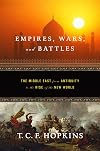
This book is utter rubbish. A short history of such a long period and large, complex region is no doubt a hard thing to write. But the difficulty should be in trying to craft something clear, readable and essentially true despite the extraordinary burdens of compression and necessary exposition. The difficulty shouldn't be in the facts, which a competent undergraduate should have been able to get from reference sources without serious error. But Hopkins (in reality the horror and fantasy show more author Chelsea Quinn Yarbro), gets facts small and large wrong time and again. I'm in serious doubt if she could pass an undergraduate pop quiz on the Successors of Alexander, Romans vs. Byzantines or the early history of Christianity her accounts are so peculiar and error-filled. (To my mind it's also boring and poorly written, but that's really beside the point.)
A non-specialist can, of course, know and say true things about history, but it comes as no surprise to find that Yarbro didn't finish college, "has studied everything from alchemy to zoomancy," writes 3-4 books a year (plus short stories), and made her career writing historical vampire novels. I won't speculate how her general history of the middle east from antiquity to the early modern period got published, but for the sake of the hapless grazers of the remainder table whom it will bore and misinform, it shouldn't have been. show less
A non-specialist can, of course, know and say true things about history, but it comes as no surprise to find that Yarbro didn't finish college, "has studied everything from alchemy to zoomancy," writes 3-4 books a year (plus short stories), and made her career writing historical vampire novels. I won't speculate how her general history of the middle east from antiquity to the early modern period got published, but for the sake of the hapless grazers of the remainder table whom it will bore and misinform, it shouldn't have been. show less
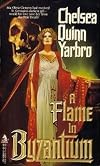
The cover/packaging of this book make it look like a historical horror novel. But the blurb on the back accidentally gives note to what this really is when mentioning it's "a skillful blend of history and fiction, given added spice by the fact that its heroine happens to be a vampire..." Because that's the crux of it: the heroine just happens to be a vampire, but aside from that fact, the book is simply historical fiction.
You might be raising your eyebrow, wondering why I'd say this is just show more a historical fiction novel when at the same time admitting it's about a vampire. Before I'd read the book, I probably would have been doing the same thing. But it's the truth. The fact is, every bit of this book's plot/story could have remained the same if the heroine hadn't been a vampire. You'd take out the few references to her being five centuries old (they don't add anything but backstory, truly), change the few bits that seem to suggest her 'true death' wouldn't be the average person's death, and presto...it would simply be a historical fiction novel.
I'm really not sure what vampirism adds to the book, in all honesty. Perhaps it makes the heroine's confidence and awareness of the world slightly more believable(?), and her friendships more long-lasting, but all of the plotting and tension in the book comes from political and social affairs. I kept waiting for it to really matter that the heroine was a vampire--and perhaps some would argue that it did matter a bit in the end, just for that scene, though I'm not one of them--but as far as I can tell, Yarbro simply wanted to write historical fiction, and because she was known for horror, the book had to be given a horror spin. And 'vampires' mean 'horror'...right? Well, at least in this case, not so much. And all that's fine, but I wish the book didn't present itself as a historical horror, as I imagine it draws in plenty of readers who get knee-deep in it before realizing that it isn't nearly what they meant to sign up for.
If you want to read a historical fiction novel full of political intrigue in the time of the Byzantine Empire, around Year 545, by all means pick up this book. If you're looking for horror or vampires, however, I'd suggest steering clear. show less
You might be raising your eyebrow, wondering why I'd say this is just show more a historical fiction novel when at the same time admitting it's about a vampire. Before I'd read the book, I probably would have been doing the same thing. But it's the truth. The fact is, every bit of this book's plot/story could have remained the same if the heroine hadn't been a vampire. You'd take out the few references to her being five centuries old (they don't add anything but backstory, truly), change the few bits that seem to suggest her 'true death' wouldn't be the average person's death, and presto...it would simply be a historical fiction novel.
I'm really not sure what vampirism adds to the book, in all honesty. Perhaps it makes the heroine's confidence and awareness of the world slightly more believable(?), and her friendships more long-lasting, but all of the plotting and tension in the book comes from political and social affairs. I kept waiting for it to really matter that the heroine was a vampire--and perhaps some would argue that it did matter a bit in the end, just for that scene, though I'm not one of them--but as far as I can tell, Yarbro simply wanted to write historical fiction, and because she was known for horror, the book had to be given a horror spin. And 'vampires' mean 'horror'...right? Well, at least in this case, not so much. And all that's fine, but I wish the book didn't present itself as a historical horror, as I imagine it draws in plenty of readers who get knee-deep in it before realizing that it isn't nearly what they meant to sign up for.
If you want to read a historical fiction novel full of political intrigue in the time of the Byzantine Empire, around Year 545, by all means pick up this book. If you're looking for horror or vampires, however, I'd suggest steering clear. show less

One of Yarbro's trademark historical novels featuring her vampire, Saint Germain. This is set in Russia at the founding of St Petersburg. Saint Germain is impersonating a Hungarian nobleman married to a Polish aristocrat; his wife is spying on Russia at the behest of the Polish king - but needs her husband to accompany her but he's vanished. Step in Saint Germain.
It's an interesting setting; the shanty town erected to house foreign craftsmen, merchants, Russian aristocrats and various show more embassies is built of wood. Even Peter the Great has only got a four-room house when he visits (mind you, he built it himself). The corvée labour force doing the actual building live in tents and die like flies.
In terms of the writing, the stock characters that seemed to be in recent outings are much muted; the unstable female character has been considerably toned down, the virtuous female is still there but isn't OTT. There's no identifiable villain of the piece; there is one - but we never really find out who he actually is. My main issue is the prose - there's a lot of rather poncy language which makes it look like somebody has gone overboard with a thesaurus.
If you enjoy historical vampire novels, this is OK. If I wasn't a Saint Germain fan, I'd probably say this is for the completist; it's one of the weaker ones. show less
It's an interesting setting; the shanty town erected to house foreign craftsmen, merchants, Russian aristocrats and various show more embassies is built of wood. Even Peter the Great has only got a four-room house when he visits (mind you, he built it himself). The corvée labour force doing the actual building live in tents and die like flies.
In terms of the writing, the stock characters that seemed to be in recent outings are much muted; the unstable female character has been considerably toned down, the virtuous female is still there but isn't OTT. There's no identifiable villain of the piece; there is one - but we never really find out who he actually is. My main issue is the prose - there's a lot of rather poncy language which makes it look like somebody has gone overboard with a thesaurus.
If you enjoy historical vampire novels, this is OK. If I wasn't a Saint Germain fan, I'd probably say this is for the completist; it's one of the weaker ones. show less
Pros: political intrigue, sense of dread throughout, wonderfully complex characters
Cons: slow & somewhat confusing beginning
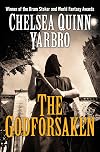
King Alonzo II’s Spanish court works in close connection with the Inquisition of Padre Juan Murador, rooting out heresy wherever it lies. At an auto-da-fe, a condemned woman proclaims her innocence and pronounces a curse on Alonzo’s line, a curse his now 19 year old legitimate son bears the burden - and effects - of. The Infante Real, Don Rolon, is beset by doubts show more as to his worthiness to be the heir to the Spanish throne, as the curse worsens, turning him into a beast during the full moon. But he walks a fine line, as the king would prefer to see his bastard son, Gil del Rey, heir, and the inquisition is eager to find fault with those at court, with spies everywhere.
While the prologue, which sets the scene of the Spanish court and the curse, is easy to follow, I found the first chapter, which introduced Don Rolon a little confusing. We meet him travelling on his father’s orders to a remote castle. Given the number of titles and names used, I thought it was a large party, and only realized that the names and titles were for the same people when the text stated that only 5 people were travelling. The heir is called numerous things, and until I had them all straight (which didn’t take long once I was aware of the situation), it was a bit confusing. Similarly, I had assumed the men travelling with him were all friends, but that turned out to not be the case either.
It takes a while to get into the story as a lot of the early part of the book is cementing the personalities of Don Rolon and, to a lesser extent, Lugantes, the court jester. Other characters are fleshed out and given POV scenes later, when the company returns to court.
The characters are all fascinating, and diverse. Everyone’s terrified of the inquisition, though some less than others, assuming that their innocence and devotion protects them. The priests are all devout in their beliefs that they’re doing god’s work, even as they torture innocents. In fact, some of the most terrifying scenes in the book are listening to the priests justify their work, knowing they’re 100% oblivious to the irony of their accusations in comparison to their actions.
While I liked Don Rolon’s complexity in his dealings with everyone, my favourite character was the jester. Lugantes, though a little person and much mocked by the court as a whole, with the noted exception of Don Rolon, which earns him Lugantes’ devotion, is remarkably clever. He hides his cleverness with japes and jokes, and uses his lower status as a form of invisibility, to learn important news and visit people in private. He’s given a good amount of page time, and he’s instrumental in helping Don Rolon, though he also has his own interests (and love) to occupy, and worry, him.
Not given as much page time, but interesting all the same - if not as developed a character - is Don Rolon’s valet, Ciro Eje, a converso who’s not as devout in his Catholicism as would be wise considering his position.
Certain other characters changed over the course of the book, making me like them more. I’d put Genevieve, the French Queen and Don Rolon’s fiance in that category. Conversely, I liked Inez at first, but her unwise decisions - and to be fair, Don Rolon’s interest in her - put her in danger.
The king’s blindness towards what the priests were doing - and some of the liberties he allows them to take with their accusations and denouncements, is astonishing. And led to several plot twists, especially towards the end, that I did not see coming.
There’s a deep feeling of dread that settles on you as you read this book. As with actual torture, there’s so much anticipation of what the Inquisition will do to Don Rolon should they learn what the curse does to him that it starts to feel like a physical weight pressing you down as you read on. So many people you come to care for are in so much danger that you rush towards the ending, just to put yourself out of the misery of uncertainty. And while I wasn’t necessarily happy with the ending, it did suit the book magnificently.
The book takes place in Spain, but the protagonists are all invented - including the royal family. The curse makes the book a very light historical fantasy, though it reads like historical fiction. If you like political intrigue and touches of horror in your stories, you’ll love this. show less
Cons: slow & somewhat confusing beginning
King Alonzo II’s Spanish court works in close connection with the Inquisition of Padre Juan Murador, rooting out heresy wherever it lies. At an auto-da-fe, a condemned woman proclaims her innocence and pronounces a curse on Alonzo’s line, a curse his now 19 year old legitimate son bears the burden - and effects - of. The Infante Real, Don Rolon, is beset by doubts show more as to his worthiness to be the heir to the Spanish throne, as the curse worsens, turning him into a beast during the full moon. But he walks a fine line, as the king would prefer to see his bastard son, Gil del Rey, heir, and the inquisition is eager to find fault with those at court, with spies everywhere.
While the prologue, which sets the scene of the Spanish court and the curse, is easy to follow, I found the first chapter, which introduced Don Rolon a little confusing. We meet him travelling on his father’s orders to a remote castle. Given the number of titles and names used, I thought it was a large party, and only realized that the names and titles were for the same people when the text stated that only 5 people were travelling. The heir is called numerous things, and until I had them all straight (which didn’t take long once I was aware of the situation), it was a bit confusing. Similarly, I had assumed the men travelling with him were all friends, but that turned out to not be the case either.
It takes a while to get into the story as a lot of the early part of the book is cementing the personalities of Don Rolon and, to a lesser extent, Lugantes, the court jester. Other characters are fleshed out and given POV scenes later, when the company returns to court.
The characters are all fascinating, and diverse. Everyone’s terrified of the inquisition, though some less than others, assuming that their innocence and devotion protects them. The priests are all devout in their beliefs that they’re doing god’s work, even as they torture innocents. In fact, some of the most terrifying scenes in the book are listening to the priests justify their work, knowing they’re 100% oblivious to the irony of their accusations in comparison to their actions.
While I liked Don Rolon’s complexity in his dealings with everyone, my favourite character was the jester. Lugantes, though a little person and much mocked by the court as a whole, with the noted exception of Don Rolon, which earns him Lugantes’ devotion, is remarkably clever. He hides his cleverness with japes and jokes, and uses his lower status as a form of invisibility, to learn important news and visit people in private. He’s given a good amount of page time, and he’s instrumental in helping Don Rolon, though he also has his own interests (and love) to occupy, and worry, him.
Not given as much page time, but interesting all the same - if not as developed a character - is Don Rolon’s valet, Ciro Eje, a converso who’s not as devout in his Catholicism as would be wise considering his position.
Certain other characters changed over the course of the book, making me like them more. I’d put Genevieve, the French Queen and Don Rolon’s fiance in that category. Conversely, I liked Inez at first, but her unwise decisions - and to be fair, Don Rolon’s interest in her - put her in danger.
The king’s blindness towards what the priests were doing - and some of the liberties he allows them to take with their accusations and denouncements, is astonishing. And led to several plot twists, especially towards the end, that I did not see coming.
There’s a deep feeling of dread that settles on you as you read this book. As with actual torture, there’s so much anticipation of what the Inquisition will do to Don Rolon should they learn what the curse does to him that it starts to feel like a physical weight pressing you down as you read on. So many people you come to care for are in so much danger that you rush towards the ending, just to put yourself out of the misery of uncertainty. And while I wasn’t necessarily happy with the ending, it did suit the book magnificently.
The book takes place in Spain, but the protagonists are all invented - including the royal family. The curse makes the book a very light historical fantasy, though it reads like historical fiction. If you like political intrigue and touches of horror in your stories, you’ll love this. show less
Lists
Awards


You May Also Like


Associated Authors
Statistics
- Works
- 159
- Also by
- 99
- Members
- 9,687
- Popularity
- #2,467
- Rating
- 3.6
- Reviews
- 118
- ISBNs
- 294
- Languages
- 11
- Favorited
- 32