
Rachel Holmes
Author of Eleanor Marx: A Life
Works by Rachel Holmes
Associated Works
Tagged
Common Knowledge
- Legal name
- Homes, Rachel
- Gender
- female
- Education
- Queen Mary and Westfield College (Ph.D)
King's College, London (BA) - Occupations
- biographer
cultural historian
poet - Agent
- United Agents
Maggie Pearlstine Associates, LTD - Relationships
- Brotton, Jerry (partner)
- Nationality
- UK
- Birthplace
- London, England, UK
- Places of residence
- London, England, UK
- Associated Place (for map)
- London, England, UK
Members
Reviews
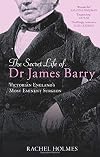
When I started reading this biography, it didn't really hold my attention. This is no reflection on the writing, which is very good, but rather that I'd already read 'The Perfect Gentleman' by June Rose, also a biography of Dr James Barry. Until three-quarters of the way through Holmes' biography, it is quite a straightforward account of Dr Barry's life and accomplishments; interesting, but not new to me. What this biography adds, and takes it up to four stars, is the last sixty pages. 'The show more Perfect Gentleman' treats Dr Barry as unequivocally female and expresses sorrow at the lonely life 'she' must have had as a consequence of this deception. By contrast, 'The Secret Life of Dr James Barry', written 25 years later, engages with the difficulty of assigning Dr James Barry a sex, a gender, and appropriate pronouns. I really appreciated this discussion, as the use of 'she' and 'her' in 'The Perfect Gentleman' troubled me (as I mentioned in my review). Holmes devotes time to views of gender, sex, and intersexuality at the time Dr James Barry lived, relating this to Barry's medical degree thesis on hernia. I found this section fascinating and felt that it struck the right note. These particular examples stood out:
In addition, the final pages comment on the obsession, even now, of reducing Barry's sex to male or female, as if this will reveal the essential truth about him. This part is too long to quote, but excellently articulated. Holmes correctly, to my mind, feels some discomfort with this rather prurient endeavour, which says much more about current prejudices around sex and gender than anything else.
Considering that the book concludes in this way, I find some ironic amusement in the jacket design. For a start, it is pink, which seems to imply a rather more binary view of Barry's sex. Moreover, one of the cover quotes (from the Daily Express) describes the book as, 'Thrillingly romantic'. I could have allowed capital-r Romantic, given that was a cultural tendency of the time that Barry to some extent reflected. But to call Barry's life 'romantic' seems extraordinary, given that the evidence strongly suggests he was single throughout his life. Perhaps I am being unduly sensitive, however that quote reminds me of the constant definition and description of feminine persons in relation to their romantic associations. Use of this word seems especially unfair in Barry's case, given the staggering achievements of his medical career. His life deserves to be described as inspiring, impressive, and ground-breaking, not romantic. The other blurb quotes strike the former note, making the Express one seem all the more jarring. After reading 'The Secret Life of Dr James Barry', I appreciate and sympathise with him more than ever. What a hero. show less
'The telling of James Barry's story is a struggle with pronouns, just as Barry's life was a struggle with pronouns. How limited English seems in allowing us only a male 'he', a female 'she', or a dehumanising, debasing 'it'.'
'The view of men and women as divided by an uncrossable binary division is a very twentieth century conceit, inherited from the Victorians, who were great lovers of organising their culture- and other people- around binary divisions and rigid classifications.'
'What I quickly discovered was that Barry himself did not seem to think that his sex was the most important thing about his own life. James Barry was much more than the sum of his physical parts. His body conditioned his experiences, but it did not finally determine who he was or what he achieved.'
'The secret of Barry's success in presenting himself to the world as a man lay in his knowledge that gender was a matter of entitlement: Barry acted this entitlement in every gesture...'
In addition, the final pages comment on the obsession, even now, of reducing Barry's sex to male or female, as if this will reveal the essential truth about him. This part is too long to quote, but excellently articulated. Holmes correctly, to my mind, feels some discomfort with this rather prurient endeavour, which says much more about current prejudices around sex and gender than anything else.
Considering that the book concludes in this way, I find some ironic amusement in the jacket design. For a start, it is pink, which seems to imply a rather more binary view of Barry's sex. Moreover, one of the cover quotes (from the Daily Express) describes the book as, 'Thrillingly romantic'. I could have allowed capital-r Romantic, given that was a cultural tendency of the time that Barry to some extent reflected. But to call Barry's life 'romantic' seems extraordinary, given that the evidence strongly suggests he was single throughout his life. Perhaps I am being unduly sensitive, however that quote reminds me of the constant definition and description of feminine persons in relation to their romantic associations. Use of this word seems especially unfair in Barry's case, given the staggering achievements of his medical career. His life deserves to be described as inspiring, impressive, and ground-breaking, not romantic. The other blurb quotes strike the former note, making the Express one seem all the more jarring. After reading 'The Secret Life of Dr James Barry', I appreciate and sympathise with him more than ever. What a hero. show less
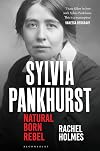
Sylvia Pankhurst: Natural Born Rebel by Rachel Holmes sweeps the reader along as we revisit much of 20th century history. This is so much more than just a biography of a remarkable woman, this is a history of some of the major struggles of last century.
I tend to read several books at a time and when I approach a lengthy book I try to figure out how much I want to read each day while giving the time and thought to my other reads. This is so well written and the subject was such a dynamic show more person that I found myself reading this faster than I intended. Even at the end of those three days I would have happily spent more time wrapped up in Pankhurst's life and Holmes' prose.
While many of the issues Pankhurst confronted are still with us today I think another valuable aspect of this work is showing the reader the types of decisions a person has to make if they decide to follow what they believe to be right. Taking a stand, broadly speaking, can be straightforward. But figuring out exactly how you're going to make that stand can put one at odds with people making the same general stand. It is in deciding specifically how one tries to make an impact that one really has to make tough decisions. Sometimes family and friends are sacrificed in the name of what is right. These more nuanced choices are highlighted in this volume because Pankhurst never shied away from the difficult decisions.
I highly recommend this to any reader interested in the early suffrage movements, as well as 20th century activism as a whole.
Reviewed from a copy made available by the publisher via NetGalley. show less
I tend to read several books at a time and when I approach a lengthy book I try to figure out how much I want to read each day while giving the time and thought to my other reads. This is so well written and the subject was such a dynamic show more person that I found myself reading this faster than I intended. Even at the end of those three days I would have happily spent more time wrapped up in Pankhurst's life and Holmes' prose.
While many of the issues Pankhurst confronted are still with us today I think another valuable aspect of this work is showing the reader the types of decisions a person has to make if they decide to follow what they believe to be right. Taking a stand, broadly speaking, can be straightforward. But figuring out exactly how you're going to make that stand can put one at odds with people making the same general stand. It is in deciding specifically how one tries to make an impact that one really has to make tough decisions. Sometimes family and friends are sacrificed in the name of what is right. These more nuanced choices are highlighted in this volume because Pankhurst never shied away from the difficult decisions.
I highly recommend this to any reader interested in the early suffrage movements, as well as 20th century activism as a whole.
Reviewed from a copy made available by the publisher via NetGalley. show less
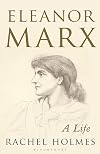
Unrestrained by convention, lion-hearted and free, Eleanor Marx (1855-98) was an exceptional woman. Hers was the first English translation of Flaubert's Mme Bovary. She pioneered the theatre of Henrik Ibsen. She was the first woman to lead the British dock workers' and gas workers' trades unions. For years she worked tirelessly for her father, Karl Marx, as personal secretary and researcher. Later she edited many of his key political works, and laid the foundations for his biography. But show more foremost among her achievements was her pioneering feminism. For her, sexual equality was a necessary precondition for a just society. Drawing strength from her family and their wide circle, including Friedrich Engels and Wilhelm Liebknecht, Eleanor Marx set out into the world to make a difference - her favourite motto: 'Go ahead!' With her closest friends - among them, Olive Schreiner, Havelock Ellis, George Bernard Shaw, Will Thorne and William Morris - she was at the epicentre of British socialism. She was also the only Marx to claim her Jewishness. But her life contained a deep sadness: she loved a faithless and dishonest man, the academic, actor and would-be playwright Edward Aveling. Yet despite the unhappiness he brought her, Eleanor Marx never wavered in her political life, ceaselessly campaigning and organising until her untimely end, which - with its letters, legacies, secrets and hidden paternity - reads in part like a novel by Wilkie Collins, and in part like the modern tragedy it was. Rachel Holmes has gone back to original sources to tell the story of the woman who did more than any other to transform British politics in the nineteenth century, who was unafraid to live her contradictions. show less
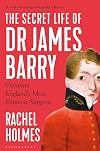
(17) I had never heard of this person despite my profession until I heard a recent talk about the first recorded successful Cesarean section by a physician. And the punch line -- wow. I won't spoil but it is quite a tale. This is the story of a man who rose from nothing and nowhere and trained as a physician and surgeon at one of the best medical schools of the time in the early 1800's in Edinburgh. He had famous mentors who were radicals and supported his career - perhaps related to the show more Beaufort family of England and a family friend of Francisco de Miranda the revolutionary from Venezuela. He ultimately joined the military and was stationed at various tropical islands, caring for Napoleon's circle while he was improsioned on St. Helena, and he served during the Crimean War where he butted heads with Florence Nightingale. He was a singular figure - a dandy, traveling with a poodle and a black servant at all times. He never married but was rumored to have a homosexual relationship with the Governor of Capetown, Lord Somerset. A fascinating person and a mystery only hinted at in his strident correspondence and letters written about him and of him at the time. Despite his personae, he worked assiduously in the trenches with the downtrodden and poor - with lepers, midwives, enlisted soldiers, and those afflicted with sexually transmitted diseases.
The author writes a pretty serviceable biography about an interesting person whom not so much is known about. There is actually good dramatic tension for non-fiction. Homes gives the reader a good sense of historical place and time. The British colonial islands were well described and one could picture Barry striding through the town in high necked ruffled shirts with his attitude and poodle.
Really the best part of the book though was sadly much later on after Barry died and Holmes explored her thesis regarding his identity. This part of the book was well-written and poignant.
Overall, I am glad I read. How could I have not known about the identity of the first surgeon to perform a C-section! The writing was good, not great and there times in the middle between Capetown and his death that were quite dull preventing a higher rating. A really interesting biography and a story that should be more well known. show less
The author writes a pretty serviceable biography about an interesting person whom not so much is known about. There is actually good dramatic tension for non-fiction. Homes gives the reader a good sense of historical place and time. The British colonial islands were well described and one could picture Barry striding through the town in high necked ruffled shirts with his attitude and poodle.
Really the best part of the book though was sadly much later on after Barry died and Holmes explored her thesis regarding his identity. This part of the book was well-written and poignant.
Overall, I am glad I read. How could I have not known about the identity of the first surgeon to perform a C-section! The writing was good, not great and there times in the middle between Capetown and his death that were quite dull preventing a higher rating. A really interesting biography and a story that should be more well known. show less
Lists
Awards


You May Also Like


Associated Authors
Statistics
- Works
- 7
- Also by
- 2
- Members
- 505
- Popularity
- #49,062
- Rating
- 3.9
- Reviews
- 21
- ISBNs
- 34
- Languages
- 1