

Daniel Quinn (1935–2018)
Author of Ishmael
About the Author
Daniel Quinn was born in 1935 and raised in Omaha, Nebraska. He graduated from Creighton Prep and attended St. Louis University, the University of Vienna and Loyola University of Chicago. Quinn worked in educational and consumer publishing, holding editorial positions with the American Peoples show more Encyclopedia, the Greater Cleveland Mathematics Program, the Encyclopedia Britannica Educational Corporation, Fuller and Dees Publishing and the Society for Visual Education. He is best known for his award-winning novel Ishmael (1992), which is about a gorilla able to telepathically communicate, but he has written other novels as well as short fiction. (Bowker Author Biography) show less
Image credit: Photographed at BookPeople in Austin, Texas by Frank Arnold
Series
Works by Daniel Quinn
Newcomer's Guide to the Afterlife: On the Other Side Known Commonly As "The Little Book" (1997) 88 copies, 2 reviews
Helladian vistas 1 copy
Ishmael 1ST Edition 1 copy
Scene 10:10:01 1 copy
Triangle of the Lost 1 copy
Food Production and Population Growth, Why the greatest crisis in human history is being faced in OUR generation. (1998) 1 copy
Power of B 1 copy
An Animist Testament (two Books: The Tales of Adam and the Book of the Damned...on Cassette tapes) (1999) 1 copy
Além da civilização 1 copy
Associated Works
Performing Arts Journal: 13 (Volume V / Number 1) — Contributor — 1 copy
Tagged
Common Knowledge
- Canonical name
- Quinn, Daniel
- Legal name
- Quinn, Daniel Clarence
- Birthdate
- 1935-10-11
- Date of death
- 2018-02-17
- Gender
- male
- Education
- Saint Louis University
University of Vienna
Loyola University (BA|1957) - Occupations
- writer
novelist
educational publishing - Organizations
- Society for Visual Education
Encyclopaedia Britannica Educational Corporation
Science Research Associates
American Peoples Encyclopedia - Awards and honors
- Turner Tomorrow Fellowship Award (1991)
- Cause of death
- aspiration pneumonia
- Nationality
- USA
- Birthplace
- Omaha, Nebraska, USA
- Places of residence
- Houston, Texas, USA
- Place of death
- Houston, Texas, USA
- Associated Place (for map)
- Texas, USA
Members
Reviews

The narrator of this extraordinary tale is a man in search for truth. He answers an ad in a local newspaper from a teacher looking for serious pupils, only to find himself alone in an abandoned office with a full-grown gorilla who is nibbling delicately on a slender branch. "You are the teacher?" he asks incredulously. "I am the teacher," the gorilla replies. Ishmael is a creature of immense wisdom and he has a story to tell, one that no other human being has ever heard. It is a story that show more extends backward and forward over the lifespan of the earth from the birth of time to a future there is still time save. Like all great teachers, Ishmael refuses to make the lesson easy; he demands the final illumination to come from within ourselves. Is it man's destiny to rule the world? Or is it a higher destiny possible for him-- one more wonderful than he has ever imagined? show less
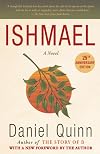
http://andalittlewine.blogspot.com/2012/02/book-6-of-52-ishmael.html
I actually finished Daniel Quinn's Ishmael about two weeks ago.
I've spent the intervening time trying to decide what to say about it. I've been trying to find something positive to say because it came to me on the recommendation of a friend, and because a quick Google search turns up positive review after positive review.
I hated it. I kept trying not to, but I hate it the way I hated the Star Wars prequels: a good idea that show more so wildly misses the mark from development to realization that a project I should support becomes one I oppose.
Let's start at the start: Ishmael is a novel/ philosophical tract in a hybrid dialogue-diary form a la Plato's dialogues, following the unnamed narrator (perhaps Daniel Quinn, the narrator is a writer; perhaps an Everyman) as he meets and learns from the gorilla Ishmael, who communicates via telepathy.
That's not the tough to swallow part.
Ishmael teaches the narrator about the sins of the human kind, about how our lifestyle is destroying the planet, about another way of interacting with the universe.
Ishmael divides the human race into two categories of people: Takers and Leavers, a play on the expression "take it or leave it." The "it" in question is agricultural society. Already, I have alarm bells going off. Any time we view a world through dichotomy (black or white, male or female, liberal or conservative) we limit our vision, and we exclude an array of alternatives (shades of gray, transgender, a political science class worth of political middle grounds).
The Takers destroy the planet because they want to control it. Their fear of the unknown compels them to seize their destiny away from "the gods" (nebulous forces I'll talk more about in a minute). Leavers live as one with the planet because they are more accepting of the limits of nature's bounty, never demanding more than the earth can provide.
Quinn's Leavers are utopian: they work very little; they suffer from no crime, no depression, no fear; they do not destroy the planet as they take from it what they need but only what they need. We Takers are aggressive, violent, and intolerant of anyone who does not accept our lifestyle. Quinn spins the story of Cain and Abel into his Leaver-Taker mythology, as the Taker/agriculturist (Cain) kills and drives of Leaver/hunter-gatherer. Quinn never mentions any of the history of warfare between hunter-gatherer societies, since that would introduce some counterpoint into his argument, and he isn't interested in nuance. Just because the hunter-gatherers Quinn views as our guiding stars are hunter-gatherers, doesn't mean that they are exempt from the feeling of materialism, of greed, of desire that motivates so much of the Taker lifestyle.
Quinn blames our consumerism on a thing he calls Mother Culture, but which I recognize as social assumptions.
There are four kinds of knowledge:
things we know we know,
things we know we don't know,
things we don't know we know,
things we don't know we don't know.
The things we know we know and the things we know we don't know are the obvious. Everything we are aware of falls into one of these two categories. I know how to tie my shows, I know that pi is the constant of a circle, I know the distances down both foul lines at Yankee Stadium. I don't know the density of wood, or the stages of mitosis, or how to program a computer.
Mother Culture is wrapped up in the things we don't know we know. Gender roles, racial biases, the limits of our vocabulary, assumptions about how the world works; all of these happen subconsciously and influence the way we interact with the world. I know that the word "definite" means certain, clear, solid. I didn't look it up, and I don't remember ever learning it at school. I've always known the meaning of the word. Until I meet someone who challenges my knowledge of the word and its limits, it might never move from the category of a thing I don't know I know to a thing I know I know (or a thing I don't know I know!).
When Quinn writes about Mother Culture, she is an enemy. She tricks us into accepting as certain facts about the world we would do well to question: what are the limits of the earth's ability to sustain human life? what responsibilities to we have to keep the earth from that limit? how can we do this?
I like this part of Ishmael. For all my dislike of the book before and after the introduction of Mother Culture, this is the section I come back to (over and over again) in my effort to find something to like. In confronting Mother Culture, Quinn finds traces of another way to live that doesn't involve the materialism that threatens to absorb and destroy the world.
It seems to me that a pursuit of "the well examined life" may be our highest purpose. If we question ourselves deeply on what we know, why we know it, and what more we need to know, then I see no way we could not because fuller human beings, capable of ever greater acts of empathy and compassion to the world around us. In chapter 2 of Genesis, God gives Adam stewardship of all world, of all the plants and animals, of his wife and (eventually) his children. This rings true to me, that our greatest responsibility is to each other.
This responsibility to each other is not what Quinn draws out of his examination of Mother Culture. His examination of Mother Culture ends with the conclusion that the agricultural lifestyle is the wrong one, and that it must be abandoned at all costs. Even if it means allowing the majority of the population of the planet to starve to death whenever population outstrips the limits of the uncultivated earth's production. It's easy to imagine how simple life would be if we were a race of 1 million instead of 7 billion, but Quinn actually advocates it. Let 'em die off. He says it explicitly, repeatedly, and remorselessly. Let 'em die off until our numbers are reduced to manageable levels, and if drought comes, more shall die. It is unconscionable, and it overshadows and diminishes every part of Quinn's treatise.
In this section the of Ishmael, Quinn writes quite a bit about "the gods" and their will. These are not a pantheon or a stand in for any divinity that I recognize, but seem to be the capriciousness of the climate and weather and soil composition anthropomorphized. Quinn has built an entire logical argument that ends with a shrug that says, "if the gods will."
Ultimately, Quinn's argument falls apart for me when he attributes perfection to the Leavers and assigns blame for all the world's woes to the Takers. Quinn argues that the Leavers, as evidenced by their lifestyle, live in greater harmony with the world; we can see clearly that this lifestyle and that lifestyle are different, but I am unconvinced that the manifest differences are born from intrinsic differences, rather than the social differences of opportunity, education, and experience. The fact that the hunter-gatherers haven't built a city doesn't tell me that none of them might want to. show less
I actually finished Daniel Quinn's Ishmael about two weeks ago.
I've spent the intervening time trying to decide what to say about it. I've been trying to find something positive to say because it came to me on the recommendation of a friend, and because a quick Google search turns up positive review after positive review.
I hated it. I kept trying not to, but I hate it the way I hated the Star Wars prequels: a good idea that show more so wildly misses the mark from development to realization that a project I should support becomes one I oppose.
Let's start at the start: Ishmael is a novel/ philosophical tract in a hybrid dialogue-diary form a la Plato's dialogues, following the unnamed narrator (perhaps Daniel Quinn, the narrator is a writer; perhaps an Everyman) as he meets and learns from the gorilla Ishmael, who communicates via telepathy.
That's not the tough to swallow part.
Ishmael teaches the narrator about the sins of the human kind, about how our lifestyle is destroying the planet, about another way of interacting with the universe.
Ishmael divides the human race into two categories of people: Takers and Leavers, a play on the expression "take it or leave it." The "it" in question is agricultural society. Already, I have alarm bells going off. Any time we view a world through dichotomy (black or white, male or female, liberal or conservative) we limit our vision, and we exclude an array of alternatives (shades of gray, transgender, a political science class worth of political middle grounds).
The Takers destroy the planet because they want to control it. Their fear of the unknown compels them to seize their destiny away from "the gods" (nebulous forces I'll talk more about in a minute). Leavers live as one with the planet because they are more accepting of the limits of nature's bounty, never demanding more than the earth can provide.
Quinn's Leavers are utopian: they work very little; they suffer from no crime, no depression, no fear; they do not destroy the planet as they take from it what they need but only what they need. We Takers are aggressive, violent, and intolerant of anyone who does not accept our lifestyle. Quinn spins the story of Cain and Abel into his Leaver-Taker mythology, as the Taker/agriculturist (Cain) kills and drives of Leaver/hunter-gatherer. Quinn never mentions any of the history of warfare between hunter-gatherer societies, since that would introduce some counterpoint into his argument, and he isn't interested in nuance. Just because the hunter-gatherers Quinn views as our guiding stars are hunter-gatherers, doesn't mean that they are exempt from the feeling of materialism, of greed, of desire that motivates so much of the Taker lifestyle.
Quinn blames our consumerism on a thing he calls Mother Culture, but which I recognize as social assumptions.
There are four kinds of knowledge:
things we know we know,
things we know we don't know,
things we don't know we know,
things we don't know we don't know.
The things we know we know and the things we know we don't know are the obvious. Everything we are aware of falls into one of these two categories. I know how to tie my shows, I know that pi is the constant of a circle, I know the distances down both foul lines at Yankee Stadium. I don't know the density of wood, or the stages of mitosis, or how to program a computer.
Mother Culture is wrapped up in the things we don't know we know. Gender roles, racial biases, the limits of our vocabulary, assumptions about how the world works; all of these happen subconsciously and influence the way we interact with the world. I know that the word "definite" means certain, clear, solid. I didn't look it up, and I don't remember ever learning it at school. I've always known the meaning of the word. Until I meet someone who challenges my knowledge of the word and its limits, it might never move from the category of a thing I don't know I know to a thing I know I know (or a thing I don't know I know!).
When Quinn writes about Mother Culture, she is an enemy. She tricks us into accepting as certain facts about the world we would do well to question: what are the limits of the earth's ability to sustain human life? what responsibilities to we have to keep the earth from that limit? how can we do this?
I like this part of Ishmael. For all my dislike of the book before and after the introduction of Mother Culture, this is the section I come back to (over and over again) in my effort to find something to like. In confronting Mother Culture, Quinn finds traces of another way to live that doesn't involve the materialism that threatens to absorb and destroy the world.
It seems to me that a pursuit of "the well examined life" may be our highest purpose. If we question ourselves deeply on what we know, why we know it, and what more we need to know, then I see no way we could not because fuller human beings, capable of ever greater acts of empathy and compassion to the world around us. In chapter 2 of Genesis, God gives Adam stewardship of all world, of all the plants and animals, of his wife and (eventually) his children. This rings true to me, that our greatest responsibility is to each other.
This responsibility to each other is not what Quinn draws out of his examination of Mother Culture. His examination of Mother Culture ends with the conclusion that the agricultural lifestyle is the wrong one, and that it must be abandoned at all costs. Even if it means allowing the majority of the population of the planet to starve to death whenever population outstrips the limits of the uncultivated earth's production. It's easy to imagine how simple life would be if we were a race of 1 million instead of 7 billion, but Quinn actually advocates it. Let 'em die off. He says it explicitly, repeatedly, and remorselessly. Let 'em die off until our numbers are reduced to manageable levels, and if drought comes, more shall die. It is unconscionable, and it overshadows and diminishes every part of Quinn's treatise.
In this section the of Ishmael, Quinn writes quite a bit about "the gods" and their will. These are not a pantheon or a stand in for any divinity that I recognize, but seem to be the capriciousness of the climate and weather and soil composition anthropomorphized. Quinn has built an entire logical argument that ends with a shrug that says, "if the gods will."
Ultimately, Quinn's argument falls apart for me when he attributes perfection to the Leavers and assigns blame for all the world's woes to the Takers. Quinn argues that the Leavers, as evidenced by their lifestyle, live in greater harmony with the world; we can see clearly that this lifestyle and that lifestyle are different, but I am unconvinced that the manifest differences are born from intrinsic differences, rather than the social differences of opportunity, education, and experience. The fact that the hunter-gatherers haven't built a city doesn't tell me that none of them might want to. show less

This is supposedly a novel about a young girl learning about human culture from a telepathic gorilla, but it barely qualifies as a novel. The gorilla, Ishmael, is really just a mouthpiece for Daniel Quinn's views, and the girl (Julie) does little more than say "Uh-huh" to Ishmael's two-chapter-long parables about life on alien planets.
Quinn's argument is that schooling in modern society is not about education, but actually entirely about helping business out in two ways. 1) It keeps people show more out of the work force until they are at least eighteen, solving the problems that would result from massive unemployment that would ensue if they were in it. 2) Because kids are not working, they have access to their parents' funds (a lot more than they would probably have if they were on their own) and thus can spend lots of money on teen-marketed stuff. He idealizes a tribal form of education, where everyone learns from the community what they need to survive. In tribal society, he says, kids passed into adulthood when they hit puberty because at that point they had learned how to survive, whereas in our society, even when people graduate after twelve years of schooling, "their survival value is virtually zero. If the rest of the community were to vanish overnight and they were left entirely to their own resources, they'd be very lucky to survive at all" (133).
Because the purpose of education is to merely keep people in a holding pattern for twelve years, Quinn says, "real school falls [far short] from the ideal of 'young minds being awakened'" (131). One of things that teachers discourage in their effort to move through the curriculum is questions from students, because it is a distraction.* This is in direct opposition to a different reading from the same class, from Cris Tovani's I Read It, but I Don't Get It: Comprehension Strategies for Adolescent Readers, which was all about getting students to ask questions. (Now I think a lot of Tovani is ridiculous, but it's her methods I usually disagree with, not her goals.) Our professor asked us to look at the two viewpoints and compare them.
What I think it comes down to is Quinn's cynicism. He says our lifestyle (by this I mean the human society that has existed since mankind began farming in the Fertile Crescent) is predicated on the fact that everything, from the code of Hammurabi to the constitution of the United States of America, only works "if people were better.... All this would work beautifully... if people would just be better than people have ever been" (121). He argues that the reason the tribal way worked so well for the three million years prior to our society is that it "didn't depend on people being better. It worked for people the way they are-- unimproved, unenlightened, troublesome, disruptive, selfish, mean, cruel, greedy, and violent" (121). The tribal system doesn't assume that laws can stop a man from committing adultery, it assumes that it will happen, and so it "prescribes steps that minimize the damage done by this act of infidelity" (108). According to Quinn, people aren't perfect (something I think no one will disagree with), but they will never be able to improve (something that, especially as a humanist, I fundamentally disagree with).
So Quinn does see school as something, that to an extent at least, could work. Ideally, questions would be asked by student and answered by students; it's just that the way the system actually works (thanks to imperfect human nature) is not like that, by and large. I think Quinn and Tovani would agree on that point, but it's their solutions that differ. Tovani seems to have a fundamentally idealistic viewpoint-- the system can work if we just do it right-- whereas Quinn's is fundamentally cynical-- the system will never work, so logically we must dismantle it. (Note that I think that Quinn would disagree with my assessment of him; I suspect he would consider himself a realist, not a cynic, but I consider him a cynic since I believe humanity is fundamentally capable of self-improvement.) Tovani gives methods for creating questioning in the classroom, but Quinn starts from the assumption that it will simply never happen.
I haven't yet gotten to where Quinn explains what he thinks should be done instead of the human society he criticizes so much, it is obvious he think the ultimate goal of education is survival. Not just survival in society, but the sort of primitive survival a member of a tribal society would have to pull off. This is what really bothers me about My Ishmael. Is survival all humankind has to look forward to? An ability to go beyond survival is what sets us apart from animals. All an animal wants to do is survive, but a human being has so much more. It reminds me of a late-night conversation I had in high school with some friends where they opined that everyone should be dropped into a forest and forced to fight their way out or something to prove their worth to continue existing in society. At the time, this really irritated me, but I later realized what ticked me off. As human beings, what sets us apart is that we help those who would die otherwise. Civilization is about creating an environment where Quinn's primitive survival is not needed. If all that mattered was survival, we wouldn't have art or iPods or philosophy or Doctor Who or books or anything that didn't relate to eating and keeping warm. This is what makes humanity superior to animals; in fact, it's what makes our society superior to the tribal ones Quinn admires.
There's one very important thing we also wouldn't have. And that is a book called My Ishmael. What did this book contribute to my survival? Nothing. I read it because I was required to, technically speaking, but in a general way, I read it simply to be more educated. Education outside of one's immediate field and interests can most definitely be a good thing; though I may complain when I take the classes, I am a proponent of liberal arts programs. But learning about musical theater and orogeny has not set me up for survival at all-- much like My Ishmael.
But the kicker is that in the sort of tribal society Quinn idealizes, My Ishmael couldn't have been written. Time and again, he traces the shift from tribal society to what he calls "Taker society" to the development of agriculture. More specifically, it's when people began to specialize: instead of everyone focusing on providing food, certain people began to produce more than they needed and give that to others in exchange for things they wanted. This sort of specialization is what makes modern society possible, of course. (Quinn also dislikes specialization, see page 174.) Because someone is making more food than he needs, other people can acquire this food in exchange for things they are good at making. But Quinn doesn't see this as an advancement:
"But you're also saying that the real innovation of our revolution wasn't growing the food, it was locking it up."
"Yes, that was certainly the key. Your revolution would have ground to a halt without that feature. It would grind to halt today without that feature." (61)
Again and again throughout the book, "locking up the food" is cited as a reason for the ills of Taker society. But how does Daniel Quinn eat? He doesn't grow his own food**; rather he writes a book, gets paid for it, heads down to the grocery store, and hands over his money to the people who locked up the food. If no one locked up food, he wouldn't be writing My Ishmael; he'd be in the forest spearing a deer or digging up roots. Rather than the downfall of human society, "locking up the food" is fundamental to it, its greatest triumph. Without this division of labor that leads to food-growers locking it up (because, after all, the want to get something in return for the food prior to handing it over), we would still be a sustenance society, not a society that had produced William Shakespeare, the Mona Lisa, the Taj Mahal.
And yes, we'd be a society without My Ishmael to tell us where we'd gone wrong by just existing. (originally written December 2005)
* His example of a discouraged question, however, is asking in a lesson on tidal forces about whether or not it's true people go crazy on the full moon. I don't care how open a teacher is, he is going to find that question pretty dang irrelevant
** Okay, I suppose he could. But I'm pretty sure he doesn't. show less
Quinn's argument is that schooling in modern society is not about education, but actually entirely about helping business out in two ways. 1) It keeps people show more out of the work force until they are at least eighteen, solving the problems that would result from massive unemployment that would ensue if they were in it. 2) Because kids are not working, they have access to their parents' funds (a lot more than they would probably have if they were on their own) and thus can spend lots of money on teen-marketed stuff. He idealizes a tribal form of education, where everyone learns from the community what they need to survive. In tribal society, he says, kids passed into adulthood when they hit puberty because at that point they had learned how to survive, whereas in our society, even when people graduate after twelve years of schooling, "their survival value is virtually zero. If the rest of the community were to vanish overnight and they were left entirely to their own resources, they'd be very lucky to survive at all" (133).
Because the purpose of education is to merely keep people in a holding pattern for twelve years, Quinn says, "real school falls [far short] from the ideal of 'young minds being awakened'" (131). One of things that teachers discourage in their effort to move through the curriculum is questions from students, because it is a distraction.* This is in direct opposition to a different reading from the same class, from Cris Tovani's I Read It, but I Don't Get It: Comprehension Strategies for Adolescent Readers, which was all about getting students to ask questions. (Now I think a lot of Tovani is ridiculous, but it's her methods I usually disagree with, not her goals.) Our professor asked us to look at the two viewpoints and compare them.
What I think it comes down to is Quinn's cynicism. He says our lifestyle (by this I mean the human society that has existed since mankind began farming in the Fertile Crescent) is predicated on the fact that everything, from the code of Hammurabi to the constitution of the United States of America, only works "if people were better.... All this would work beautifully... if people would just be better than people have ever been" (121). He argues that the reason the tribal way worked so well for the three million years prior to our society is that it "didn't depend on people being better. It worked for people the way they are-- unimproved, unenlightened, troublesome, disruptive, selfish, mean, cruel, greedy, and violent" (121). The tribal system doesn't assume that laws can stop a man from committing adultery, it assumes that it will happen, and so it "prescribes steps that minimize the damage done by this act of infidelity" (108). According to Quinn, people aren't perfect (something I think no one will disagree with), but they will never be able to improve (something that, especially as a humanist, I fundamentally disagree with).
So Quinn does see school as something, that to an extent at least, could work. Ideally, questions would be asked by student and answered by students; it's just that the way the system actually works (thanks to imperfect human nature) is not like that, by and large. I think Quinn and Tovani would agree on that point, but it's their solutions that differ. Tovani seems to have a fundamentally idealistic viewpoint-- the system can work if we just do it right-- whereas Quinn's is fundamentally cynical-- the system will never work, so logically we must dismantle it. (Note that I think that Quinn would disagree with my assessment of him; I suspect he would consider himself a realist, not a cynic, but I consider him a cynic since I believe humanity is fundamentally capable of self-improvement.) Tovani gives methods for creating questioning in the classroom, but Quinn starts from the assumption that it will simply never happen.
I haven't yet gotten to where Quinn explains what he thinks should be done instead of the human society he criticizes so much, it is obvious he think the ultimate goal of education is survival. Not just survival in society, but the sort of primitive survival a member of a tribal society would have to pull off. This is what really bothers me about My Ishmael. Is survival all humankind has to look forward to? An ability to go beyond survival is what sets us apart from animals. All an animal wants to do is survive, but a human being has so much more. It reminds me of a late-night conversation I had in high school with some friends where they opined that everyone should be dropped into a forest and forced to fight their way out or something to prove their worth to continue existing in society. At the time, this really irritated me, but I later realized what ticked me off. As human beings, what sets us apart is that we help those who would die otherwise. Civilization is about creating an environment where Quinn's primitive survival is not needed. If all that mattered was survival, we wouldn't have art or iPods or philosophy or Doctor Who or books or anything that didn't relate to eating and keeping warm. This is what makes humanity superior to animals; in fact, it's what makes our society superior to the tribal ones Quinn admires.
There's one very important thing we also wouldn't have. And that is a book called My Ishmael. What did this book contribute to my survival? Nothing. I read it because I was required to, technically speaking, but in a general way, I read it simply to be more educated. Education outside of one's immediate field and interests can most definitely be a good thing; though I may complain when I take the classes, I am a proponent of liberal arts programs. But learning about musical theater and orogeny has not set me up for survival at all-- much like My Ishmael.
But the kicker is that in the sort of tribal society Quinn idealizes, My Ishmael couldn't have been written. Time and again, he traces the shift from tribal society to what he calls "Taker society" to the development of agriculture. More specifically, it's when people began to specialize: instead of everyone focusing on providing food, certain people began to produce more than they needed and give that to others in exchange for things they wanted. This sort of specialization is what makes modern society possible, of course. (Quinn also dislikes specialization, see page 174.) Because someone is making more food than he needs, other people can acquire this food in exchange for things they are good at making. But Quinn doesn't see this as an advancement:
"But you're also saying that the real innovation of our revolution wasn't growing the food, it was locking it up."
"Yes, that was certainly the key. Your revolution would have ground to a halt without that feature. It would grind to halt today without that feature." (61)
Again and again throughout the book, "locking up the food" is cited as a reason for the ills of Taker society. But how does Daniel Quinn eat? He doesn't grow his own food**; rather he writes a book, gets paid for it, heads down to the grocery store, and hands over his money to the people who locked up the food. If no one locked up food, he wouldn't be writing My Ishmael; he'd be in the forest spearing a deer or digging up roots. Rather than the downfall of human society, "locking up the food" is fundamental to it, its greatest triumph. Without this division of labor that leads to food-growers locking it up (because, after all, the want to get something in return for the food prior to handing it over), we would still be a sustenance society, not a society that had produced William Shakespeare, the Mona Lisa, the Taj Mahal.
And yes, we'd be a society without My Ishmael to tell us where we'd gone wrong by just existing. (originally written December 2005)
* His example of a discouraged question, however, is asking in a lesson on tidal forces about whether or not it's true people go crazy on the full moon. I don't care how open a teacher is, he is going to find that question pretty dang irrelevant
** Okay, I suppose he could. But I'm pretty sure he doesn't. show less
I had been hearing about the Ishmael books for a while before finally deciding to read Ishmael and My Ishmael. I certainly didn't expect a novel involving a telepathic gorilla who teaches about how civilization has become so destructive. Sometimes the structure or dialogue is a little clunky, but the message comes through and is the important part. Through his two characters--Ishmael and an unnamed narrator--Quinn offers a dissection of the underlying ideology of western/agricultural show more societies compared to older, aboriginal cultures. Very eye-opening/mind-altering to see such ideas laid bare. The main question is what can we do to reverse or alter our course before we destroy ourselves? Quinn believes that motivated and aware people must come up with their own solutions. If the problem is hierarchical domination, then the solutions must be decentralized and adapted to local needs and concerns. show less
Lists
Favourite Books (1)
Awards


You May Also Like


Associated Authors
Statistics
- Works
- 38
- Also by
- 3
- Members
- 11,940
- Popularity
- #1,964
- Rating
- 3.9
- Reviews
- 186
- ISBNs
- 105
- Languages
- 16
- Favorited
- 55