
Scott Heim
Author of Mysterious Skin
About the Author
Image credit: Facebook
Series
Works by Scott Heim
Loam: Disorder collection 1 copy
Associated Works
Boys Like Us: Gay Writers Tell Their Coming Out Stories (1996) — Contributor — 426 copies, 2 reviews
Tagged
Common Knowledge
- Canonical name
- Heim, Scott
- Birthdate
- 1966-09-26
- Gender
- male
- Education
- University of Kansas (BA - English, MA - English, MFA - English)
- Agent
- Dorian Karchmar (William Morris)
- Nationality
- USA
- Birthplace
- Hutchinson, Kansas, USA
- Places of residence
- Roslindale, Massachusetts, USA
- Associated Place (for map)
- USA
Members
Reviews
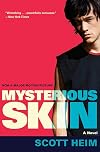
Two eight year old boys are molested by their Little League baseball coach and take different paths to discover the truth.
Neil becomes a teenage gay hustler with a taste for older men. He has few friends and fewer confidants. Brian 'loses' any trace of what happened with the coach and believes he was a victim of a UFO abduction. They seem to be on an eventual collision course in search of the truth.
Brian uncovers the true events on that terrible day long ago and Neil's participation. Neil show more discovers that maybe sex with the coach was not quite the idealized, romantic encounters that he remembers. Both young men seem to be at a crucial point in their lives. How can they reconcile what happened so long ago and how it affects their current attitudes towards friends and love.
The graphic subject matter is not for the easily disturbed. Graphic sex, language and violent situations occur throughout the story. But they are not meant to shock, but simply to allow us to experience as close as possible these events in both boys lives. Mr Heim does a masterful job. Both sides of the story are told with equal import. Neither seems sensationalized.
Unfortunately, the subject matter may limit the audience to read this book. I found it cathartic, a triumph of the human spirit in spite of some terrible events. The end comes too soon. I want to see both these young men move forward with their lives having finally put the past behind them. show less
Neil becomes a teenage gay hustler with a taste for older men. He has few friends and fewer confidants. Brian 'loses' any trace of what happened with the coach and believes he was a victim of a UFO abduction. They seem to be on an eventual collision course in search of the truth.
Brian uncovers the true events on that terrible day long ago and Neil's participation. Neil show more discovers that maybe sex with the coach was not quite the idealized, romantic encounters that he remembers. Both young men seem to be at a crucial point in their lives. How can they reconcile what happened so long ago and how it affects their current attitudes towards friends and love.
The graphic subject matter is not for the easily disturbed. Graphic sex, language and violent situations occur throughout the story. But they are not meant to shock, but simply to allow us to experience as close as possible these events in both boys lives. Mr Heim does a masterful job. Both sides of the story are told with equal import. Neither seems sensationalized.
Unfortunately, the subject matter may limit the audience to read this book. I found it cathartic, a triumph of the human spirit in spite of some terrible events. The end comes too soon. I want to see both these young men move forward with their lives having finally put the past behind them. show less
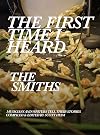
What a great name for a series -- it's an announcement and, at the same time, a question to the reader: what was your first time like? I must have encountered the Smiths as the last song on the Pretty in Pink soundtrack (the wonderfully maudlin "Please Please Please Let Me Get What I Want"), or by way of "Heaven Knows I'm Miserable Now," played on NU 107, a Manila-based FM radio station that specialized exclusively in the alt-radio format and forever changed my life.
But the first time? I show more have no idea; all I have are associated Smiths moments with particular songs, and I would tag people if this were on Facebook:
"Please Please Please Let Me Get What I Want:" two memories, really. One is of sitting next to a portable Toshiba cassette player and hitting the pause / play / rewind buttons to transcribe the lyrics onto a TRS-80 Model 100 portable computer. The other associated memory is, I regret, of my teenage self turning off all the lights and, with my headphones on, lying on the bedroom floor, in despair, over those twin torments of acne and female rejection.
"How Soon Is Now:" played during the intermission of an Edie Brickell and the New Bohemians concert sometime in the early nineties, right after Aztec Camera opened. Said my concert buddy, presumably at a loss for words: "This is a great song." I agreed.
"There Is A Light That Never Goes Out:" the living room of an apartment in Ithaca, NY that I shared with some dear grad student friends. Pretty sure I was singing along to this with one of my housemates.
"I Know It's Over:" wallowing in despair just wouldn't be the same without this song to accompany the wallow.
Still, how did the Smiths speak to me, in 1985? I can't remember. As a young teenager in the Philippines, I had no concept of Manchester, Wilde, or Thatcher, for that matter. I wouldn't have recognized Jean Marais or Joe Dallesandro on the album covers, nor the cinematic reference in "a jumped-up pantry boy." In those pre-internet days, I don't think I even knew what Morrissey looked like until he appeared on the cover of Viva Hate; for the longest time I thought that was him on the cover of Hatful of Hollow. But I recognized a good guitar riff when I heard one, and I thrilled to the language.
Perhaps that was it, the language. Think of the vocabulary sprinkled throughout the Smiths' oeuvre and the last time you heard them in pop music: Miserable. Handsome. Flatulent. Frightening. Bucktoothed. (That internal rhyme of "bucktoothed girl in Luxumbourg" -- brilliant, though it should really have been "buxom.") Humdrum. Gruesome. Privilege. Complexities. Certainly for the mid-eighties -- a time when "Say Say Say" and "Ghostbusters" ruled the Philippine airwaves -- the Smiths sounded remarkably literate, and therefore appealing to a snotty adolescent like me.
But back to The First Time I Heard The Smiths. At first glance, the collection seems a little slight. One doesn't come to these essays for a primer on the '80s, or the Smiths themselves -- no discography trivia here, or historical context -- but those decade's details are worked in by accretion: other bands, the politics, the hair.
This slow accumulation of detail fascinates, as it builds a shared memory united, for the most part, only by music. The materiality of the music, and how people remember it, is remarkable; the act of possession, for instance, is forever lost to the mp3 generation. (So is staring at/into an album cover.) Whether on tape or vinyl, the album itself carried a physical heft in the writers' memories, whether on a shelf, or as one cassette in a Converse shoebox full of tapes. Craig Wedren (from Shudder to Think) remembers lying in the back of an Econoline, listening to his Walkman, with the first Smiths album "on Side Two of a red-and-white BASF cassette." Even the very act of riding a bus and going to a record store is recalled with great detail. (We can't be all as lucky as Zack Linmark, who actually discovers the Smiths in an underground dance club in Hawai'i.)
Nonetheless, all this, alas, doesn't make for the most varied reading. How many times, really, can you describe Marr's guitar lines and Morrissey's voice? (I'll use "sinuous" and "crooning," respectively.) Some of the pieces are mere snippets, more suitable for a quick blog entry. Perhaps I'm used to the creative nonfiction convention of having these insights structured around a narrative, following some arc of discovery. The best essays here, at least to my mind, are those that hew closer to the latter, and those are unfortunately few. Heim's own introduction to the anthology, for one, stands out for its precise detail and evocation of longing.
But there are gems of insight all throughout. Miki Berenyi, who made my heart skip a beat back in the early '90s -- introduced here, alas, as having "zero interest in ever making music again" -- smartly observes that the received wisdom of the Smiths playing music for depressives wasn't quite deserved; the lyrics were, in fact, humorous, and that the music was "irrepressibly full of light and air."
What's most remarkable about the anthology, in the end, is the seeming uniformity of experience, how the Smiths spoke to different people in a common tongue and was intelligible, sometimes, instantly, to all. show less
But the first time? I show more have no idea; all I have are associated Smiths moments with particular songs, and I would tag people if this were on Facebook:
"Please Please Please Let Me Get What I Want:" two memories, really. One is of sitting next to a portable Toshiba cassette player and hitting the pause / play / rewind buttons to transcribe the lyrics onto a TRS-80 Model 100 portable computer. The other associated memory is, I regret, of my teenage self turning off all the lights and, with my headphones on, lying on the bedroom floor, in despair, over those twin torments of acne and female rejection.
"How Soon Is Now:" played during the intermission of an Edie Brickell and the New Bohemians concert sometime in the early nineties, right after Aztec Camera opened. Said my concert buddy, presumably at a loss for words: "This is a great song." I agreed.
"There Is A Light That Never Goes Out:" the living room of an apartment in Ithaca, NY that I shared with some dear grad student friends. Pretty sure I was singing along to this with one of my housemates.
"I Know It's Over:" wallowing in despair just wouldn't be the same without this song to accompany the wallow.
Still, how did the Smiths speak to me, in 1985? I can't remember. As a young teenager in the Philippines, I had no concept of Manchester, Wilde, or Thatcher, for that matter. I wouldn't have recognized Jean Marais or Joe Dallesandro on the album covers, nor the cinematic reference in "a jumped-up pantry boy." In those pre-internet days, I don't think I even knew what Morrissey looked like until he appeared on the cover of Viva Hate; for the longest time I thought that was him on the cover of Hatful of Hollow. But I recognized a good guitar riff when I heard one, and I thrilled to the language.
Perhaps that was it, the language. Think of the vocabulary sprinkled throughout the Smiths' oeuvre and the last time you heard them in pop music: Miserable. Handsome. Flatulent. Frightening. Bucktoothed. (That internal rhyme of "bucktoothed girl in Luxumbourg" -- brilliant, though it should really have been "buxom.") Humdrum. Gruesome. Privilege. Complexities. Certainly for the mid-eighties -- a time when "Say Say Say" and "Ghostbusters" ruled the Philippine airwaves -- the Smiths sounded remarkably literate, and therefore appealing to a snotty adolescent like me.
But back to The First Time I Heard The Smiths. At first glance, the collection seems a little slight. One doesn't come to these essays for a primer on the '80s, or the Smiths themselves -- no discography trivia here, or historical context -- but those decade's details are worked in by accretion: other bands, the politics, the hair.
This slow accumulation of detail fascinates, as it builds a shared memory united, for the most part, only by music. The materiality of the music, and how people remember it, is remarkable; the act of possession, for instance, is forever lost to the mp3 generation. (So is staring at/into an album cover.) Whether on tape or vinyl, the album itself carried a physical heft in the writers' memories, whether on a shelf, or as one cassette in a Converse shoebox full of tapes. Craig Wedren (from Shudder to Think) remembers lying in the back of an Econoline, listening to his Walkman, with the first Smiths album "on Side Two of a red-and-white BASF cassette." Even the very act of riding a bus and going to a record store is recalled with great detail. (We can't be all as lucky as Zack Linmark, who actually discovers the Smiths in an underground dance club in Hawai'i.)
Nonetheless, all this, alas, doesn't make for the most varied reading. How many times, really, can you describe Marr's guitar lines and Morrissey's voice? (I'll use "sinuous" and "crooning," respectively.) Some of the pieces are mere snippets, more suitable for a quick blog entry. Perhaps I'm used to the creative nonfiction convention of having these insights structured around a narrative, following some arc of discovery. The best essays here, at least to my mind, are those that hew closer to the latter, and those are unfortunately few. Heim's own introduction to the anthology, for one, stands out for its precise detail and evocation of longing.
But there are gems of insight all throughout. Miki Berenyi, who made my heart skip a beat back in the early '90s -- introduced here, alas, as having "zero interest in ever making music again" -- smartly observes that the received wisdom of the Smiths playing music for depressives wasn't quite deserved; the lyrics were, in fact, humorous, and that the music was "irrepressibly full of light and air."
What's most remarkable about the anthology, in the end, is the seeming uniformity of experience, how the Smiths spoke to different people in a common tongue and was intelligible, sometimes, instantly, to all. show less
This was... pretty disturbing to me, but in a way that was compelling? I did have to cheat and look up the ending on Wikipedia because I didn't feel I could finish the book if I didn't know how it ended ahead of time. Heim does this incredible thing with his narration where these details of the scenes he paints become so deeply haunting--not just the obvious ones, but all of them.
Enormous trigger warnings fordetailed sexual abuse of children and a rape sequence which I didn't know going in show more and would have approached with more caution if I did. show less
Enormous trigger warnings for
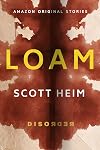
Three siblings (who are triplets) reluctantly return to their hometown after many years away to attend their estranged father’s funeral. The three of them are confronting bad and unwelcome memories from back when they were first-graders--when the children in their class (themselves included) were coerced into lying about their teacher and her adult son, which resulted in destroying two lives. This short story was on the dark and depressing side, but it held me captivated, nonetheless. show more Well-written and atmospheric, this made for a good quick read. show less
Lists
Awards


You May Also Like


Associated Authors
Statistics
- Works
- 13
- Also by
- 7
- Members
- 1,549
- Popularity
- #16,623
- Rating
- 3.9
- Reviews
- 32
- ISBNs
- 31
- Languages
- 5
- Favorited
- 11
