

Michael Punke
Author of The Revenant
About the Author
Michael Punke was born on December 7, 1964 in Torrington, Wyoming. He attended the University of Massachusetts Amherst, then transferred to George Washington University where he earned a degree in International Affairs. He later received his doctorate from Cornell Law School and served as show more Editor-in-Chief of the Cornell International Law Journal.. Punke serves as the U.S. Ambassador to the World Trade Organization in Geneva, Switzerland. He has also served on the White House National Security Council staff. He was formerly the history correspondent for Montana Quarterly. At the University of Montana, he was an adjunct professor. Punke has written several books. His work includes Fire and Brimstone: The North Butte Mine Disaster of 1917; Last Stand: George Bird Grinnell, the Battle to Save the Buffalo, and the Birth of the New West; and his most famous book, The Revenant: A Novel of Revenge (2002). 30 show less
Works by Michael Punke
Last Stand: George Bird Grinnell, the Battle to Save the Buffalo, and the Birth of the New West (2007) 136 copies, 6 reviews
Tagged
Common Knowledge
- Birthdate
- 1964-12-07
- Gender
- male
- Education
- University of Massachusetts, Amherst
George Washington University (BA)
Cornell University (JD|Cornell Law School) - Occupations
- novelist
professor
policy analyst
policy consultant
attorney
Deputy US Trade Representative (show all 7)
US Ambassador and Representative to the World Trade Organisation - Nationality
- USA
- Birthplace
- Torrington, Wyoming, USA
- Places of residence
- Torrington, Wyoming, USA
Geneva, Switzerland
Washington, D.C., USA - Associated Place (for map)
- USA
Members
Discussions
Welcome to New Friends in 75 Books Challenge for 2021 (December 2021)
Reviews

Having very conflicted and interesting feelings about this one. I went into the novel expecting to experience a narrative that was hands-down improved upon with the translation to film--Inarritu's masterpiece holds the record (8) for the number of times I've seen something in theaters. And while Punke's novel is solid and a fine western in its own right, the narrative divergence between film and novel has left me ponderous.
Inarritu's film strips Punke's material to its bare essentials (pun show more intended): Hugh Glass somehow survives a grizzly attack and is left for dead by Bridger and Fitzgerald; Glass tracks down these men, Fitzgerald in particular, as well as the remainder of his fellow fur trappers. Aside from various encounters with a number of native populations, these are the sole elements shared by the two fictional treatments of Hugh Glass's legendary narrative.
Inarritu's Glass is the father of a biracial son (Native & non-Native), Hawk--whom Fitzgerald kills--and journeys from near-death to revenge almost exclusively by himself (he is saved/helped on occasion by Native peoples). Punke's Glass is alone at the outset of his hellbent seeking for revenge, but not long after is accompanied by various motley crues of trappers and frontiersmen. Inarritu provides the viewer and Glass with the wish fulfillment of a final encounter with Fitzgerald--a beautifully savage and visceral confrontation between DiCaprio and Hardy, respectively.
The closest Punke allows Glass to get is a misfired pistol shot in the shoulder at the end of a court martial hearing (Fitzgerald absconded from the Rocky Mountain Fur Company, as he does in the film, but runs into trouble with the US Army and chooses enlistment over imprisonment after stabbing a major in the hand when a game of poker turns sour). A fellow trapper advises Glass that not all loose ends are tied up, that revenge is not a desire usually fulfilled, a sentiment that could easily be directed towards the reader, as well. Fitzgerald is forced to return Glass's Anstadt rifle, relinquish pay for the next two months, and continue his tenure as a member of the United States Army; Glass is left with figuring out what to do next (death doesn't come to him until nearly 10 years after the events of the novel). Inarritu's Revenant ends with the viewer uncertain of Glass's wounds being fatal or not after his final battle with Fitzgerald--the film enters one of its surreal moments and the authenticity of Glass's reality is questionable as the screen fades to black.
Thankful for a read that offered unexpected events in a narrative I considered myself more than intimate with, completion of the novel left me with the curious moments of reflection and introspection as to my feelings towards the wildly different endings to what is arguably the same narrative. Avoiding the pitfall that comes to those not familiar with adaptation studies, this wasn't a question of which narrative/ending was "better," but a question of how do the mediums of literature and film depict the same source material, how are they effective, and how do they make me feel about the concerns at hand?
You can tell someone all the gruesome details about a man being mauled by a bear, but nothing compares to witnessing the event for what feels like an eternity. In this regard--this being the matter of conveying the punishment inflicted upon the body, the body as a site of sensation and reaction, and the filmic mastery of capturing the event--the film delivers an experience that only film can.
I had to fight the natural instinct that comes with reading something after it's already been seen, that the text is meant not for side-by-side comparison with its filmic counterpart, but consideration on its own grounds, worthy from its own merit. And then it occurred to me that, given the nature of the factual history behind Hugh Glass's narrative, I was in the midst of something different from the traditional experience that comes with adaptation. Aside from being a legendary encounter with a grizzly, Glass's story is also entrenched in legend itself. Some is known about what occurred, mostly about the event itself, but not all--perfect for an artist wishing to instill their own imagination to flesh out the narrative. Here is a case of two artists in two different mediums delivering their own creative interpretations of Glass's story.
It is a matter of the ending that concerns me most. What do I do with such vastly different emotions regarding Glass's hellacious path to enact his revenge on those who left him for dead? The differing endings provide two distinct experiences. The film gratifies the viewer/Glass's desire to see Fitzgerald dead as what is more than likely his final act on Earth, while presenting us with the moral dilemma that comes with seeking vengeance: after you get it, what next? Was it all worth it?
Inarritu's film gives Glass much more incentive than just being robbed of his equipment and left for dead--his son is murdered and the same man is guilty of both crimes. With no other force to lawfully punish Fitzgerald, it is Glass's sole raison d'etre, the fuel that pushes him to crawl from his grave and trek across the American midwest in the dead of winter.
Punke seems to frame this motivation as almost a matter of principle: it's one thing that they left me for dead, but did they have to take my gun and tools of survival? Fitzgerald's greatest crime, according to a court of law, is being a gun thief, something he doesn't deny when faced with a court martial. That their showdown is set in a makeshift courthouse suggests that even in the wilderness, Law, too, exists. Punke seems to offer a notion with even greater implications: Revenge is not for man to enact, a claim supported by the novel's epigraph, a quote from Romans 12:19,
"Avenge not yourselves, but rather give place unto wrath; for it is written, Vengeance is mine; I will repay, saith the Lord."
What I'm left with, in a strange way, is two simultaneously occurring realities: one in which I get to see the river run red with Fitzgerald's blood; another where he walks away with nothing more than a bullet lodged in his shoulder, robbed of two months pay for heartless service to the US Army.
I'm not sure which fate is worse for Fitzgerald. But I do know that as I type this, Sakamoto and Noto's hauntingly masterful score playing in the background, there is at least certainty in knowing that Hugh Glass did what should be impossible. And no matter what you think when comparing/contrasting The Revenant in both literary and filmic forms, only one of them won Leonardo "My Heart and Soul" DiCaprio an Oscar. show less
Inarritu's film strips Punke's material to its bare essentials (pun show more intended): Hugh Glass somehow survives a grizzly attack and is left for dead by Bridger and Fitzgerald; Glass tracks down these men, Fitzgerald in particular, as well as the remainder of his fellow fur trappers. Aside from various encounters with a number of native populations, these are the sole elements shared by the two fictional treatments of Hugh Glass's legendary narrative.
Inarritu's Glass is the father of a biracial son (Native & non-Native), Hawk--whom Fitzgerald kills--and journeys from near-death to revenge almost exclusively by himself (he is saved/helped on occasion by Native peoples). Punke's Glass is alone at the outset of his hellbent seeking for revenge, but not long after is accompanied by various motley crues of trappers and frontiersmen. Inarritu provides the viewer and Glass with the wish fulfillment of a final encounter with Fitzgerald--a beautifully savage and visceral confrontation between DiCaprio and Hardy, respectively.
The closest Punke allows Glass to get is a misfired pistol shot in the shoulder at the end of a court martial hearing (Fitzgerald absconded from the Rocky Mountain Fur Company, as he does in the film, but runs into trouble with the US Army and chooses enlistment over imprisonment after stabbing a major in the hand when a game of poker turns sour). A fellow trapper advises Glass that not all loose ends are tied up, that revenge is not a desire usually fulfilled, a sentiment that could easily be directed towards the reader, as well. Fitzgerald is forced to return Glass's Anstadt rifle, relinquish pay for the next two months, and continue his tenure as a member of the United States Army; Glass is left with figuring out what to do next (death doesn't come to him until nearly 10 years after the events of the novel). Inarritu's Revenant ends with the viewer uncertain of Glass's wounds being fatal or not after his final battle with Fitzgerald--the film enters one of its surreal moments and the authenticity of Glass's reality is questionable as the screen fades to black.
Thankful for a read that offered unexpected events in a narrative I considered myself more than intimate with, completion of the novel left me with the curious moments of reflection and introspection as to my feelings towards the wildly different endings to what is arguably the same narrative. Avoiding the pitfall that comes to those not familiar with adaptation studies, this wasn't a question of which narrative/ending was "better," but a question of how do the mediums of literature and film depict the same source material, how are they effective, and how do they make me feel about the concerns at hand?
You can tell someone all the gruesome details about a man being mauled by a bear, but nothing compares to witnessing the event for what feels like an eternity. In this regard--this being the matter of conveying the punishment inflicted upon the body, the body as a site of sensation and reaction, and the filmic mastery of capturing the event--the film delivers an experience that only film can.
I had to fight the natural instinct that comes with reading something after it's already been seen, that the text is meant not for side-by-side comparison with its filmic counterpart, but consideration on its own grounds, worthy from its own merit. And then it occurred to me that, given the nature of the factual history behind Hugh Glass's narrative, I was in the midst of something different from the traditional experience that comes with adaptation. Aside from being a legendary encounter with a grizzly, Glass's story is also entrenched in legend itself. Some is known about what occurred, mostly about the event itself, but not all--perfect for an artist wishing to instill their own imagination to flesh out the narrative. Here is a case of two artists in two different mediums delivering their own creative interpretations of Glass's story.
It is a matter of the ending that concerns me most. What do I do with such vastly different emotions regarding Glass's hellacious path to enact his revenge on those who left him for dead? The differing endings provide two distinct experiences. The film gratifies the viewer/Glass's desire to see Fitzgerald dead as what is more than likely his final act on Earth, while presenting us with the moral dilemma that comes with seeking vengeance: after you get it, what next? Was it all worth it?
Inarritu's film gives Glass much more incentive than just being robbed of his equipment and left for dead--his son is murdered and the same man is guilty of both crimes. With no other force to lawfully punish Fitzgerald, it is Glass's sole raison d'etre, the fuel that pushes him to crawl from his grave and trek across the American midwest in the dead of winter.
Punke seems to frame this motivation as almost a matter of principle: it's one thing that they left me for dead, but did they have to take my gun and tools of survival? Fitzgerald's greatest crime, according to a court of law, is being a gun thief, something he doesn't deny when faced with a court martial. That their showdown is set in a makeshift courthouse suggests that even in the wilderness, Law, too, exists. Punke seems to offer a notion with even greater implications: Revenge is not for man to enact, a claim supported by the novel's epigraph, a quote from Romans 12:19,
"Avenge not yourselves, but rather give place unto wrath; for it is written, Vengeance is mine; I will repay, saith the Lord."
What I'm left with, in a strange way, is two simultaneously occurring realities: one in which I get to see the river run red with Fitzgerald's blood; another where he walks away with nothing more than a bullet lodged in his shoulder, robbed of two months pay for heartless service to the US Army.
I'm not sure which fate is worse for Fitzgerald. But I do know that as I type this, Sakamoto and Noto's hauntingly masterful score playing in the background, there is at least certainty in knowing that Hugh Glass did what should be impossible. And no matter what you think when comparing/contrasting The Revenant in both literary and filmic forms, only one of them won Leonardo "My Heart and Soul" DiCaprio an Oscar. show less
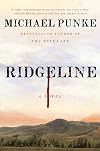
I really enjoy well-written non-fiction and historical fiction about the American West, and in Ridgeline, Michael Punke has created a tale based on real people and events that held me in its grasp from beginning to end.
Any well-told tale has to have a first-rate cast of characters, and there certainly is one here. The arrogant ignorance of so many in Carrington's band of soldiers makes you shake your head. Carrington himself had no battle experience, and as they journey to their show more destination in the Powder River Valley, he is reminded of the African safaris undertaken by British nobles. After all, officers' wives and other women are traveling with them as well as the band he insisted upon so they could have music in the evenings around the campfires. Oh, how very civilized.
Others also make contributions to Ridgeline. Frances Grummond, the wife of the most arrogantly ignorant of Carrington's officers, writes of her experiences in two different journals: one for public consumption and one private, for-her-eyes-only. Jim Bridger, hired as a scout, helps show just how ignorant the soldiers are, and I loved his reply to one of the officers in one of their many meetings: "Don't ask me if you don't wanna know." How many times have so-called intelligent people refused to listen to the experts they hired?
But it was watching Red Cloud and Crazy Horse that kept me focused the most. Watching them work with other Lakota and then other tribes, convincing warriors that they needed a new way to fight the soldiers in order to win, forming their strategy that was so brilliant that it would ultimately be taught in military academies around the world. Watching events unfold knowing it was ultimately for nothing.
Although I knew how Ridgeline was going to end, I still got caught up in Punke's story. I still got caught up with the characters. That's some powerful storytelling, and I look forward to his next book. show less
Any well-told tale has to have a first-rate cast of characters, and there certainly is one here. The arrogant ignorance of so many in Carrington's band of soldiers makes you shake your head. Carrington himself had no battle experience, and as they journey to their show more destination in the Powder River Valley, he is reminded of the African safaris undertaken by British nobles. After all, officers' wives and other women are traveling with them as well as the band he insisted upon so they could have music in the evenings around the campfires. Oh, how very civilized.
Others also make contributions to Ridgeline. Frances Grummond, the wife of the most arrogantly ignorant of Carrington's officers, writes of her experiences in two different journals: one for public consumption and one private, for-her-eyes-only. Jim Bridger, hired as a scout, helps show just how ignorant the soldiers are, and I loved his reply to one of the officers in one of their many meetings: "Don't ask me if you don't wanna know." How many times have so-called intelligent people refused to listen to the experts they hired?
But it was watching Red Cloud and Crazy Horse that kept me focused the most. Watching them work with other Lakota and then other tribes, convincing warriors that they needed a new way to fight the soldiers in order to win, forming their strategy that was so brilliant that it would ultimately be taught in military academies around the world. Watching events unfold knowing it was ultimately for nothing.
Although I knew how Ridgeline was going to end, I still got caught up in Punke's story. I still got caught up with the characters. That's some powerful storytelling, and I look forward to his next book. show less
The Revenant by Michael Punke is based on the story of Hugh Glass, who, in 1823 was travelling up the Grand River with a party of fur trappers. He was attacked and viciously mauled by a grizzly bear. Hugh is not expected to survive and the group needs to move on so two men are left to stay and care for the wounded man and bury him once he dies. Instead these two men, not only abandon him in the wilderness but take his gun and knife. Instead of dying Glass recovers and, driven by grim show more determination for revenge, he vows to track down the deserters and begins his long crawl to safety.
The author stays very close to the facts that are known about this event and delivers a spellbinding tale of survival and revenge. This was not the first time I have read about Hugh Glass, his story is also the basis for the 1954 National Book Award recipient, Lord Grizzly by Frederick Manfred, but even on the second reading, the details of this man’s survival are incredible. While Lord Grizzly delved into the actual survival story in greater detail, this book deals more with his pledge for retribution.
The Revenant is a great piece of historical fiction both entertaining and informative as well as an excellent adventure story about one man’s willpower and courage to survive against the odds. show less
The author stays very close to the facts that are known about this event and delivers a spellbinding tale of survival and revenge. This was not the first time I have read about Hugh Glass, his story is also the basis for the 1954 National Book Award recipient, Lord Grizzly by Frederick Manfred, but even on the second reading, the details of this man’s survival are incredible. While Lord Grizzly delved into the actual survival story in greater detail, this book deals more with his pledge for retribution.
The Revenant is a great piece of historical fiction both entertaining and informative as well as an excellent adventure story about one man’s willpower and courage to survive against the odds. show less
This sprawling historical fictional account of the battle known as the Fetterman Massacre, between American Indians and the US Army, presents a wide, if not deep, historical and geographical context to the fight. The range of the book is only a few months, beginning when the US Army sets up in Sioux territory to build Fort Phil Kearney, and ending with the infamous battle, but the scope of the novel widens to present the points of view of several key and secondary players. In particular, the show more the author focuses on the viewpoints of Lt. Grummond, Crazy Horse, Jim Bridger, bugler Adolph Metzger, Lt. Grummond's wife, among others, and the different points of view give us a sense of the context and importance of the fort, this land, the people of the outpost, the idealism as well as the brutality of the American push towards the West, as well as the resistance from the Natives.
Yes, this is a vast landscape of a story, as vast as the Wyoming setting, and the reader gets a good sense of the time, place and causes behind the characters' actions. But it's a bit of a slog, with very little action. It's the literary equivalent of a Ken Burns documentary: thorough, with lots of voices, but time-consuming and glacially paced.
The author also doesn't hide his disdain for the white characters and his near deification of the Native Americans. In that sense it betrays the author's prejudices too clearly. Carrington is portrayed as bemused, slightly in over his head, and feckless; Grummond is a drunken polygamist; Margaret Carrington is bigoted against the laundresses; the French baker surreptitiously sells homemade hooch, and so on. On the other hand, the Sioux chief, Red Cloud, is wise, sober, and thoughtful; Crazy Horse is similarly noble, caring about the land where the whites do not, etc. In one exchange Lone Bear, Crazy Horse's friend, wonders how the whites have used all their body parts for evil, asking, "Are their hearts pure?" We are given to understand that the Indians live in contrast to them, using their bodies to perfection. Later on Crazy Horse notes that the whites are different from any other enemy, in that "they fight only for the purpose of killing." For an author of historical fiction to whitewash (so to speak) how brutal and violent the warrior cultures of the Indians were is just unforgiveable, if only from a literary perspective, in which the highest good comes not from idealizing one group of people over another, but from acknowledging the complexity in us all, the shades of good and evil in every single human being. That ambiguity is absent here. show less
Yes, this is a vast landscape of a story, as vast as the Wyoming setting, and the reader gets a good sense of the time, place and causes behind the characters' actions. But it's a bit of a slog, with very little action. It's the literary equivalent of a Ken Burns documentary: thorough, with lots of voices, but time-consuming and glacially paced.
The author also doesn't hide his disdain for the white characters and his near deification of the Native Americans. In that sense it betrays the author's prejudices too clearly. Carrington is portrayed as bemused, slightly in over his head, and feckless; Grummond is a drunken polygamist; Margaret Carrington is bigoted against the laundresses; the French baker surreptitiously sells homemade hooch, and so on. On the other hand, the Sioux chief, Red Cloud, is wise, sober, and thoughtful; Crazy Horse is similarly noble, caring about the land where the whites do not, etc. In one exchange Lone Bear, Crazy Horse's friend, wonders how the whites have used all their body parts for evil, asking, "Are their hearts pure?" We are given to understand that the Indians live in contrast to them, using their bodies to perfection. Later on Crazy Horse notes that the whites are different from any other enemy, in that "they fight only for the purpose of killing." For an author of historical fiction to whitewash (so to speak) how brutal and violent the warrior cultures of the Indians were is just unforgiveable, if only from a literary perspective, in which the highest good comes not from idealizing one group of people over another, but from acknowledging the complexity in us all, the shades of good and evil in every single human being. That ambiguity is absent here. show less
 This review was written for LibraryThing Early Reviewers.
Lists
Disaster Books (1)
At the Library (1)
Awards


You May Also Like


Associated Authors
Statistics
- Works
- 7
- Members
- 3,001
- Popularity
- #8,499
- Rating
- 3.9
- Reviews
- 109
- ISBNs
- 84
- Languages
- 10
